

Share this article
A kitchen backsplash serves both functional and aesthetic purposes in a kitchen. One of the primary functions of a kitchen backsplash is to protect the wall behind the cooking and preparation areas from splashes, stains, and moisture.
Do I really need a kitchen backsplash?
Cooking activities can generate grease, water, and food splatters, and a backsplash helps prevent these substances from damaging the wall surface.
Backsplashes are typically made from materials that are easy to clean, such as tile, glass, or stainless steel. This makes it convenient to wipe away splatters and spills, helping to maintain a hygienic and visually appealing kitchen environment.
The wall behind the stove and sink is particularly vulnerable to damage from heat, moisture, and stains. A backsplash acts as a barrier, preventing these elements from causing long-term damage to the wall surface.
5 Half Height Kitchen Backsplash Ideas
Beyond their practical function, backsplashes are also a key element in kitchen design. They contribute to the overall aesthetics of the kitchen, providing an opportunity to introduce color, texture, and pattern into the space.
In the kitchen backsplash department, half-height kitchen backsplashes have been trending for the open-concept, airy, and farmhouse-inspired slow living atmosphere it introduces to a home. Here are 7 trendy half-height kitchen backsplash ideas for you:
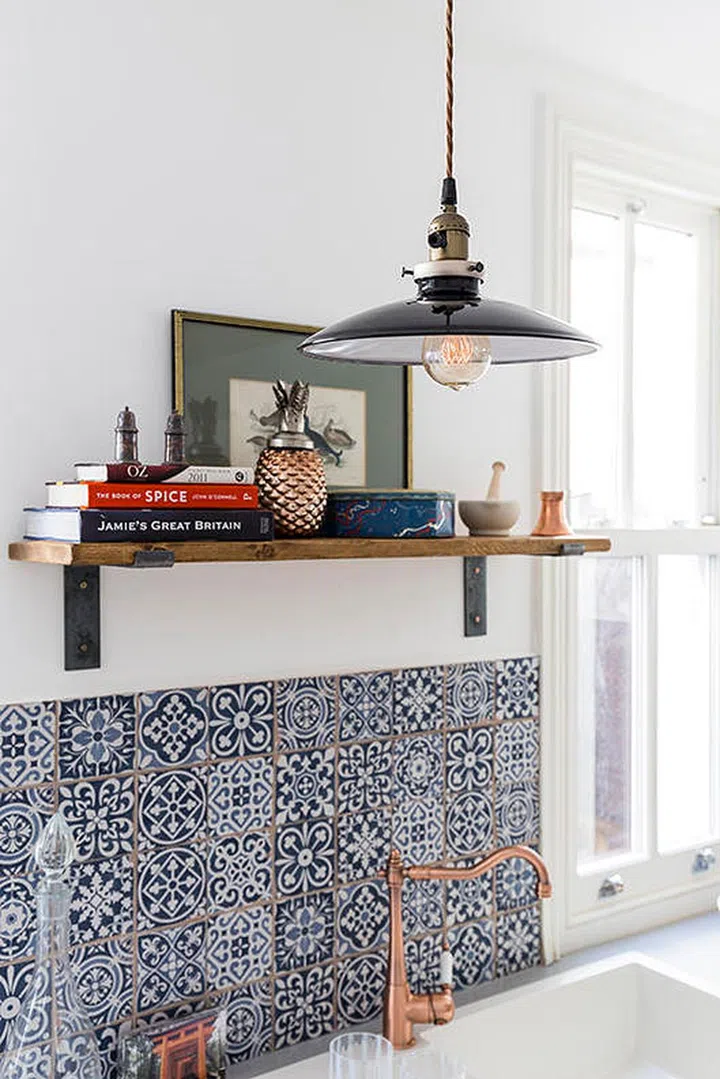
The half-height backsplash — half the cost, but just as pretty. Interior design by Anouska Tamony
Patterned Tile Kitchen Backsplash
Patterned tiles come in a wide range of colors, designs, and patterns, allowing for creative and visually appealing kitchen designs. They add a decorative element that can enhance the overall style and character of the kitchen.
If you're renovating an old kitchen or an old HDB resale flat, patterns can help hide stains, splatters, and minor imperfections, making the backsplash easier to maintain and clean.
They also serve as a focal point in the kitchen, drawing attention to the backsplash area and creating visual interest.
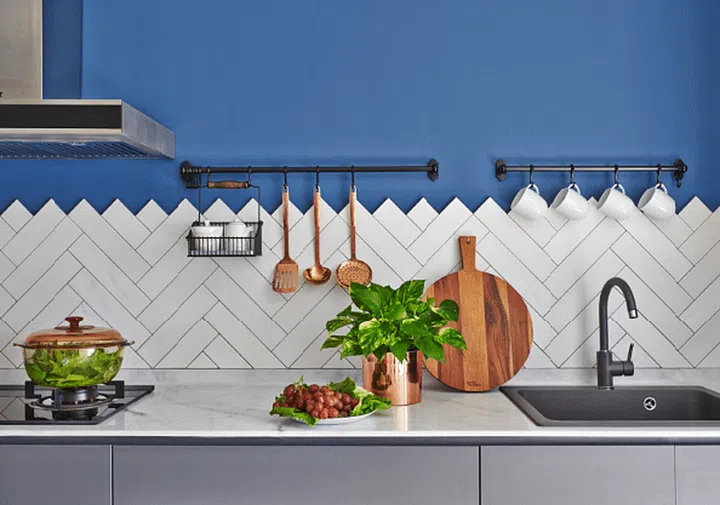
It allows you to play with various textures and colours in the same space. Interior design by Three-D Conceptwerke
Herringbone Tile Kitchen Backsplash
The herringbone pattern is a classic and versatile design that can be incorporated into various interior design styles, such as traditional, contemporary, Scandinavian, farmhouse, cottage, and modern interior design styles.
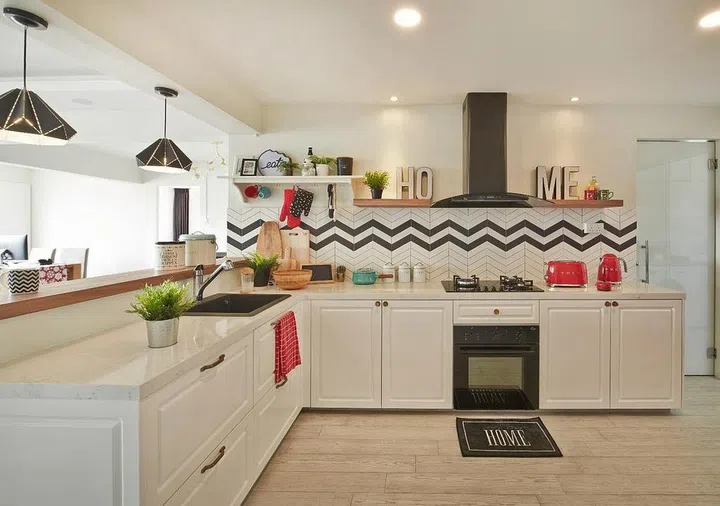
You definitely don't need to deal with the awkward angles around the kitchen hood with these accented herringbone tiles for the kitchen backsplash! Interior design by Rezt n Relax
The simplicity and light color of a white herringbone tile backsplash align well with the principles of these elegant and timeless interior design styles, making it an easy yet simple kitchen renovation choice.

Hexagonal or geometrical kitchen backsplash tile designs will give an extra oomph to your kitchen. Interior design by Hafary
Hexagon Tiles Kitchen Backsplash
Hexagonal tiles can be a unique and stylish choice for kitchen backsplashes. They often come in various materials, colors, and finishes, allowing for versatile design options that can complement different kitchen styles, from classic to contemporary.
Also, hexagonal tiles create interesting visual illusions and depth, especially when used in combination with contrasting colors or different tile orientations.
Finally, hexagonal tiles offer flexibility in terms of layout. They can be arranged in a classic grid pattern, a staggered layout, or even in a more intricate pattern, providing customization options for different design preferences.
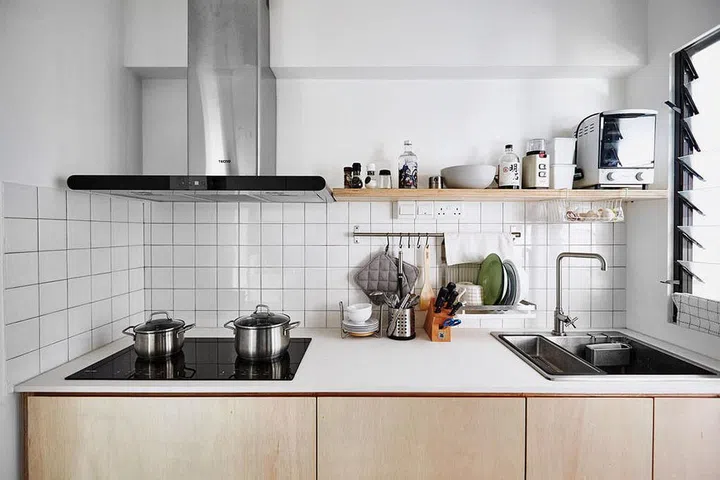
Open kitchen shelves sit nicely above the edges of this white square tile half-height kitchen backsplash. Interior design by JQ Ong
White Square Tile Kitchen Backsplash
White square mosaic tiles are popular for kitchen backsplashes. They are highly versatile and can complement a wide range of kitchen color schemes, cabinet finishes, and countertop materials. They serve as a neutral backdrop that allows other design elements to stand out.
White mosaic tiles are also easily adaptable, and can seamlessly coordinate with a variety of materials, including different countertop surfaces, cabinet finishes, and flooring options.
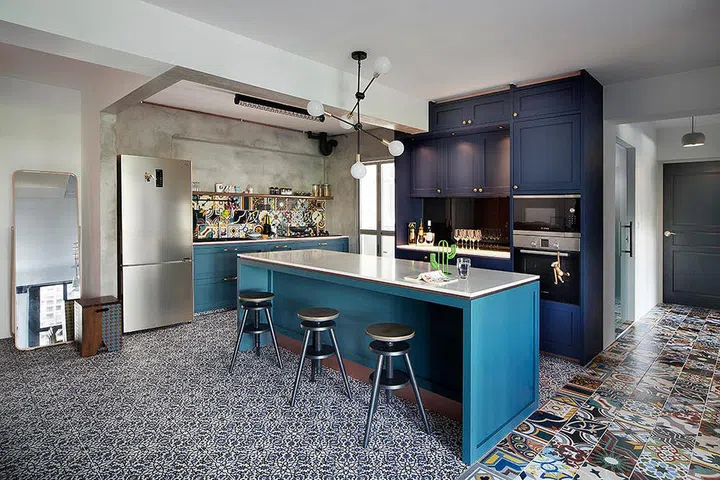
Half-height kitchen backsplashes are ideal if you've chosen a colourful tile, but do not want to overwhelm the kitchen with its print or design. Interior design by The Scientist
Complements bold colours in kitchens
Half-height kitchen backsplashes, also known as "short backsplashes" or "partial backsplashes," can be beneficial in kitchens with bold colors and patterns.
In kitchens with bold and heavy interior designs featuring vibrant colors and patterns, a half-height backsplash can provide a sense of balance. It prevents the space from feeling overwhelmed by too many bold elements, allowing for visual harmony.
Bold colors and patterns can create a visually stimulating environment. A half-height backsplash offers a break in the intensity, preventing the kitchen from becoming overly busy or overwhelming to the eye.
If you have got fluted panels, intricate cabinetry, elaborate countertops, or other striking design features, a half-height backsplash allows these elements to take center stage without competing for attention.
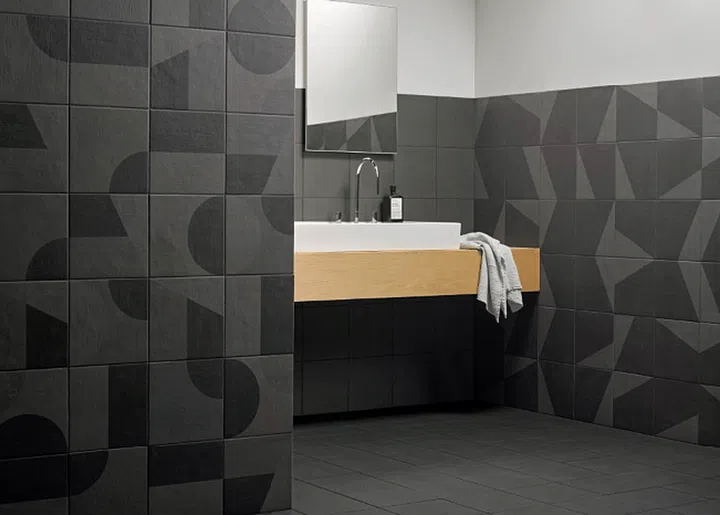
You can stop your backsplash at a height where water, oil and grease will most likely be unable to reach. Interior design by GF + A Global
What is the minimum height for a kitchen backsplash?
The minimum height for a kitchen backsplash is typically determined by practical considerations and the potential for splashes and spills in the kitchen.
While there isn't a universal standard, a common recommendation is to have the kitchen backsplash extend at least 10 cm minimally above the countertop surface.
When planning the height of a kitchen backsplash, it's recommended to consider factors such as the style of the kitchen, the material of the backsplash, and the specific needs of the cooking and food preparation areas.
What is the best material for a kitchen backsplash in Singapore?
Some of the best materials for kitchen backsplashes include acrylic, tiles, stainless steel, glass, and mirror. Their benefits are respectively:
- Acrylic kitchen backsplash offers a sleek and modern aesthetic, is easy to clean, and provides a cost-effective and lightweight alternative to traditional materials.
- Stainless steel backsplash provides a durable, heat-resistant, and easy-to-clean surface that adds a contemporary and professional look to the kitchen.
- Glass kitchen backsplash offers a sleek, reflective surface that is easy to clean, visually expands the space, and allows for versatile design options with various colors and textures.
- Mirrored kitchen backsplash adds a touch of glamour, enhances natural light, and creates the illusion of a larger space while maintaining easy cleanability.
How do I install a kitchen backsplash in Singapore?
Installing a kitchen backsplash can be done in several ways, and the simplicity of the process often depends on the chosen material and design.
Peel-and-Stick Backsplash Tiles
Materials Needed: Peel-and-stick backsplash tiles, utility knife, measuring tape.
Installation Steps: Clean the wall surface, measure and cut tiles as needed, peel off the backing, and stick the tiles onto the wall.
This method is relatively quick and requires minimal tools and expertise, making it suitable for a DIY project.
Adhesive Tile Mat or Matting Systems
Materials Needed: Adhesive tile mat or matting system, tiles, utility knife.
Installation Steps: Apply the adhesive tile mat to the wall, cut it to fit the space, and press tiles onto the mat.
This method eliminates the need for traditional mortar or thinset, making it a cleaner and faster option for installing tiles.
Liquid Nails or Construction Adhesive
Materials Needed: Liquid Nails or construction adhesive, tiles, trowel or putty knife.
Installation Steps: Apply the construction adhesive to the back of the tiles or directly onto the wall, press the tiles into place, and use spacers to maintain even spacing.
This method is suitable for a variety of materials, including glass and acrylic tiles, and is relatively simple for those comfortable with DIY projects.
It's important to note that the simplicity of the installation also depends on factors such as the surface condition, the type of material used, and the desired pattern. Before starting any installation, it's recommended to thoroughly clean the wall surface and ensure it is smooth and dry.
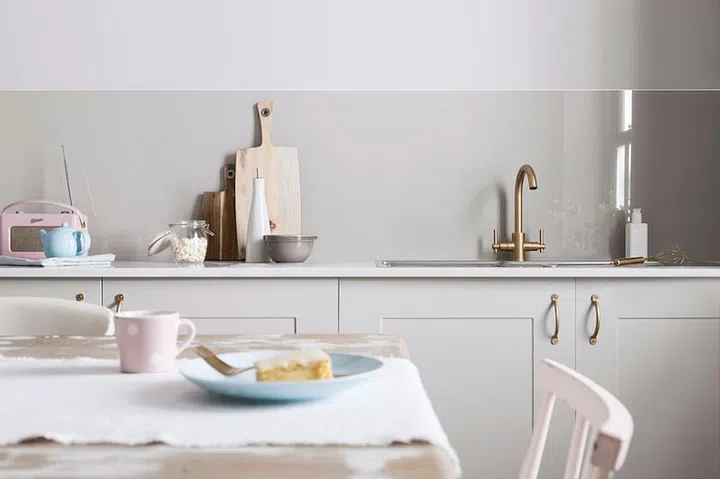
What is the average cost of a kitchen backsplash in Singapore?
The cost of a kitchen backsplash in Singapore can vary widely depending on several factors, including the type of material chosen, the size of the kitchen, and whether the installation is done professionally or as a do-it-yourself (DIY) project.
Here are some general price estimates for different types of kitchen backsplash materials:
- Ceramic or Porcelain Tiles: $10 to $30 per square foot
- Glass Tiles: $20 to $40 per square foot
- Natural Stone (e.g., marble, granite): $20 to $60 per square foot
- Stainless Steel: $25 to $50 per square foot
- Acrylic or Laminate: $15 to $35 per square foot
- Peel-and-Stick Tiles: $5 to $15 per square foot
These are rough estimates and actual costs may vary based on factors such as the specific material brand, labor costs, and any additional features or design elements. It's recommended to obtain quotes from local suppliers and contractors to get a more accurate estimate based on your specific requirements.
If you choose to install the backsplash yourself, you can save on labor costs but should still consider the cost of materials and any tools or adhesives needed.