
Share this article
Ang Mo Kio was once home to rubber plantations, where mostly Hokkien rubber tappers toiled during the early 20th century. The world slump in rubber prices in the 1920’s and 1930’s led to a switch to pig, poultry and vegetable farming. In 1973, they made way for Ang Mo Kio New Town, the seventh satellite town in Singapore, which was completed in 1980 and built over an elongated valley previously occupied by squatters.
The self-contained town was the first to pioneer a road numbering system; avenues in odd numbers run in an east-west direction originating from the south, while even numbers run in a north-south direction, starting from the west. Other new towns like Hougang, Jurong West and Woodlands then adopted the same system. In 1986, Ang Mo Kio also became the test pad for the town council concept.
Ang Mo Kio even picked up several design awards – the Singapore Institute of Architects (SIA) Outstanding Buildings Award in 1983 while the swimming complex at Avenue 1 won the 1986 SIA Architectural Award for its unique ‘tetrahedral skylight’ design.
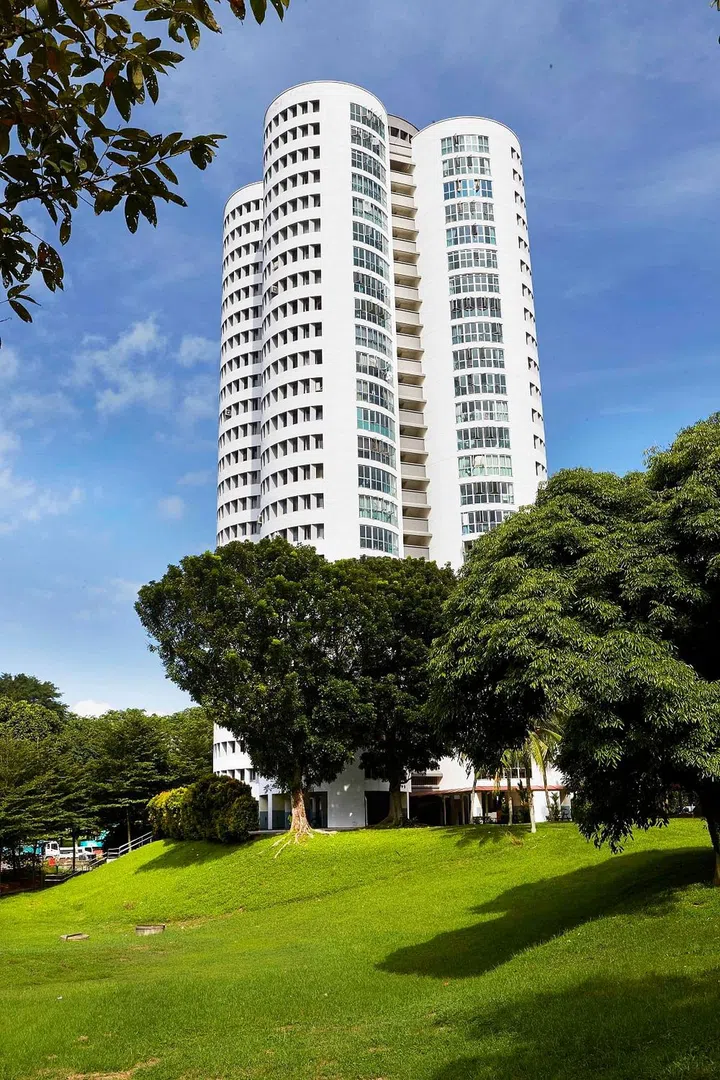
Another unusual ‘only in Ang Mo Kio’ design is Blk 259 Ang Mo Kio Ave 2, Singapore’s only circular Housing Board (HDB) block. The spacious 5-roomed, 1,453sqf flats are marketed at a premium befitting its rare status, too. In December 2016, a unit was put on sale for $918,000.
Revamping Ang Mo Kio
The sprawling Ang Mo Kio Planning Area is divided into 12 estates: Ang Mo Kio Town Centre, Cheng San, Chong Boon, Kebun Baru, Sembawang Hills, Shangri-La, Tagore, Townsville, Yio Chu Kang, Yio Chu Kang East, Yio Chu Kang North, Yio Chu Kang West.
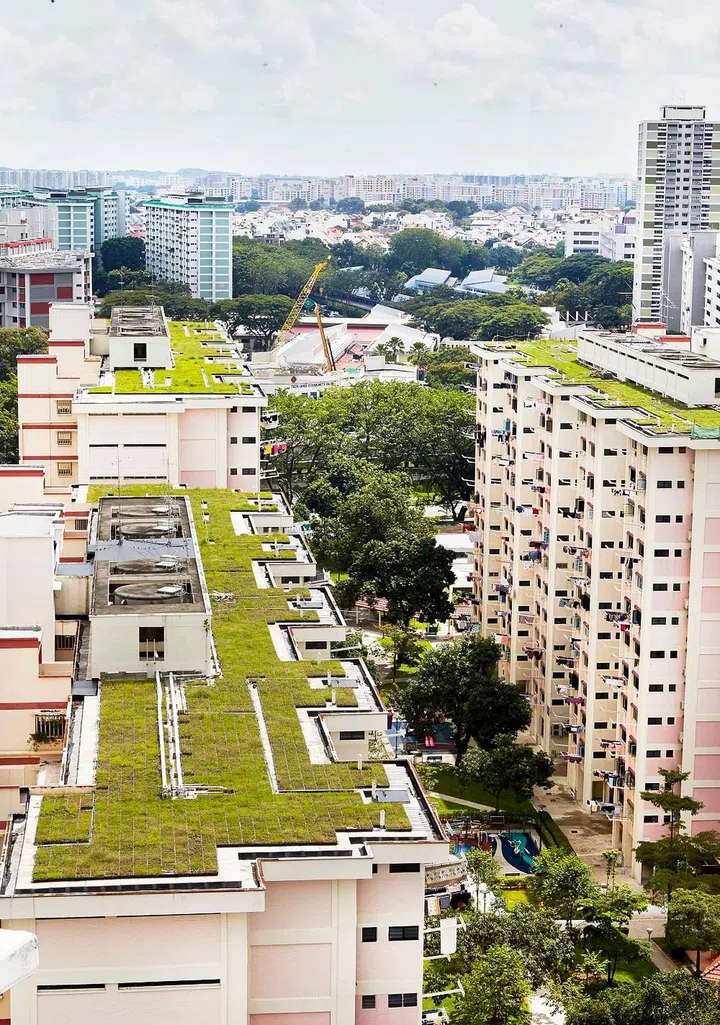
There are an estimated 49,169 HDB flats here, and 149,800 residents, including sales executive Benjamin Lim, 26. Like his neighbours, he has been enjoying the rejuvenation of the mature estate. “The Lift Upgrading Programme brought lift access to every floor in my block,” he says. In addition, the Home Improvement Programme, a scheme to improve old flats built before 1986 at highly subsidised rates, saw the installation of new waste pipes, upgrading of electrical supply, and other structural improvements. Many homes got new toilets, as well as entrance doors, gates and ramps.
Ang Mo Kio was the last town in Singapore to be upgraded under the Main Upgrading Programme in 2012, where the flat, block and precinct enjoyed a ‘three-in-one’ upgrade. From 1990 to 2012, over 86 blocks in Ang Mo Kio were successfully revamped with the choice of adding more floor space to their units, available as a utility room, a kitchen extension or a new toilet, which undoubtedly improved their market value.
Private estates in Ang Mo Kio benefited from the Estate Upgrading Programme too. Gerald-Mugliston estate, for example, now boasts a new exercise area, playground and improved footpaths and street lighting. Shangri-la Park’s playground was upgraded while Ellington Park has a new playground.
Residents also look forward to improved medical facilities. The Ang Mo Kio Polyclinic, currently being redeveloped at Ang Mo Kio Central 2 beside the community library, will be ready in 2018. In addition to the Ang Mo Kio-Thye Hua Kwan Hospital in Avenue 9, a new 11-storey nursing home at the junction of Ang Mo Kio Ave 1 and Ave 8 will offer 470 beds and a 1,000sqm Senior Care Centre, for the mature town’s ageing population.
All-in-one neighbourhood
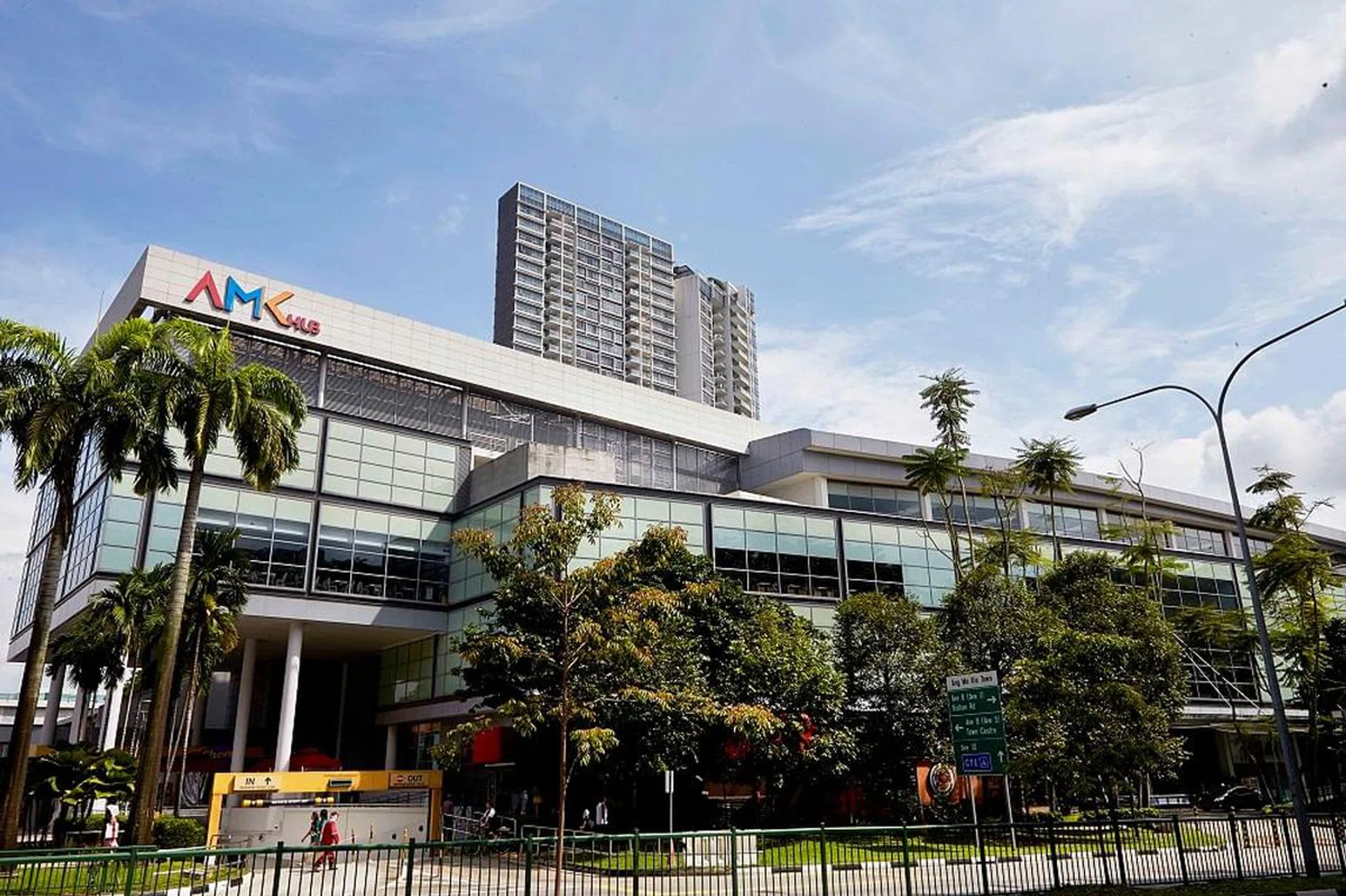
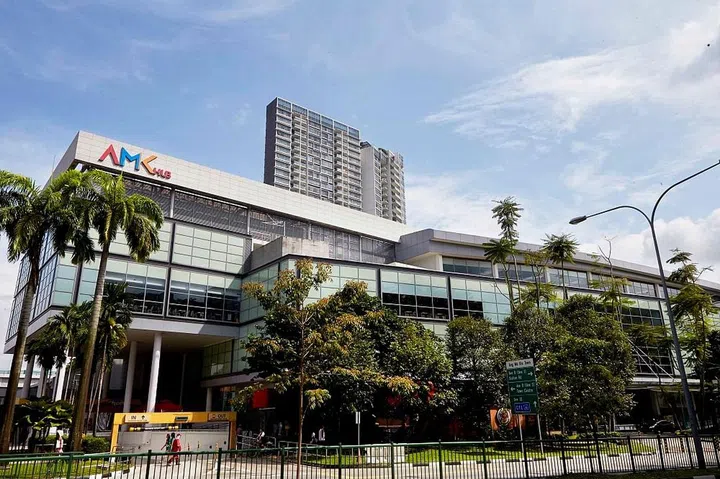
Old-timers may fondly recall Oriental Emporium at the Town Centre. These days, AMK-ians shop at AMK Hub, which took its place. Conveniently linked to Ang Mo Kio MRT station and Ang Mo Kio Bus interchange, it boasts 350,000sqf of retail space. For more retail therapy, the revamped Jubilee Square (formerly the Jubilee Entertainment Centre), Broadway Plaza (the old Broadway Cinema) and DjitSun Mall, the newest addition that opened in 2013 at Ang Mo Kio Central 2, provide numerous options.
With 9 upgraded markets and food centres spread around the town, plus many more coffee shops dishing up local delights, Ang Mo Kio has no lack of good food. Among the most raved about is Rahim Muslim Food at Blk 721 Ang Mo Kio Ave 8’s Fu Chan Coffee Shop, where their ‘Power Mee Rebus’ drizzled with satay sauce packs in the crowd. Cafe hoppers will also find plenty of Instagram-worthy options in the heartland, like the charcoal waffles and ice cream at Twenty Grammes, Blk 529 Ang Mo Kio Ave 10.
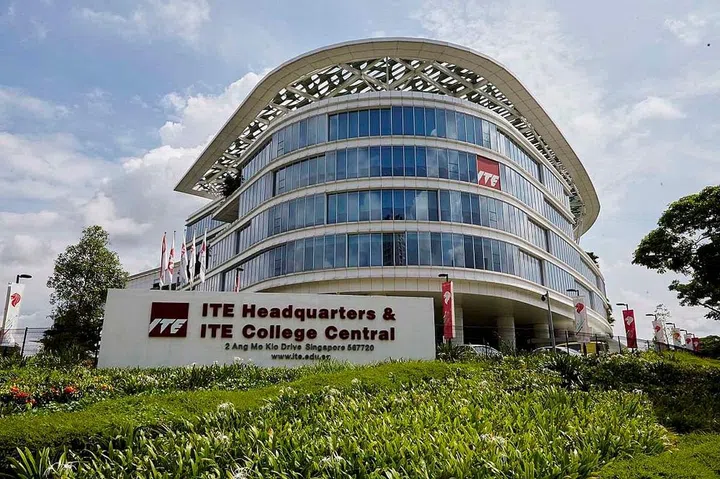
Ang Mo Kio offers a wide range of academic options and even special needs schools like Chaoyang School and Pathlight School. Popular primary and secondary mission schools include CHIJ St Nicholas Girls’ School and Presbyterian High, with post-secondary options like the new campus at ITE College Central (it even has its own hangar with a helicopter and a decommissioned Boeing 737), Nanyang Polytechnic, and Anderson Junior College.
Students will also enjoy the upgraded community library, which has the largest Tamil-language collection in Singapore. Another hangout is the recently upgraded Kebun Baru Community Club, where new recreational and sporting facilities, such as a gym and an air-conditioned hall to host social and cultural events, await.
All about connections
Currently served by Ang Mo Kio and Yio Chu Kang MRT stations, AMK-ians will enjoy better connectivity when the Thomson-East Coast MRT Line is completed in 2020, adding two new stations, Mayflower and Lentor. Also ready by then is Singapore’s 11th expressway, the North-South Expressway (NSE). Running parallel to the Central Expressway, this alternative route to the city should help ease the peak-hour jams.
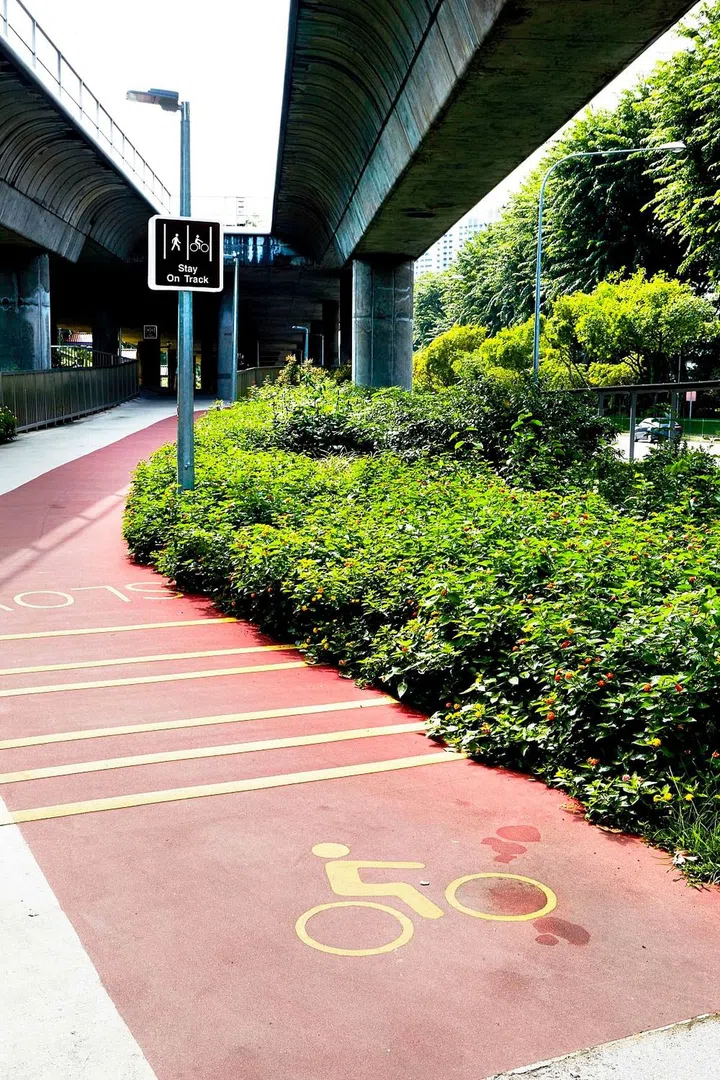
For a greener way to travel, Ang Mo Kio is set to become Singapore’s first cycling town. By 2018, an extensive network of walking and cycling paths, safer road crossings, and bicycle parking facilities will be built. Homemaker Neo Jay Li, 36, cheers the news that a seamless, 2.6km-long walking and cycling corridor will connect Yio Chu Kang and Ang Mo Kio MRT stations to Bishan-Ang Mo Kio Park. “My family usually drives there to visit the famous family of otters. With this convenient corridor, it will encourage us to walk or cycle instead and get some exercise.”
Other popular parks in the neighbourhood include Ang Mo Kio Town Garden West, which was built on a hillock, and Ang Mo Kio Town Garden East, formerly home to important cash crops like rubber, nutmeg and cinnamon, aptly represented by the sculptures of rubber seeds and nutmegs dotting the park.
Great location, premium prices
Priced for its central location, Build-To-Order flats at Ang Mo Kio Court drew a predictably enthusiastic response during the May 2016 exercise. As National Development Minister Lawrence Wong noted in his blog, “I know many buyers have been looking forward to this launch, as it has been more than three years since HDB last offered BTO flats in Ang Mo Kio, Bedok and Bukit Panjang.”
At Ang Mo Kio, two-room Flexi, four-room, five-room and 3Gen flats were offered, with the bigger flats being the most popular. Each four-roomed flat saw nine applicants vying for the 234 units available, while the five-room and 3Gen flats had more than eight applicants for each of the 200 units. Prices ranged from $142,000 to $541,000, excluding grants. In comparison, similar flats at Bukit Panjang cost just $73,000 to $316,000.
Resale HDB flats at Ang Mo Kio typically fetch a premium, especially the newer ones. In Oct 2016, three units at the Design, Build and Sell Scheme (DBSS) development Park Central @ Ang Mo Kio made the news when the units were resold at at least 40 per cent more than their original prices, with the most expensive 1,292sqf unit fetching $980,000.
Similarly, newer condominiums and those nearest to the MRT station boast higher price tags. Completed in 2014, units at Centro Residences, located right next to AMK Hub, transacted between $1,288 to $1,445 per sqf in recent months. A 1,281sqf unit, for example, sold for $1.65m in November 2016. At the 2005 project, Grandeur 8 at Ang Mo Kio Central, prices are a more affordable $820 to $1,108 per sqf.
For those lucky enough to land a BTO flat in Ang Mo Kio, it offers the best bang for your buck. However, in today’s soft resale market, sharp-eyed buyers can still pick up a bargain. For example, several three-room flats built in the 1980’s are currently listed for as low as $270,000. Compare this to a five-year old, 753sqf three-room flat at Blk 308A Ang Mo Kio Ave 1, listed for a cool $510,000 – almost double the price.
Benjamin, who jokingly laments that he was “too young and too single” to apply for a BTO flat last May, says: “I’m hoping that by the time I’m ready to settle down, the ‘new’ flats will be ready for resale, and that they will be reasonably priced. I’ve lived in Ang Mo Kio and gone to schools here all my life. I hope to bring up my kids in the neighbourhood, too.”