
Things to do: Rare Chinese ceramics dating back to 5000BC at Asian Civilisations Museum
By Home & Decor Team -
Share this article
The newly opened 333sqm-sized gallery located on the top floor of the Asian Civilisations Museum features more than 300 Chinese ceramic objects, ranging from simple cups and pots that date as far back as 5000BC to exquisite porcelain vessels and ornaments from as recent as the 18th century.
Many of these objects, which include recent acquisitions, have either never been displayed in the museum before or have not been in public view for some time.
The crown jewel of the show, however, is the collection of Dehua porcelain - white porcelain from Dehua county in Fujian province. Dehua porcelain is well-known around the world for its distinctive white glaze and fine clay - allowing for delicate workmanship and highly expressive forms. Besides Dehua ware, the exhibition, which flows in a largely chronological order, includes sections on clay objects for burial and porcelain made for the imperial court.
Here are some of the highlights:
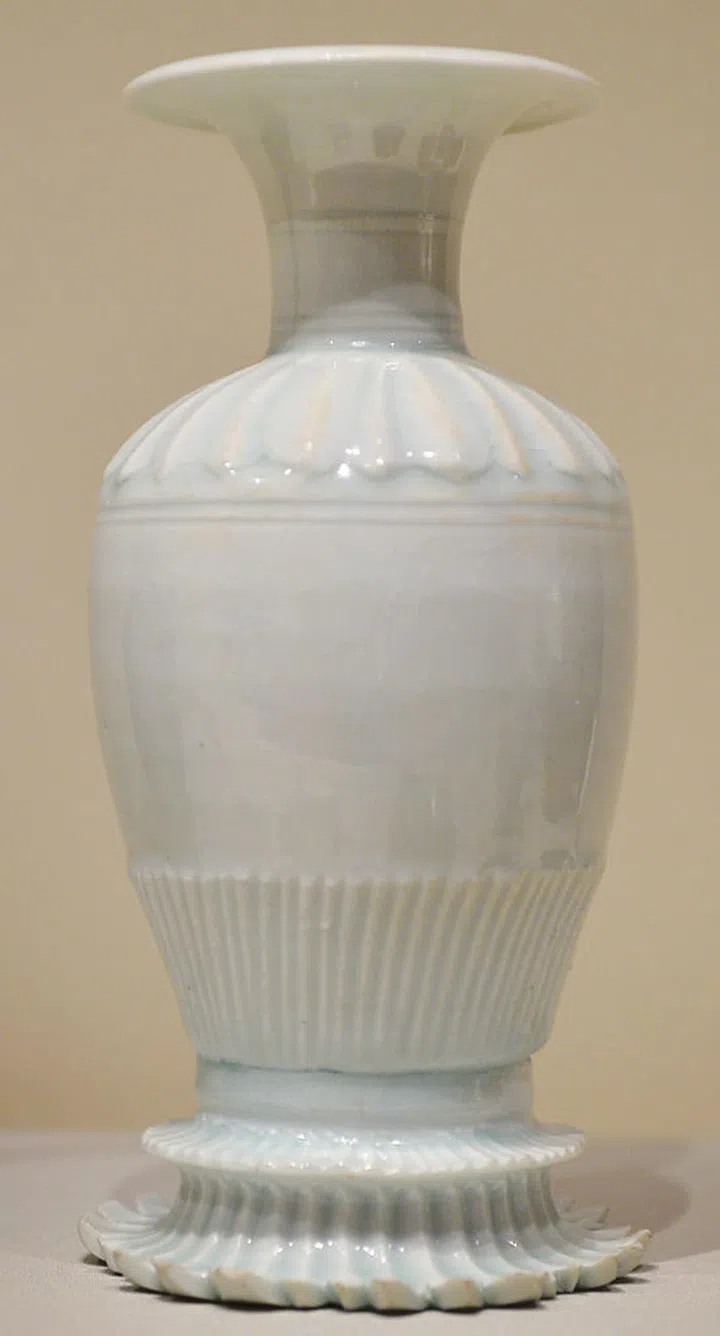
1. VASE WITH A CHRYSANTHEMUM BASE
Porcelain, China, about 1100BC The base of this vase, shaped like a ring of delicate upturned chrysanthemum petals, offers an elegant counterpoint to its broad, rounded upper body. The petal-like edge of the base was created by cutting the wet clay at sharp angles.
Vases of this type are not common. Another known example of it, which dates back to 1115BC, was excavated from a pagoda in Hebei, then ruled by the nomadic Khitan people under the Liao dynasty.
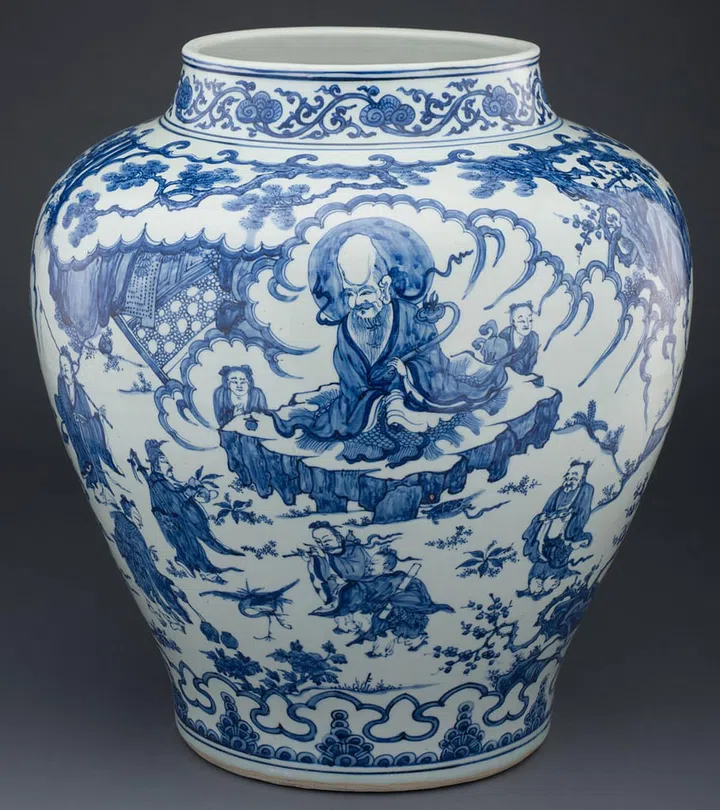
2. JAR WITH TAOIST IMMORTALS
Porcelain, China, 1522 to 1566 This exquisite jar with a vivid depiction of Taoist immortals gathering to pay their respects to the god of longevity was probably made by a private kiln in Jingdezhen for the imperial court of Emperor Jiajing, who reigned from 1522 to 1566.
While most Ming dynasty emperors were Buddhist, Jiajing was devoted to Taoism. The symbols of longevity that decorate the vase, including the crane, peach and lingzhi fungus, point to the emperor's obsession with immortality. It is widely believed that his death was caused by mercury poisoning from consuming an elixir promising immortality.
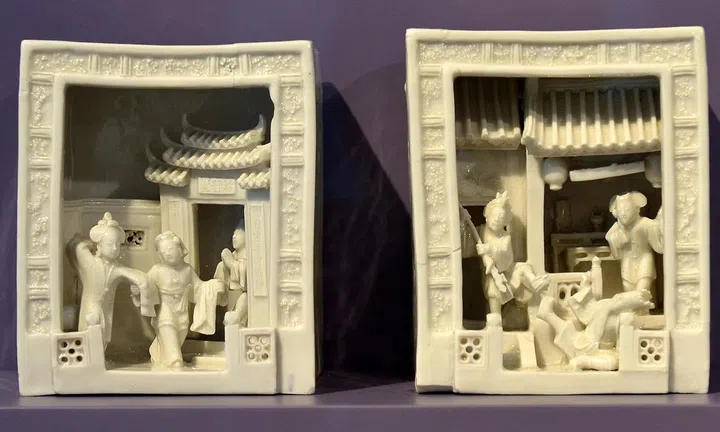
3. THEATRE SCENES
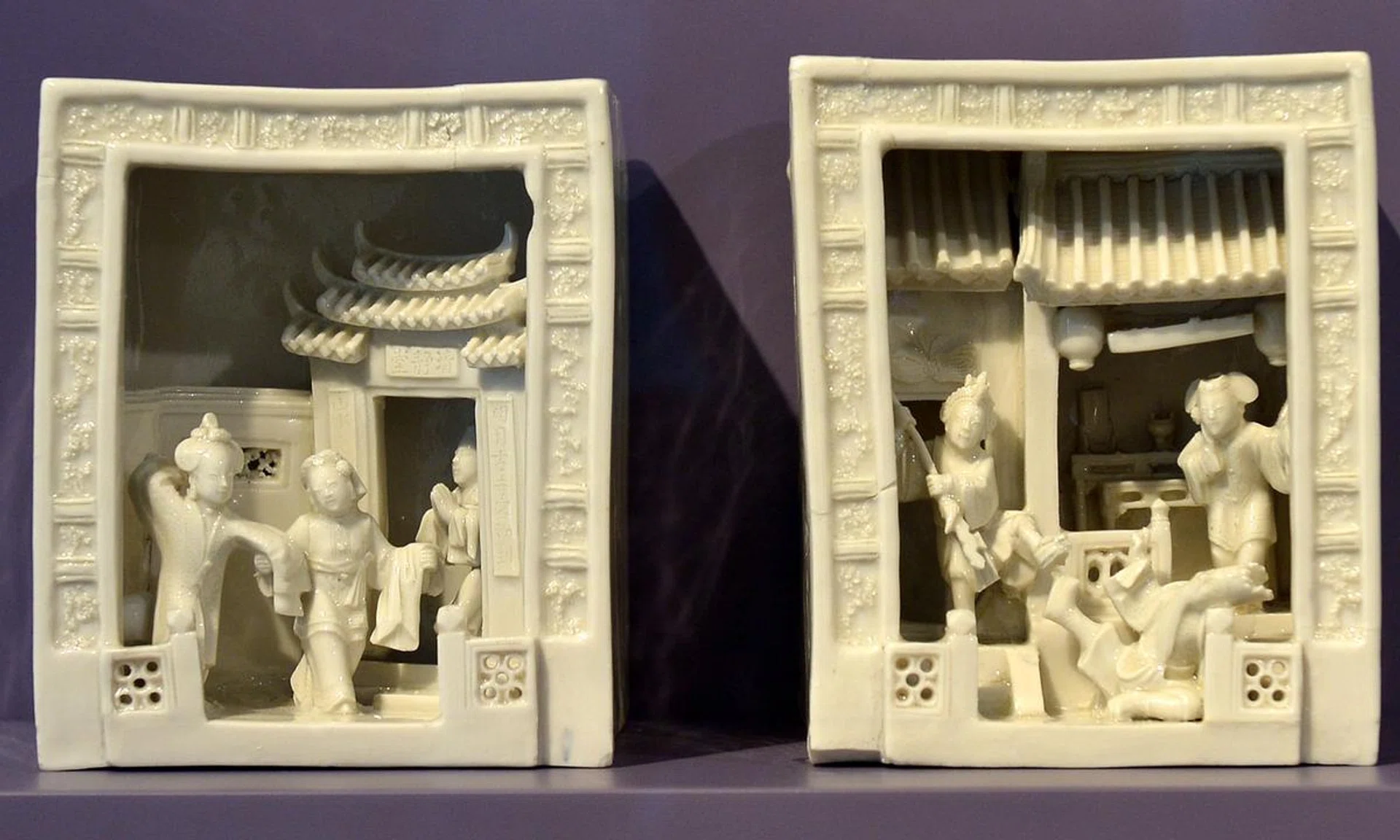
Porcelain, China, Dehua, 18th century The pottery kilns in Dehua county of Fujian province are famed for their lustrous, white porcelain made from fine clay, which allowed it to be shaped into expressive figurines.
This pair of miniature stages depicts two theatrical scenes. The stage on the left portrays a scene from the Ming novel, Jade Hairpin, which tells the story of an official's daughter who falls in love with a scholar who failed the imperial examinations. The stage on the right comes from the literary classic, Romance Of The Three Kingdoms, and it shows the warlord Dong Zhuo attacking his adopted son Lu Bu for consorting with a chambermaid.
Details:
WHERE: Asian Civilisations Museum, 1 Empress Place, Level 3
WHEN: 10am to 7pm (Saturday to Thursday), 10am to 9pm (Friday)
ADMISSION: Free for Singaporeans, permanent residents and children aged six and below, $8 (adults), $4 (students and seniors aged 60 and above)
This article was first published in The Straits Times.