
Figment Co-Living Singapore: Shophouse living at $3,200 per month
Can fulfill your Singaporean dream to live in a landed property
By Melody Bay -
Share this article
Co-living certainly isn’t a new trend in Singapore – while there are plenty of well-established players in the market, there are boutique ones that offer a much more upscale option, like Figment.
Designed for executives and creatives who value heritage and local flavour, the Figment coliving brand specialises in shophouses that each have a distinct personality.
Figment Co-Living Prices
Although they don’t come cheap – a shophouse suite on average starts from $3,200 to $5,500 a month – Figment homes are well-appointed, intimate spaces that stand out from the run-of-the-mill crowd.
| Figment Co-Living | Address | Price |
|---|---|---|
| Canvas House | Blair Road | From $2,500 per month |
| Shanshui House | Emerald Hill Road | From $2,500 per month |
| Ambon House | Emerald Hill Road | From $3,000 per month |
| Cuppage House | Emerald Hill Road | From $3,000 per month |
| Banda House | Emerald Hill Road | From $3,200 per month |
| Library House | Emerald Hill Road | From $3,302 per month |
| Fig House | Joo Chiat Terrace | From $2,500 per month |
| Straits House | Kim Yam Road | From $3,300 per month |
| Still House | Koon Seng Road | From $3,500 per month |
| Red Dragon House | Lorong 24A Geylang | From $2,200 per month |
| Alexandra House | Lorong 24A Geylang | From $2,600 per month |
| Gallery House | Lorong 24A Geylang | From $2,600 per month |
| Alawi House | Mohamed Sultan Road | From $2,700 per month |
| Vignette House | Nell Road | From $3,300 per month |
| Shang House | Pegu Road | From $2,900 per month |
| Cavenagh House | Petain Road | From $2,400 per month |
| Monochrome House | Petain Road | From $2,400 per month |
| Voyage House | Petain Road | From $2,900 per month |
| Allenby House | Petain Road | From $3,000 per month |
| Peninsula House | Petain Road | From $3,000 per month |
| Venus House | Petain Road | From $3,100 per month |
| Aviary House | River Valley Road | From $2,700 per month |
| Botany House | River Valley Road | From $4,700 per month |
| Kongsi House | Sam Leong Road | From $2,900 per month |
| Bukit Rose House | Sam Leong Road | From $3,300 per month |
| Palladium House | Saunders Road | From $2,900 per month |
| Kilang House | Sims Avenue | From $2,300 per month |
| Daxi House | Tras Street | From $3,900 per month |
Creations by local designers like Ministry of Design and Scene Shang feature heavily in all 28 homes in their portfolio, including landed houses along Emerald Hill in Orchard.
Read More: Affinity at Serangoon Review: From $2,250 per month by Habyt (previously Hmlet)

Figment Singapore Co-Living founder, Fang Low
We sit down with the founder, Fang Low, to find out more about Figment and the co-living scene in Singapore.
Figment Co-Living Founder, Fang Low
What inspired you to start Figment in the first place?
The Singapore skyline we know changes all the time. After working abroad, I came back to find that so much has changed, that Singapore essentially has construction going on all the time. So in a way, Figment arose as a response to the mounting anxiety that I felt coming back to all this change, to this Singapore that was always changing.
But of course, it’s so much more complex than that. Figment is also a mixture of all the different passions that I have, like my love for travel, for instance. I used to couch surf a lot in different countries, which let me have a sense of what it was like to live local and be a part of the place. Being able to immerse myself in the local architectural vernacular helped me build memories in that place, and we hope to create the same memories in a Figment home that people otherwise wouldn’t have if they go to a condominium or hotel to stay.
Figment Co-Living: Unique Singapore Shophouse Living
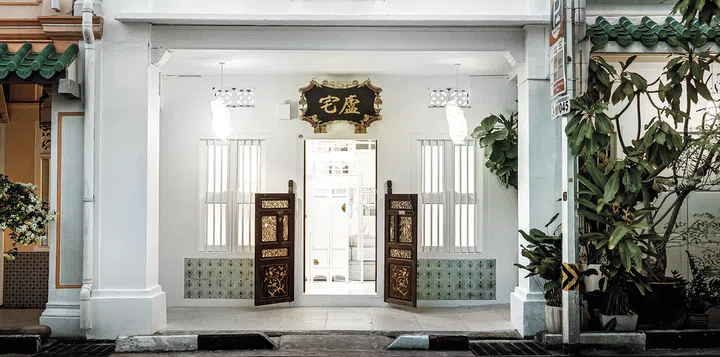
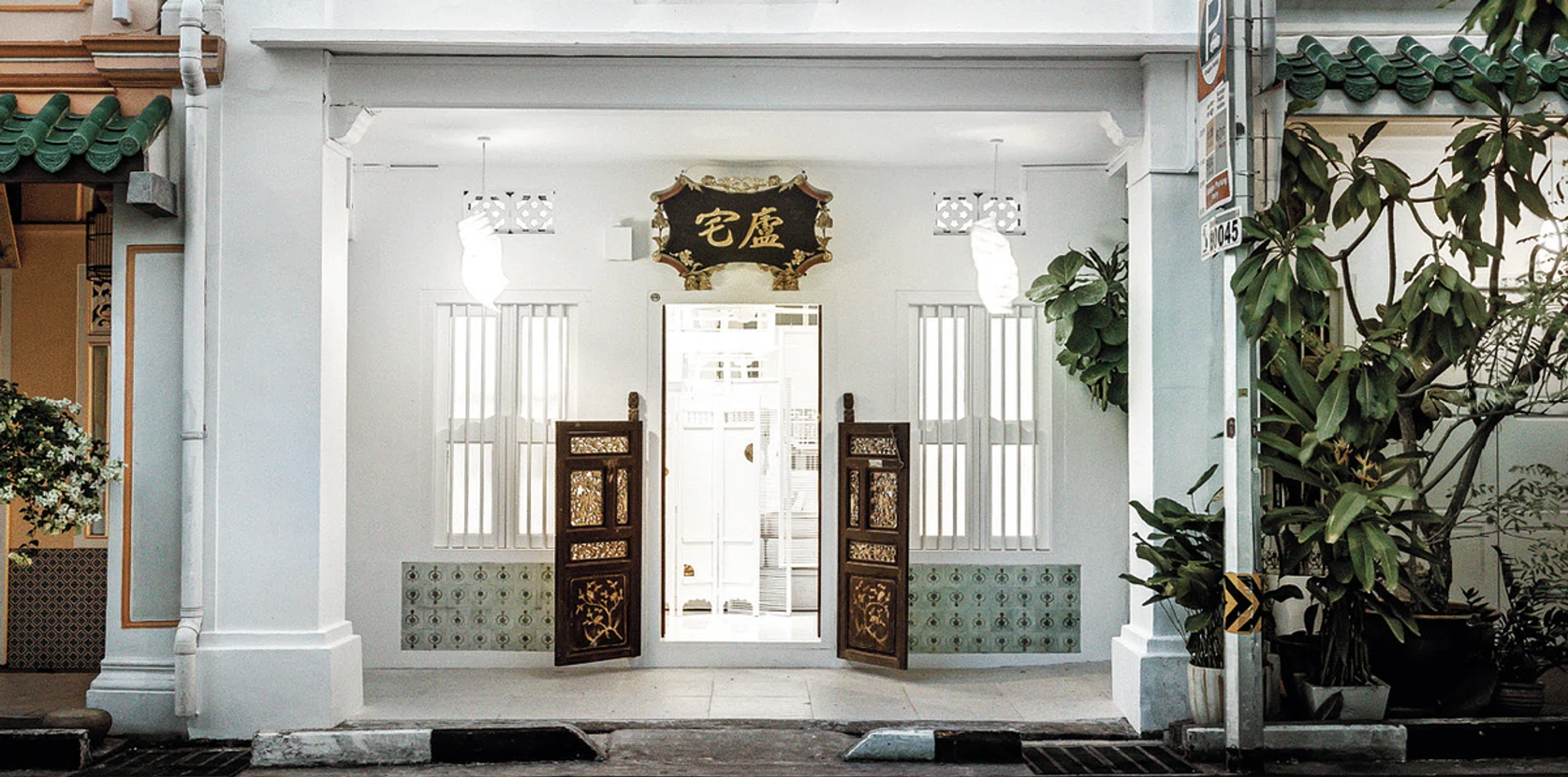
The Canvas House on Blair Road features an all-white facade, allowing the focus to be on the doors at the entrance.
Is that because there’s a lot more character and local flavour in these shophouses?
Yes, the shophouses have a lot of character, but we also layer on different creative personalities. The artist Arthur P.Y. Ting, the designers, the artisans Roger & Sons who created the furniture, Fossa Chocolate -there are so many stories coming something together as one. I believe that these different layers of personality add vibrancy that turns a house into a home, because it’s all about building memories of that specific place.
Figment Co-Living Founder Fang Low: Family's history in property
Your family has always been in property. How has that shaped your vision for Figment?
When I was growing up, my dad would drive me to random streets in different neighbourhoods to look at shophouses, and to try different dishes. I looked forward to it a lot, and the experience of growing up around these shophouses is something quintessentially Singaporean. It’s something that I reflect on a lot and want to share with other people. So a lot of that has rubbed off on how I look at things today.
Separately, when I was in NYU studying for my business degree, I interned at Christie’s Fine Art auction house. Although it didn’t end well – I ended up breaking a Ming teacup that was worth 45 grand – I realised I didn’t just have a passion for art, I had a passion for shophouses as works of art. Art is a distinctly Western concept, at least in my opinion, but there are so many things in different cultures that were not originally intended as art, like teacups and bowls, and they are beautiful anyway.
To be able to work with buildings as art, that’s along the same lines.
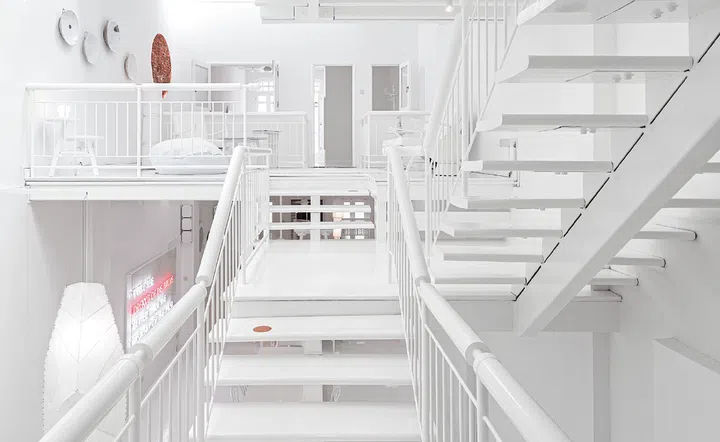
Created by the Ministry of Design, the Canvas House was blanketed with a layer of white, a symbolic canvas for creating a new future.
Figment Co-Living: Four to six people per house
How does Figment differentiate itself from other co-living options?
Figment is moving away from the concept of co-living in a building; we’re much more human-scale, with 4-6 people in the same house. I think that’s essentially the sweet spot.
There was a co-living survey done by Ikea, which showed that while people are open to co-living, they don’t want to share their private spaces – which is why every one of our rooms has an en-suite bathroom. Neither do they want to share the house with many other people.
So for us, capping it at 4-6 people was just right. It’s how I personally want to co-live. I’m sure there are people who value a more condominium-like setup with facilities, but someone who values the local character, privacy and spaciousness that we offer will come to Figment.
While a lot of other co-living companies do pool parties and barbecues, we’re not only about having fun. We do private dining events where we get local chefs in to prepare intimate dinners for 10-15 people, each time in a different shophouse.
Not just that: we also bring our members out to different exclusive members’ clubs, and they appreciate the access that we provide. There is networking, but on a much more intimate scale for the executives and creatives who live with us.
Figment Co-Living: Each shophouse with unique design
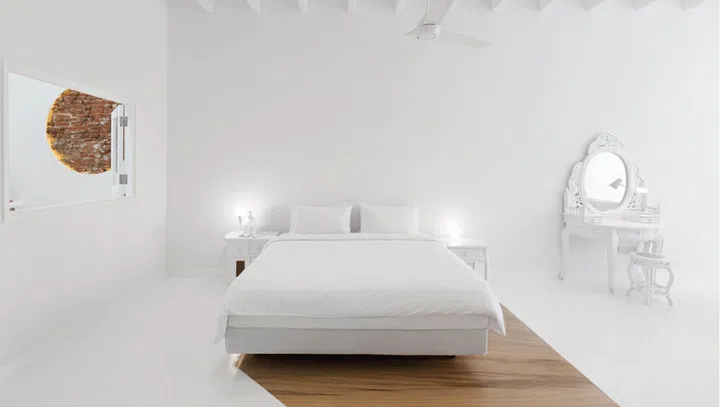
In the suites, visitors will see a “time shadow” cast by the bed, which reveals the underlying floor and pays tribute to the movement of time.
How is the design for each shophouse conceptualised? Do you give carte blanche to the designers, or are you very involved in the process?
We do give different designers creative freedom to go out and do what they want. It’s funny you mentioned carte blanche, because the Ministry of Design house is literally all white.
For these homes, we pick designers that we trust. They come under referral from other designers, or we go to brands like Scene Shang who are the best fit for the place – like Shang House, which has all the different heritage elements. It’s more about the people than anything else. These are people we have chosen and curated, and so we give them freedom for the actual designs.
I like to say that each of our homes has a distinct personality, which is what attracts a potential member. Maybe they’ll find that the Shang House’s design is more for them, or maybe the one by Studio Juju.
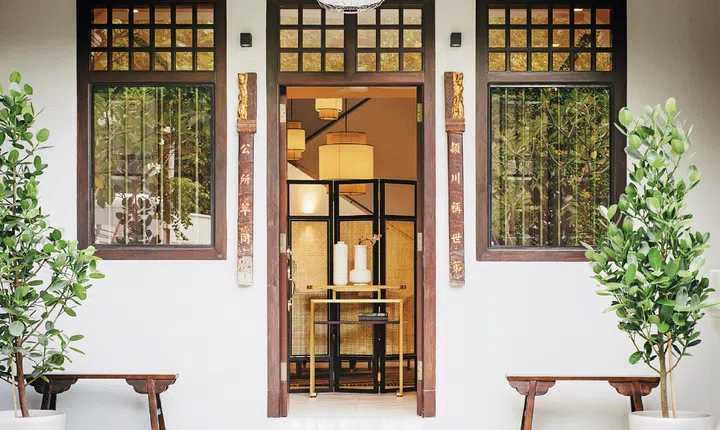
A rattan screen at the entrance of Shang House harks back to the rattan-manufacturing history of Balestier.
Co-Living on the rise in Singapore
What are your thoughts on the rise of the co-living trend in Singapore?
I think it’s not just in Singapore, this is how people around the world want to live. I think that the convenience and flexibility that it offers reflect the preferences of an increasingly mobile expat population.
It’s likely that over the next five to ten years, we’ll see co-living becoming more entrenched, much like how co-working spaces are common now.
Did you face any challenges along the way when establishing Figment?
I envisioned Figment as something more of a movement. A few years ago, I tried to start a young patron’s circle in Singapore, like an art collective. It failed terribly: we didn’t have many people, the organising committee wasn’t very hands-on, but we really wanted to push for a sort of cultural change.
After that, taking a break to do my graduate studies led to the idea for Figment, and now we’re doing shophouses as works of art. So while the young patron’s circle did not work out, right now I think what we’re doing has more staying power, and it’s validated by the different expats that choose to live with us.
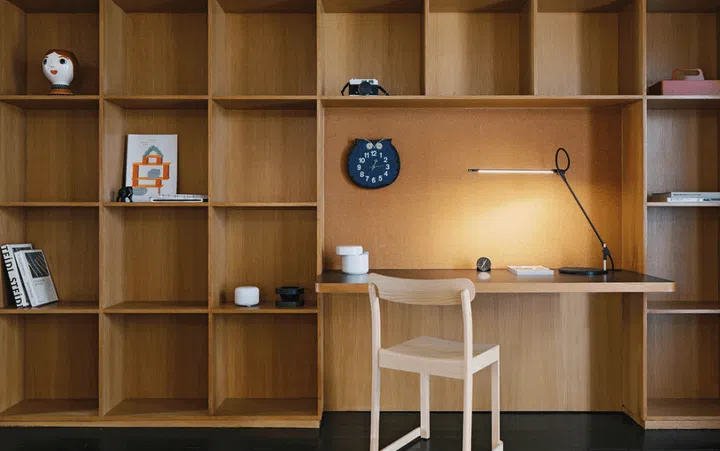
Designed by Studio Juju, the Still House uses natural materials to instill a sense of calm.
Would you say your experience in the corporate world has allowed you to understand your target audience better?
I think our audience is very cosmopolitan. My experience of having had classmates all over the world, taking a year and a half off school to travel the world, and the languages I learned on my travels really informed how I could look into bringing together this cosmopolitan tribe today. I’d say it’s a “bourgeois bohemian” audience, like ex-bankers, ex-consultants who are now doing more creative pursuits. Plenty of people do change what they do and the lines are blurring, and we just have to find them and bring them together in the Figment family.
What do the neighbours think about the homes?
Initially they had some apprehension that it was going to be partying, a lot of noise — the usual co-living setup. But we invited them over to look and they really liked the design of the shophouses. We’re planning to host more events, more dinners and get-togethers that we can invite the neighbours to as well. Ultimately, we want to be an addition to be the neighbourhood.