
Studio SKLIM Architect Kevin Lim: Conscious construction in Singapore
Kevin Lim, founder of Studio SKLIM, talks about the award-winning design practice’s collaborative installation at the Marina Barrage, recent construction technologies that he’s excited about and how we can reduce our carbon footprint in our daily lives.
By Asih Jenie -
Share this article
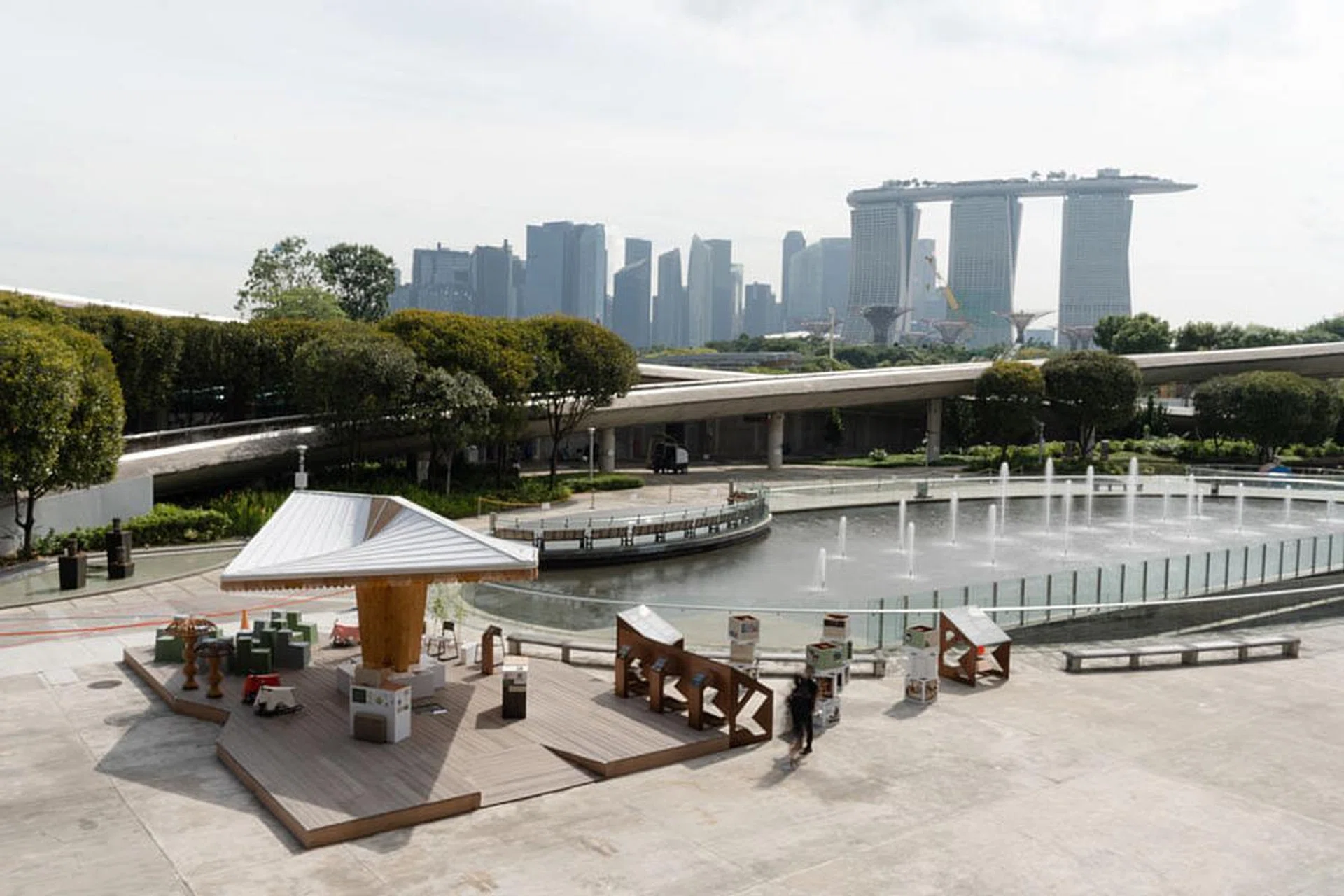
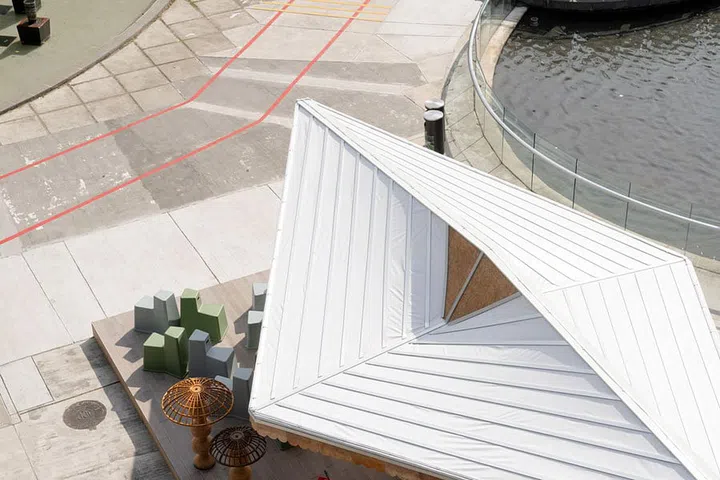
If you have visited Marina Barrage lately, you would have seen an elegant timber pavilion at the base of the green ramp. This is +Pavilion.
Designed for Swiss Weeks 2022, it is a collaborative project of the Embassy of Switzerland in Singapore, Affordable Abodes, Deloitte Singapore, EHL Campus (Singapore), Haring Timber Technology, Hilti, Nespresso, Studio SKLIM and UBS. Constructed from engineered timber, the pavilion showcases innovative and sustainable designs, building materials and solutions, including tricked-out iconic furniture pieces from Vitra.
The built environment is responsible for 39 per cent of global carbon emissions. +Pavilion aims to educate its visitors on how we can reduce that via innovative materials and technologies showcased under its five-metre cantilever.
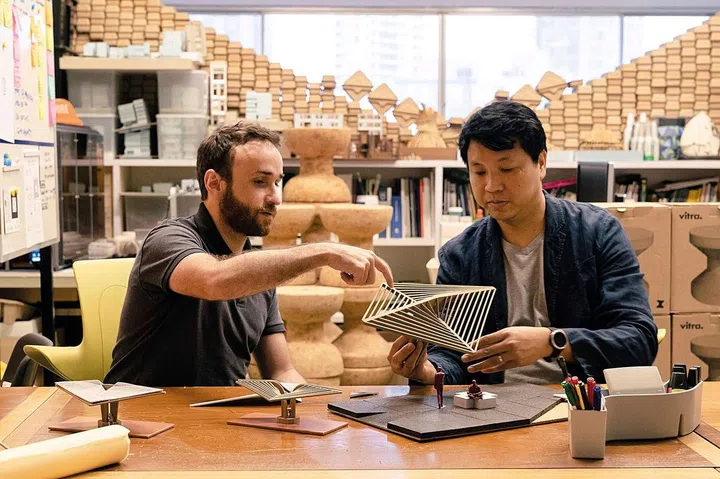
Kelvin Lim (right)
We asked Kevin Lim, founder of award-winning practice Studio SKLIM and +Pavilion's architect, to share more.
What has designing this pavilion and seeing it constructed taught you?
In recent times, design in architecture and construction has been more about creative collaboration rather than egotistical pursuits. The process has been a series of collaborative overlaps from architectural design, structural engineering, content curation, technical knowledge, product fabrication, project coordination, venue selection and financing to see this +Pavilion come to fruition.
The pavilion’s materialisation has been a team effort, including content curatorial to educate the audience through print, social media and video. The construction process was also a learning curve for the contractors and fabricators, but their resolve to successfully erect this glulam timber structure has been stellar.
What do you hope people will take away from experiencing +Pavilion?
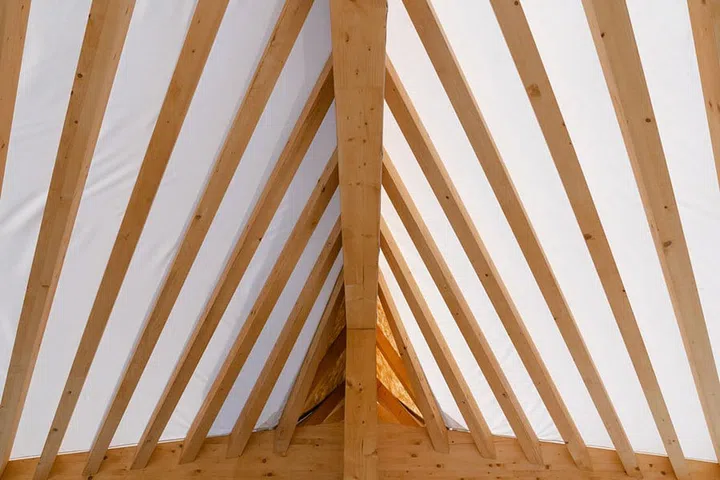
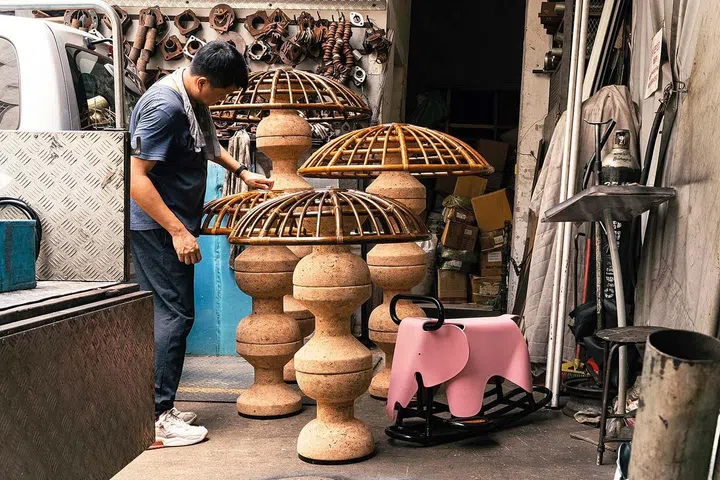
The +Pavilion showcases a vignette of a sustainable built environment with both new and traditional materials. We hope to educate visitors about sustainable construction methods like using prefabricated glue-laminated timber structural members (Haring Timber Technology) and modular off-site bolt and nut systems (Hilti) for platform construction. We also hope to arouse the curiosity of young ones by creating a whimsical play with sustainable materials. By grafting modern iconic furniture pieces (Vitra) with rattan additions, we wish to showcase the furniture in a new light.
We want to inspire visitors about the story of +Pavilion of how a bottom-up initiative came together to turn ideas into reality. This initiative soon garnered more support from various partners along the journey to realise this vision. Sustainability is a shared responsibility where everyone can play their part by being proactive and pushing this green agenda. The +Pavilion is probably just the start of this conversation, and we hope to engage individuals and groups as part of the Plus network/outreach.
What are some of the recent technology/inventions in the design/architecture industry that you are excited about?
There has been a recent shift toward sustainable building materials due to climate change and the urgency to reduce greenhouse gases. One of these is the increasing popularity of timber as full structural members in high-rise buildings and bamboo as low-rise structures.
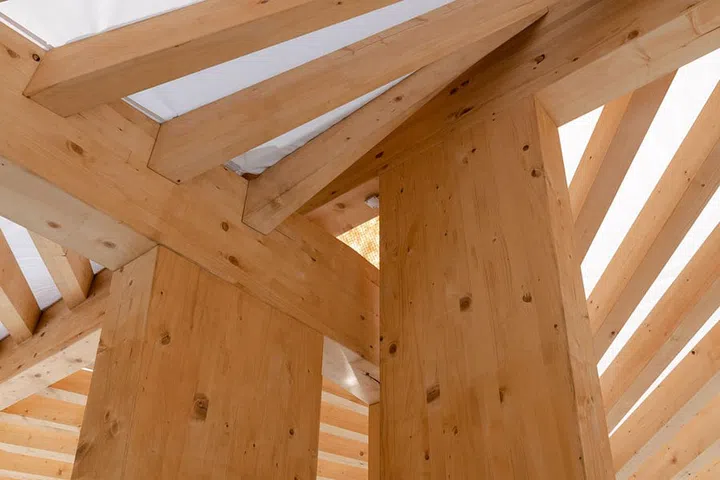
Timber construction comprising glue-laminated timber (Glulam) and cross-laminated timber (CLT) reduces our carbon footprint and is renewable compared to concrete and steel. The high strength and stiffness of varying grades of timber laminations enable glulam to freely span across large distances and be able to take lateral forces when stacked. We could achieve more than a five-metre-long cantilever to support the roof in +Pavilion.
On a smaller scale and in lower-rise structures, using bamboo and rattan, coupled with hybrid technology, is a nod in the right direction. The materials are renewable and help revitalise the artisans’ trade, introduce new technologies and keep the craft relevant to modern lifestyles.
Another one is the increasing use of biocomposites in everyday life. Organic fibres like sugarcane bagasse and hemp, and waste materials such as coffee grounds have gathered traction. Our studio has recently concluded material research ( supported by DesignSingapore Council’s Good Design Research grant ) into the production of biocomposites using kenaf plant fibres and binders to produce interior/exterior architectural tiles.
We have been working with Affordable Abodes to realise some of the kenaf biocomposite roofing pieces you can see on the pavilion, such as the translucent mesh reinforced skylights and the turmeric ombre dyed roof eave shingles. Besides preventing rain backflow onto the structure, the kenaf biocomposites exhibit wabi-sabi aesthetic with its unique texture.
What are your top three sustainable materials that are good for our homes?
Cork – biodegradable, recyclable, hydrophobic (repels water). Harvesting cork does not kill the Cork Oak Tree. It is also resistant to mould and mildew, thanks to its impermeable yet porous nature.
Rattan - the fastest growing tropical wood that renews in only five to seven years. It is also long-lasting in humid tropical weather. It requires low-tech manufacturing that does not pollute the environment.
Renewable, sustainably sourced timber. The trees sequester carbon from carbon dioxide (CO2) in the atmosphere as they grow, store it for a finite period and re-release it back into the cycle.
What are your three tips for homeowners to reduce their carbon footprint in their daily lives?
Cut down on single-use plastics and containers by bringing your utensils/crockery. Bring an eco-bag to reduce single-use plastic bags. It might be convenient to place one in each area you often use, such as in backpacks, handbags or bicycles. Use public transport or bike to work if your workplace.