
Stefano Boeri's Vertical Forest City: The Italian Architect building forests in the sky
Milanese architect and urban planner Stefano Boeri on tackling climate change by building forests in the sky.
By Y-Jean Mun-Delsalle -

Share this article
Stefano Boeri has been obsessed with trees ever since reading Italo Calvino’s novel The Baron in the Trees as a boy, in which the protagonist lives in oak, olive, beech and chestnut trees, contemplating the world from above through the leaves and branches.
Therefore, it’s hardly surprising that he’s considered the father of the Vertical Forest, a new model of successfully living with trees in high-rise buildings. The idea came to him in early 2007 in Dubai, when as editor-in- chief of Domus, he witnessed the frenzied construction of a city in the desert comprising dozens of new skyscrapers in glass, ceramic and metal – all reflecting sunlight and generating heat.
At the time, he had just started work on two towers in central Milan, and it suddenly occurred to him to turn them into biological constructions: two high-rises covered from head to toe in trees, shrubs and other plants.

Aerial view of the Vertical Forest in Nanjing, China. Photo by Stefano Boeri Architetti China
Stefano Boeri Philosophy
According to Boeri, living with nature is not simply a choice, but a global emergency. Cities play a major role in shaping our planet’s future, being responsible for at least 75 to 80 per cent of CO2 emissions, while trees and forests absorb almost 40 per cent of annual fossil fuel emissions.
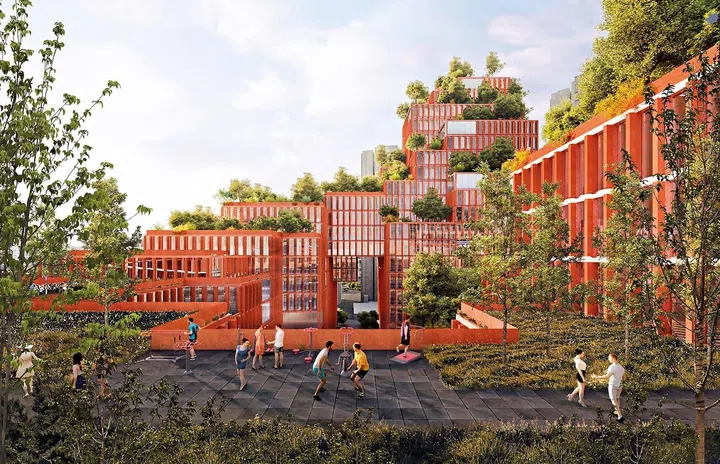
Photo by Stefano Boeri Architetti China
“As much as we can prevent or lessen our impact on the planet, the only technology that is able to absorb the CO2 already emitted, and thus, in a sense, make up for what we have already done, is the tree,” he explains.
“There is no artificial technology that can do what nature already does autonomously through photosynthesis. Therefore, cities have the opportunity to face the environmental crisis by preserving existing nature and increasing its presence in urban contexts.”
Milan Bosco Verticale
In 2014, Boeri’s first Bosco Verticale (Vertical Forest) went up in Milan, hosting the equivalent of three hectares of forest within a small urban surface in the middle of a high- density city. Benefits include an increase in biodiversity, lower temperatures, the removal of CO2 and other pollutants, the production of oxygen, noise reduction and the lifting of people’s spirits.
However, critics have argued that these advantages are far outweighed by the carbon output of building in concrete and steel, and that maintaining green walls and roofs is resource intensive.
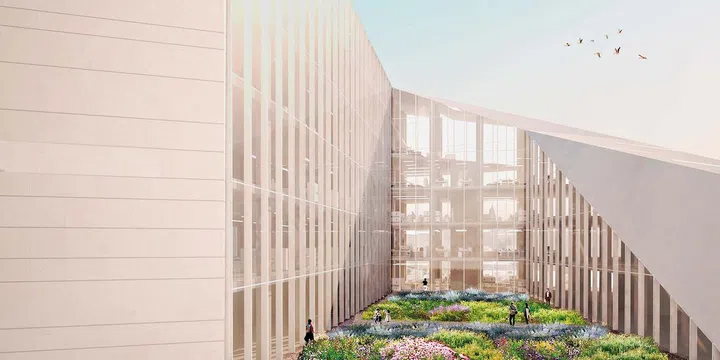
Therefore, Stefano Boeri Architetti has been developing various solutions, from state-of-the-art prefabrication systems and the selection of low-maintenance and low-water consuming plants to timber-based architectural structures in Milan and Paris.
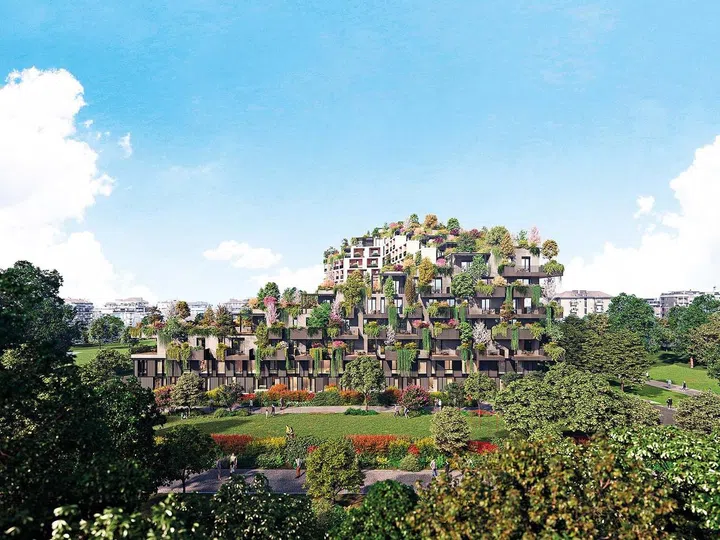
Photo by Level Creative Studio
Moreover, as sustainable schemes can be applied to existing constructions, Boeri is working on retrofitting edifices in Prato, Monza and Brussels with self-standing structural systems designed to host trees and plants.
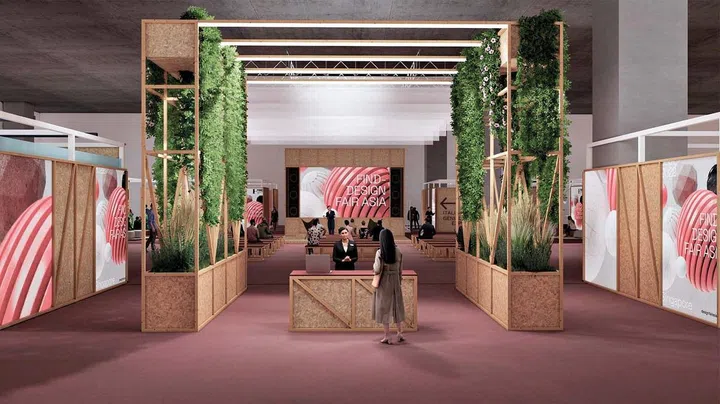
Italian Design Futures Capsule
After having designed the Italian pavilion at FIND Design Fair Asia in Singapore last year, Stefano Boeri Interiors returned in 2023 to conceive the 700-sqm Italian Design Futures Capsule housing close to 50 Italian brands.
With a monumental, landscaped green portal marking the main entrance inspired by the historic gateways of Italian cities, the exhibition layout was centred around a “public square” that acted as a meeting place for exchanges and lectures, which lay at the intersection of two large orthogonal “boulevards”.
The exhibitors’ booths were imagined as large districts crossed by public avenues, or corridors, through which visitors strolled.
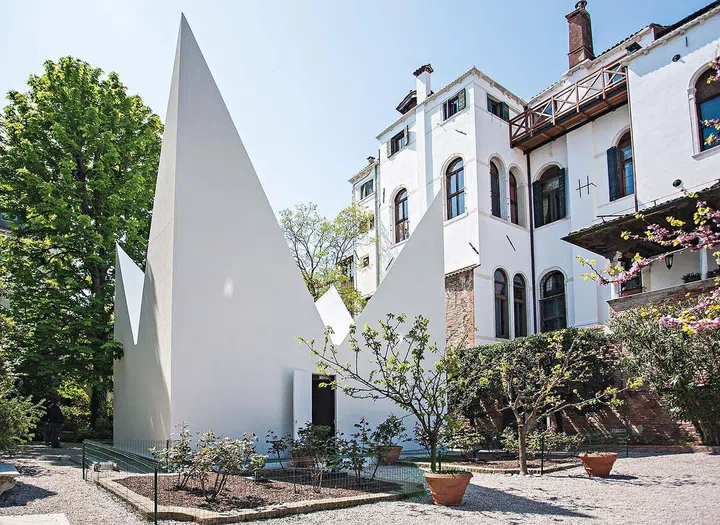
Photo by Alice Clancy Courtesy of CKY
Vertical Forest
Bosco Verticale has also served as a prototype to research new solutions that Boeri subsequently adopted in other developments varying in scale, function and context.
Currently involved in 77 projects (architecture, Vertical Forests, urban planning) in over 20 countries, Stefano Boeri Architetti has already completed four green buildings in Huanggang, Antwerp, Eindhoven and Treviso, with others under construction in places like Utrecht and Cairo.
Trudo Vertical Forest, Eindhoven
Erected in 2021, Trudo Vertical Forest in Eindhoven marked a milestone as the first Vertical Forest concept applied to social housing, effectively mixing the environmental issue with the housing shortage crisis in contemporary cities.
Boeri states, “The new Vertical Forests that have been built or are under construction represent for us steps forward, in different directions, towards perfecting and adapting the typology: cutting costs with sustainable and innovative technological solutions, creating an accessible and inclusive building, radically changing the urban landscape and the expectations of the population for a future sustainable city in a place where pollution is a very serious problem, or adapting to a different climate context, even more arid ones, as in Egypt or Dubai.”
While Bosco Verticale was the first example of integration between living nature and architecture, Boeri’s goal from the start was to set a precedent that could influence architects and urban planners worldwide working towards a common goal of multiplying green solutions in cities.
Bosco Verticale, Milan
“We are proud to see that more and more architects are inspired by our project,” he notes. “We did not impose a copyright on the design of Bosco Verticale in Milan precisely so that more and more green buildings will become part of the urban landscape and so that cities will transform surfaces from mineral to green ones, both horizontally and vertically.
In our Green Obsession approach to architecture and urban planning [that took home the United Nations Sustainable Development Goals first prize], new parks and gardens could be created, city roofs could be transformed into lawns or boundary walls into plant façades, and courtyards and empty spaces into green oases.”
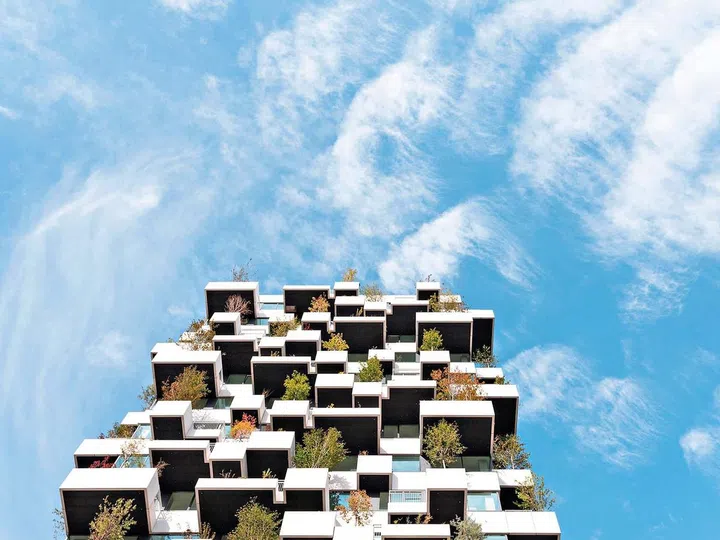
Photo by Paolo Rosselli
Working from building scale to urban scale, Boeri has never believed that architecture should operate in a vacuum, but must include sustainable urban development models incorporating renewable energy, the redesign of urban mobility and forestry strategies.
He concludes, “Integrating living nature into the architectural design is not the only solution against climate change, but it can be a starting point that, combined with sensible policies and sustainable technological systems, could play a key role in reversing the climate crisis and improving quality of life – for humans, plants and animals.”
Now he aims to turn cities in drylands that are among the most vulnerable to climate crises into Green Urban Oases. A programme launched with the UN Food and Agriculture Organization, it hopes to achieve food, health, environmental and economic resilience through the implementation of urban forestry and urban greening strategies – all part of Boeri’s grand plan to build the sustainable city of the future.
Stefano Boeri Projects
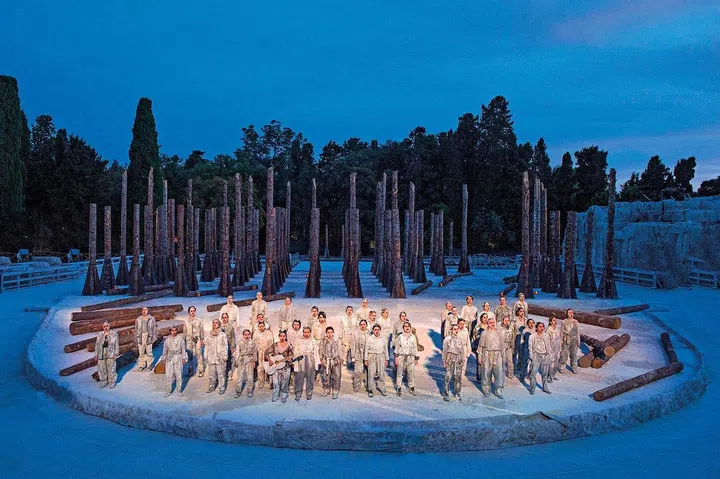
Greek Theatre Syracuse (2019)
In 2019, Boeri completed The Dead Forest, the stage design for Euripides’ tragedy The Trojan Women, which takes the idea of universal anti- militarism to a higher level, rising above the conflicts between people to target the complex relationship between humans and their natural environment today.
Greater Geneva Concept
Stefano Boeri proposes a large-scale vision imagining an “archipelago metropolis” centred around the Salève Mountain, which serves as the principal element of the urban system.
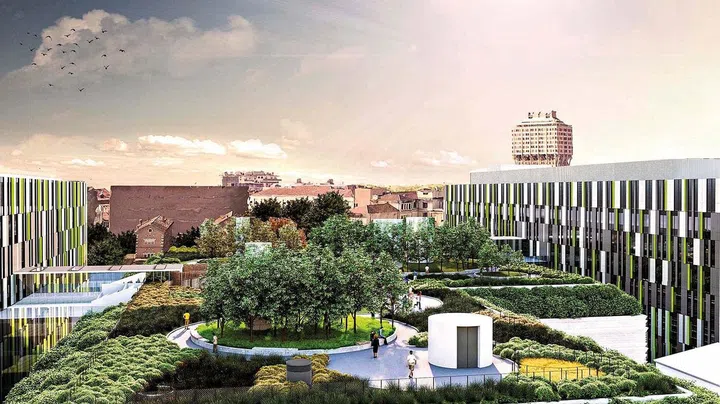
Milan Polyclinic Hospital
Currently under construction, it will be the world’s first hospital to house a 6,000 sqm therapeutic garden on its roof, with important environmental and health benefits for patients and the city.
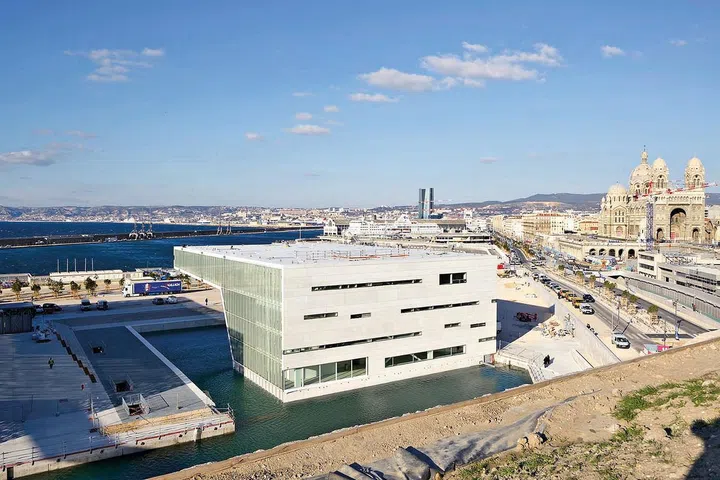
Photo by Paolo Rosselli
Villa Mediterranee
Villa Mediterranee in Marseille – Built in 2013 along the waterfront, the museum embraces the sea rather than towering over it, opening up to the Mediterranean and becoming a hub of exchange and interaction among peoples.
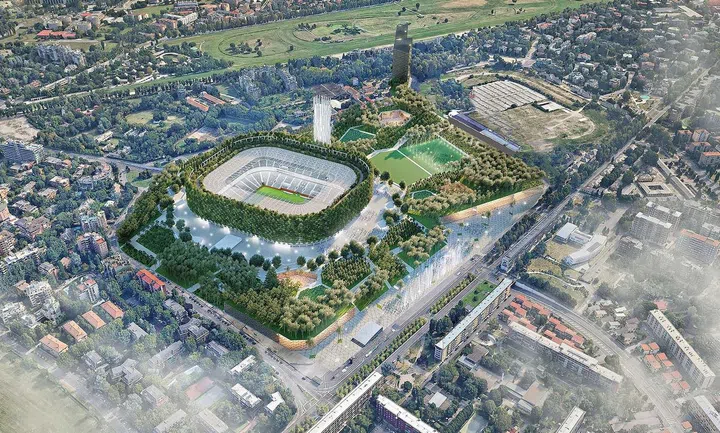
International Forest Stadium San Siro, Milan (Concept)
With trees surrounding the football pitch and stands, living nature becomes the main protagonist of the sporting experience and a new urban landscape for all citizens.