
La Donaira, Spain
Surrounded by oak-clad mountains and local farmhouses, La Donaira is the perfect place for a reset, whether spiritually or physically. An organic farm and equestrian centre located on Andalusian Serrania de Ronda in southern Spain, the eco-resort has only nine rooms, with each individually designed to showcase the original structure of the stone building. Expect mostly vegetarian cuisine from ingredients hand-picked by local farmers or from the property’s organic garden and honey from its bee farm.
Les Echasses Eco-Lodge, France
With lodges and “modges” (smaller lodges raised on stilts over the water) perched along the perimeter of a lake, this four-star sustainable resort allows guests the ultimate privacy. In a unique location in the middle of the Landes Forest and a few minutes away from the beaches of southwest France, there’s plenty to do and see, including exploring Basque country, surfing, golfing and trekking.
Les Cols Pavellons, Spain
Tucked in a small city in Spain, Girona, Les Cols Pavellons, near Garrotxa Volcanic Zone Natural Park is an architectural beauty combining rustic and modern design. Guests of Fina Puigdevall’s two Michelin-starred restaurant Les Cols can stay in a glass labyrinth on the first floor of her 13th-century country house. Its cuisine features ‘volcanic’ Catalan dishes, which take advantage of the resort’s own vegetable garden and henhouse, as well as the natural heat source nearby.
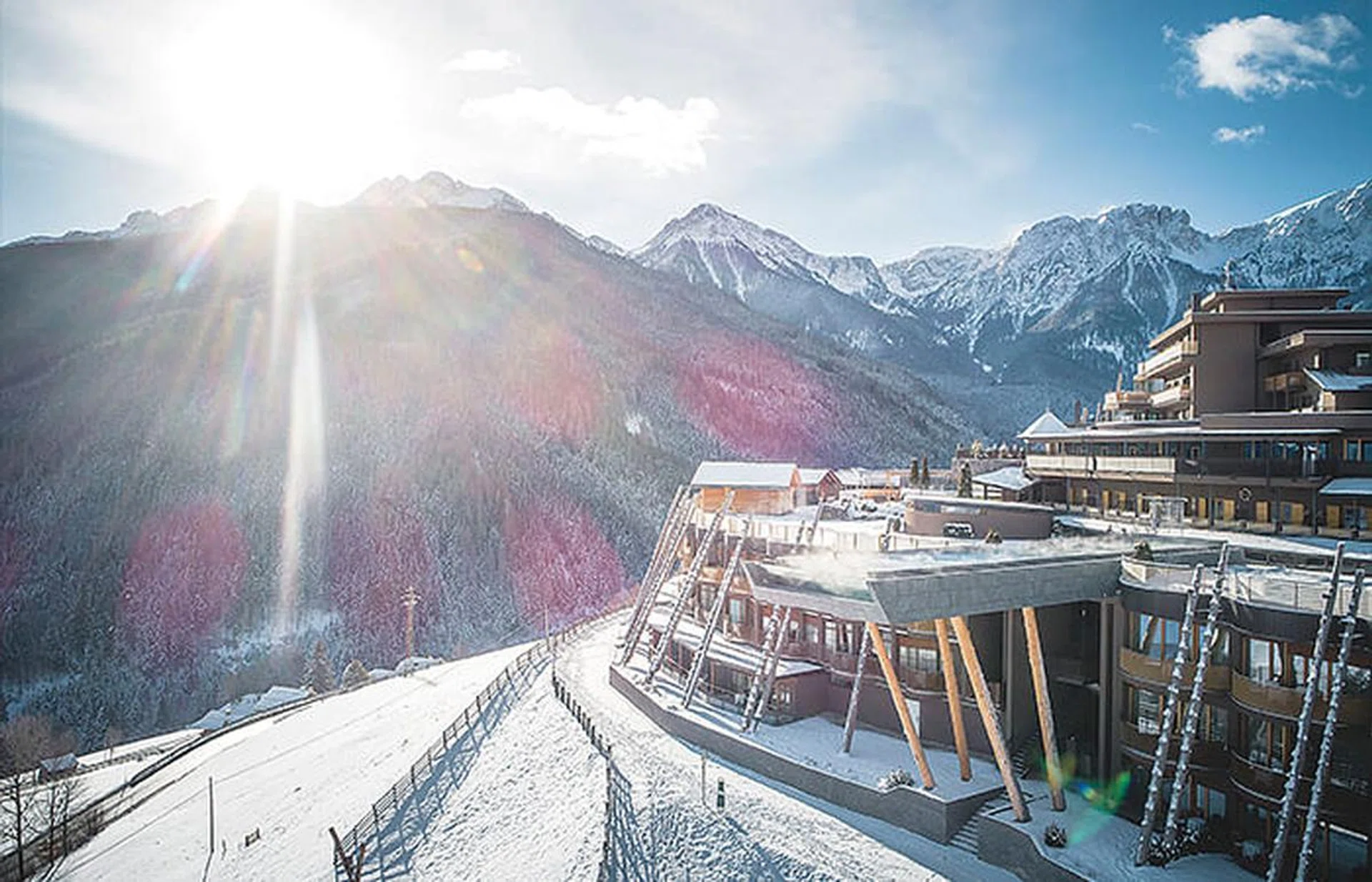
Hubertus Unplugged, Germany
You’ll find this lodge-style spa and resort in Balderschwang in a Bavarian village. Run by the Traubel family, Hubertus Unplugged intentionally utilises traditional materials such as wood, stones, linen and fur to recreate simplistic living. A heated outdoor infinity pool offers scenic views of the Allgau Alps and the award-winning in-house restaurant, led by chef de cuisine Ludwig Schlichtherle, emphasises the slow food movement.
Originally published in The Peak.