
Share this article
In Singapore, home loans and mortgage loans are the same thing and used interchangeably to refer to borrowing money from the bank to pay for your property. Buying a property in Singapore can cost up to millions, which most people cannot afford to pay fully in cash upfront. This is when you can turn to a mortgage or home loan.
In general, home loans offered by private banks are split into HDB and private properties - constructing and completed or resale. There is also a HDB loan which is exclusively offered by HDB to homeowners purchasing a HDB flat. The interest rate is very stable, pegged at 2.6% fixed rate with flexible repayments.
Since most HDB buyers would take up the HDB loan, I will focus largely on bank loans offered to completed/resale condominium buyers. As interest rates are usually not open to the public and customised to your income level and financial profile, the rates here should be taken as just a reference and may vary from the offer you receive from the bank.
DBS Fixed Interest Loan
DBS is one of the major banks in Singapore and offers different loan packages for financing homes. A plus point would be that it allows existing DBS customers who own their Multiplier deposit account to earn a higher return when they credit their salary and pay off the loan using the Multiplier account.
| DBS Fixed Interest Loan | Details |
|---|---|
| Fixed or Floating Interest Rate | Fixed |
| Interest Rate | 2.30% |
| Minimum Loan Amount | $500,000 |
| Lock-in period | 2 years |
| After lock-in period | 3M SORA + 1.0% (after third year) |
For fixed interest loans, DBS offers packages from 2 to 5 years and allows you to switch to another pricing package at the end of your fixed rate period for free. The application process can also be fully completed online through your DBS digibank.
You may find out more about DBS fixed interest loans here.

Bank of China Fixed Interest Loan
Bank of China offers home loans for mainly private properties including those completed and building-under-construction (BUC). While it offers both fixed and floating rates, their fixed interest loan is fairly competitive at 2.0% with a minimum loan amount of $500,000.
| Bank of China Fixed Interest Loan | Details |
|---|---|
| Fixed or Floating Interest Rate | Fixed |
| Interest Rate | 2.0% |
| Minimum Loan Amount | $500,000 |
| Lock-in period | 2 years |
| After lock-in period | 3M SORA + 0.60% (third year), 3M SORA + 1.0% (thereafter) |
There are some requirements to qualify for the loan including holding a Bank of China credit card, having a minimum annual income of $24,000 and submitting a list of documents - quite a number of them are proof of income such as 12 months of CPF history, notice of assessment for 1 year etc.
You may find out more about Bank of China home loans here.
CIMB Fixed Interest Loan
CIMB offers a range of property loans including private, HDB, commercial and even overseas properties in London, Australia, Japan and Malaysia. For private properties, the home loan is marketed to have low interest rates, zero partial prepayment fees which means that you can pay down portions of the loan early without incurring a penalty, high margin of financing which refers to a higher Loan-to-Value, and flexible tenure.
| CIMB Fixed Interest Loan | Details |
|---|---|
| Fixed or Floating Interest Rate | Fixed |
| Interest Rate | 1.98% |
| Minimum Loan Amount | $200,000 |
| Lock-in period | 2 years |
| After lock-in period | 3M SORA + 0.70% (third year), 3M SORA + 1.0% (thereafter) |
In terms of requirements, you will need to be 21 years old and above, and earn at least $24,000 per annum. CIMB is also running some incentive promotions for referrals and Green Mark homes till end of the year. If you refer a friend and apply for a property loan together, both of you can get up to $1,000 worth of Capitaland vouchers each. If your private property has a qualified BCA Green Mark Award, you will also get a $200 Capitaland voucher when you sign up for the GREEN loan.
You may find out more about CIMB home loans here.
UOB Floating Interest Loan
UOB is one of the only banks that publish their rates online, making it easier and more transparent for homeowners to research and plan their finances. It has a fairly low minimum loan amount with no specific indicated minimum salary requirement. The website is rather comprehensive with a loan calculator and instant valuation for you to receive an indication of how much you would need to finance your new home.
| UOB Floating Interest Loan | Details |
|---|---|
| Fixed or Floating Interest Rate | Floating |
| Interest Rate | 3M SORA + 0.70% |
| Minimum Loan Amount | $250,000 |
| Lock-in period | 2 years |
| After lock-in period | 3M SORA + 0.80% (third year), 3M SORA + 1.0% (thereafter) |
UOB also offers 1 free conversion after 2 years from the date of first disbursement and flexibility to prepay your loan. Similar to CIMB, the bank offers sign-up gifts such as up to $1,000 worth of Takashimaya vouchers and cash rebates for refinancing.
You may find out more about UOB home loans here.
Maybank Floating Interest Loan
Maybank is also one of the banks that publish their rates online, offering both fixed and floating rate packages for completed and Building Under Construction properties. It has the lowest minimum loan amount requirement of only $100,000 and a minimum tenure of 5 years.
| Maybank Floating Interest Loan | Details |
|---|---|
| Fixed or Floating Interest Rate | Floating |
| Interest Rate | 3M SORA + 0.70% |
| Minimum Loan Amount | $100,000 |
| Lock-in period | 2 years |
| After lock-in period | 3M SORA + 1.0% (after third year) |
On top of sign-up gifts, Maybank Home Loan customers get to enjoy special rates when they take up the Maybank Renovation Loan, at 2.50% for the first year and subsequently 4.08% interest rate per annum.
You may find out more about Maybank home loans here.
RHB Floating Interest Loan
RHB Bank traces its origins back to 1913 when it was established as Kwong Yik (Selangor) Banking Corporation in Malaysia. It was one of the first local banks founded in Malaysia and played a significant role in supporting the local Chinese business community.
| RHB Floating Interest Loan | Details |
|---|---|
| Fixed or Floating Interest Rate | Floating |
| Interest Rate | 1M SORA + 0.35% |
| Minimum Loan Amount | $200,000 |
| Lock-in period | 2 years |
| After lock-in period | 1M SORA + 1.0% |
If you want to take advantage of the lower interest rates and can afford to risk the monthly fluctuations, the RHB’s 1M SORA interest rates might be up for consideration. The bank offers 1 free conversion after 12 months and up to 50% partial payment is allowed during the lock-in period. Given that interest rates have been on a lower trend, it might be worthwhile to consider 1M SORA if you are actively refinancing your loan to get the most savings.
You may find out more about RHB home loans here.

Standard Chartered Floating Interest Loan
Another bank with a competitive 1M SORA package, Standard Chartered offers the lowest rates after the lock-in period at just 1M SORA + 0.6% after the third year. There is also 1 free conversion allowed after 12 months which is a shorter period compared to most banks that offer free conversion after 24 months.
| Standard Chartered Floating Interest Loan | Details |
|---|---|
| Fixed or Floating Interest Rate | Floating |
| Interest Rate | 1M SORA + 0.30% |
| Minimum Loan Amount | $500,000 |
| Lock-in period | 2 years |
| After lock-in period | 1M SORA + 0.35% (second year), 1M SORA + 0.40% (third year) ,1M SORA + 0.60% (thereafter) |
The loan information available on their website are mainly for the HomeSuite loan and MortgageOne. The HomeSuite loan is offered to both HDB and private property owners, with both fixed and floating interest packages along with a 36 months fixed deposit rate of 1.27% per annum. For the MortgageOne loan, you are able to reduce your monthly interest rate with the interest that you earn on your fixed deposit. But this would also mean that to take on the Standard Chartered loan, you will need to have a fixed deposit account with them.
You may find out more about Standard Chartered home loans here.

5 Things to look out for when taking a home mortgage loan
1. Loan Structure
There are three things to note here when considering which loan to take - Loan-to-value (LTV) ratio, loan tenure and downpayment.
LTV ratio is the maximum amount that the bank can lend to you based on the property price or valuation. Typically the LTV ratio goes up to 75% for private banks and up to 80% if you take a HDB loan directly from HDB.
The loan tenure refers to the period that you have to repay back the loan. The maximum tenure is usually between 30 to 35 years. Your age will play a part here as well.
For downpayment, usually a requirement of at least 5% cash is mandatory and the rest can be paid from your CPF.
2. Interest Types
Interest rate is probably the biggest factor in decision-making. There are 2 types of interest rates - fixed rate and floating rate.
As the name suggests, fixed rate loans give you a fixed interest rate which will not change even with economic fluctuations. But this rate is not fixed throughout the entire tenure, it is usually only for the first 2 to 5 years. Thereafter, you will be paying based on a floating interest rate. Fixed interest rates are also often higher than floating interest rates.
Floating rate loans, on the other hand, are subjected to fluctuations. You would usually see terms like “3M Compounded SORA” when looking at floating rate loans. What does this mean?
3M = 3 months
SORA = Singapore Overnight Rate Average (a benchmark)
Instead of using a single day’s rate, banks would usually take the SORA’s average interest rate over the past 3 months and compounded daily to determine the floating interest rate. It is usually reset every 3 months for 3M SORA and 1 month for 1M SORA.

3. Fees and penalty
On top of the interest rates, you will have to take note of the extra hidden charges and fees that are charged as it can affect the total cost. Common fees and penalties include early repayment, partial repayment and administrative fees.
It may sound like a good thing if you happen to save up enough funds to pay back your loan entirely earlier than the tenure, but most banks will actually charge you a fee for paying them back early. There is also a lock-in period, typically between 2 to 3 years, where penalties apply if you decide to repay early or refinance by switching to a different loan or different bank altogether.
Some banks would also require you to pay for an insurance premium to cover for cases of house fires, terminal illnesses or disability leading to the inability to repay the loan.
4. Eligibility and repayment structure
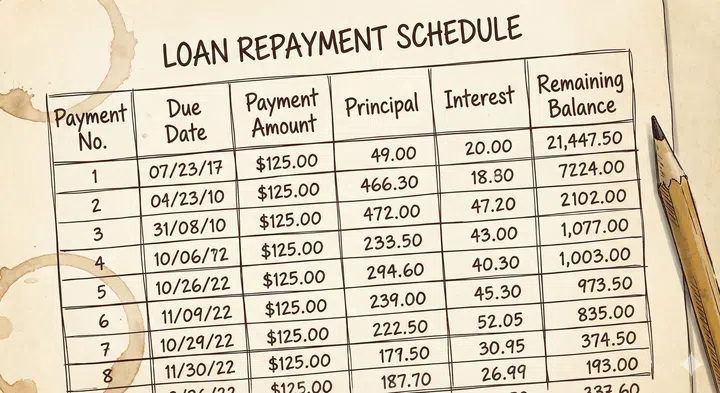
When you are applying for the loan, the bank will evaluate your income and profile before issuing a document that is similar to the HDB HFE letter. The document will detail your eligibility for the loan, the amount of loan and interest rates offered to you.
In general, the bank will look at your Total Debt Servicing Ratio (TDSR) where your monthly debt repayments cannot be more than 55% of your gross monthly income. The Monetary Authority of Singapore (MAS) also requires banks to conduct a stress test rate to assess affordability assuming a minimum interest rate of 4% or more.
You should also look at the repayment terms. If you are planning to use your CPF to service the monthly installment, you will need to take note of the limits and withdrawal cap.
5. Total cost and affordability
As much as taking a housing loan is common, it is still a loan that you will have to pay back every month. Some practical questions to ask would be:
- Can you still service the monthly repayment if the interest rises by 1 to 2%?
- How much of your CPF are you dipping into? Remember, using your CPF now means less retirement savings.
- Are you planning to sell your house after the minimum occupancy period (MOP) or within the next 5 to 10 years? You may need to relook at the lock-in period and choose a shorter one to avoid penalties.