
Share this article
There’s no denying that superstitions cost (or bring) significant amounts of money. Regardless of whether you believe in it, the fact is that other Singaporeans do. Some are so superstitious that they are willing to pay a premium for lucky things, or pay a hefty sum to avoid unlucky things.
Here are the most common superstitions in Singapore, and how they affect your spending.
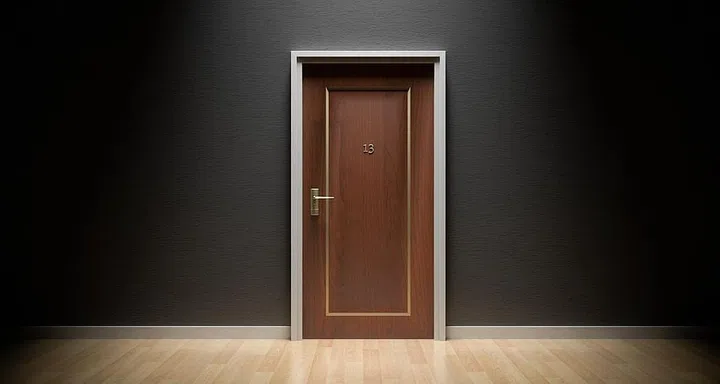
(Photo: Pixabay)
1. House Numbers
Chinese home buyers dislike the number four (which sounds like “death” in Chinese), but love the number eight (which sounds like the word for prosperity).
Past studies have shown that, in Singapore, house numbers that contain the number four (e.g. Unit 44) have been sold for about 1.5% less. On the other hand, houses that feature the number eight tend to be sold for almost 1% more.
That’s a significant amount of money: assuming the subject is a S$350,000 flat, being unit #44 would cost the seller S$5,250. If it was unit #88, the seller might just make an additional S$3,500.
This means non-superstitious types should be in search of “unlucky” houses if they are looking for a discount! It could be great savings if it makes no psychological impact on them.
2. Feng Shui Home Services
Feng Shui (wind and water, or Geomancy) plays a big role in Asia’s housing markets; Singapore is no different. In fact, not a lot of people realise that the Singapore Flyer had the direction of its rotation changed for Feng Shui reasons. It was changed to rotate toward the island, so that wealth would come inward rather than flow outward.
Feng Shui believers are very particular about the facing of a house, as well as the placement of items such as furniture, beams, and windows. Feng Shui believers want to maximise the flow of chi (energy), which they believe affects their well-being and prosperity.
As such, many people will consult a Feng Shui expert when moving into a new home. The price can range from a flat fee (S$200 to S$500 for a three-room flat) to a per-square-foot cost. The most famous Feng Shui masters in Singapore can charge up to S$2 per square foot. That would make even a tiny studio apartment cost S$1,000 for a consultation!
Here's 4 things you must know about Feng Shui.
3. The 7th Month Housing Effect
During the Hungry Ghost Festival (the 7th Lunar Month), Singaporean Chinese believe that the souls of the departed return to visit. It’s a time for Taoists to venerate their ancestors, through various burnt offerings.
One of the taboos, during this period, is scheduling renovations or moving into a new home. It’s thought that this confuses visiting spirits and rebukes the notion of cherishing the past. It’s a little ironic to be moving to a new home, at a time when you are supposed to revere your family’s past.
Whatever the case, there is an actual impact on the housing market. Sales volumes fall because there are fewer buyers. Many property developers now refuse to launch at times close to 7th-month celebrations.
Buyers who are not superstitious might be able to find a good deal on property during this time. Sometimes, a salesperson desperate to meet quotas might give them a better price, if they agree to buy at such an inauspicious time.
Written by Ryan Ong, adapted from SingSaver. From personal loans to the best credit cards in Singapore, SingSaver.com.sg helps you to save money. Start comparing today!