Beyond the Tour: How to cleverly colour block an entire home — and does it work for everyone?
By Shannon Osztonits -
Share this article
Not every homedweller is a fan of colour. You get homes completely stricken of it. Spaces that favour an entire monochromatic palette. Especially for homeowners after a completely minimalist aesthetic; as has been the crowning flavour of the 2025 year design trend.
But with 2026’s calendar on the horizon, we’re noticing a break-free from the all-light-woods of the Muji cult and the minimalist, furniture-stricken, less-is-more Scandi-inspired aficionados.
A hunger for (bringing back) colour is surging.
Feeling the sudden urge to spice up your life, or rather, your home with bounds of colour? If the idea of a full-blown rainbow-spewing abode intimidates you, or you’re uncertain of how long it would take until the novelty wears off, begin with colour-blocking one room, space, or corner.
A nursery or children’s room is a wonderful place to start. Children need colour: they’re stimulated by it on an emotional, creative and cognitive level. Or, test the waters by colour blocking wardrobes or doors.
How to begin colour blocking?
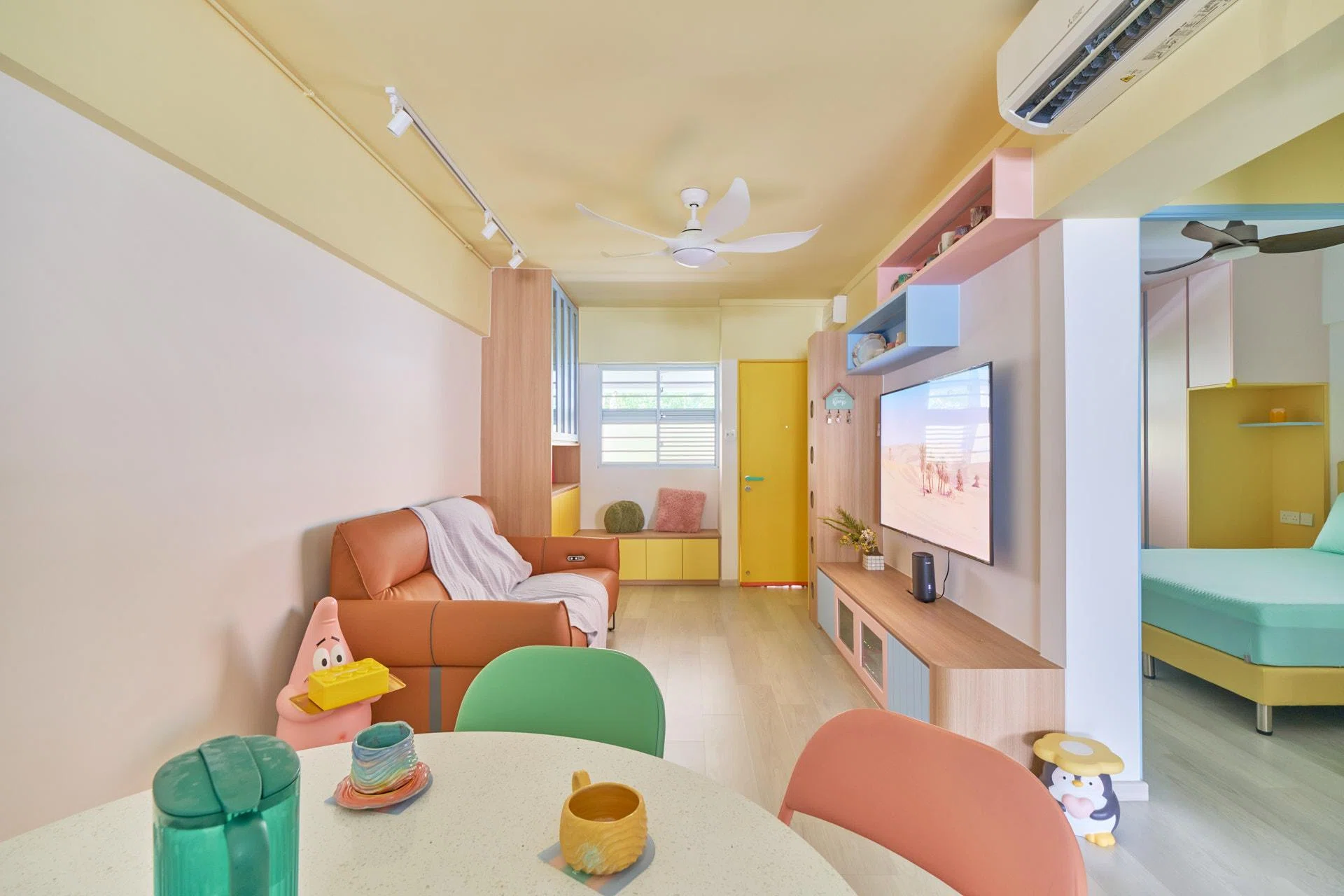
Throughout Priscilla’s home, Qi Xuan leaned into the idea of breaking up spaces or even furniture by colour blocking, i.e., introducing contrasting solid colours in one area.
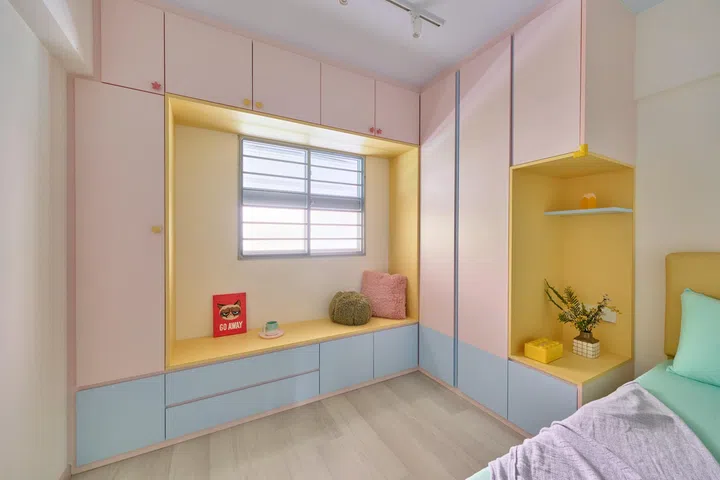
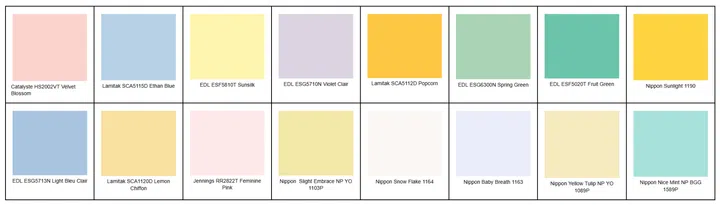
“When deciding on how to colour block, we went with a concept first: what did Priscilla need for her house and lifestyle,” explains Qi Xuan. “Then I considered the colours, two to three. I tried to keep one area to no more than three to four colours.” She used Jennings RR2822T Feminine Pink, EDL ESG5713N Light Bleu Clair and Lamitak SCA1120D Lemon Chiffon laminates.
Pick two to three colours per space
Whether it’s bright, dark, rich, pastel or light colours you’re going for, pick a maximum of three colours per space, room, or furniture piece.
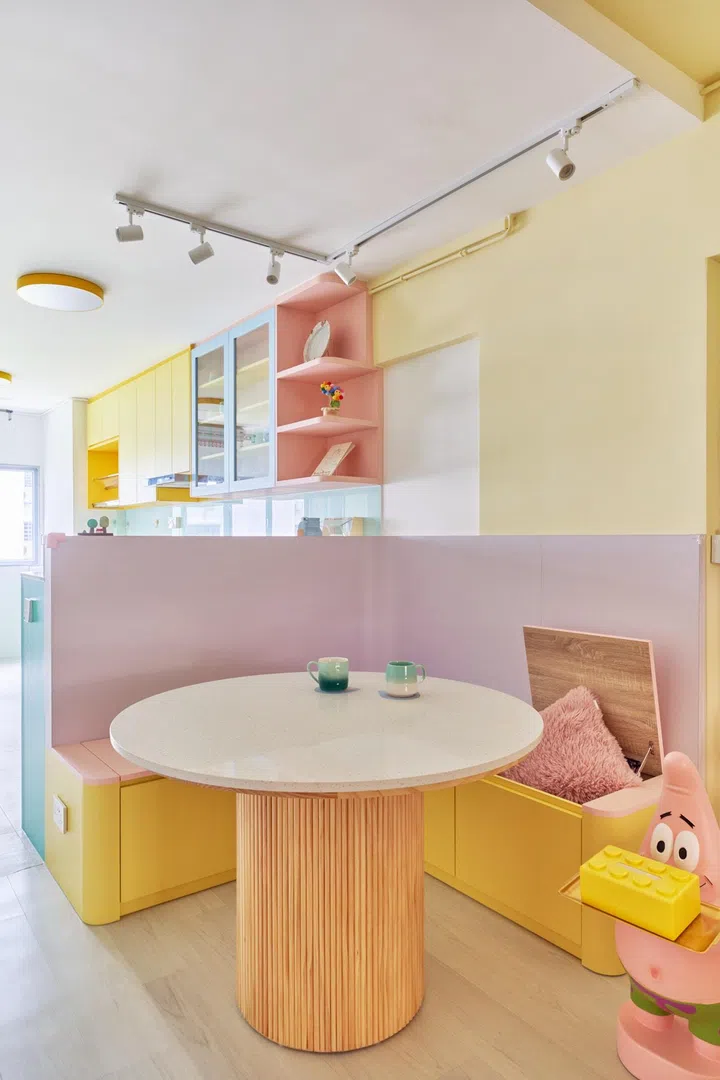
For the dining settee cafe-like booth, Qi Xuan selected three colours: purple (EDL ESG5710N Violet Clair), pink (Catalayste HS2002VT Velvet Blossom) and yellow (EDL ESF5810T Sunsilk).
Play with similar colour shades / tonal colours
The tone refers to dark and light variations of a primary (red, yellow and blue) or secondary colour (orange, green and purple).
For colour blocking, you’re placing different colours side-by-side, so you want each to match in tonality, or hues similar in colour. Considering tertiary colours is another trick: the result of mixing a primary and secondary colour. For example, blue and purple hues, or yellow and orange hues. Varying tones are easiest to start with for colour blocking.
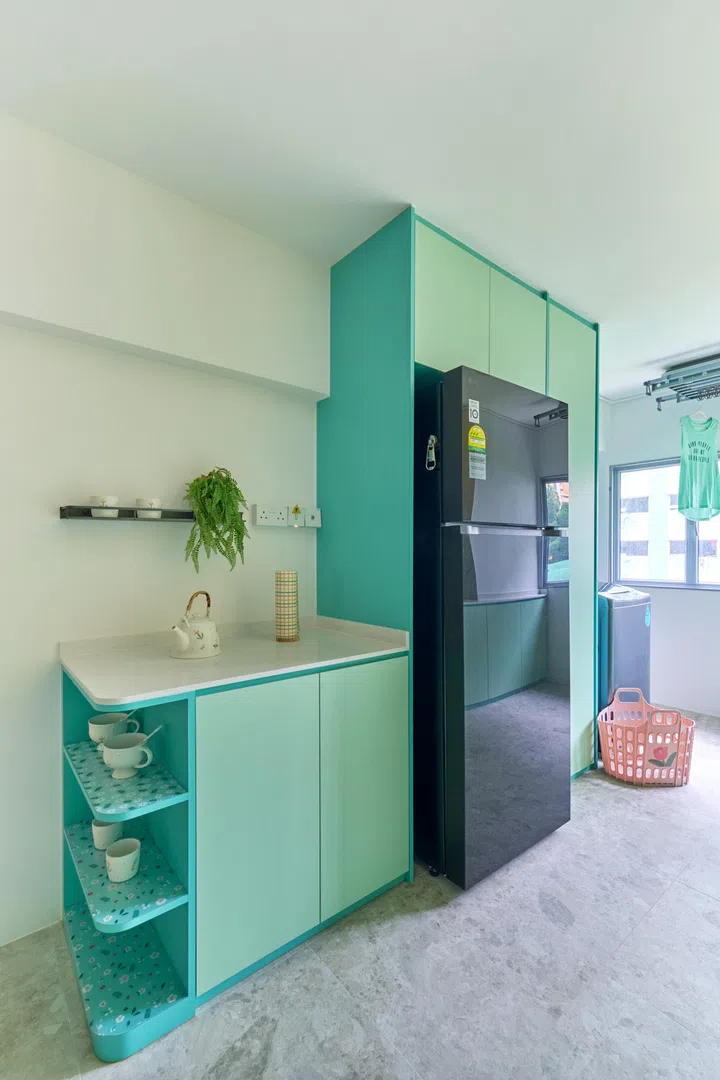
Working to Qi Xuan’s advantage was Priscilla’s need for a pastel palette. Pastel tones are already all soft and light, and so you have the flexibility to play around with varying colours. For example, the interior designer selected EDL ESG6300N Spring Green for the coffee nook door and EDL ESF5020T Fruit Green for the carcass.
But also select one or two contrasting colours
You don’t want to stick to only varying shades or tones of one colour. Colour matching using a colour wheel is a great way to see that colours suit one another. Choose colours from the colour wheel, and then play around with tones.
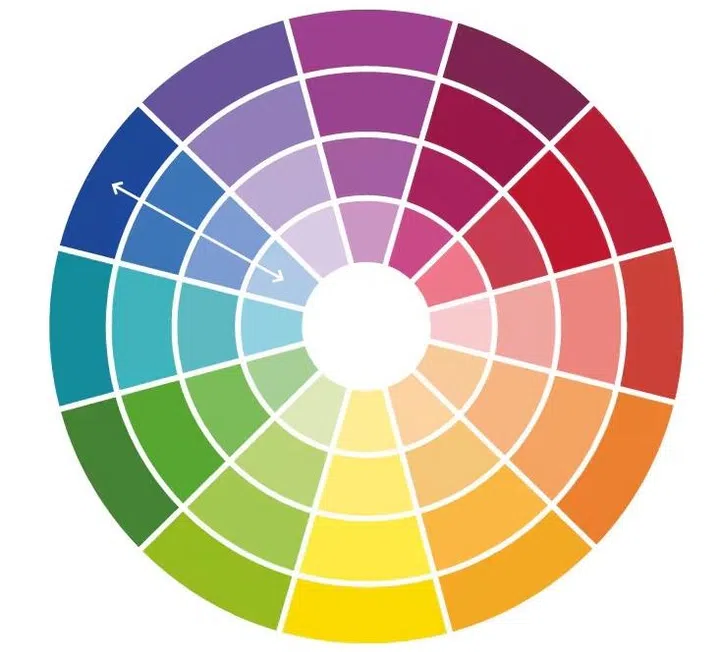
Colours on the opposite side of the colour wheel go well together. For example, yellow and purple are easy on the eyes when paired against each other.
Introduce shapes with colour
Create shapes and geometry using colour. Break up straight, sharp lines with another colour. This makes contrasting colours appear visually appealing, instead of smack-bang in your face or overly intense.
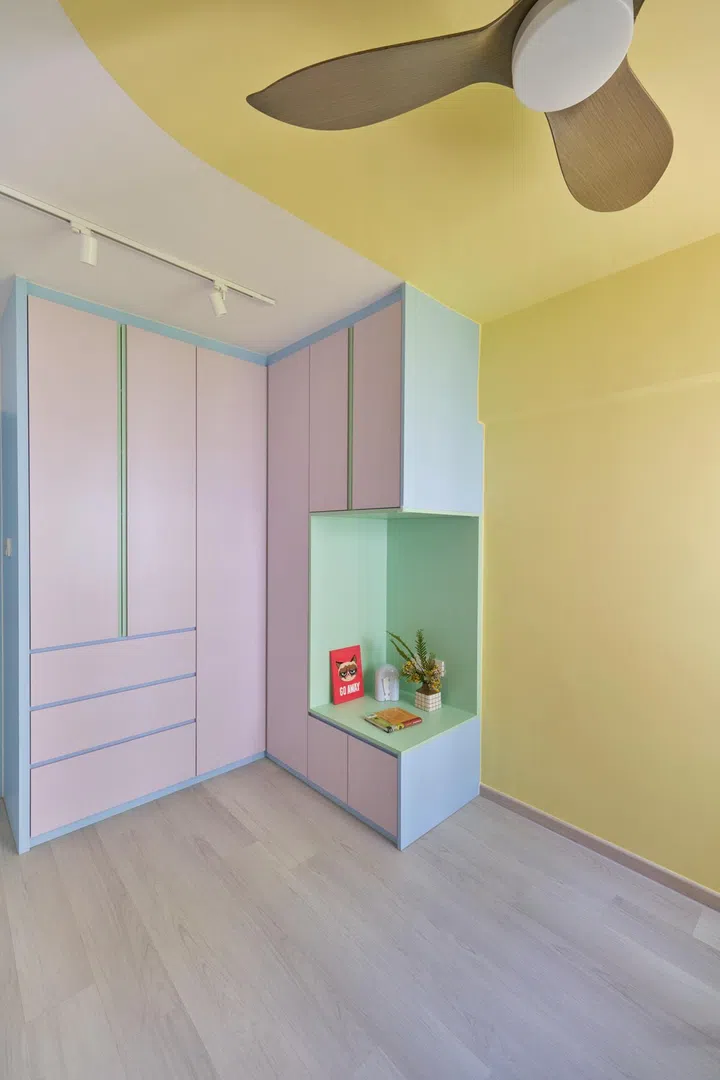
Qi Xuan introduced a butter yellow curve (Nippon Slight Embrace NP YO 1103P) in the ceiling, continuing down the wall. She paired this with Nippon Snow Flake 1164 to softly break the shape. Three colours were chosen for the custom-built cabinet in this Master Bedroom: Lamitak SCA5115D Ethan Blue, EDL ESG5710N Violet Clair and EDL ESG6300N Spring Green.
Ensure there is one or two neutral shades
If everything is coloured, a space feels too claustrophobic. At least one, two or even three neutral shades, whether it’s white, brown, black, grey or beige hues. If you’re set on an all-colourful room, take note of how Qi Xuan introduced a neutral white into the ceiling. The interior designer also establishes neutral colours across the flooring in every room and space.
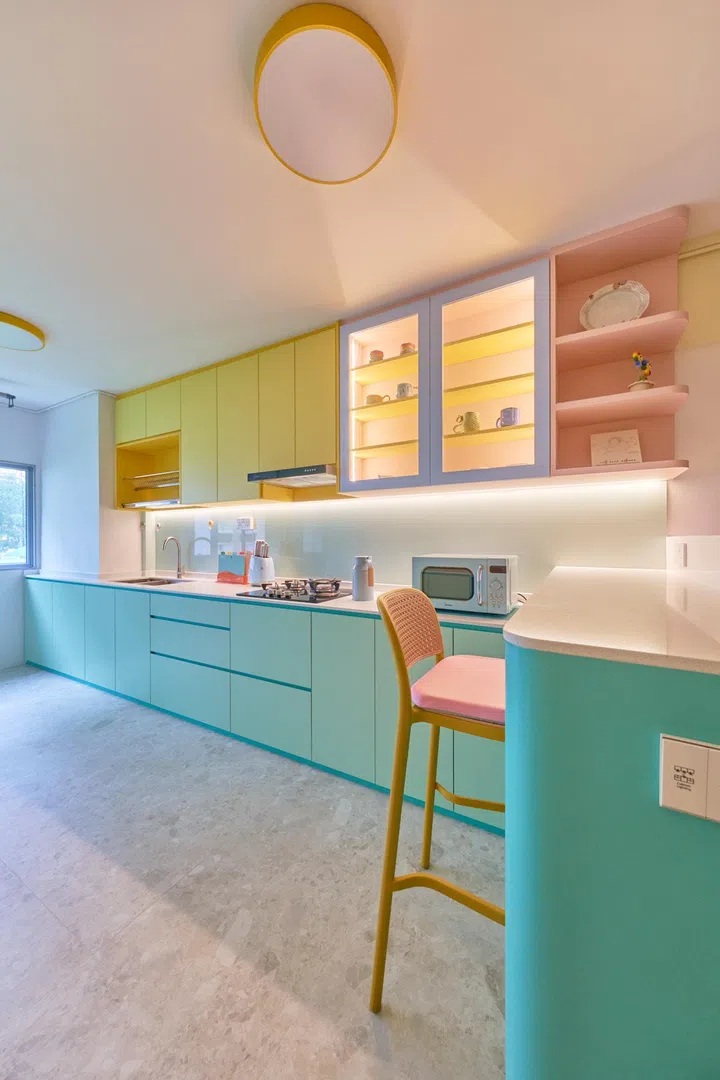
The kitchen floor is done in tiles from Hafary 60TR12R. Using tiles incorporates a cool tone. The living, dining and bedrooms showcase a neutral beige vinyl floor: DeRoots - LV 8836 Elder Teak.
Highlight room accents with colour blocking
From underneath, on top or entire shelves to cupboard frames, doorways, windowframes, trims, skirting boards, wainscoting and side-by-side cabinets; the options are endless for colour blocking room or furniture accents and finishes if you hone in and explore the finer details.
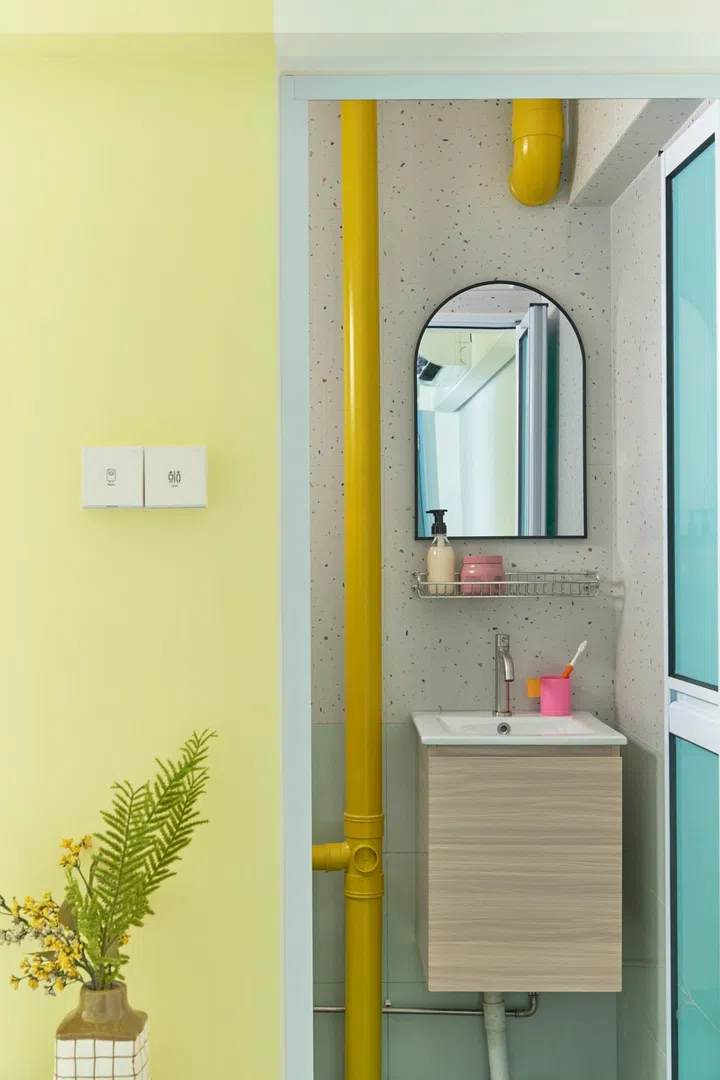
A powder blue doorframe contrasts with the Nippon Baby Breath 1163 yellow wall. The permanent bathroom pipe was painted in Nippon Sunlight 1190. The bottom tiles are another blue/green tone (Lian Seng Hin - GC-36P3076), balanced by terrazzo-inspired upper walls, Lian Seng Hin - 01-AGT602121R.
Explore lighting to enhance your colour blocking features
Don’t underestimate the power of lighting — a major ambience player. You get warm or cool lighting, as well as colourful LEDs.
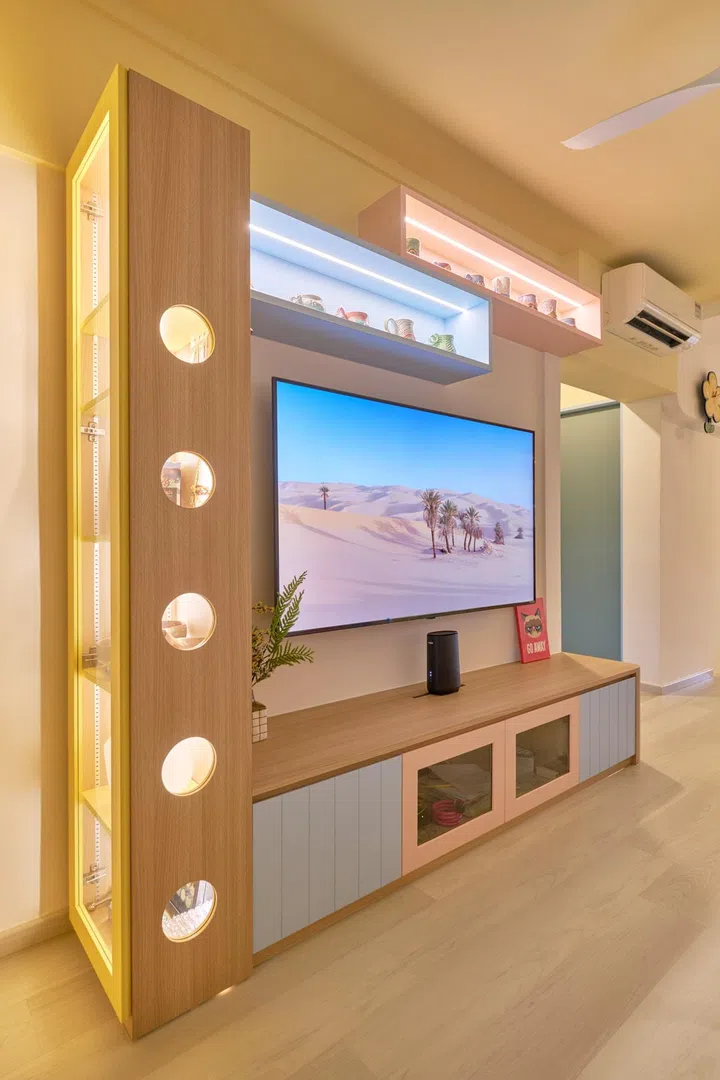
Qi Xuan cleverly utilises lighting throughout the apartment to further enhance the colours, as well as create colour blocking. Priscilla specifically wanted cooler and brighter lights for her apartment. Qi Xuan brought in more colours through colour LEDs.
Get the look: Featured Colours