
Share this article
The Kolam is a traditional form of ritual art drawn upon the ground, serving as a silent prayer and a visual bridge between the domestic and the divine.
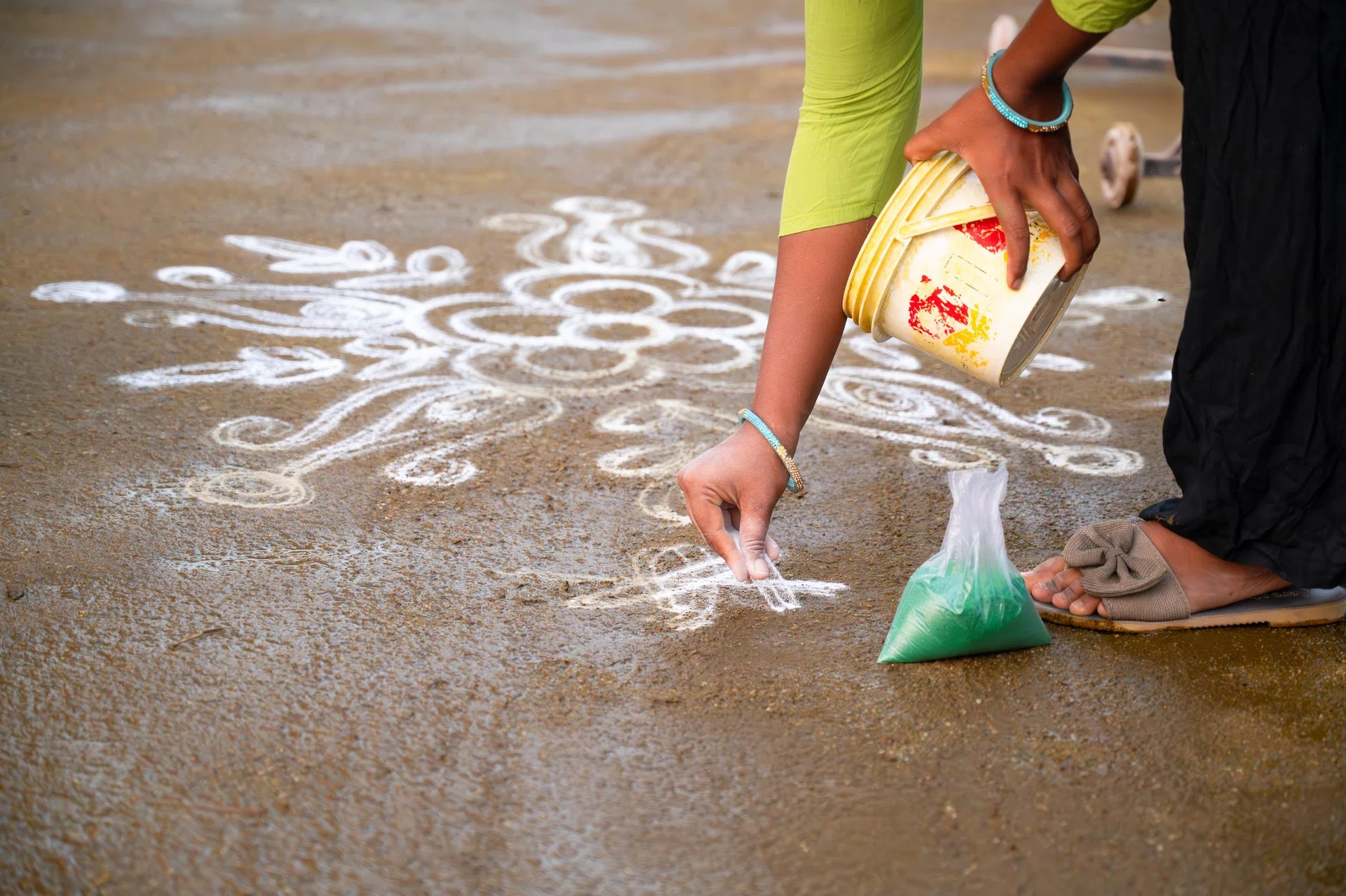
In Hindu culture, it is far more than a decorative flourish; it is a sacred geometry intended to bring order, harmony, and prosperity to the household. Traditionally, it is drawn by the female members of the house at the break of dawn, representing the “awakening” of the home and the invitation for auspicious energies to enter.
The primary significance of the Kolam lies in its ephemeral nature and its role in Bhuta Yagna, or the offering to all living beings. Traditionally made with rice flour, the Kolam provides food for ants, birds, and insects, embodying the Hindu philosophy of “living in harmony with all creatures.”
Within the home, the Kolam acts as a spiritual filter; the intricate, unbroken lines are believed to trap negative vibrations and “evil eyes,” preventing them from crossing the threshold. For the practitioner, the act of bending down to draw the lines is a form of physical and mental discipline, grounding the individual before the day’s tasks begin.
Kolam Culture in Singapore
In Singapore, the practice of Kolam has adapted to urban high-rise living while maintaining its spiritual core.
Since most devotees live in HDB flats, Kolams are often drawn on the tiled corridors just outside the main door. During festivals like Thaipusam, the designs become significantly larger and more elaborate.
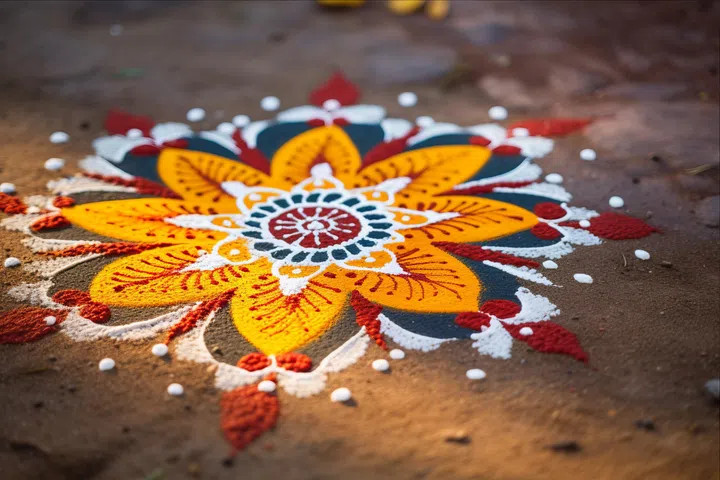
In the days leading up to the festival, Singaporean families may transition from simple white powder to vibrant “Rangoli” colours—finely ground dyed quartz or sand—to celebrate the festive spirit. In the heat of the Singaporean afternoon, these vibrant patterns provide a cooling, welcoming sight for the “kavadi” bearers and visitors who return to the home for post-procession prayers.
How to “Draw” a Kolam in Singapore
There are three primary methods used by devotees in Singapore:
Pulli Kolam (Dotted Kolam)
This is the most traditional method where a grid of dots is laid out first, and lines are drawn to either loop around or connect the dots. It represents the “points of life” being connected into a beautiful, cohesive whole.
Padi Kolam
Often drawn on Fridays or during festivals, these are geometric square-based patterns with borders, symbolising a “throne” for the deity.
Freehand Motifs
Specifically for Thaipusam, it is common to see freehand drawings of the Peacock (Murugan’s mount) or the Vel (his spear) integrated into the centre of the geometric pattern.
Where to Buy Kolam Powder in Singapore?
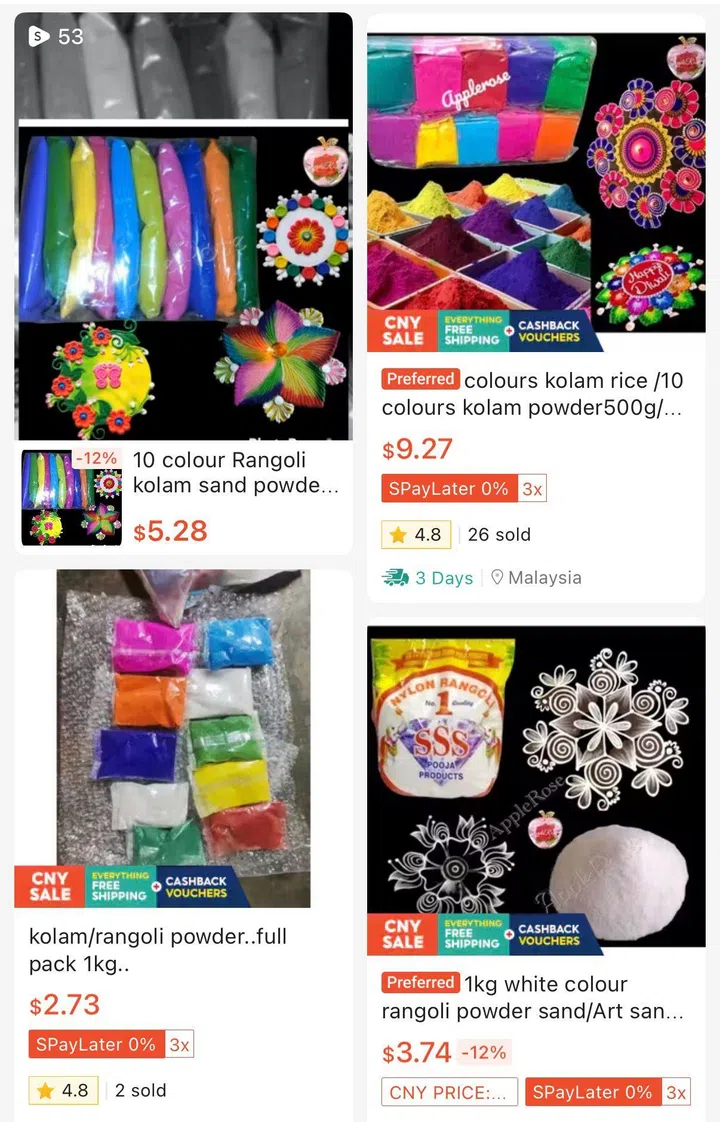
White to coloured Kolam powders can be easily purchased on Shopee.
Rice Flour and Basic Powders
Common grocery stores like Sheng Siong or FairPrice stock fine rice flour, but for the specific “Kolam powder” (which is slightly grittier for better grip), Mustafa Centre and the small provision shops along Serangoon Road are the best sources.
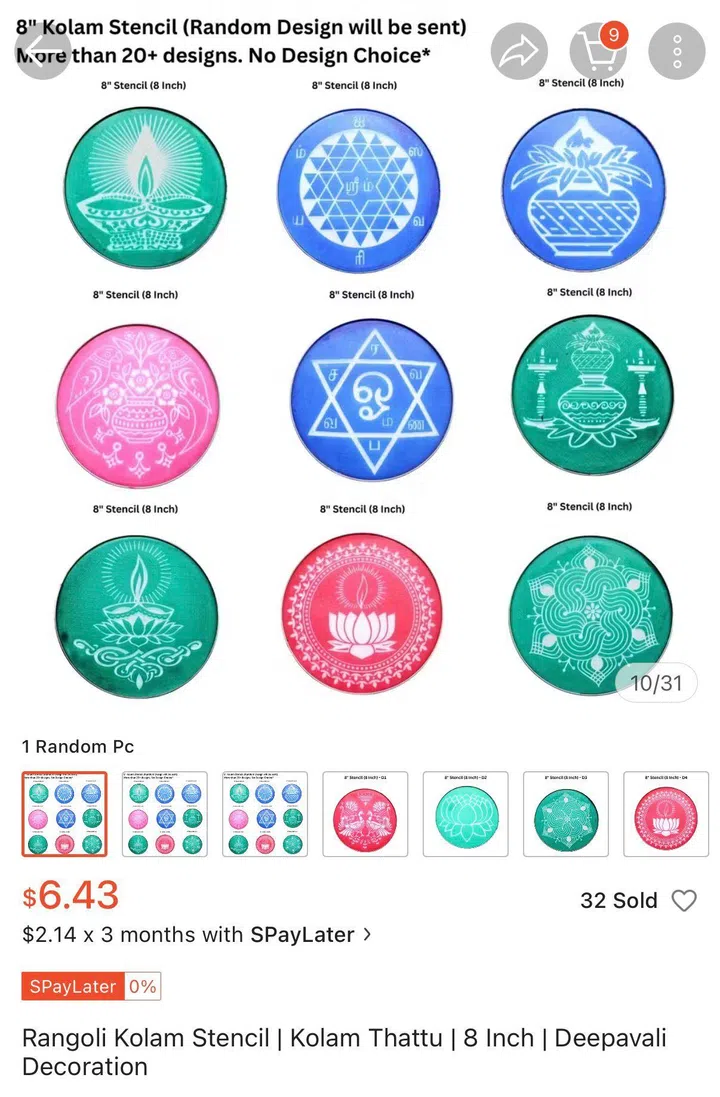
Kolam stencils are retailing on Shopee for approximately $6 a piece.
Coloured Sand and Stencils
For those who prefer more intricate designs without the years of practice, shops like Jothi Store and Flower Shop sell plastic stencils and pre-mixed vibrant sand colours.
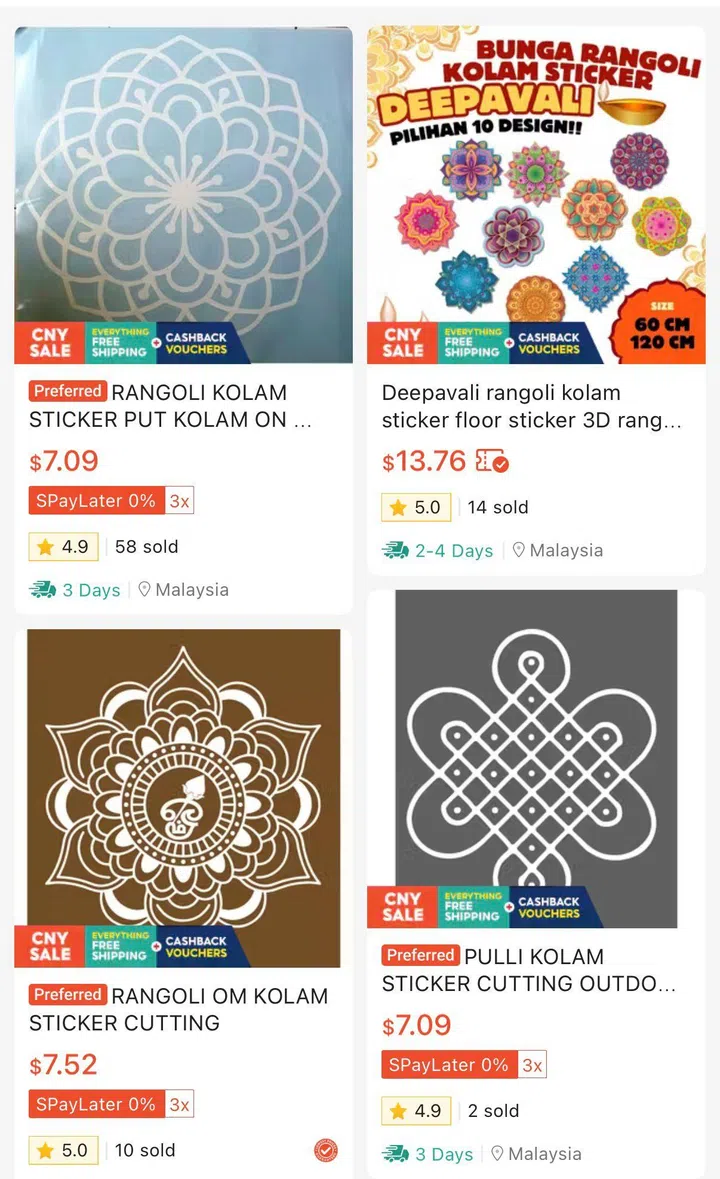
Kolam Stickers are retailing in Singapore on apps such as Shopee for $7 to $13.
Acrylic Kolam Stickers
Due to the busy pace of Singaporean life, many shops in Little India Arcade now sell “instant” Kolams—beautifully decorated acrylic plates or stickers that can be placed on the floor, though traditionalists still prefer the hand-drawn flour version.
A Daily Ritual
The Kolam is an everday practice. While it reaches its peak of grandeur during festivals, it is a daily ritual for many Hindu households.
On a normal morning, a simple white rice flour Kolam is drawn outside the door as part of daily prayers. It is usually a modest geometric design or a few simple loops. The use of white flour specifically is meant to denote purity and to serve its purpose of feeding small insects.
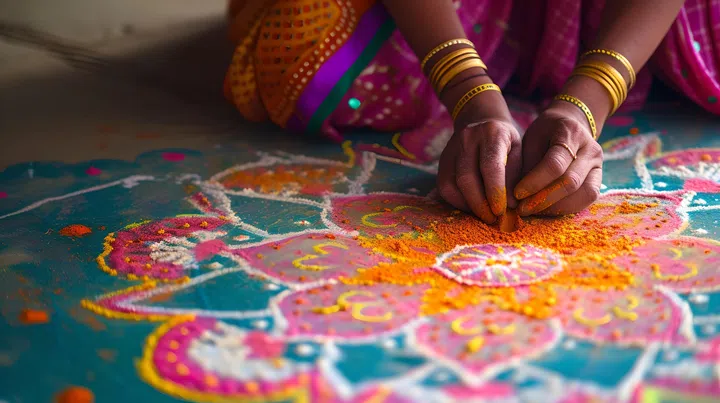
For Deepavali (Festival of Lights), the Kolam evolves into what is more commonly known as Rangoli. While the spiritual intent is similar, Rangoli is usually much more colourful and decorative. It often features the lotus flower (symbolising Goddess Lakshmi), lamps (diyas), and vibrant circular patterns. While a Kolam focuses on symmetry and lines, a Deepavali Rangoli focuses on “filling” the spaces with vivid, celebratory colours to welcome the Goddess of Wealth.
If you’d like to see these kolams and rangolis being drawn by experts, head to the Sri Srinivasa Perumal Temple in Little India early in the morning (around 6:30 AM to 7:30 AM). You will see the temple staff and devotees drawing massive, complex versions of these patterns on the granite floors.