
What is a floor plan?
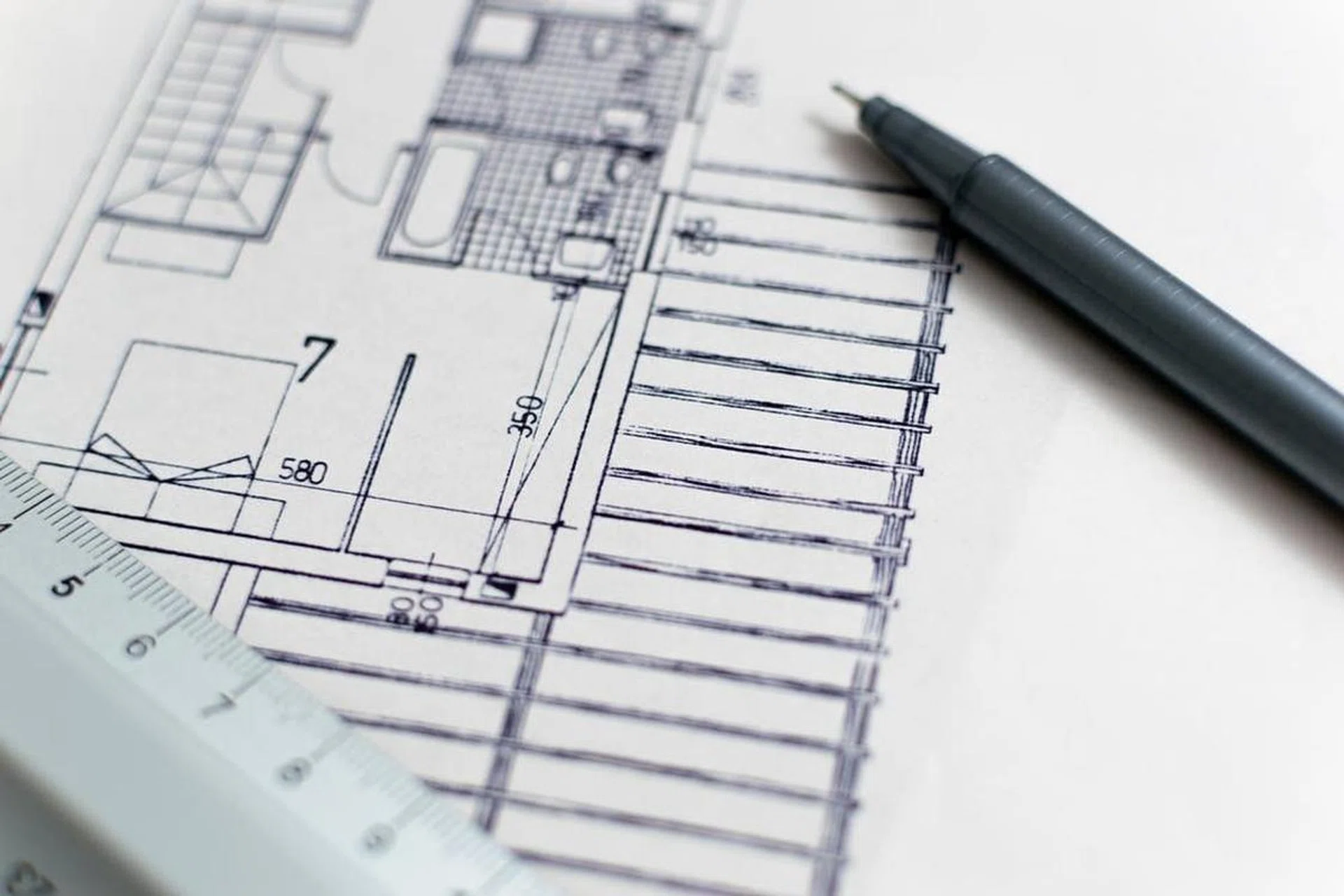
A floor plan (also known as the blueprint) is one of the most common types of drawing that is used to convey information about a home or building. It is usually read together with other drawings such as sections, elevations, 3-D perspectives and detail drawings, in order to get the full picture of a space.
Design: J+A Design
What will this aeriel plan show?
The floor plan is generated by horizontally cutting through vertical elements approximately 1.2m above ground level. Besides showing the building or home envelope, internal layout, walls, doors and windows demarcating the rooms, the names of rooms and the location of staircases and lifts, it also indicates the interior features, furniture, fixtures, and even flooring materials.
(Open photo in a new tab for a closer look!)
What do all the lines on a floor plan mean?
On a drawing, a line is never just a line. Whether it is a solid or dashed line – or even how bold the line is – these represent different things. As a floor plan is a 2-D representation of a 3-D space, the use of tonal values helps to convey depth.
The heaviest lines are elements that are cut and therefore closest to view. Sometimes, walls are filled in black or grey for greater clarity. Intermediate line weights are for elements that are below the cut line. Fine lines are reserved for furniture, fixtures or surface treatments.
A floor plan should include a title block that contains information such as the project title, drawing title, scale, the designer’s details, and date.
When reading floor plans, it's always good to 1) locate the main entrance and use that as a starting point
2) get a better visualisation of the space by imagining yourself walking through the rooms or rotating the floor plan as you go
and 3) use doors or standard furniture as references, if dimensions are not indicated. For example, a typical bedroom door usually ranges between 900mm and 1,000mm, while a queen-size bed is typically 1,530mm by 2,030mm.