
Home hack: Refurbish secondhand items into new furniture, shares experts and real homeowners
By Shannon Osztonits -
Share this article
More than just saving a dollar or two, breathing new life into someone else’s discarded goods is really so much fun – not to mention, ultra-satisfying!
During my time living in New York City, I couldn’t believe the amount of furniture that was thrown out as “trash!”
Sofas…standing lamps…occasional chairs…coffee tables!
Still, to date, NYC has been the playground of my favourite second hand stores anywhere in the world.
It’s always been a passion of mine. No matter the home I’ve lived in, I’ve always taken to restoring and refurbishing second-hand goods. Giving them a new personalised look and feel. It’s a creative outlet for me. Not to mention, being someone highly obsessed with all things interior and decor. These moments make my heart sing!
Living in Hanoi, Vietnam, I’d go trekking along the banks of the Red River near the Bat Trang Pottery Village, digging deep beneath the soil for discarded ceramics. A small chip here or a slight crack there took nothing away from their beauty…
The Japanese have understood this for centuries – the art of Kintsugi, anyone?
Using second hand and vintage furniture to add personality to your home
Our design prediction for 2027? Homes with more personality!
If 2025 was the year for Japandi-style homes, 2026 has already seen a shift.
Trending homes in Singapore, and those causing a splash online, are ones filled with personality. Eclectic. Mid-century Modern vibes. One-of-a-kind designs, like this bachelor pad filled with Doraemon or this HDB Executive Maisonette designed around the couple’s cats.
A simple yet super effective way to add a personal touch or some artistic flair to your own abode is with refurbished furniture.
It guarantees hyper-personalised, unique items that none of your friends or other homeowners will have.
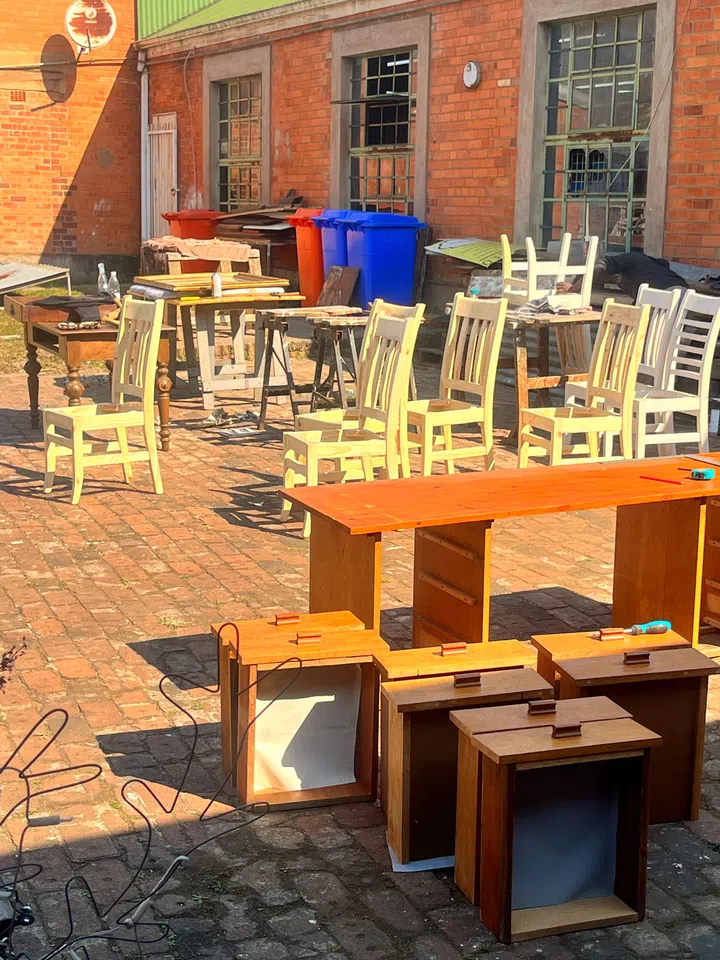
The outside of Amy and Lawrence’s workspace, where they work on restoring old furniture along with their team.
Advice from expert refurbishers
Amy and her dad, Lawrence (who has been working in the industry for 50 years), run a furniture refurbishing business: Furniture Warehouse. Their store/workshop is an oasis of vintage and second-hand furniture, selling all sorts of stunning pieces, from chests of drawers to tables to desks to other furniture, some even dating to the 19th century.
They work together with a small team to restore furniture, breathing new life into each piece. If you didn’t know any better, you’d have a hard time guessing that their furniture isn’t brand new. But that’s the beauty in restoring furniture, isn’t it?
As Amy puts it: “Once it’s in your blood, you actually can’t get rid of it. My dad’s love for old furniture got passed onto him from his dad, and it’s definitely a bug that bites, because it got passed onto me!”
Which is the hardest furniture to work with and refurbish?
The smaller and simpler the object, the more straightforward the job. Tables are easier to work with than a chest of drawers, for example, as there are fewer pieces involved.
But above that, Amy shared some super insightful information. Here’s what to take note of when looking to buy or grab second-hand furniture made from wood.
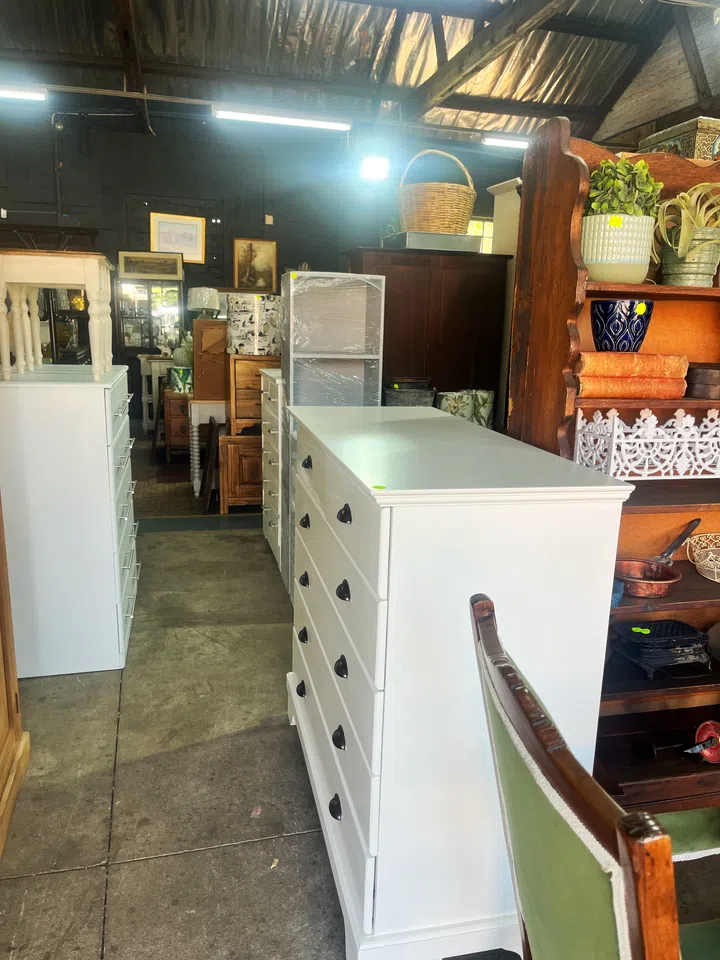
These furniture pieces have been lovingly restored by Amy and Lawrence.
“The most challenging are pieces with wood borer damage – you know, the little nunu that eats away at wood? It’s most tricky because often people throw that kind of furniture away thinking it’s completely damaged,” the expert refurbisher shares. “What we do is take the piece and then treat it completely for wood borer, then try and save it. So definitely, the trickiest part of refurbishing is dealing with damaged wood, from water damage to wood borer.”
How long does the restoration process take?
It depends on the type and size.
“There’s more work involved in a chest of drawers, obviously, because you’ve got the inside and the outside; each drawer is its own piece. A table is a much easier thing to restore,” says Amy. “A table from start to finish, completely, is probably about one week.”
Steps involved in restoring wood furniture?
Speaking from personal experience, anything wood requires TLC, especially if it is painted.
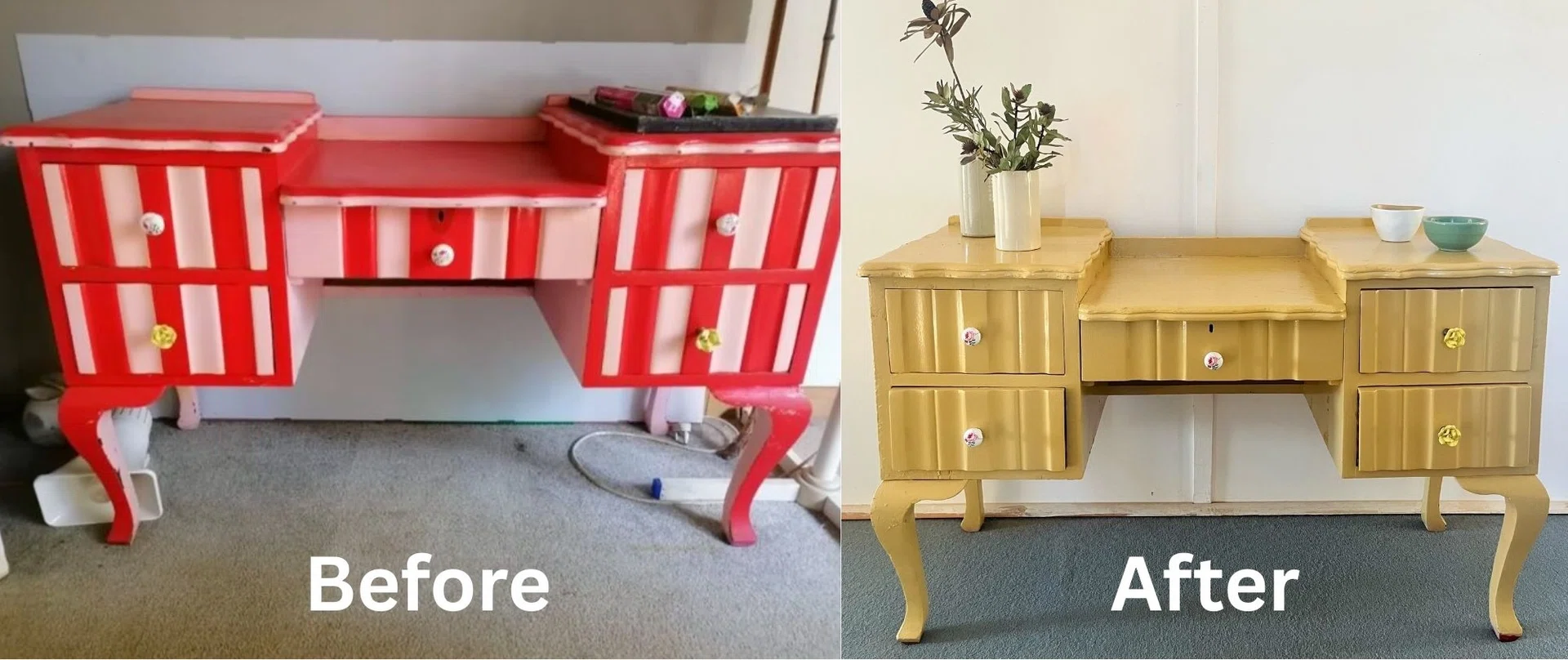
Want to repaint a wooden item? Get paint strippers and sandpaper. But it also depends on how heavily painted the furniture piece is. For example, I bought a second-hand dressing table, heavily painted in thick coats of pink and red.
The first step I did was try to sand the piece using an electric sandpaper machine. This didn’t work.
Secondly, I tried chipping away at the paint, but ended up damaging the wood. Next, I bought paint strippers, but not even this was strong enough to strip the heavy paint. Eventually, to save myself the hassle, I repainted over the existing paint. But it took over two weeks to dry.
“Also consider if you have a heavy varnish on it and then, if you want a light stain, there will be more steps involved,” Amy tells.
Where to begin as a homeowner?
Here are some hacks for homeowners, according to the experts
1. Look for quality furniture
Often, second-hand or vintage furniture items were made decades ago, and not factory mass-produced. Although they are older than brand new, their quality wins.
“The problem these days is that furniture being manufactured now is made from chipboard; it’s not solid wood. It’s not going to last five, even 10 years. But there is this resurgence of beautiful vintage furniture and putting it together with the modern, like Mid-century,” says Amy. “If you are going to restore a piece of furniture, you’ve got to make sure it’s a solid wood piece. The older, the better.”
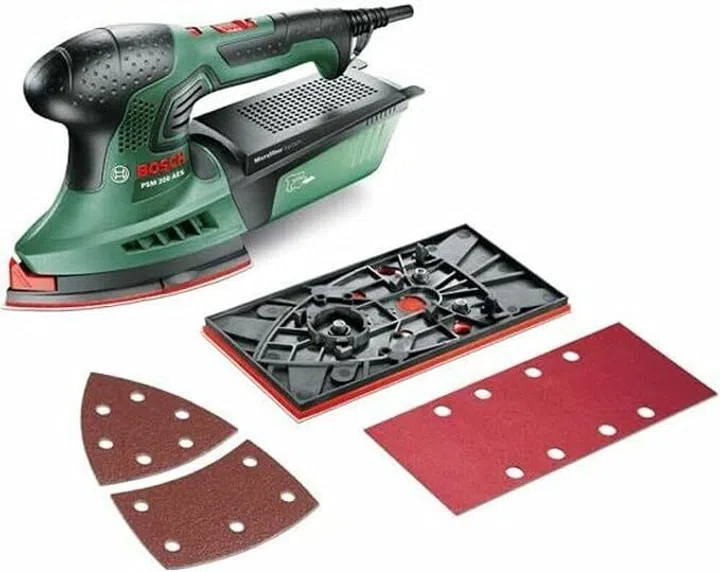
Bosch PSM 200 AES Multi-Purpose Sander Psm 200 Aes, Green from $132 on Amazon
2. The right tools
The initial investment might cost you a Sing dollar or two, but once you’ve got the right tools, like paintbrushes, strippers and even a sanding machine, imagine the endless possibilities!
“You need the right amount of tools. If you don’t have the right tools, it can become a nightmare. We’ve probably tried four or five different brands of paint strippers,” this expert informs.
3. Knowledge is power
The internet is your friend, and you can find many DIY and how-to tutorials on YouTube and online. Just make sure you do your homework and follow the guidelines of someone who knows what they’re doing.
Amy shares: “You need to have the right amount of tools, but also the right amount of knowledge. But all of that is readily available on Google. Go into a project knowing exactly what work is involved and what’s required of you. So often clients come to me with a half-stripped piece of furniture, because they say they just can’t do this anymore, please finish off the job. It happens all the time because people are unaware of how much work it is.
That’s my biggest piece of advice. Restoring furniture takes time. Make sure you are fully aware of what is involved in restoring furniture before tackling a project.”
4. Choose the right supplies for the correct material
There’s nothing worse than buying the wrong paint for the wrong material, like wood instead of metal; sandpaper that is too fine; or paint strippers that don’t have the correct strength.
“The best paint, including brightly coloured paint, for painting wooden furniture is water-based paint. You can choose any colour and then get it mixed as a water-base,” says expert paint mixologist, Luay.
Fun ideas from homeowners that you can try
Need a little inspiration? Here are some fun ideas to try at home, inspired by other Singaporean homeowners’ refurbished creations.
Refurbishing family heirlooms/treasures
A travel trunk as a piece of living room decor:
One homeowner, who wished to remain anonymous, professionally refurbished her father-in-law’s decades-old travel trunk – now displayed in the second living room upstairs where the family spends time relaxing. For this job, she employed the help of an expert refurbisher in Singapore.
“My father-in-law brought this travel trunk on a ship when he migrated from Kerala down to Malaysia. We found this lady who refurbishes old furniture and travel trunks, and she did a fabulous job. It’s a showpiece in the room for sure. And you wouldn’t believe that the original trunk was turquoise. Inside was terracotta, but that had faded and rusted a bit, so we just redid the same colours,” she tells Home and Decor.
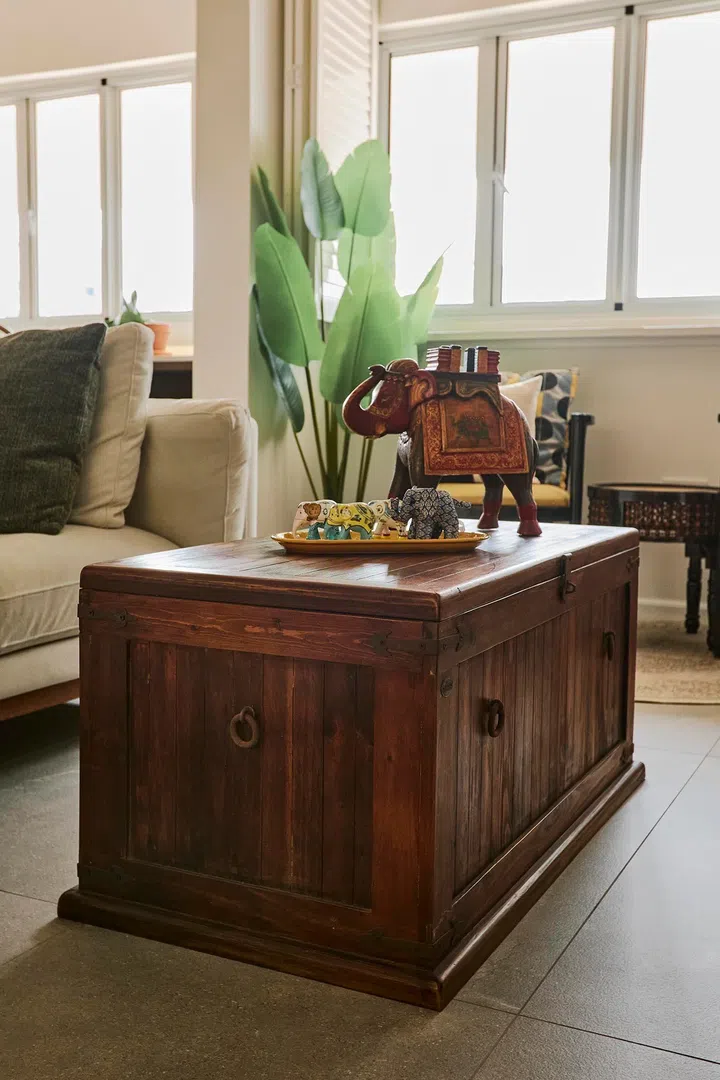
A storage trunk as side table:
Homeowners Patrick and Ian also had the same idea of repurposing a trunk, but this time into a coffee table.
“The trunk is something I bought more than 20 years ago from India,” says Ian. “It was actually a storage trunk, but we use it as a coffee table now.”

Rewiring non-working lamps and lights
Wife and avid DIY and second-hander, Grace, is obsessed with restoring pre-loved and unwanted goods. It’s something she does regularly for furniture in her family home. She found an Arco-like floor lamp that wasn’t in working condition, and simply rewired the piece.
“It was just an unwanted lamp at the time. It seemed old and clunky, but it has a beautiful marble base. We got it back in 2012, and it wasn’t working, so I had it rewired. I love choosing timeless classic furniture that will be able to go with the seasons.”
Repurposing old-school items into funky decor
A Singer sewing machine as a fish tank stand:
Whilst interior designer Chris from Morphosis Studio was working on a reno project with homeowners, Siva and Fongling, Siva one day arrived home with an old-school Singer sewing machine, asking the designer if he could use it somehow in their home.
“Siva actually found an old Singer sewing machine in a recycling area. We found it, he bought it over and asked if I could refurbish it. I thought, of course, this thing is a rare gem,” explains Chris.
Now, the antique cast-iron treadle base is used to hold and display the family’s fish tank.
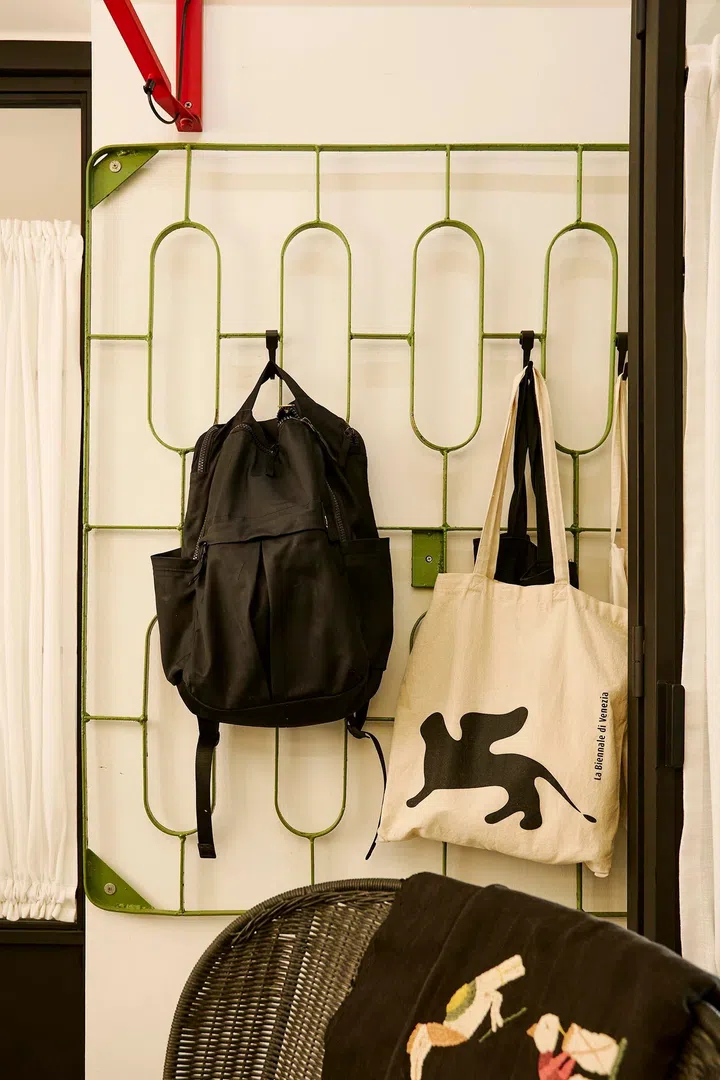
An old window grille as a tote bag hanging rack
Post moving into their Little India abode, interior designer and homeowner Ian spotted an old-school iron window grille, which he later repurposed. Giving it a new flick of green paint, he and his partner, Patrick, now use it to hang tote bags and other items from it in Ian’s home studio.
“There is a back alley opposite our building; we walk to the MRT station via the back lane. I spotted this piece of “junk” lying against the wall. After months of walking past it every day, I started to think, ‘What a waste, it’s just lying there.’ I asked some shops around if it belonged to them and nobody claimed it,” Ian explains. “It’s like rubbish, and nobody is claiming it, so I just took it. It’s an original window grille from the 70s or 80s. If you see some apartments in Singapore, they still have this type of window.”
Upcycling using new colours, shades and varnishes
Sometimes, all a pre-loved item needs to feel like something new is a flick of paint or varnish. Patrick rehomed a Sri Lankan round side table in between office moves, giving it a new home in their house. Ian decided to upcycle it.
“Ian varnished the table into a different colour. Previously, it was teak, and he turned it into walnut,” says Patrick. “It was in quite bad shape. He spent a lot of time polishing the top of it to give it that beautiful golden layer at the top.”
You know what they say: one man’s trash is another man’s treasure!