
5 Plants that Tackle Mould and Humidity Better Than Fans
I come from a family of green thumbs - with florists, horticulturists and landscapers in my family mix
By Shannon Osztonits -
Share this article
This article is part of Home & Decor’s monthly editorial topics series — crafted around real, current problems that many Singaporean homeowners face. Jam-packed with personal recounts, opinions, and expert takes, we hope that these weekly pieces will inspire you, and bring you solutions that you can take into your own home.
April’s topic: ‘Living in the Tropics’. Article 2/5.
When considering ways of minimising the humidity we experience in our homes due to living in tropical Singapore, too quickly do we jump onto the appliance bandwagon…For example, expensive dehumidifiers and ventilation fans, not to mention filter replacements and the like.
Throw into the mix a couple of these for different rooms and areas of your home, and it can end up costing you a hefty penny.
However, there are other ways to cope with the humidity in your household that don’t end up costing the Earth in comparison. Instead, they’re provided by the Earth! Sometimes, the best remedy is Mother Nature’s.
Did you know that certain plants help to reduce humidity?
That’s right! I hail from a family of green thumbs, with florists, horticulturists and landscapers in my family mix. I grew up in a tropical city, travelled around the world to tropical destinations (my favourite kind) and have lived in tropical countries–try driving a motorbike in Hanoi’s 50°C in the peak of summer. Yet one thing remains the same: my home is never devoid of indoor plants!
There are hundreds of indoor plants out there, but not all of them work for balmy and humid conditions. Trust me, as a plant mom, I have learned this the hard way.
Some of my most beloved indoor plants I loved whilst living in a tropical destination, haven’t done well in cities I moved to with drier conditions – albeit still warm temperatures. There’s a difference, and I sadly learned this the hard way, saying goodbye to some of my favourite plant babies.
If you’re a first-time plant buyer or already own a bunch of indoor plants at home but cannot seem to keep them alive, there are some must-knows when it comes to indoor plants for a tropical climate.
Which indoor plants help reduce humidity?
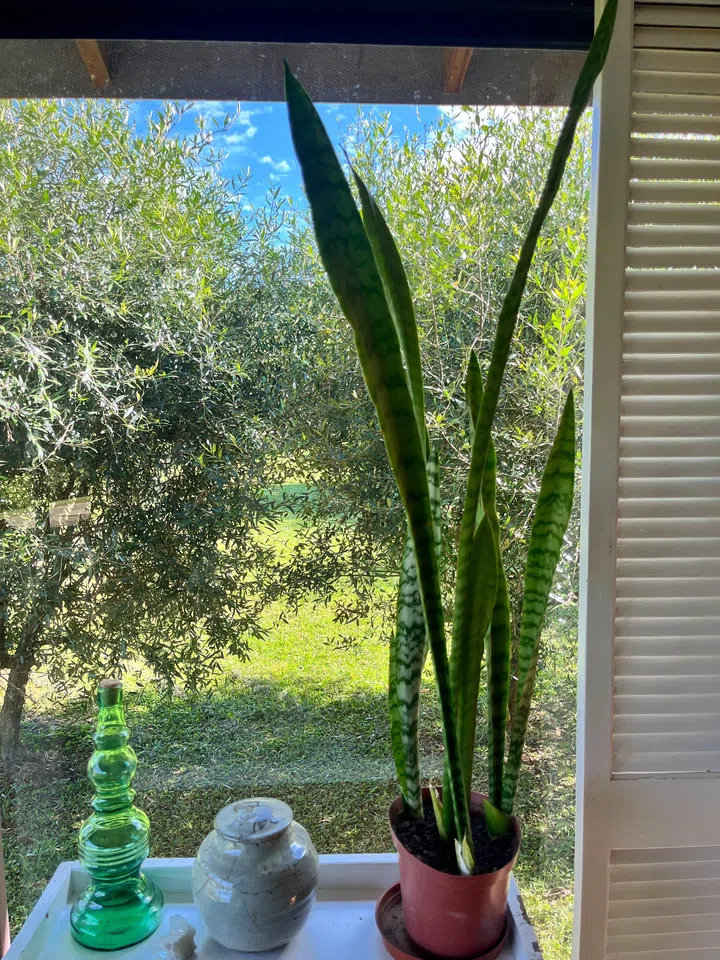
1. Snake Plant, i.e., Mother-in-law’s tongue (Sansevieria)
“Sansevieria is a very good indoor plant. It looks nice and is pretty sculptural as well. They do convert in the home in lines of humidity and assist with that,” explains Frank Hull, landscape designer and founder of Creative Landscapes.
I hardly have to water my snake plant at home, and I also love the fact that it is an air-purifying plant as well. It helps to eliminate condensation in the air, which households in Singapore are prone to because of the air’s heavy moisture content. They do well in rooms that are bright but no direct sunlight; however, as a pretty adaptable plant, they also do well in dimmer spaces.
“Snake plants are great for the bathroom, too,” tells Frank.
Which room to place your snake plant?
Bathrooms and kitchens are best, where there are high condensation ratios. I keep mine in my sun room/living area, and it thrives in this space, too. They are pretty fuss-free, so you can have them in any room, really.
2. Pothos (Epipremnum aureum)
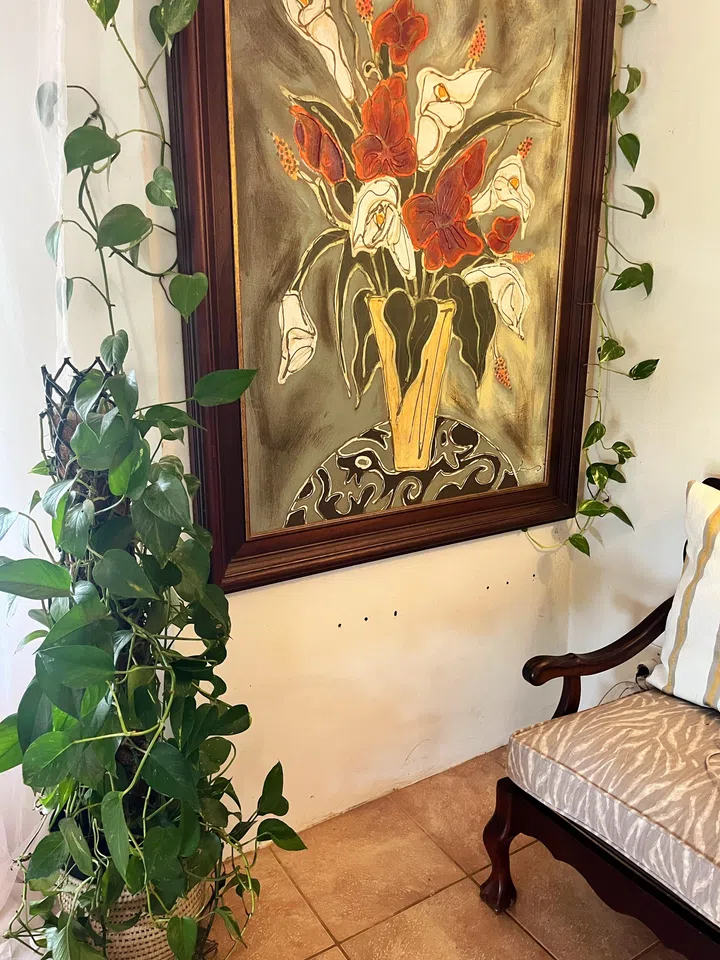
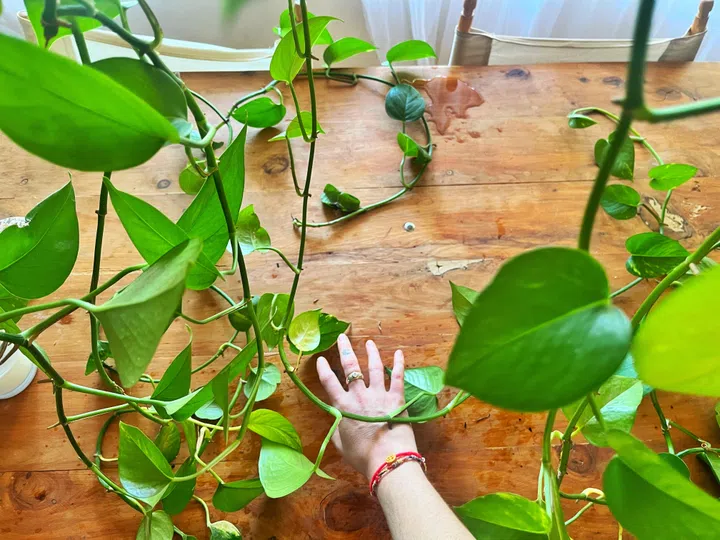
Pothos is my personal favourite plant–probably of all time. No matter where in the world I live, I always have a pothos plant (or five) hanging somewhere. I find them pretty adaptable to an indoor or an outdoor area, and they LOVE humid climates.
For example, when I lived in Hanoi, I had a few hanging from my outdoor balcony, but now in my home, I have three hanging indoors in multiple rooms. My longest vine is 10 meters!!! I have a fourth one that grows upright.
In very small humid spaces, Pothos purifies the air and is also a moisture-regulator. It’s native to Southeast Asia, specifically Malaysia!
My love for this plant stems from the fact that it is a hanging vine, but can also double as a creeper. For this, you will need to have some sort of stake or trellis to support the pothos, guiding it to grow upwards, as opposed to hanging down in a free-fall. It’s one of the best indoor plants for aesthetics.
One thing I have noticed is that it thrives better in a cooler space rather than one whacked by direct sunlight. You will need to water your pothos once a week. I have noticed that I can push it to two weeks if I become a bad plant mom and forget.
3. Peace Lily (Spathiphyllum)
“Spathiphyllum is great for bathrooms as they pretty much live off the mist from the hot water, and they absorb it like a sponge. So, it’s good for damp, too,” says Frank Hull. “They take away the damp, and so you don’t get the mildew or mould that grows on your ceiling that can lead to and cause respiratory issues.”
This is one of the indoor plants that not only helps with dampness, but they sprout a gorgeous white lily flower, too. They look really pretty sitting on a bathroom counter, especially if it’s the guest washroom. But they are not just limited to this room. Recently, Frank created an indoor garden for a home, adding a collection of peace lilies into a soil bed in the middle of an air well.
I keep my peace lily in my bedroom in a corner with no direct sunlight. The other day, I took it outside on a scorching hot day to give it a full bath, and forgot it outside for a couple of hours. When I came back late afternoon, its poor leaves were burnt! Moral of the story? Avoid direct sunlight!
Which room to place your peace lily?
“It’s always good to have a peace lily in bathrooms,” says the landscape designer. But you can place them in the kitchen, living room, and bedrooms, on shelves or in pots on a countertop.
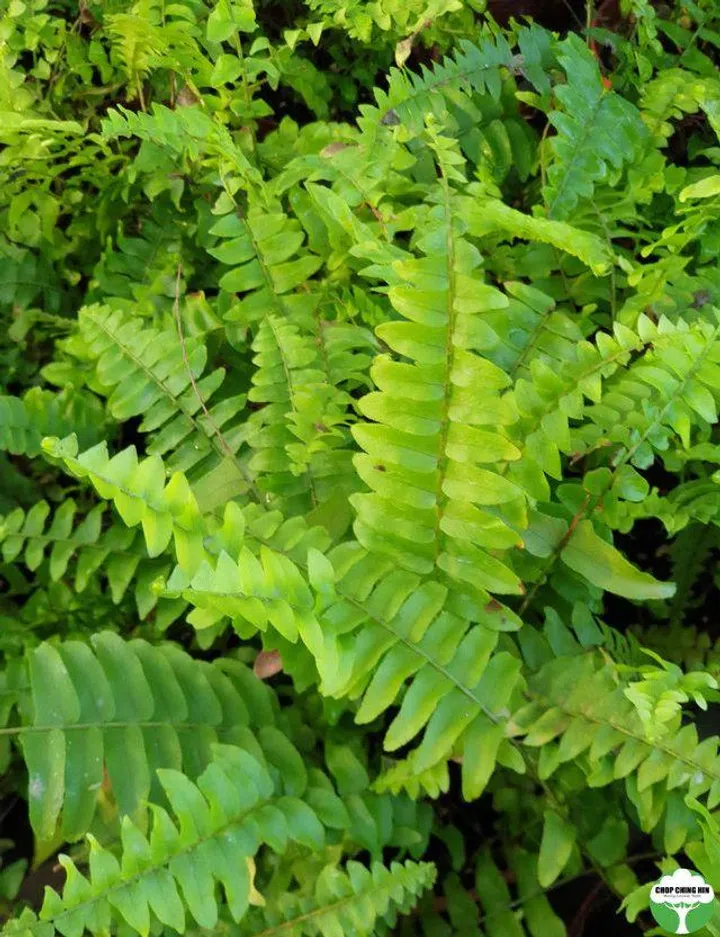
4. Boston Fern (Nephrolepis exaltata)
Similar to the peace lily, the Nephrolepis is another bathroom-recommended indoor plant by Frank Hull for more or less the same reasons. The better the humidity, the better they grow, too.
Plus, the fern is a super pretty one with its feathery leaves, flowing over a basket/pot, making it a standout on any shelf. Or, you can hang it from the ceiling, too. It’s also a well-priced indoor plant available in Singapore.
5. Spekboom (Portulacaria afra)
Spekboom, also known as Portulacaria afra, is native to South Africa (which also has many tropical regions), but these fast-growing plants have become increasingly popular in other tropical countries, including Singapore. It’s considered a succulent.
“They grow indoors nicely, but what’s interesting is that they do the conversion ten times more than any Amazon Rainforest plant, so that’s a huge one, and it’s become very popular,” explains Frank Hull.
Spekboom absorbs insane amounts of carbon dioxide and, as a result, releases a huge amount of oxygen into the air! Other pros are that it helps to lessen humidity levels in indoor spaces, helps get rid of VOCs in the air, and also purifies the air around it. It’s also used for medicinal properties, and these plants love sunlight!
Which room to place your spekboom? Home office, kitchen or living room.
Where to buy indoor plants in Singapore?
Of course, you can buy indoor plants online, but I always find it more satisfying and exciting to go plant-hunting in person. There’s no greater feeling than returning home from a plant-buying adventure with a whole bunch of new plants in your arms!
Singapore is blessed with indoor plant shops, as well as outdoor nurseries and garden centres. Our top 5 picks for indoor plants and accessories include:
It’s one thing buying a bunch of indoor plants, but there is more to just adding an indoor plant to your home and thinking it will survive and thrive. Here are some tips for getting the best out of your indoor plants AND ensuring they live a long life.
Limit the number of indoor plants
Depending on the size of your home and how many rooms you have, you do need to set a limit on the number of indoor plants in your living spaces.
“Plants convert carbon dioxide to oxygen,” tells Frank.
But when they stop their photosynthesis period, they do also take in a little oxygen and then release carbon dioxide. A jungle of indoor plants in one room can create an imbalance in the air. Specifically for air quality.
Certain indoor plants increase humidity levels
This has two sides. On one hand, Singapore is already super humid; why would you want to increase humidity levels?
On the other hand, having the AC running 24/7 leads to dry air conditions, causing things like a dry cough or cracked/dry skin. This means you need a little moisture in the air, which is why many households have humidifiers, too.
Two indoor plants that are excellent for creating a little bit of moisture in the air and are natural humidifiers include:
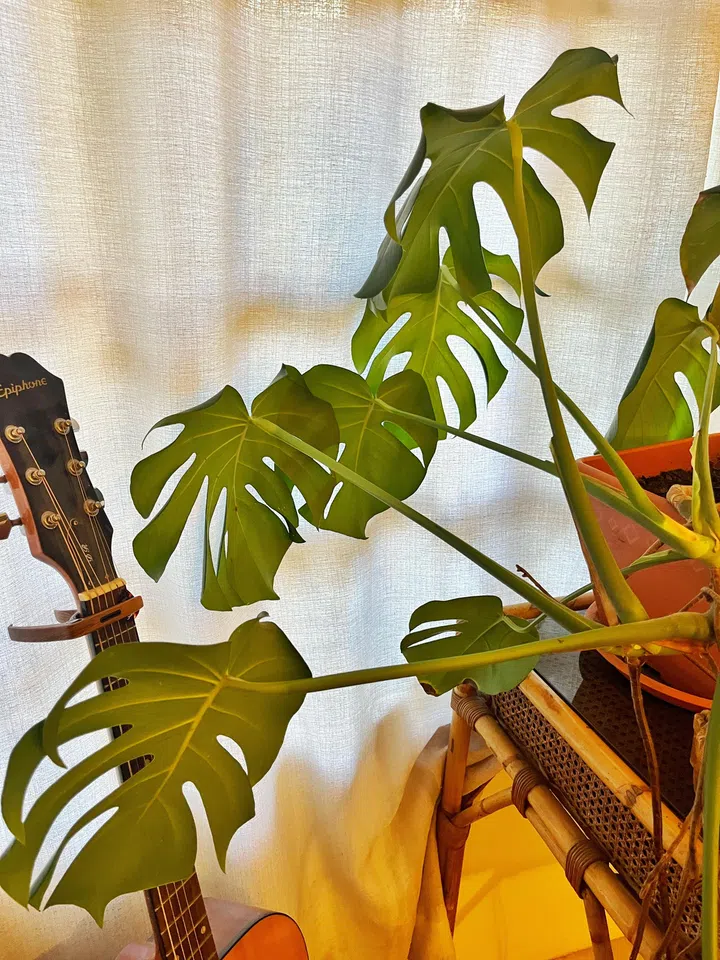
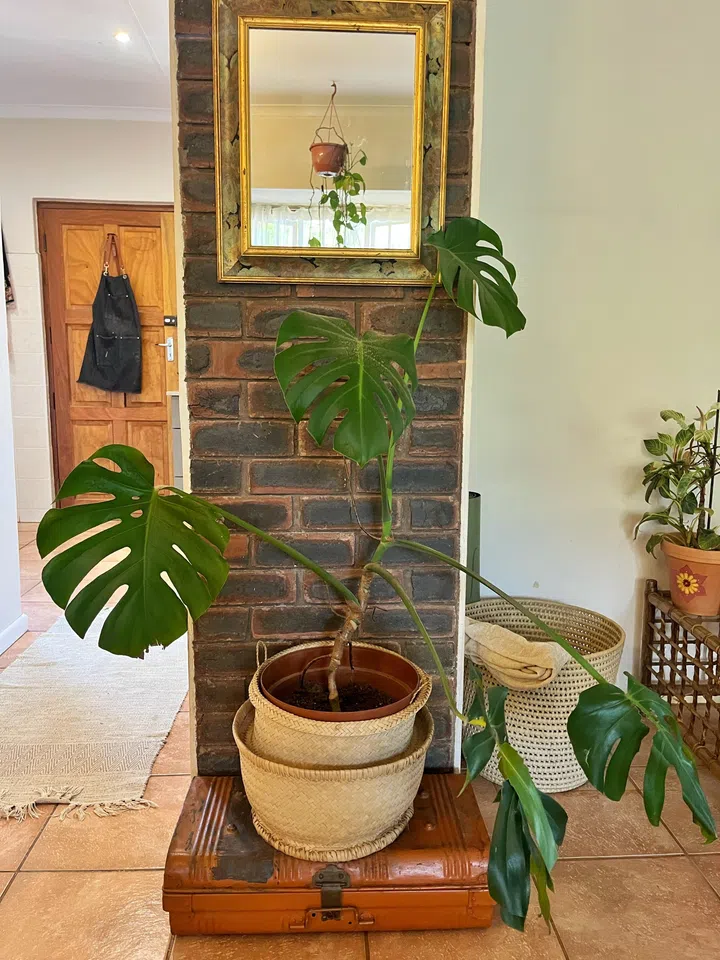
- Delicious Monster (Monstera deliciosa): Helps to purify the air as well. I made sure to keep one delicious monster in my apartment in Hanoi, placing it near the entrance.
- Areca Palm (Dypsis lutescens): Increases oxygen and is also excellent for feng shui, especially for wealth and health.
“When the aircon is going all the time, it’s going to dry up your plants,” says Chris Dalzell, former director for Conservatories at Gardens at the Bay. “That is why you constantly need a little spray bottle. The aircon doesn’t do plants any good, especially when it is set to very cold temperatures and the plants receive little to no light.”
Plants for insect control
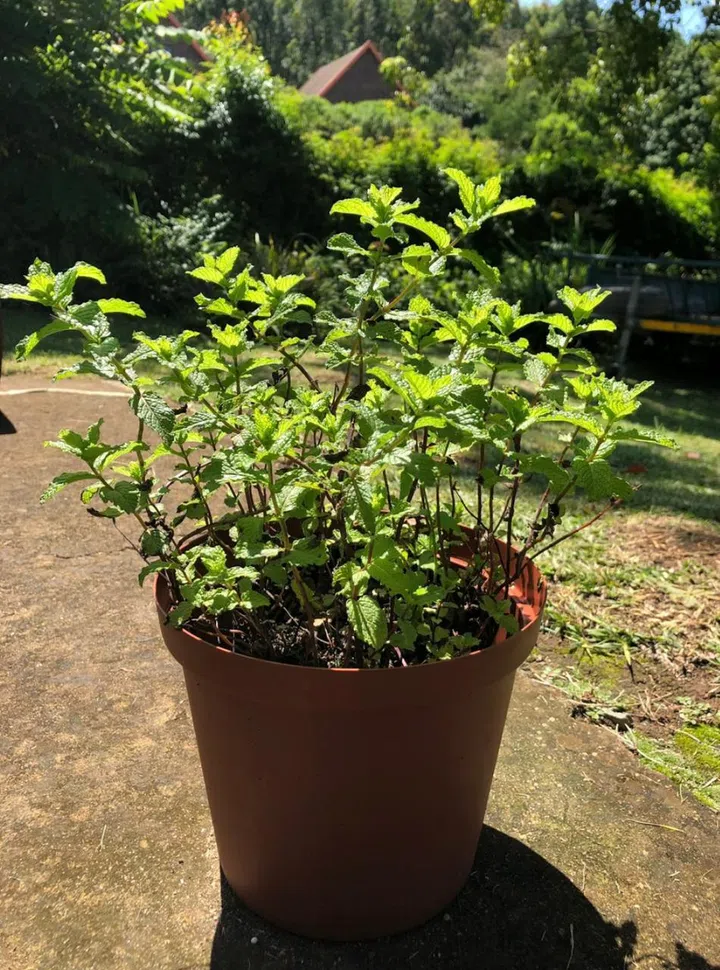
Humid temperatures in tropical countries like Singapore mean that insects and pests are, unfortunately, unavoidable. There are indoor plants (most of which fall under the ‘herbs’ category) that help to repel insects such as mosquitoes and flies.
These include:
- Citronella
- Lavender
- Lemongrass
- Basil
- Mint
My Green Thumb Secrets
I’ve countlessly been asked over the years by friends and family how I get my indoor plants to thrive the way that they do. Apart from the most obvious solutions, such as proper care (watering, lighting, room placement, etc.), I also have a few secrets of my own.
- When spraying my plants, I always ensure to spray underneath their leaves where you find a plant’s stomata, i.e., its food-intake source.
- I 100% believe in the power and benefits of crystals, and either place crystals or stones near my plant, or add a few to its planter/basket. I also have a bunch of crystals in my spray water bottle, which I use to spray my plants.
- I talk to my plants regularly. Plants are living species, and there are even studies that have been conducted to prove this theory: plants that are spoken to did better than plants that were not!
- They appreciate a shower/bath every now and then. By this, I mean fully submerging them under the shower head. I promise you I can hear them “shout” for joy when I do this.