
How to Design a Wheelchair-Friendly Home
From the placement of a door lock to the layout of a bathroom, an architect shares expert tips on designing a wheelchair-friendly home.
By Joyce Yang -
Share this article
There comes a point many Singaporeans eventually face: watching an ageing parent struggle with a step, steady themselves against the wall, or even start relying on a wheelchair. Yet, few homes are designed for this reality.
As Singapore’s population ages, wheelchair-friendly homes are no longer niche considerations reserved for care facilities, but part of future-proofing the family home. And while grab bars are a good start, accessible design is all about the details.

Charmaine Wong, principal architect of Chalk Architects
Charmaine Wong, principal architect of Chalk Architects, walks us through the small design decisions that can make everyday living both intuitive and dignified for wheelchair users.

1. Entrance
At the entrance, a wider doorway and a gentle ramp are the obvious starting points. But Charmaine has a smarter tip: Swap a swinging gate for a sliding one. You’ll need to write in to HDB for approval to install one, but it’s well worth the while.
With a swinging gate, wheelchair users require more clearance to reverse their device when opening the gate. Some may even have to strain themselves to pull it shut behind them. A sliding gate does away with this choreography entirely, enabling them to enter their home without relying on anyone else.
“We design with the idea that our clients will be staying alone, and we want to empower them to be independent,” said Charmaine.
She also suggests mounting hooks onto the gate for food deliveries and installing peepholes and locks at a lower height, which is easily achieved with digital locks that come with built-in cameras.
2. Living and dining room
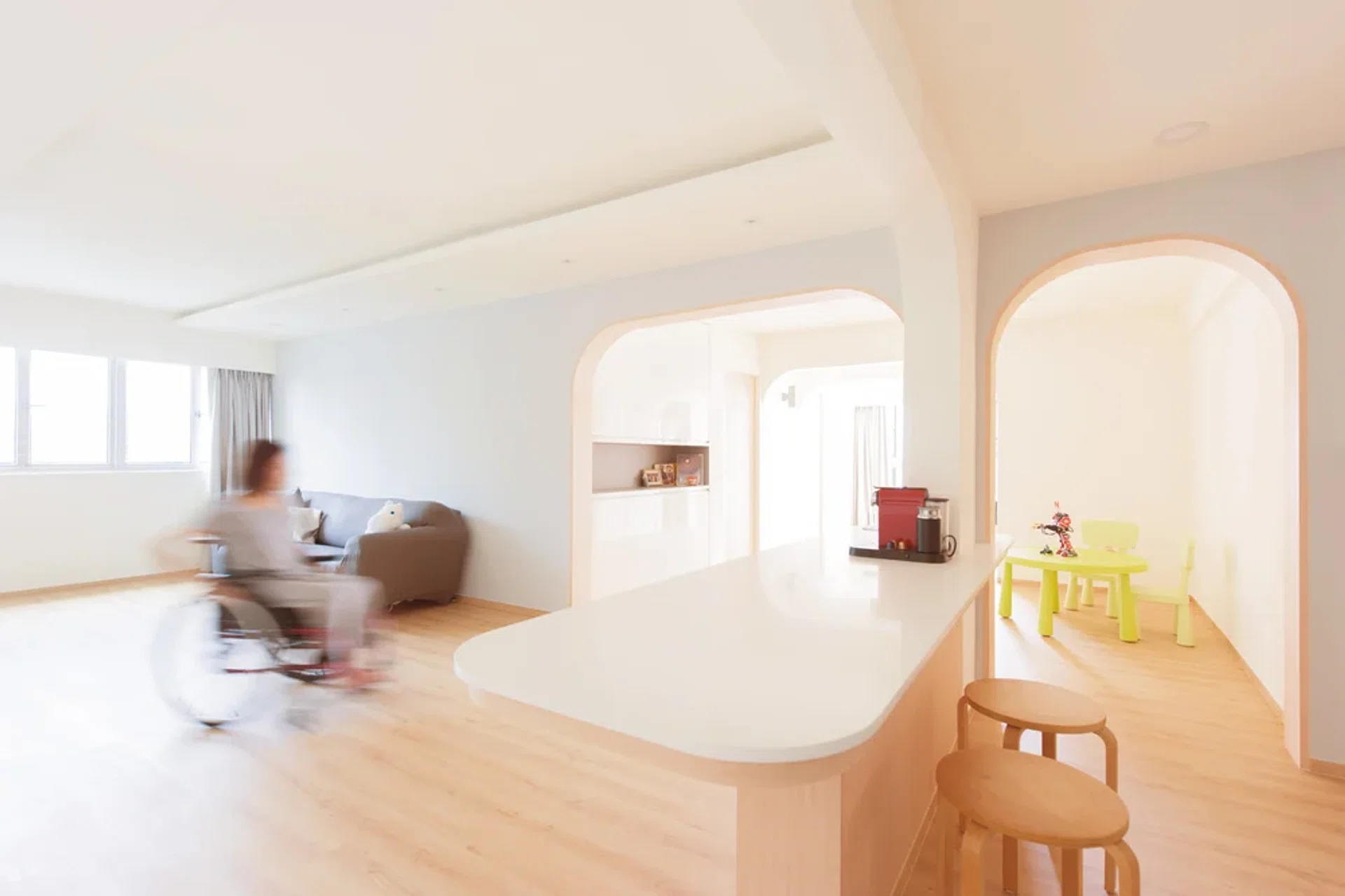
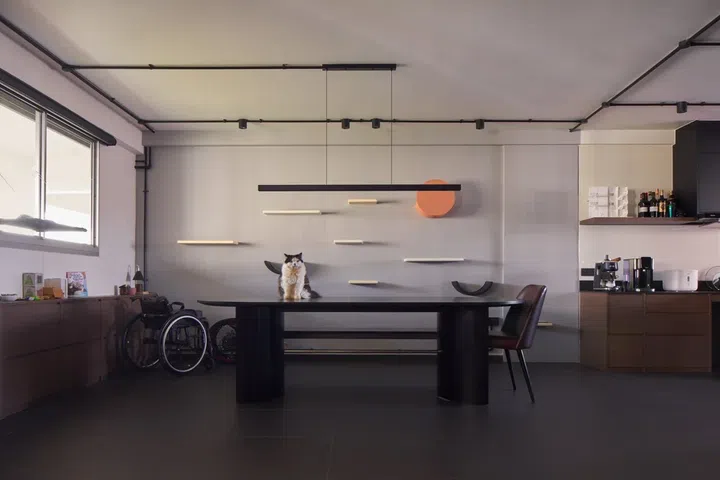
As a rule of thumb, a wheelchair-friendly home should be open and spacious so users have enough space to manoeuvre comfortably, with even room to spare for home-based physiotherapy sessions where necessary. Often, that means keeping built-ins to a minimum and hacking down a wall or two.
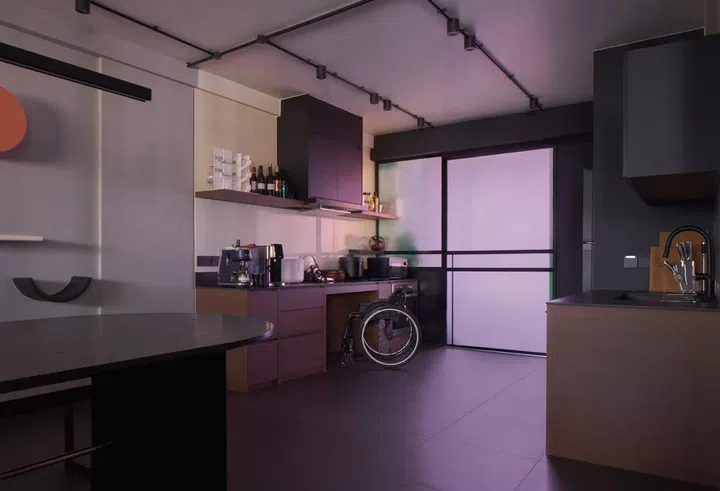
“That’s where we start to introduce ‘soft’ walls like curtains to allow privacy, or even sliding glass doors in areas where we don’t want to compromise on natural lighting,” Charmaine explained.
Materials matter just as much. For users with fall risk, she recommends vinyl flooring as its softer underlay cushions their impact better than tiles. Rough, textured walls are also best avoided – ask anyone who has ever accidentally brushed against a “popcorn’ wall.
Remember to factor wheelchair transfers into your choice of furniture, too. Sofas, dining benches and stools should sit at the wheelchair’s height to facilitate transfers, and your tabletop should ideally be curved at the corners with plenty of legroom underneath.
3. Kitchen
A pull-down rack in the kitchen makes life easier for almost everyone, but for wheelchair users, it’s necessary for keeping essentials handy. Likewise, kitchen appliances should be placed on the countertop instead of overhead cabinets, with power points positioned comfortably within arm’s reach.
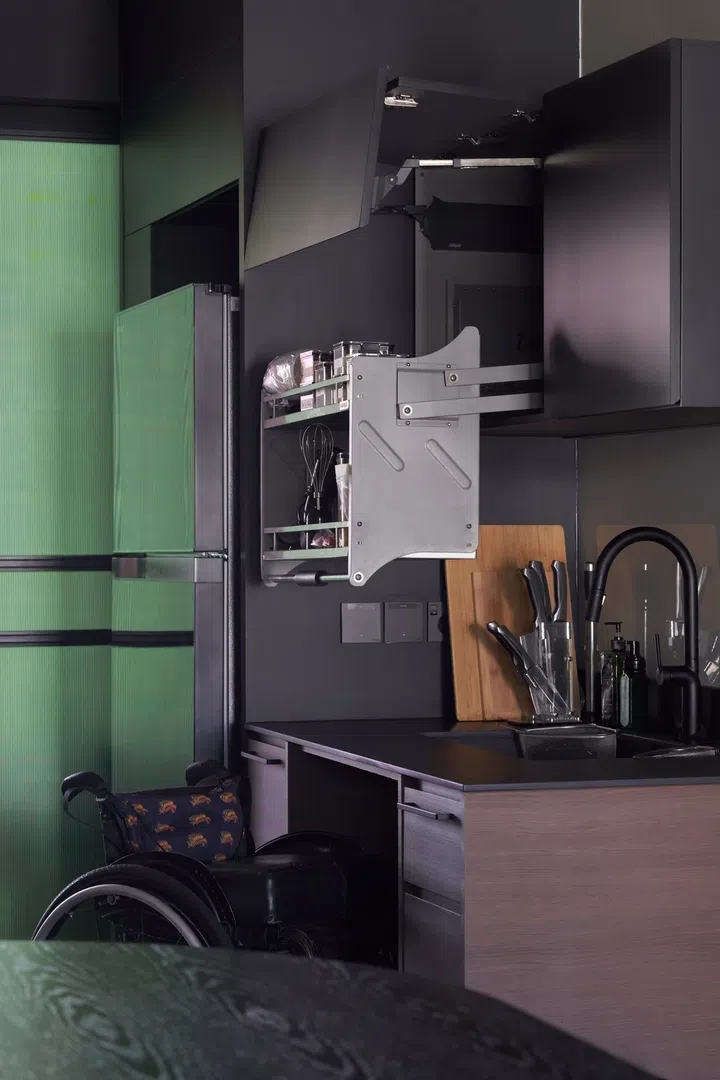
Pulling this off for a cooker hood, however, isn’t that simple. In one project, Charmine initially considered a downdraft cooker hood, which could be activated while seater. But she soon realised that its motors, concealed within the counter, would interfere with her plans for a recessed niche at the same spot. The solution? A remote-controlled hood mounted above the hob.
“We located the switches at the side of the recessed niche so the homeowner can turn the hood on and off easily,” she added.
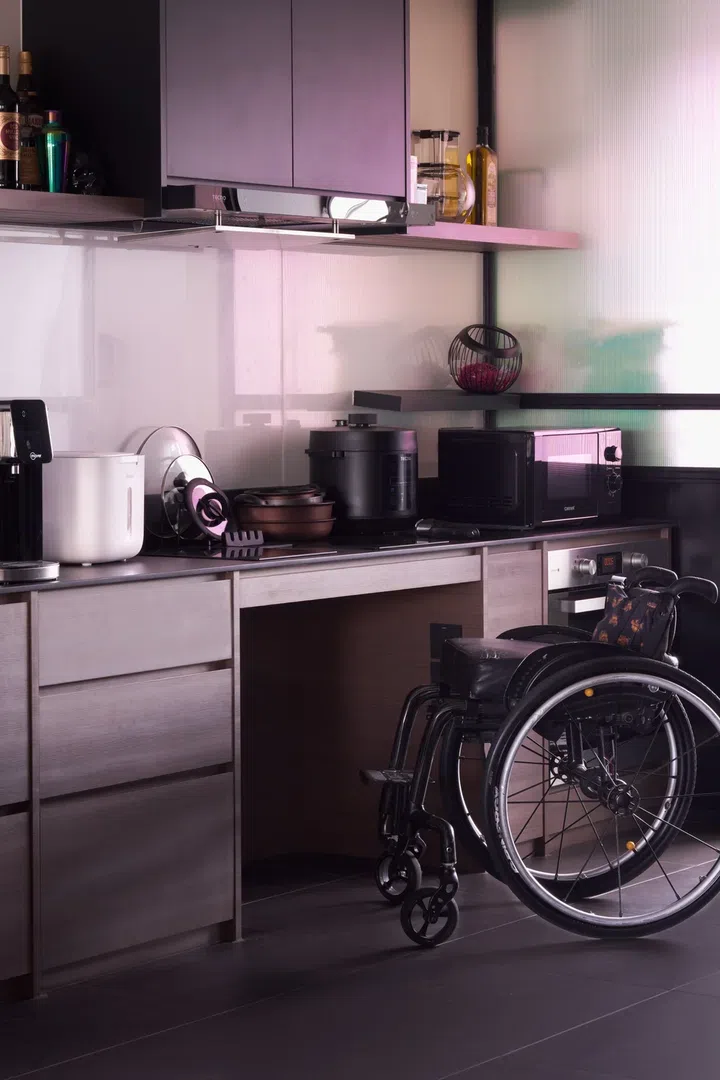
The same logic applies to the rest of the home in the forms of an automated laundry rack, voice-activated fans, and air-conditioning units linked to the Google Home system.
“These smart appliances have made things a lot more convenient for the client.”
4. Bedroom and bathroom
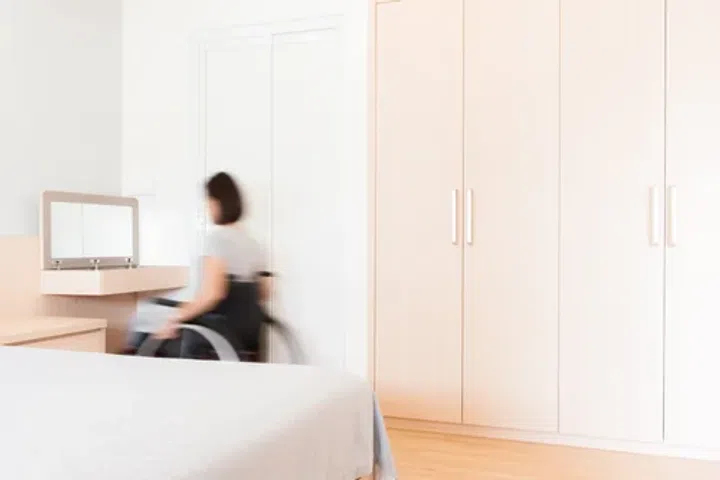
According to Charmaine, the ideal position for the bed is in the middle of the room, with sufficient clearance on both sides for wheelchair access. The combined height of the bed frame and mattress should also align closely with the wheelchair to make transfers safer and easier.
To minimise movement within the room, she recommends open wardrobes and pull-out ironing boards that tuck neatly away. For the bathroom entrance, sliding doors — particularly glass ones that still allow natural light through — also work better than swinging doors.
Within the bathroom itself, positioning the vanity counter away from the WC and shower zone frees up more space for wheelchair transfer, while a recessed niche beneath the sink improves access to personal care products.
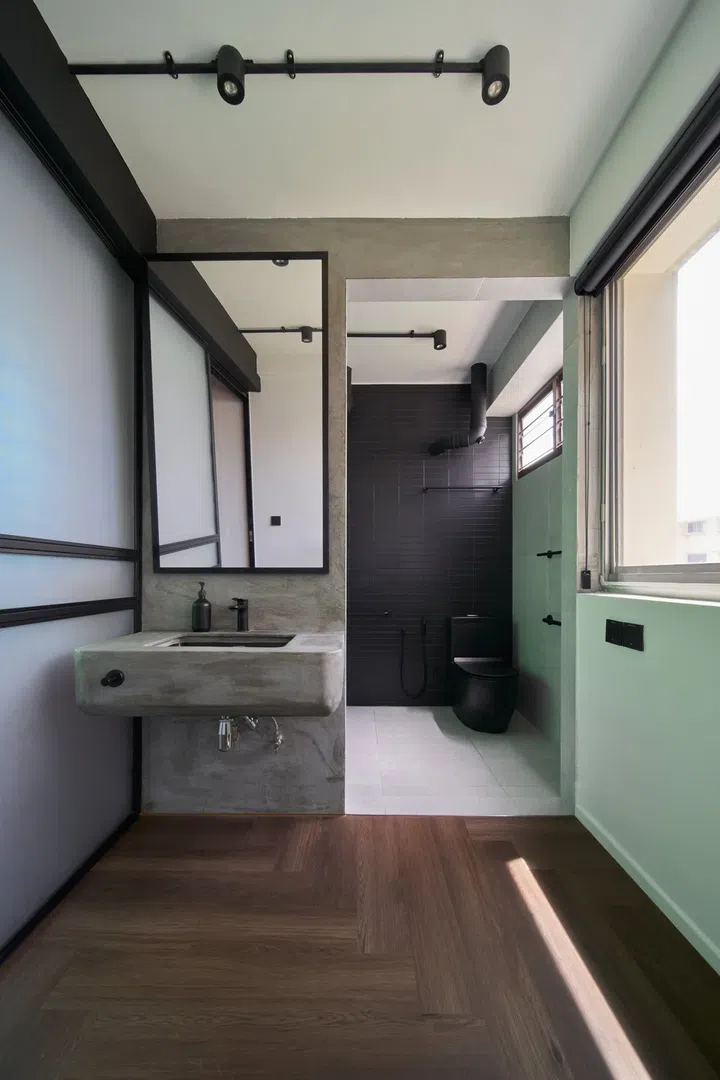
There should also be no kerbs, dividers, or changes in floor level between wet and dry zones. A gentle gradient keeps water where it belongs, and anti-slip tiles are non-negotiable.
“We always check the slip resistance index, and something like R9 to R10 is a good index to go for wet areas,” says Charmaine.

As for shower benches, there is no one-size-fits-all solution. Some users prefer fixed benches, while others favour movable ones they can reposition as needed. Those who use bathroom wheelchairs may not require one at all.
“Every wheelchair user moves through a space differently, so it really boils down to understanding their conditions, abilities, and daily routings, and adapting the home to them.”