
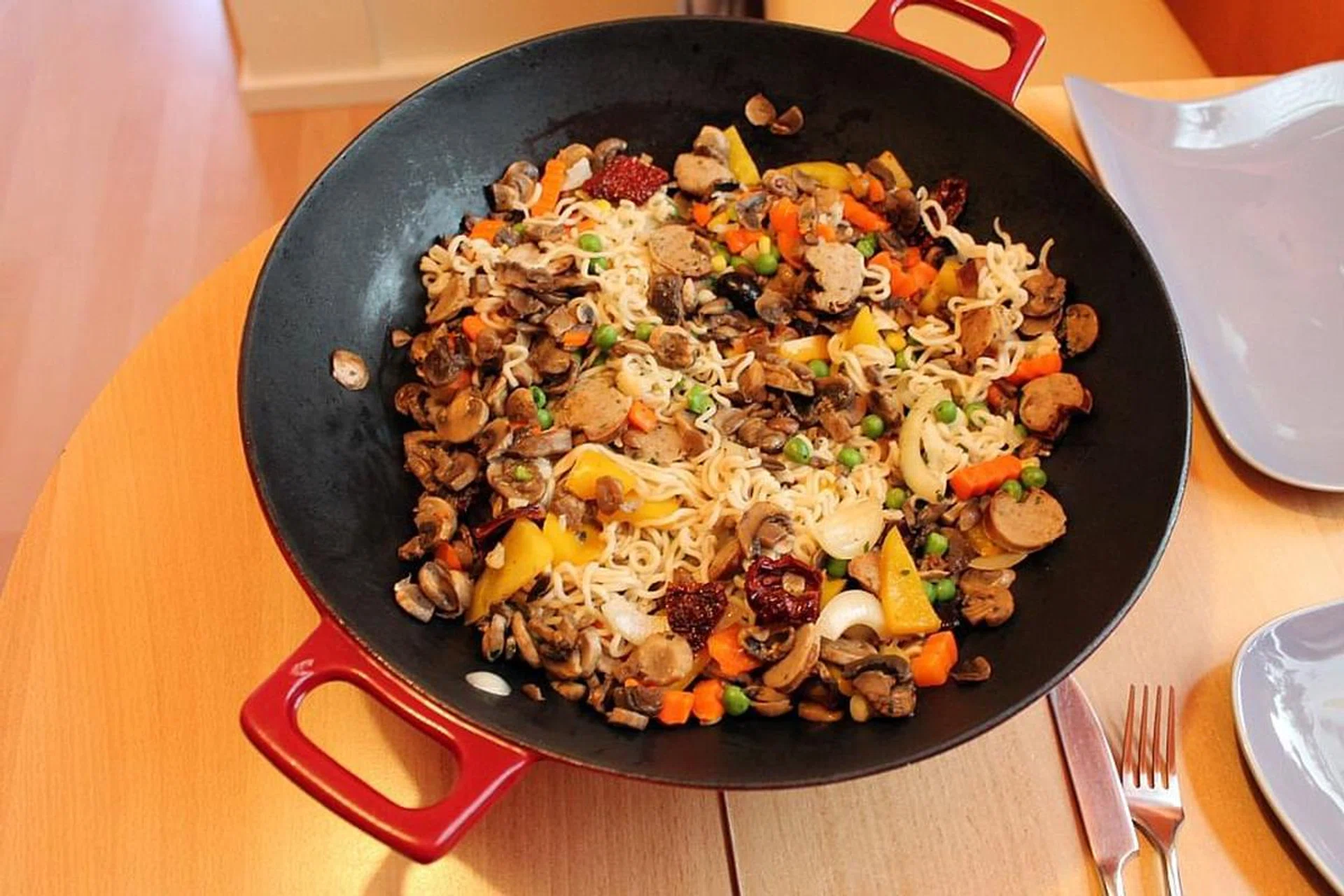
The cooking wok, a versatile and iconic kitchen tool, originated in China thousands of years ago. Its history and design reflect the practical needs of ancient Chinese societies, evolving from a simple cooking vessel into a staple in East and Southeast Asian cuisines. Here’s a look at where and how woks came into existence:
Origins of Cooking Woks
The exact origin of the wok dates back over 2,000 years, likely from Ancient China during the Han Dynasty (206 BCE – 220 CE) or even earlier. Archaeological evidence suggests the use of metal pots with similar concave shapes, indicating that early Chinese societies were already experimenting with vessels designed for even heat distribution and cooking efficiency.
Initially, these cooking vessels may have been used over open flames or charcoal. The shape of the wok, with its rounded bottom, was ideal for use on a traditional Chinese stove, where wood or charcoal could be arranged around the bottom for even heating.
Stir-Frying and Multi-Purpose Cooking
The design of the wok—a rounded bottom and high, sloping sides—allowed for a variety of cooking methods, including stir-frying, deep-frying, steaming, and boiling. Its shape made it easy to push ingredients up the sides, where they stayed warm without overcooking, while new ingredients could be cooked at the center.
Stir-frying, a cooking technique that became synonymous with the wok, may have developed later in Chinese culinary history, especially during periods when fuel (like wood or charcoal) was scarce. The wok’s ability to cook food quickly with minimal oil and fuel was invaluable, making it an essential tool for households looking to conserve resources.
Cooking Wok Materials
Early woks were made from cast iron or carbon steel, materials that could withstand high heat and conduct it well. The development of iron smelting and metalworking in China significantly impacted the production of durable cooking tools like the wok.
Carbon steel eventually became the preferred material due to its light weight and excellent heat conductivity, making it easier to maneuver for stir-frying and other quick cooking methods.
Wok Hey
The wok’s design has remained relatively unchanged because of its versatility and efficiency. Its shape allows for high heat, quick cooking, and a unique flavour profile, often called “wok hei” (breath of the wok), which is achieved by cooking food at very high temperatures. This smoky, charred flavour became highly valued in Chinese cooking and is difficult to replicate with other cooking tools.
Buying a wok is only the first step to being a great Asian cook. You still have to maintain it! Here are the things you need to do, to ensure your wok is in tip top condition and will last you for years.
How to Season a Cooking Wok
- Heat the wok over high heat for 10min. Twirl it over the flame to heat it evenly. Sediments should emerge from the wok.
- Rinse and dry the wok.
- Add salt to cover the base of the wok. Fry the salt until it turns brown or grey. The salt helps to remove small dirt particles.
- Wash and dry the wok.
- Cook 1kg of fresh pork lard (available from butchers in wet markets) over low heat for 30min, coating the wok evenly with the fat.
- Wash and dry the wok.
- Stir-fry a bunch of vegetables in the wok to get rid of the metallic taste.
Maintaining a Cooking Wok
Wash it with hot water and a sponge, or use a bamboo brush (available at kitchenware stores). It’s okay for the wok to be slightly oily after washing as the grease seasons it and prevents it from rusting. Don’t use a scouring pad – this will remove the natural non-stick coating.
When food starts sticking to your wok, you can crack four beaten eggs into the wok and twirl to let the eggs cover as much of the surface as possible. The fat in the eggs is a natural lubricant.