
A 27-year-old filmmaker built his first home around vintage finds, including 1980s camcorders
Drawing on his filmmaking background, Jacky Chung brings the art of set design into his 480 sq ft studio in Petaling Jaya, Malaysia, where vintage finds, warm colours and contemporary pieces tell an intriguing story.
By Joe Lim -
Share this article
Who Lives Here: A 27-year-old filmmaker, Jacky Chung
Home: Rented studio apartment in Petaling Jaya, Malaysia
Size: 440 sq ft
At 27, Jacky Chung spends his working days helping brands tell stories through film. Based in Selangor, Malaysia, he works primarily on commercials for brands such as Honda, where lighting, colour, composition and props shape what viewers see on screen. At home, he applies that same visual sensibility to a more personal project: creating a home that reflects his own tastes and his affection for vintage finds.
His interest in interiors grew alongside his exposure to carefully styled commercial sets and, later, the interior design content he encountered on Instagram. Conversations with Mandy Gioh, his boss’s wife and a renowned interior designer in Malaysia, also gave him opportunities to learn more about the field and its evolving trends.
Yet Chung’s instinct for arranging a space was not something he discovered solely through work. “I would say enhancing an interior came naturally during my mid-20s. I always liked to organise spaces to make things look chic and lived-in. When I see a blank space, I draw on my observations from film and beautifully styled commercial sets and apply them to my home decor journey,” he explains.
A filmmaker’s eye for the everyday
Colour has become a way to bring his ideas to life. “Colours are important in filmmaking, which is why I wanted to play with different colours in my house,” he adds.
His boss’s high standards for interior quality, as reflected in his home, also inspired Chung. But his affinity for objects with a past goes back much further, to childhood, when he kept a newspaper clipping from the 1930s. “I thought I would save it and then frame it up when I had a place of my own,” he recalls.
It was an early indication of how he would eventually approach his own home: not simply as a space to furnish, but as a place where objects could carry memories and personal meaning.
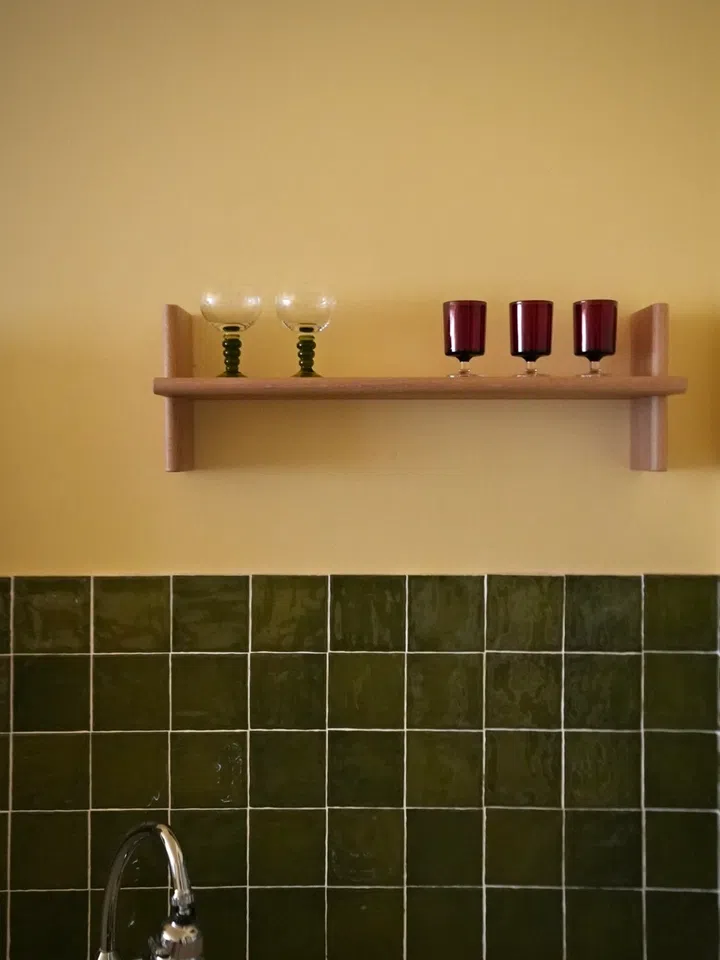
A sophisticated palette of colours in Jacky Chung's house in Petaling Jaya, Malaysia.
Finding a blank canvas in Petaling Jaya
In the last quarter of 2025, Chung decided to buy a place of his own and began searching for a suitable property. After months of looking, he found a one-bedroom studio in Petaling Jaya that offered something he had not expected to come across so easily.
“I was actually surprised I could find this blank one-bedroom studio home in Petaling Jaya, because it’s actually quite rare,” he says.
The location was another draw. Set in a leafy environment close to a park and a food mall, both within walking distance, the property offered the suburban atmosphere he preferred to the pace of city living. “I prefer the suburban feel, more comfortable than the bustling city life,” he says.
Chung moved out of his family home in January 2026 and into the studio while a contractor carried out minor works. The contractor happened to be a friend who had previously helped him with his filmmaking work, making the collaboration a natural fit.
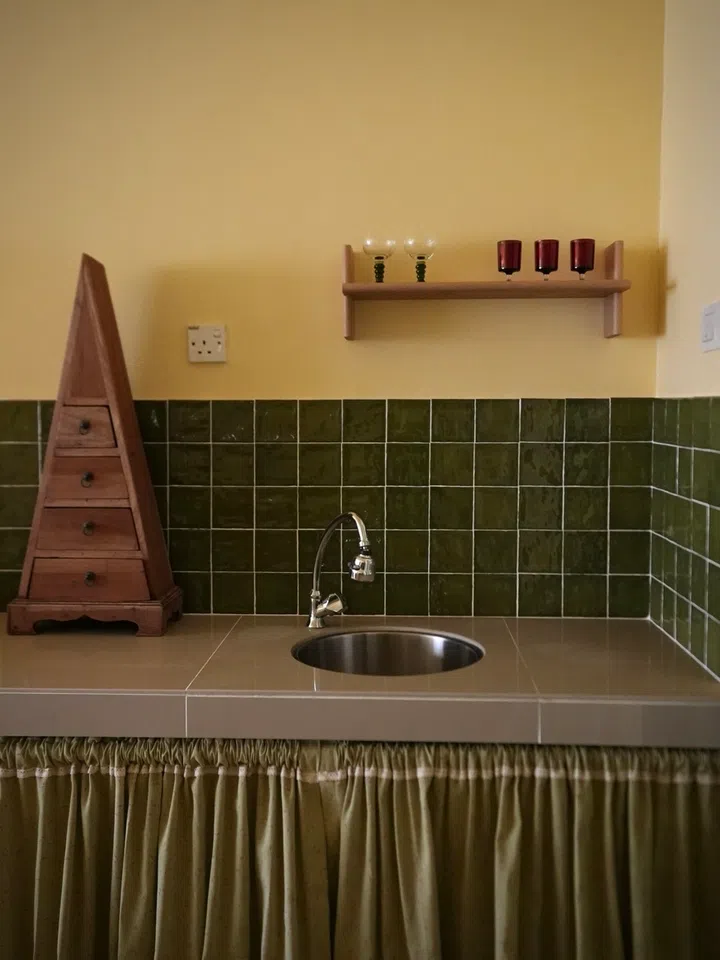
Jacky Chung bought olive-green kitchen backsplash tiles from Taobao and applied them himself.
Chung also took on some of the work himself, including installing a pelmet for the curtain track and tiling the kitchen backsplash with olive-green tiles sourced from Taobao. It meant putting up with several weeks of inconvenience, but the hands-on process gave him a role in shaping the home beyond selecting its furnishings.
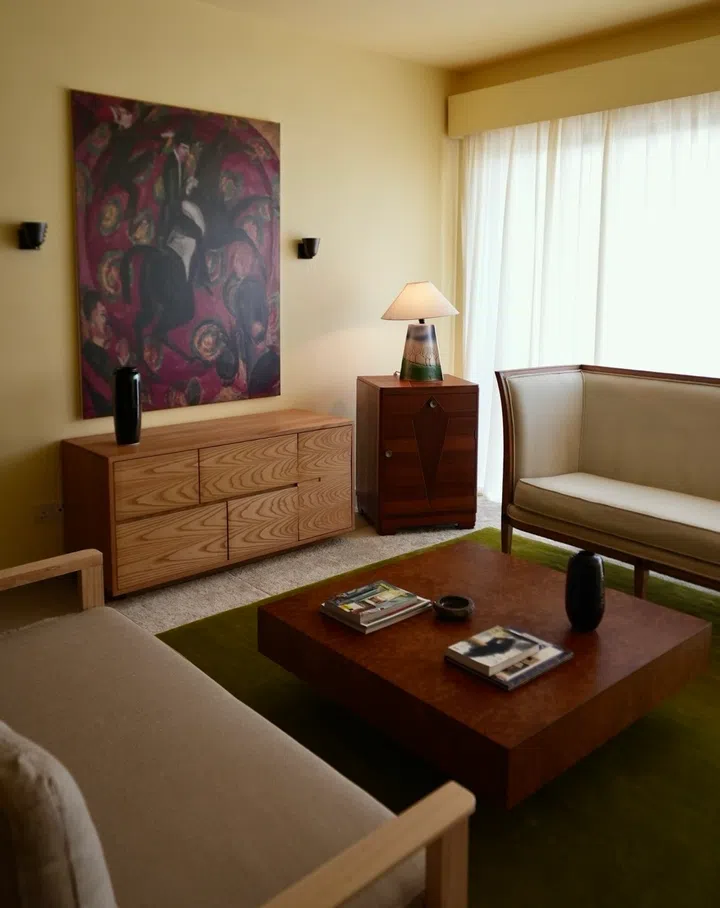
Chung lives in a rented studio apartment spanning 480 sq ft (approx. 44.6 sqm).
A warm palette for a vintage sensibility
At 480 sq ft, the studio has limited space, but Chung’s use of colour gives it a distinct identity. The light butter-yellow walls immediately draw the eye, setting a warm backdrop for the wooden furniture and vintage objects throughout the home.
“I was inspired by old homes in nostalgic places such as Melaka and Penang, and the yellow hue brings out the warmth of wooden furniture,” he says.
Olive green and brown extend the palette, bringing depth to the interior without overwhelming its modest proportions. The approach also reflects Chung’s filmmaking instincts, in which colour helps establish atmosphere and gives individual elements a visual relationship with one another.
Step inside and the vintage pieces lend the studio a sense of history, while contemporary furnishings keep it grounded in the present. An IKEA sofa bed provides a practical anchor for everyday use, complemented by an olive-green rug that defines the living area. Nearby, a burl-wood coffee table with real burl veneer makes a strong impression. Although its appearance suggests an older piece, it is a new purchase, with its generous proportions giving the room a sense of presence.
The contrast between old and new is deliberate. Rather than recreating a period interior, Chung draws on Art Deco and Mid-Century modern styles, curating furniture, objects and lighting that reflect his preferences while allowing the studio to function as a contemporary home.
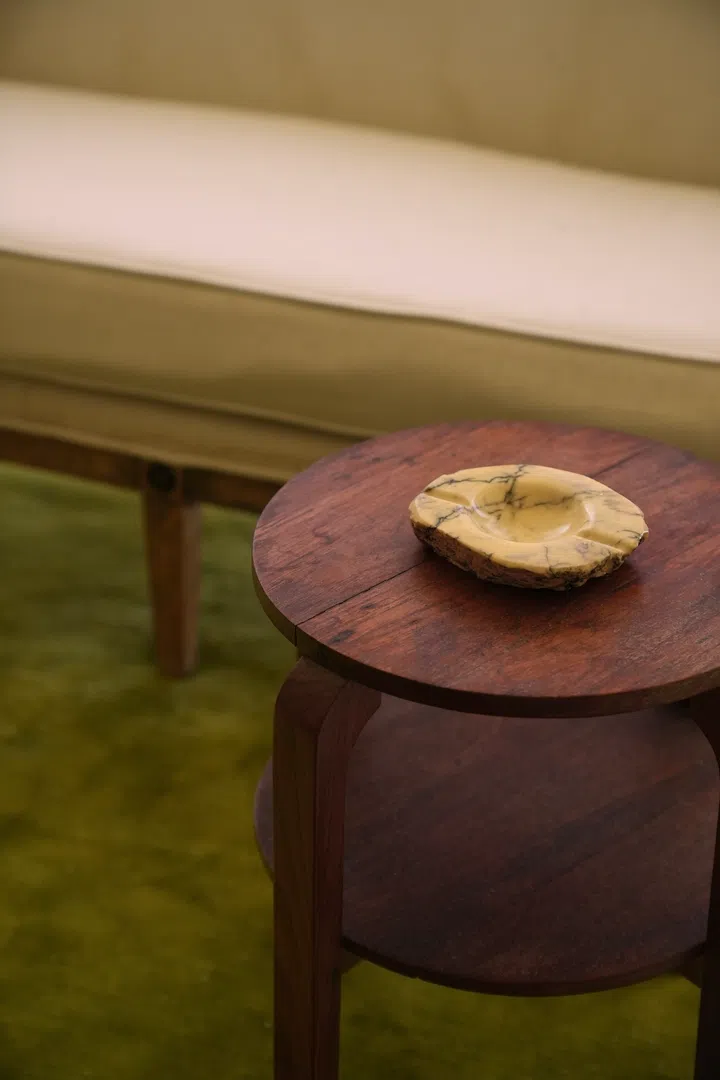
Mid-Century and Art Deco design languages permeate the house.
Vintage finds with stories to tell
Among the possessions Chung wanted to accommodate in his first home is a collection of vintage JVC camcorders from the 1980s, a reminder of his filmmaking interests. His wider appreciation for vintage furniture and decorative objects, however, extends beyond his professional life.
He is drawn to pieces that may appear imperfect or weathered but have a distinct character. For Chung, signs of age are part of their appeal, giving each object an identity that a brand-new purchase may not offer.
One particularly satisfying discovery came during a visit to Amcorp Mall in Petaling Jaya, where he found a teak side table dating to the 1960s. The experience reinforced his preference for hunting down older pieces rather than buying everything new.
“It’s the largest mall in Southeast Asia for thrift and vintage objects, and it’s located in Petaling Jaya, so close to my home! I also prefer to buy vintage than brand new. The side table was a serendipitous find!” he says.
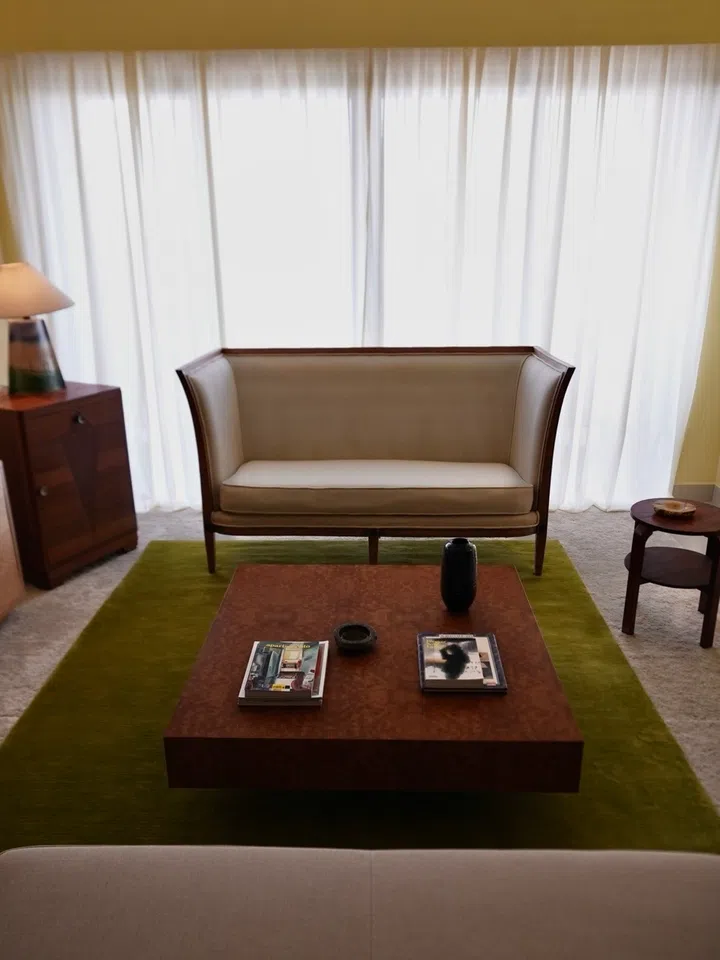
"Furniture and furnishings, mostly vintage and sourced secondhand with some new pieces mixed in, came to approx. RM 13,760 separately," shares Chung.
Another treasured acquisition came through Carousell: a vintage high-back settee sold by a French man who lived in Malaysia. Its more formal silhouette introduces a contrasting note to the living area, facing the IKEA sofa bed.
Elsewhere, a sideboard made of solid ash occupies a carefully chosen position where sunlight streams across the wood grain. “I really love this piece because I purposely placed it in a spot where the sun streams in to bring out the allure of the wood grain,” Chung says.
A cupboard salvaged from a house in Melaka that was about to be demolished adds another layer of history. Chung bought it from an antique dealer, giving the piece a place in a new setting. A lamp with a ceramic base painted with a pastoral scene provides another conversation starter when guests visit.
These are not merely decorative accents. Their varied origins, materials and finishes give the studio a collected quality, suggesting a home assembled over time rather than furnished in a single shopping trip.
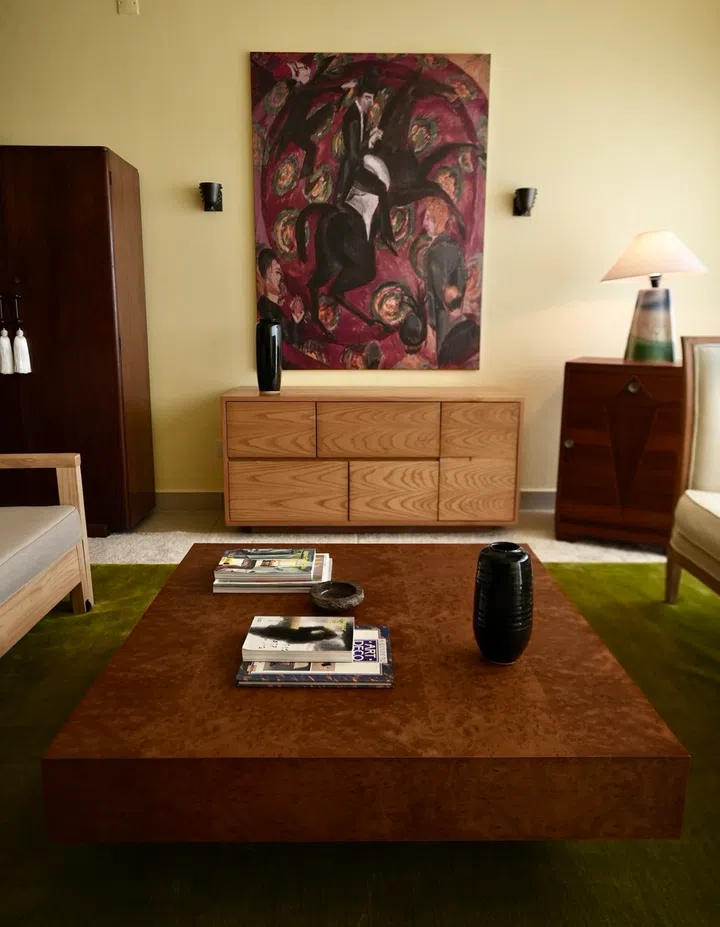
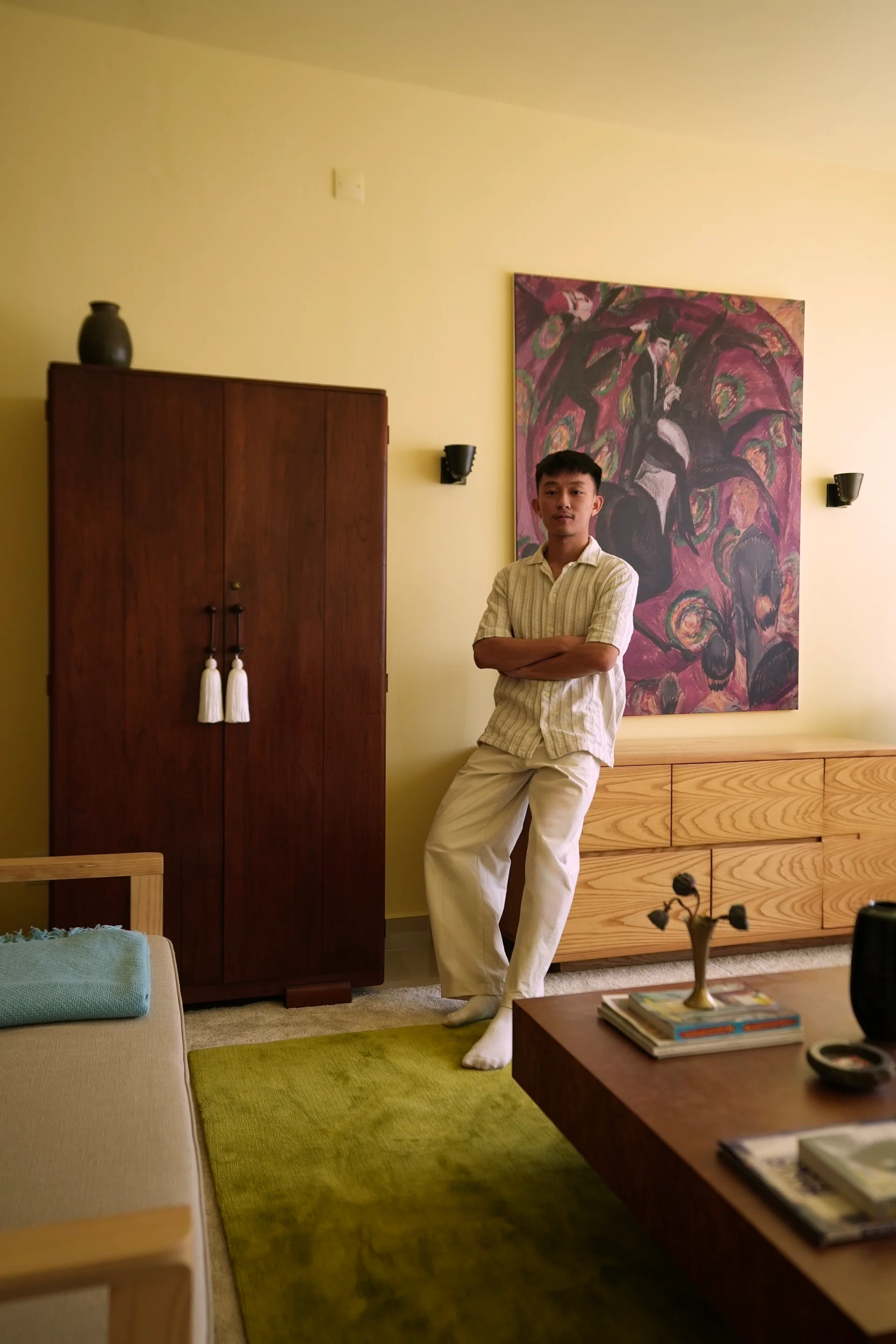
A printed canvas piece titled ‘Circus Rider’, dated 1914, flanked by two Art Deco sconces in the living room.
A considered mix of old and new
The walls continue the narrative through a selection of artworks and lighting. A printed canvas piece titled ‘Circus Rider’, dated 1914, is complemented by two sconces with Art Deco influences that Chung purchased from Taobao.
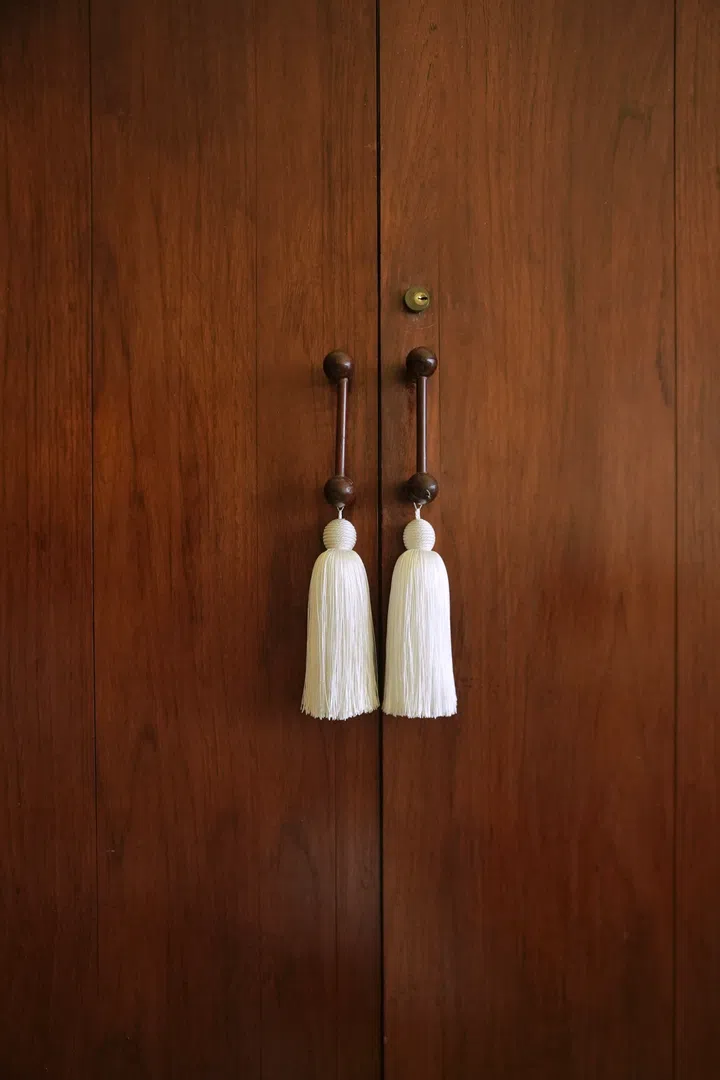
To the left is a wooden cupboard adorned with silk tassels.
Nearby, a tall wooden cupboard with white silk tassels on its handles introduces another distinctive detail.
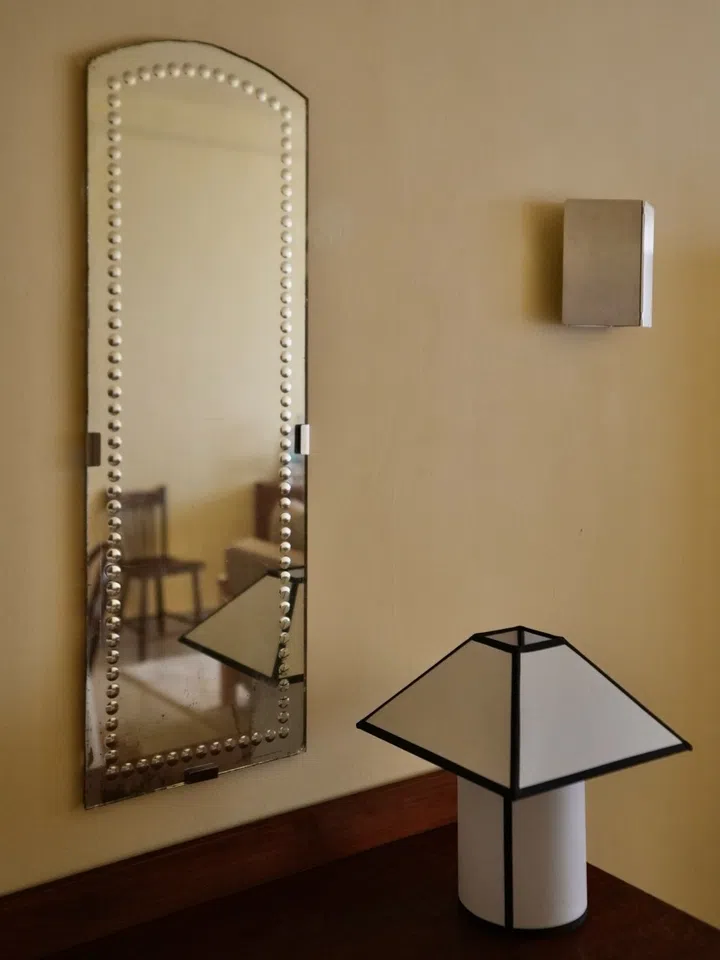
A vintage dimpled mirror, Alvaro Ucha Rodriguez for Lichen NYC sconces, and a monochrome HAY ‘Ava Pyramid’ table lamp..
Elsewhere, newer pieces provide contrast. A monochrome HAY ‘Ava Pyramid’ table lamp sits on a console beneath a vintage dimpled mirror that was given to Chung. Two brushed-steel silver sconces designed by Alvaro Ucha Rodriguez for Lichen NYC flank the arrangement, which faces a small dining table where he takes his meals.
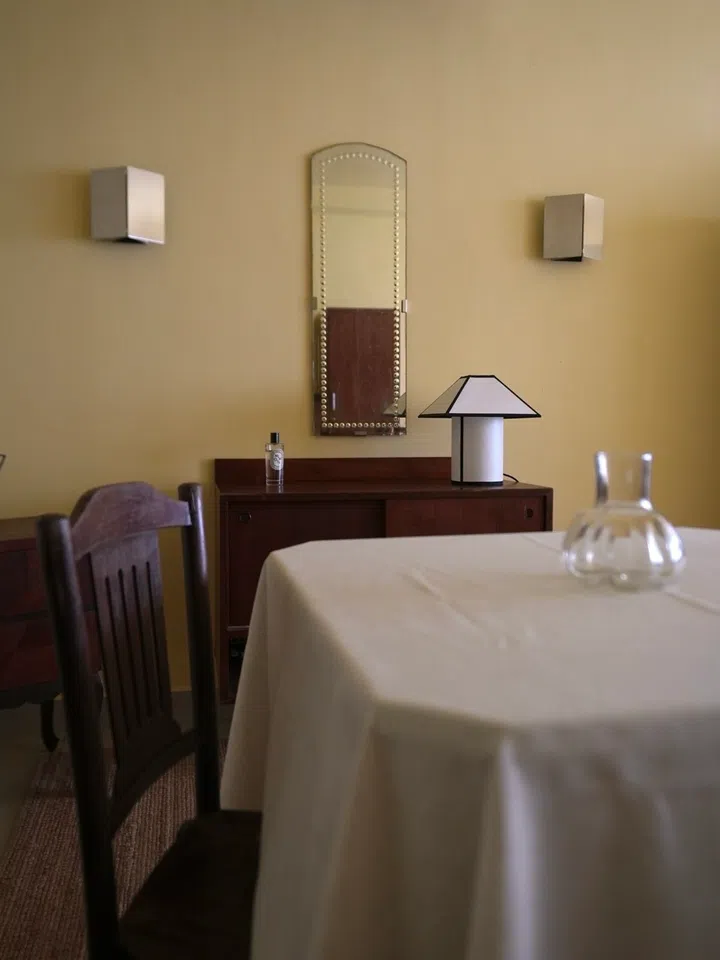
A small and quaint dining table setup.
The resulting interior is eclectic without feeling arbitrary. Each object must earn its place, whether through its material, form, provenance or personal significance. That selectivity is particularly important in a studio where every square foot counts.
Making every piece count
Living in a compact space has also made Chung more deliberate about what he brings home. His preference for vintage objects means that he is often looking for pieces with a particular character or connection to an era, rather than buying something simply because it is fashionable. Not every vintage find, he acknowledges, will suit the interior.
“I think it’s all about buying quality than quantity,” he says.
That principle helps explain why the studio balances contemporary essentials with more expressive vintage pieces. The IKEA sofa bed serves a practical purpose, while the wooden furniture, old camcorders, artworks and distinctive lighting give the home its personality. Modernity is present, but it does not dictate the interior’s character.
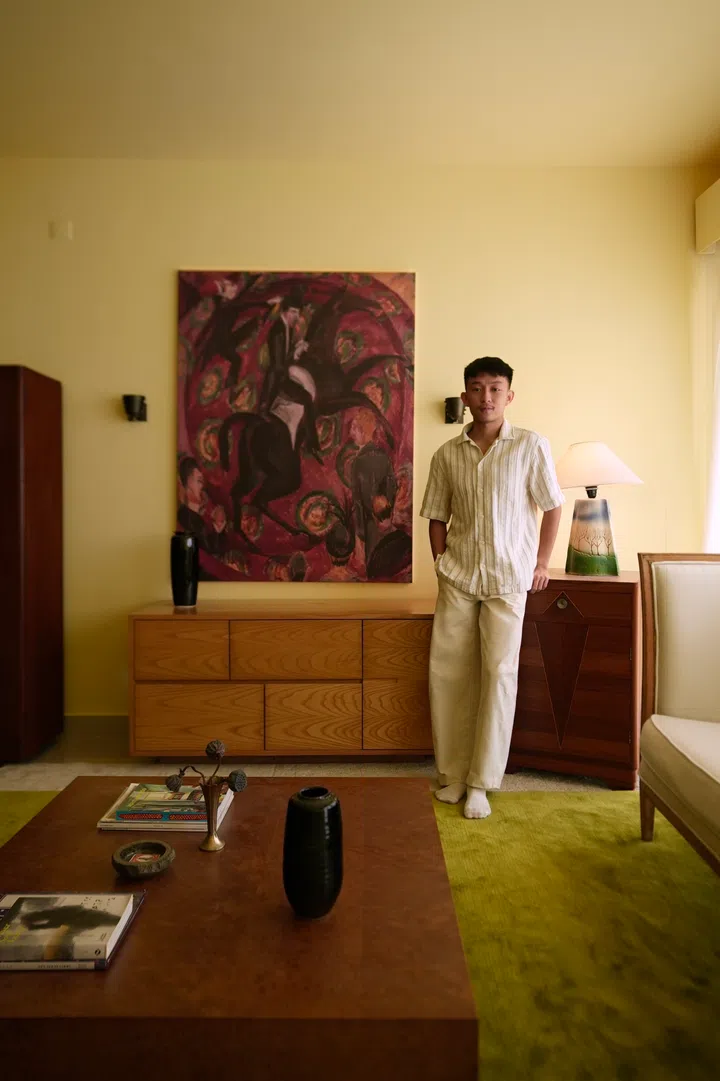
Jacky Chung poses for a photo in his own home in Petaling Jaya.
For Chung, creating a home has become an extension of the visual storytelling he practises at work. The difference is that he is no longer arranging a set for a commercial shoot, where every object serves a brief and the scene exists for the camera. Here, the choices are his own, shaped by the way he wants to live and the objects he has collected along the way.
That instinct can be traced back to the newspaper clipping from the 1930s that he kept as a child, with the intention of framing it when he finally had a place of his own. Long before he found his studio, Chung was already holding on to a piece of the past for a future home.
Now, surrounded by objects that have lived other lives before finding their way to Petaling Jaya, he has created a space that reflects more than a taste for vintage design. It is a home shaped by a filmmaker’s eye, a collector’s patience and the personal history he chooses to bring into the present.