
A single design element inspired it all: A pleated Japanese-style door started a Japandi home renovation
“I saw these wooden panels in London and knew I loved them. This wooden pleat detailing is probably the nucleus, the starting point, of the whole house. It was built around that because I was sure I wanted the bedroom to have these features. Then, it started building on how to make the whole house cohesive, and then everything just came together.”
By Shannon Osztonits -
Share this article
Creamy ceramics and decor styled with intention; Japanese-inspired pleated slat doors, frames and design choices; soft lantern-like chandeliers; and a space dripping in natural sunlight and warmth…Right from the word go, homeowner, wife and mom, Alicia, knew exactly what she wanted: a Japandi-style home, which would become a haven of calm, relaxation and nourishing family moments.
“I wanted the home to be a place where I feel calm when I come back from work and that I know I will still feel that way when I walk into this space in 20 years…Timeless, neutral, that Zen feeling,” says the homeowner.
The couple appreciate countries like Japan but also European cities such as France, so their lean towards the Japandi design style is perhaps a natural affinity. Also close to Alicia’s heart is her love for nature–a defining factor that sold the homeowners on this property.
“I think that with properties, you can change a lot of the interior, but you cannot change the direction facing the view. This unit has very beautiful views off the tree line. From my bedroom, when I look out, I see just trees, and when I’m sitting at the dining table, when I look up, I also see just trees,” explains Alicia. “So, in my eye line, it’s just greenery in every room. That’s what drew me to it. We wanted to buy it immediately.”
Who Lives Here: A 38-year-old wife, her 40-year-old husband, their two daughters and a helper.
Home: 4-bedroom resale Condominium
Size: 1,830 sq ft
Interior designer: Intheory Design
4 Bedrooms, 4 Bathrooms Condo
The condominium comprises four bedrooms as well as four bathrooms (including the helpers). It was a complete gutting that the homeowners took on, employing an interior designer, contractor and a stylist to help with the decor and furnishing of the unit.
Hard to believe now, as you glance across the warm engineered floors throughout the entire home (including the living room and bedrooms), but previously, these were white marble. The kitchen and dining area were replaced with vinyl flooring for durability purposes.
“We gutted these. I was very clear that I wanted this type of wood floor and feeling,” details the homeowner. “I had never heard of the term ‘Japandi’ until I came across it on Instagram.”
Intheory Interior Design Review
Working with Intheory Design on the interiors, Alicia knew she wanted a Japandi interior design theme for their family home.
“I was very clear on the style that I wanted and the pleated doors. How I decided on the interior design studio is that they had a portfolio with a lot of Japandi designs. I believe every designer is very talented, but some can lean into a style, so I did want to find a designer that leans into this specific style,” she explains.
“It was clear in my mind what I wanted, and I required someone who welcomed that and not someone who wanted full reign. Intheory seemed to lean into the Japandi.”
The Japandi Philosophy
Many Singaporean homeowners pursue the Japandi interior design style, where functionality and form are best friends. It’s all about a space that feels intentionally warm with its neutrally toned palette.
This condo certainly is Japandi, but every space feels very much purposeful; as if not trying too hard to fit the theme, yet it beautifully does so. It’s classic.
A Pleated Slat Story
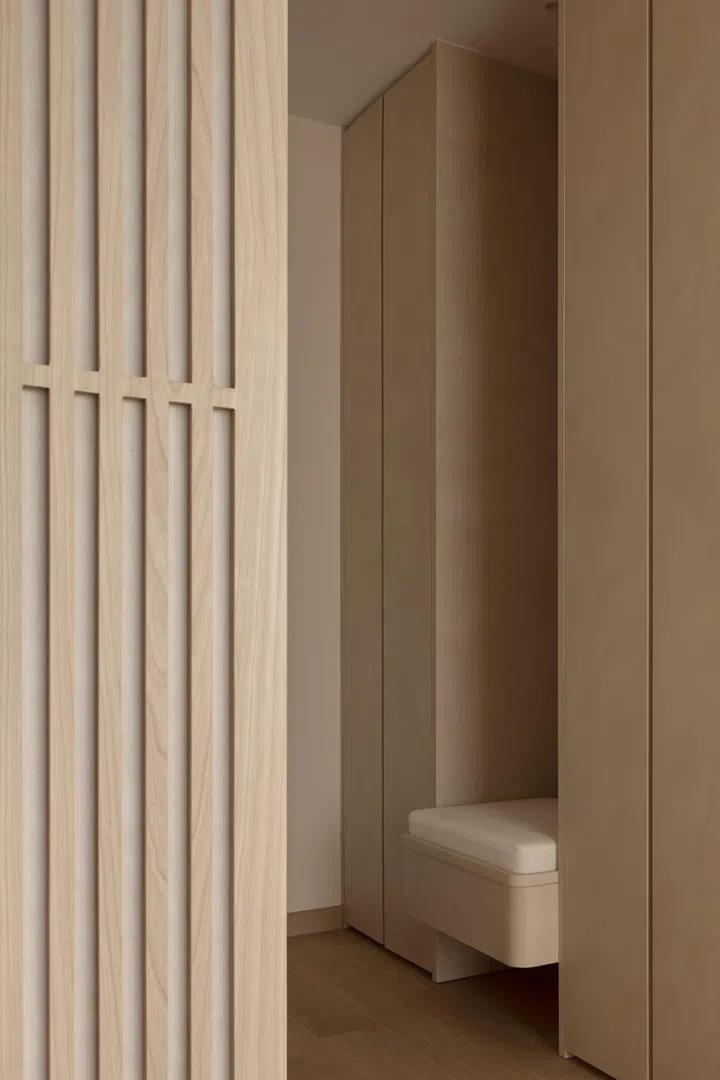
Alicia’s pleated frame details were incorporated in framework and decor, highlighting both design and function. All of the blonde-toned pleated slat work (including the living room and the rest of the house) is constructed from plywood with a light laminate finishing– reminiscent of ash wood favoured in Scandinavian architecture.
The living room door is constructed with Shoji paper, allowing light to filter through.
A Timeless Living Room
Instead of relying on the Japandi’s appreciation for form-meets-function, there are specific elements that transport you to Japan as well as Scandinavian countries, whether it’s through a piece of decor, furniture or a specific room finishing.
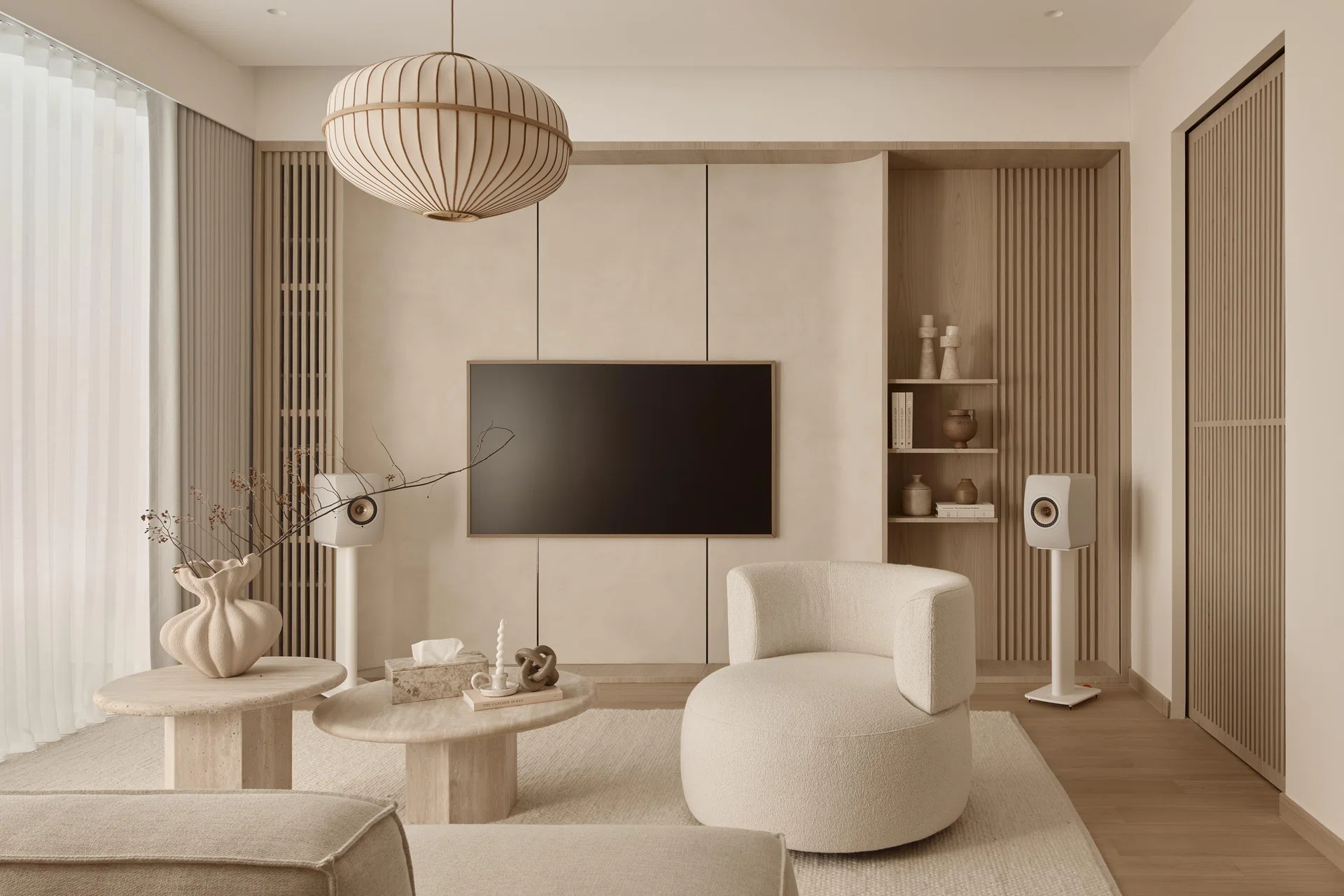
A custom-built TV wall unit was designed with a soft limewash finish and showcases slightly curved edges.
“It was the hardest thing to figure out. I think I pinned about 300 pins on Pinterest,” laughs Alicia.
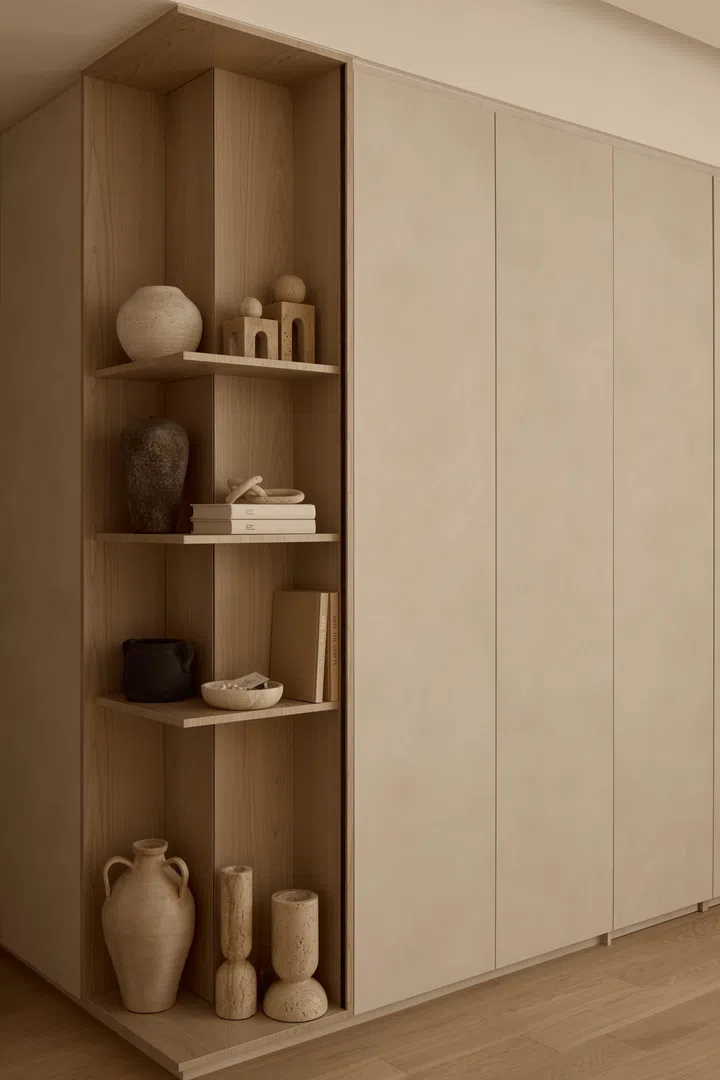
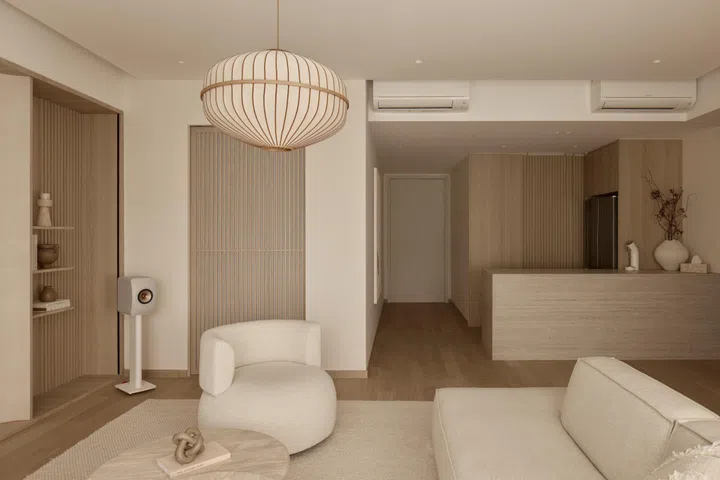
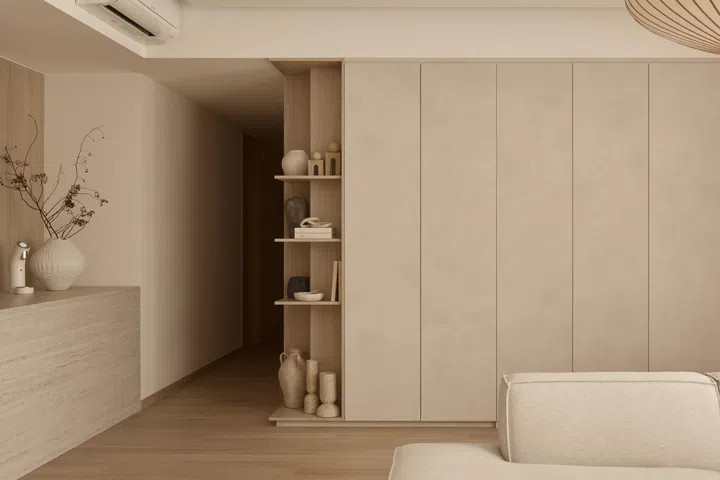
The opposite wall features this same effect, which was built for storage purposes. A Castlery sofa is paired with a marble coffee table set and soft, roundback occasional chair, both from CANCAN Furnishings.
If you’re going to have a pair of standing speakers in the living room, make them aesthetic! This gorgeous set is KEF speakers in Sand Shell on KEF Mineral White Floor Stands.
Tying in the Nordic feeling is the Bolia chandelier–a brand famous for its unique Scandinavian design and craftsmanship.
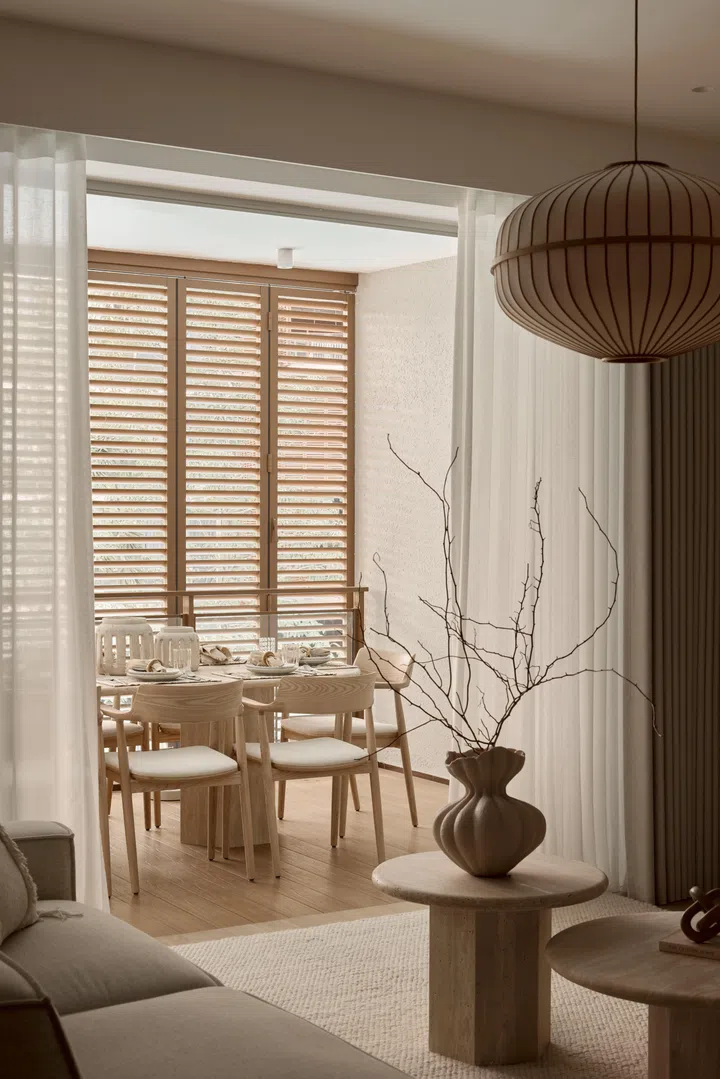
Light and Airy Dining Balcony
From the living room, it interleads to the dining area, which has been set out on the condo’s balcony section. Wood-finish vinyl floors add plenty of warmth to this space, and it doesn’t have that typical “cold” outdoor vibe. Adding to its warmth are the double-lined retractable curtains zoning off the dining room from the living room, with both light filtering and blackout drops.
Whilst dining, the family or visiting friends are enveloped by a feeling of nature with trees surrounding this part of the building outside. Although the shutters are part of the condo’s original design, they suit Alicia’s family home perfectly.
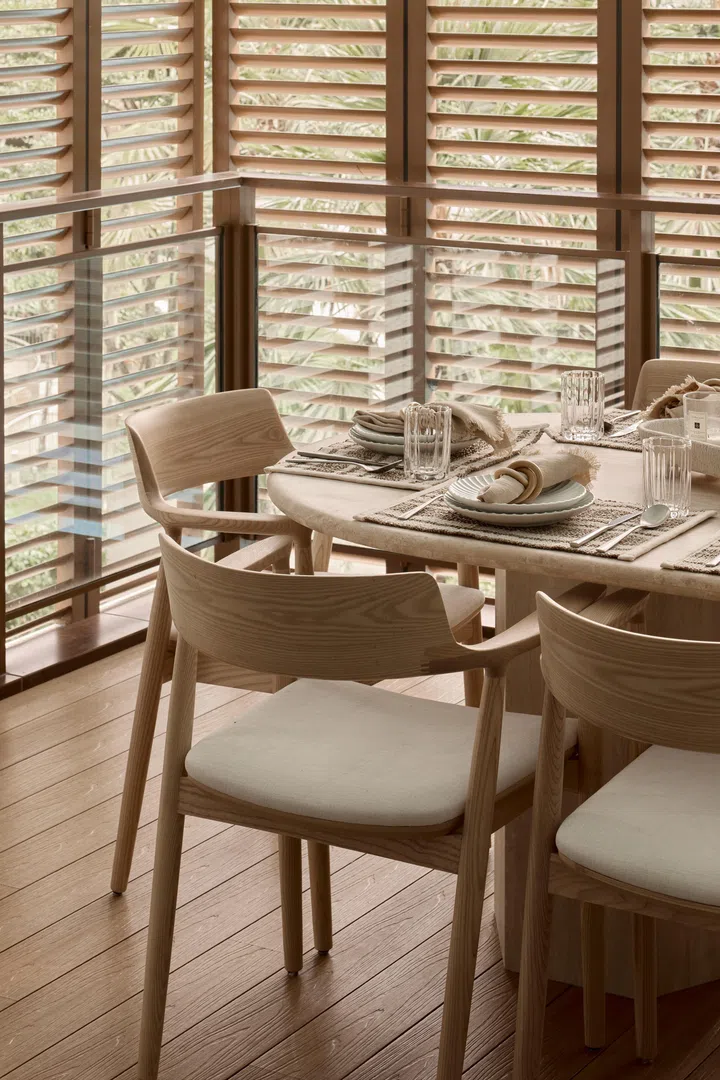
The round-edge dining table from CANCAN provides a soft touch, although it has a travertine tabletop, and the wood and fabric chairs are also from this modern furniture shop. All of these elements continue the home’s primary elements: wood, travertine and natural stone.
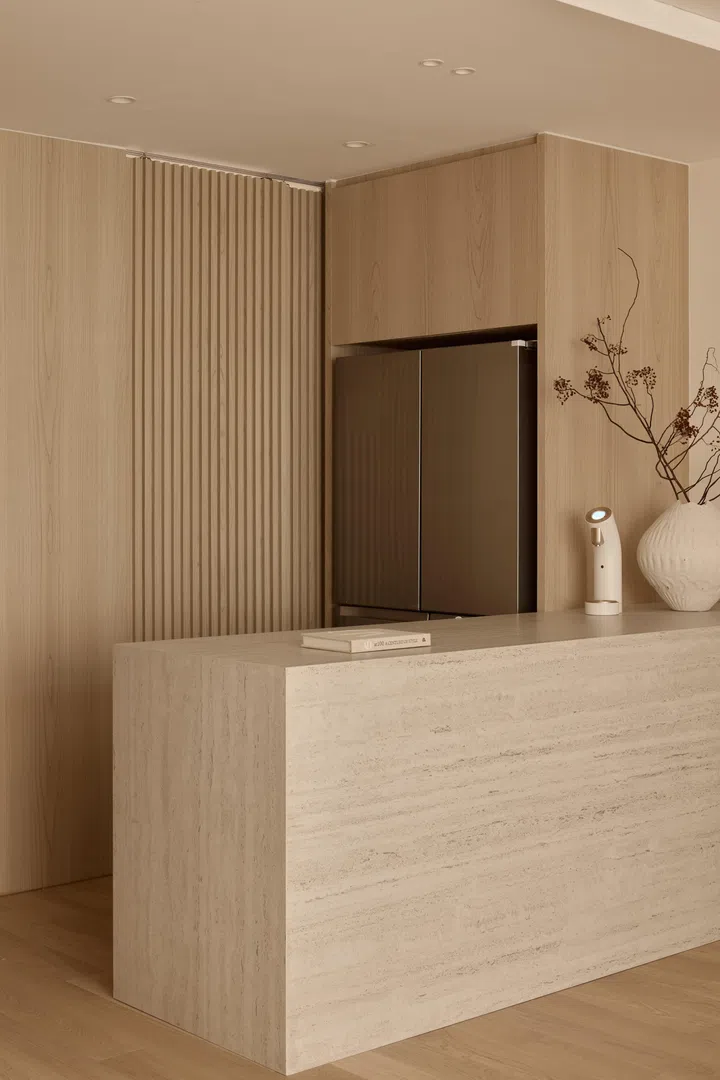
The Dry and Wet Kitchens
Next to the living room is the dry kitchen, comprising a solid block island, made completely of Cosentino’s Dekton surface (Marmorio). The stone-like surface blends harmoniously with the rest of the abode’s zen-like colour palette.
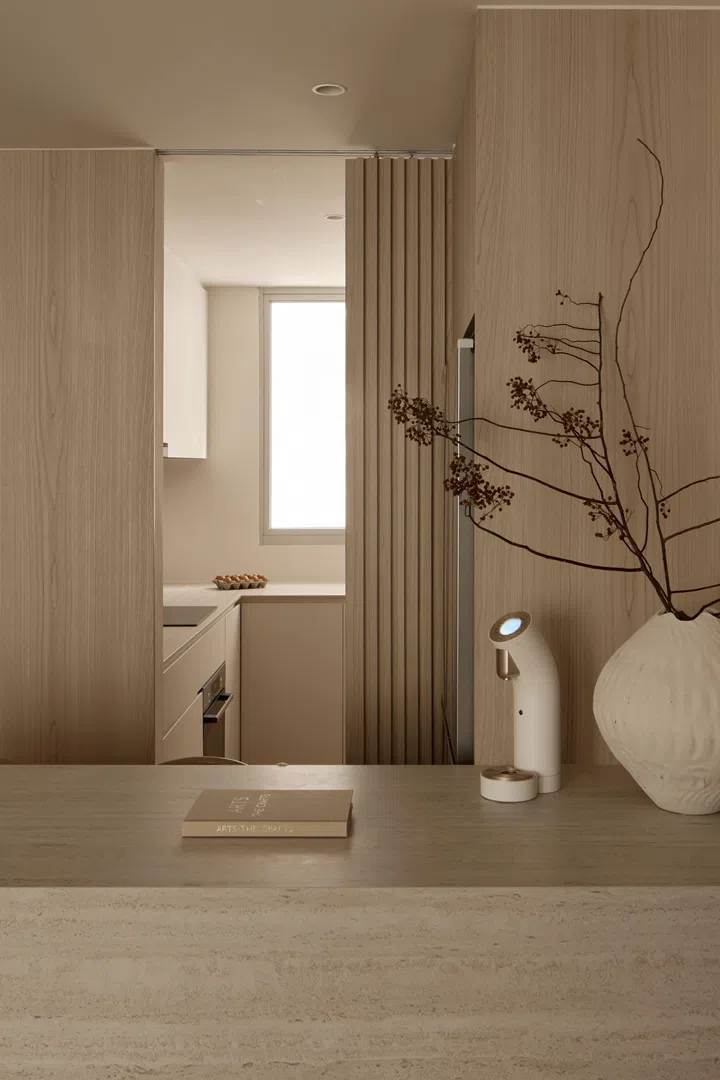
Beneath the counter island is storage, stocking the kids’ snacks and things. There is a fridge in the dry kitchen, too. Another pleated slat door retracts and opens into the wet kitchen, where major appliances such as the oven, stove, dishwasher, washing machine, dryer, etc., are kept.
Countertops in the wet kitchen are also Marmorio Dekton from Cosentino, and all cabinets are finished in laminate.
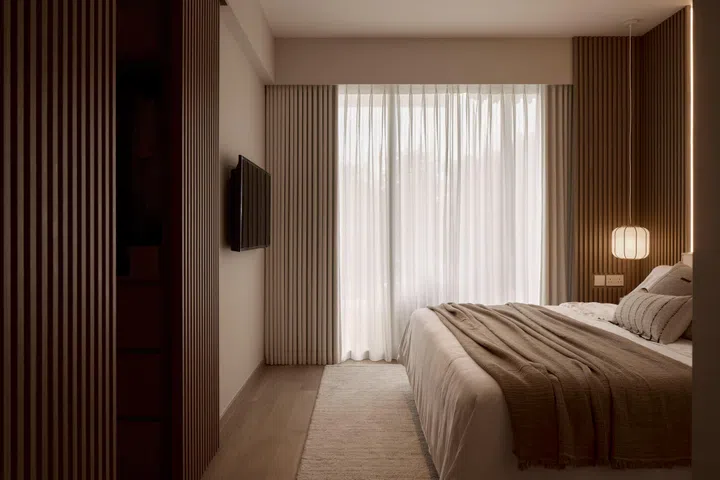
A Totally Zen Master Bedroom
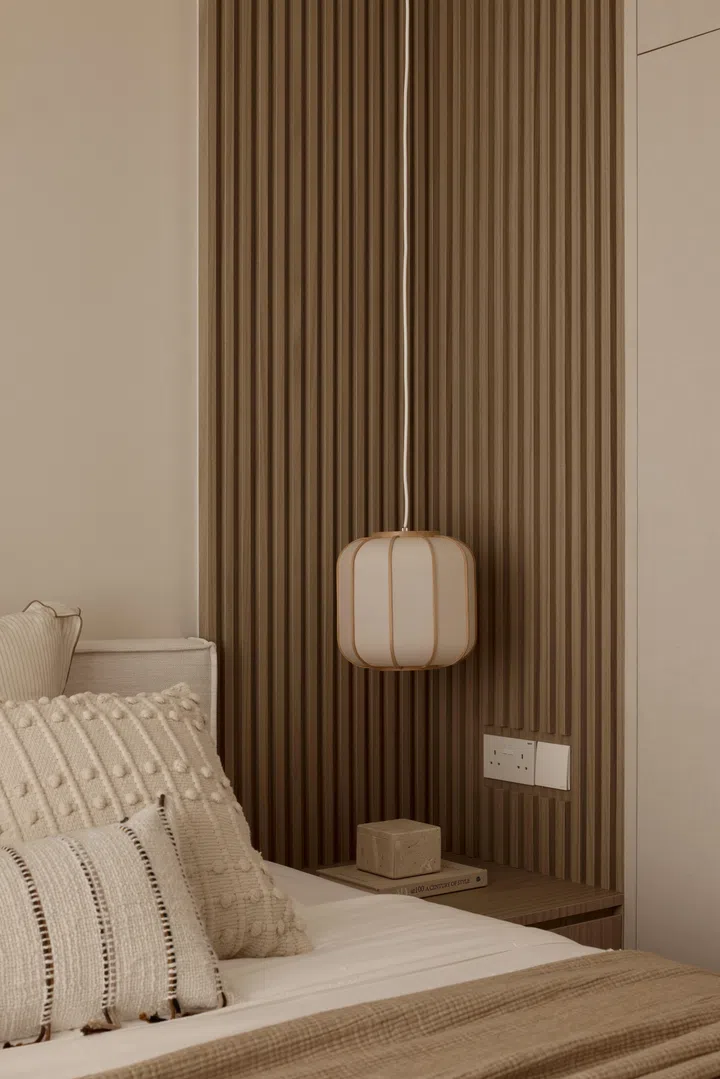
A space to totally relax in, the master bedroom utilises the same design elements as the other rooms in the house, creating continuous flow. The pleat doors lead to the walk-in wardrobe, but pleat detailing is also added to the custom corner walls against the king-sized bed with built-in side tables.
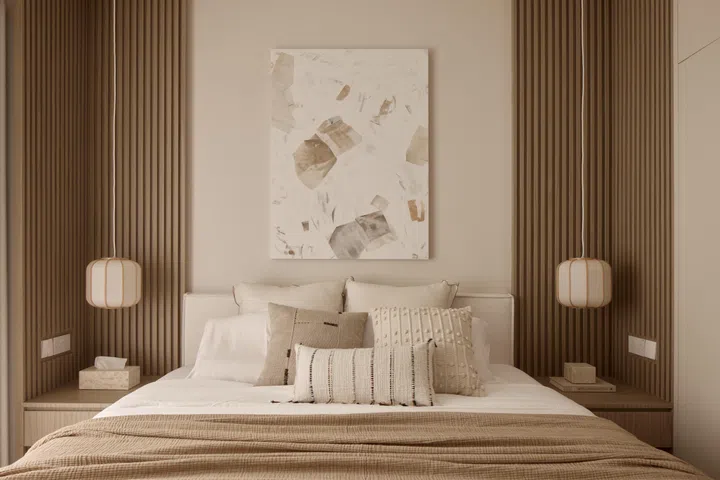
This bed base is anti-slip and is furnished with a French Seam Detail Aqua Clean Moon Upholstered headboard. Double set curtains are from Drapes Studio. The hanging Time & Style Botan no Hana lamp chandelier (constructed from Japanese paper with a cedar frame) completes the room, sourced and shipped in from Japan.
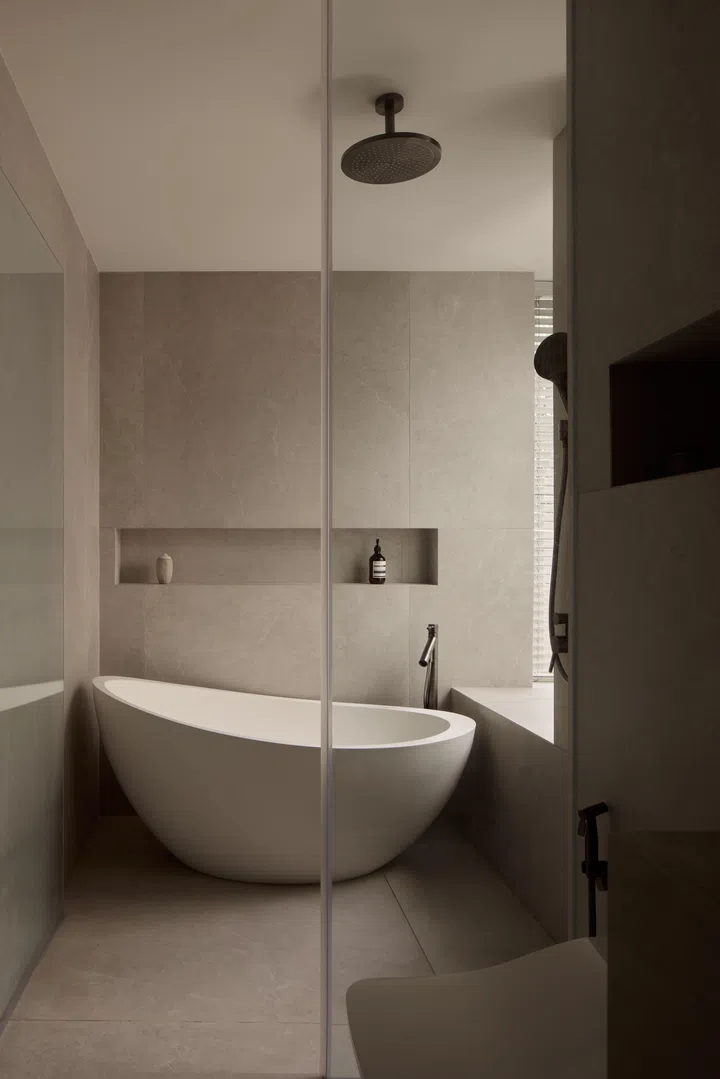
A Relaxing Bathtub En Suite
A spot to enjoy quiet moments, the primary en suite is one of Alicia’s favourite spaces. Her initial vision of lying in her tub, with a candle lit and the trees rustling outside, is now her reality.
Featuring a matte, floating egg-shaped bath, it truly is a dreamy space, or rather, a space to dream in.
“I love how the bathroom turned out…This is my happy place; it’s the first thing I wanted,” says the mom of two. “Everyone wanted me to make the windows frosted, but it’s glass, I was like, no! If you frost it, you cannot see the views clearly. Now, I can see the trees.”
Also within the primary en suite is a shower, vanity and toilet.
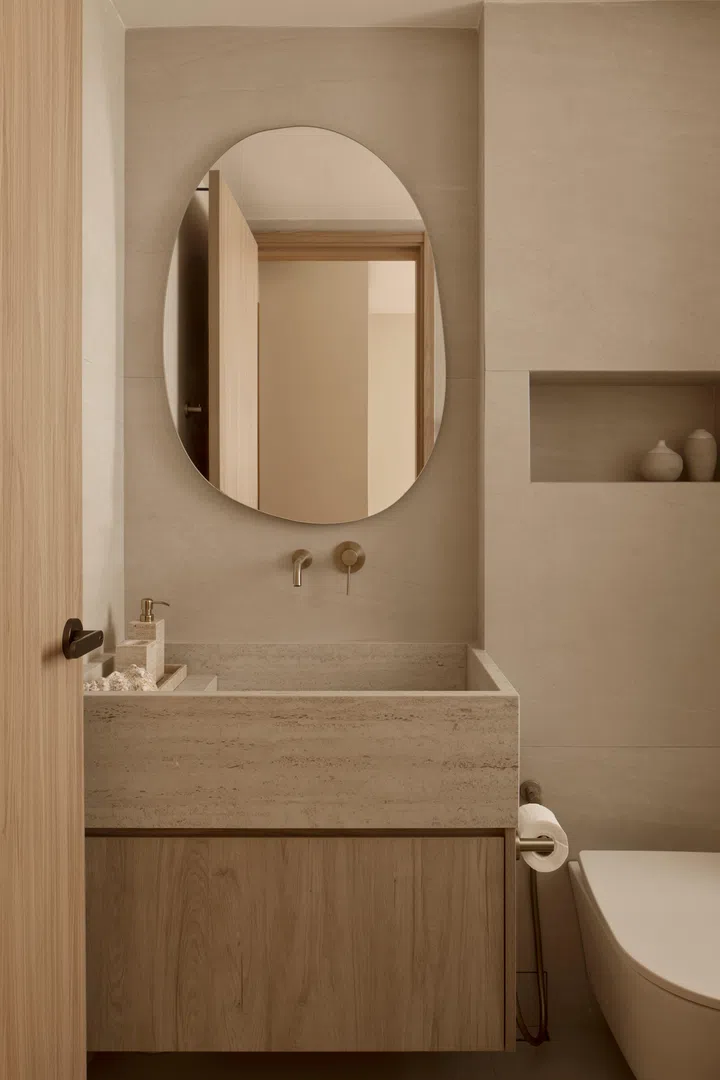
Japandi-style Guest Bathroom
The common bathroom is full of strong geometric lines and natural materials.
As this homeowner knew what she wanted, the whole design and construction process was complete within a couple of months. The design side took two to three weeks, and construction was roughly two to three months.
“Get a good team. Having a very clear direction is helpful, and because there was such a strong theme, it was easy for the different teams to work together,” explains the homeowner. “I know I didn’t know a lot of things, but I knew it was this one picture that inspired me, and I also knew my perimeters before going into the design process. Everyone’s journey is different, but I knew I wanted the space to be calm and functional, l and I realised my special places, like the bathroom.”
We love Alicia’s last words:
“A space is meant to be an experience.”