
Home Tour: $80,000 Colour-rich renovation for a 3-bedroom walk-up in Tiong Bahru
Happe Design Atelier refreshes a conserved Tiong Bahru flat into a vibrant, lived-in home that balances heritage details with contemporary family life.
By Gwyneth Goh -
Share this article
The first thing that strikes you upon entering this 3-bedroom conservation flat in Tiong Bahru is a sense of familiarity.
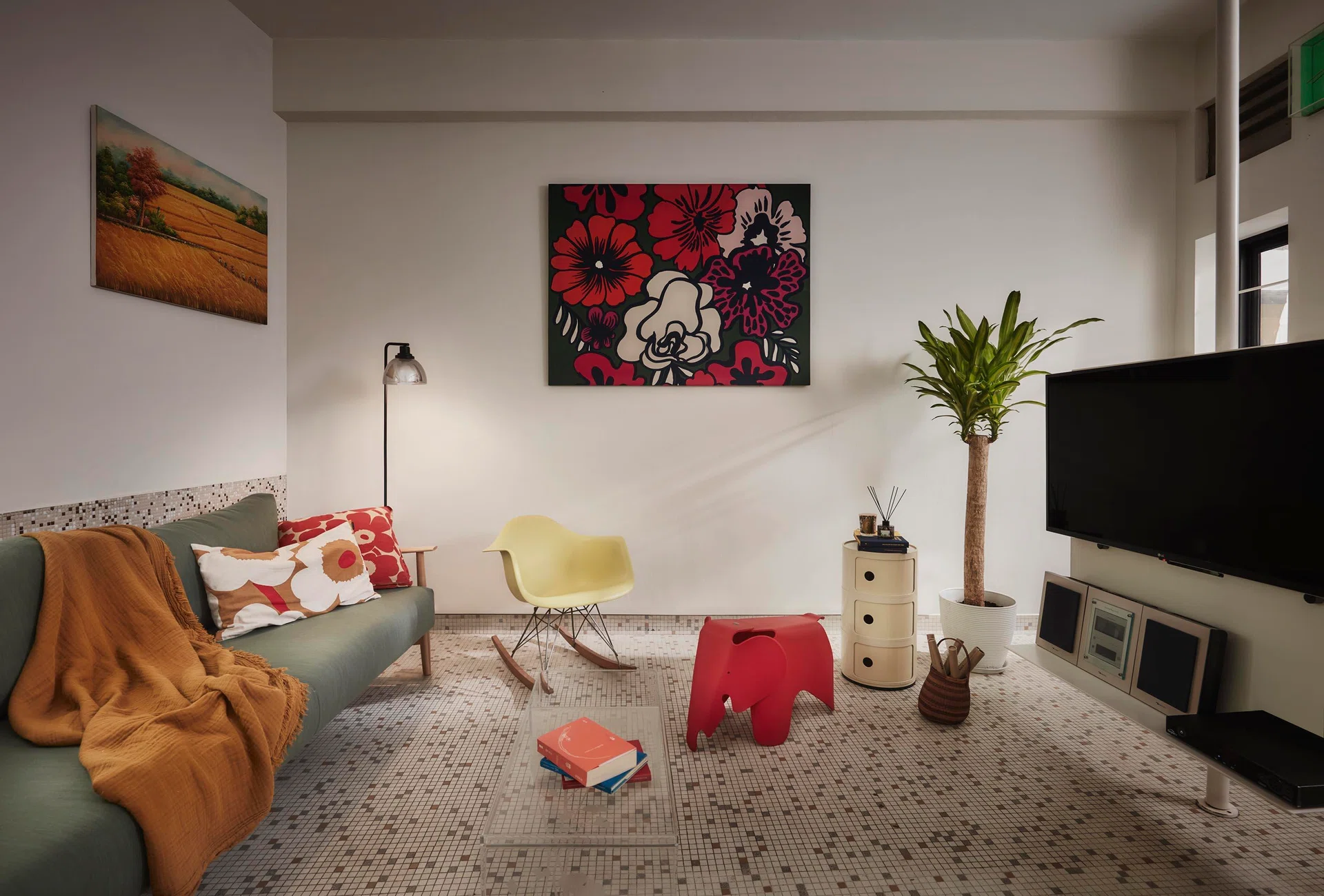
Original mosaic flooring runs underfoot, its varied pattern and texture carrying a gentle nostalgia that anchors the home to its past. Colour, artwork, and long-owned objects soften the architecture’s age, giving the space an easy vibrancy without tipping into excess. Rather than feeling restored or overly styled, this home reads as calm, practical, and comfortably lived in.
For Boon Bee and her husband, choosing this flat at Moh Guan Terrace was instinctive. “It really was love at first sight,” she says. Long-time admirers of the neighbourhood, the couple had spent years visiting Tiong Bahru for its markets, cafés, and walkable streets before considering a move.
After nearly 15 years living in a private condominium, they began reassessing what mattered most. “We decided to move towards a lifestyle that felt more aligned with how we live today,” Boon Bee shares, “one centred around walkability, good food, and a strong sense of neighbourhood.”
This move marked a deliberate shift. Where their previous homes prioritised amenities and efficiency, this one offered character and a stronger sense of place. The flat sits within a conserved block originally built by the Singapore Improvement Trust in the 1930s. Known today for their Art Deco features and generous proportions, these early public housing blocks come with conservation sensitivities that shaped every design decision that followed.
Who Lives Here: Boon Bee, currently on a career break from banking, her husband in the shipping industry—both in their 50s, and their daughter who is studying overseas
Home: A 3-bedroom walk-up HDB conservation flat in Moh Guan Terrace
Size: 990 sq ft
Interior Designer: Vanessa Goh, Happe Design Atelier
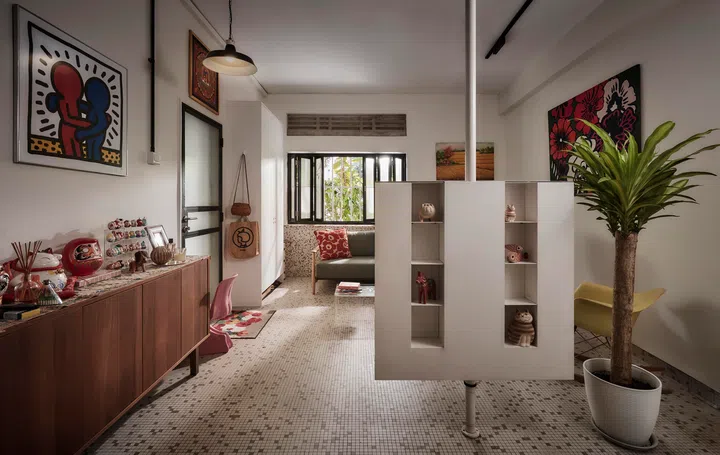
Furniture, artwork, and circulation come together in a colourful composition shaped by the homeowners’ lifestyle, habits, and long-held collections.
Choosing an interior designer who listens
For Boon Bee, the decision to work with Vanessa Goh from Happe Design Atelier was guided as much by process as by outcome. “For us, attitude mattered even more than the design itself,” she says. “Renovation can be stressful if communication doesn’t flow well, but with Vanessa, everything felt effortless.”
From the outset, Vanessa listened closely, explained what was feasible, and worked within the couple’s budget and timeline. “She responded promptly every step of the way,” Boon Bee adds, “and beyond that, her design captured the essence of our lifestyle and identity. It wasn’t just a beautiful space, but one that truly feels like ours.”
That sense of alignment shaped the design approach. “Our vision was to blend their collections with Tiong Bahru’s iconic architecture,” Vanessa explains, “ensuring the interior felt like a natural extension of the SIT flats rather than a jarring modern contrast.”
Original elements such as the mosaic flooring and window grilles were therefore treated as anchors rather than obstacles, while new interventions were kept deliberately restrained.
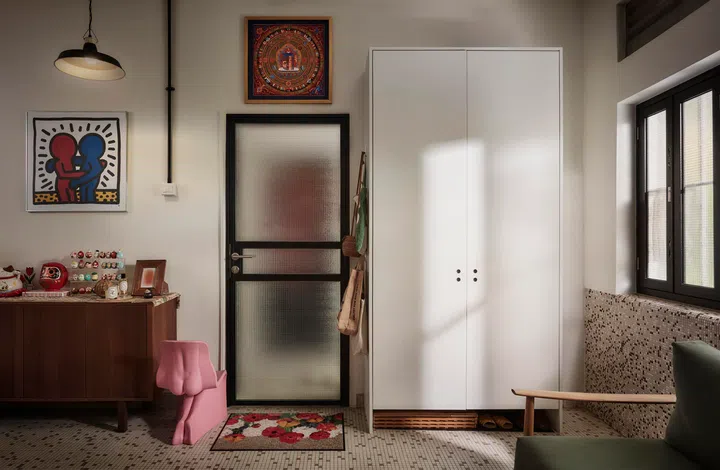
Long-owned pieces shape the living area, including a Keith Haring ‘Best Buddies’ poster first bought in 2002, which continues to mark the couple’s earliest chapter of building a home together.
Pieces for keeps
In the living area, certain long-owned pieces carry particular emotional weight. “One of the pieces that carries special meaning for me is the Keith Haring poster Best Buddies,” Boon Bee shares. “We bought it for our first home back in 2002, right after we got our first HDB, and it has stayed with us ever since.”
The artwork recalls an early chapter of their lives together, “that exciting time of starting a home and building memories from scratch”, and continues to anchor the space years later.
Nearby, the Desalto Sail TV system is another fixture that has travelled with them over time. “It’s a piece we invested in for the long term, and it has moved with us since 2010,” Boon Bee explains.
In this home, its placement allows the couple to enjoy television from both the living and dining areas, while blending seamlessly into the layout. “Seeing how well it fits reinforces our belief in choosing thoughtful, well-designed pieces that stand the test of time.”
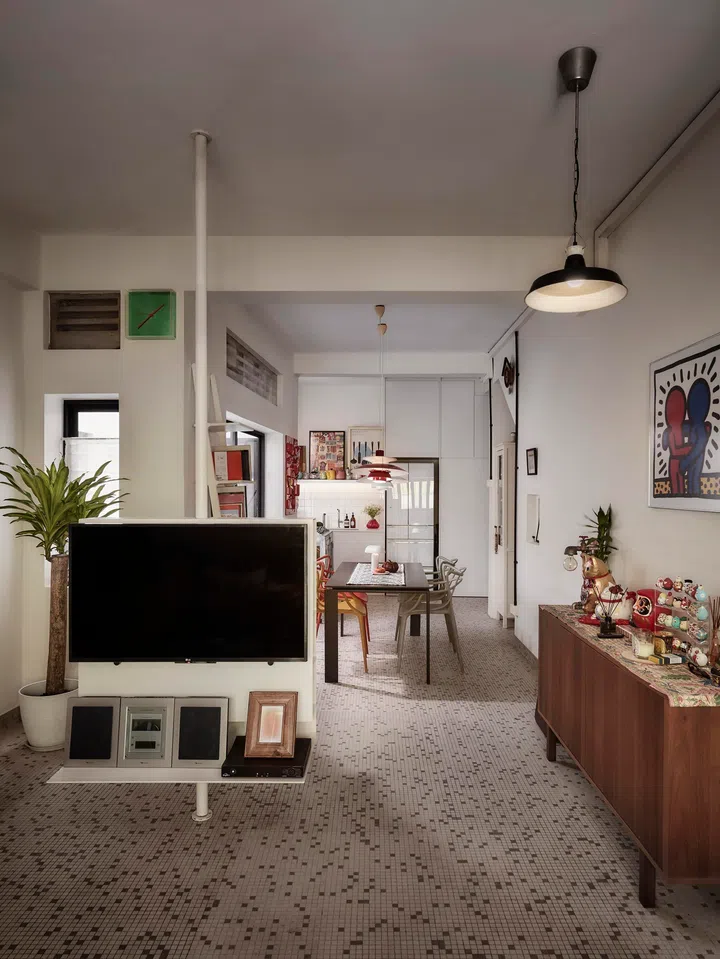
A Desalto Sail TV system divides the living and dining areas, while long-collected objects, including Daruma dolls, add a personal layer shaped by time and trave..
Traveling and Collecting
Collecting has long been tied to travel for Boon Bee, particularly her years in Japan. “I’m a big fan of Daruma dolls, which I tend to collect whenever I find a unique one in Japan,” she shares. “They’ve become a playful part of my life—friends and family now immediately think of me whenever they spot a cute Daruma.”
Each doll carries its own story, contributing to a home that feels personal rather than styled.
Her collections also shift over time. Boon Bee collects pieces by Lisa Larson, and what appears in the home changes with time and mood.
“At the moment, I’m drawn to Daruma dolls, so they naturally take centre stage,” she explains. “More recently, I revisited some cameras I’ve collected over the years and created a dedicated spot to display them behind the TV stand, allowing different parts of the home to quietly evolve with us.”
Travel, she says, has fundamentally shaped how she relates to objects. “I lived in Tokyo for almost six years, and that experience shaped the way I appreciate things, from valuing durability and sustainability to finding beauty in restraint and longevity rather than novelty.”
That mindset carries through the home, where collections are not fixed displays but part of an ongoing, interactive relationship with space.
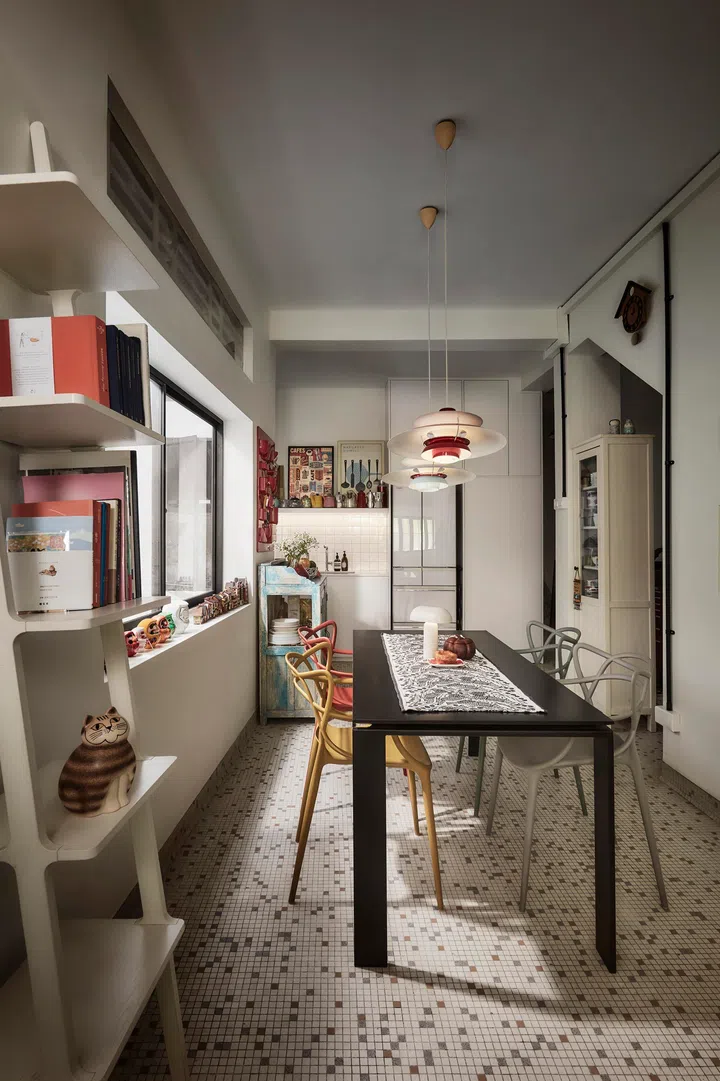
In the dining area, negative space is used deliberately to allow light, movement, and personal collections to coexist without visual clutter.
The dining space
This approach is especially evident as the home transitions into the dining area. Openness allows objects and daily activity to coexist without visual overload.
“We intentionally left a lot of negative space in the form of clean white walls,” Vanessa explains. “This acts as a quiet canvas, allowing the owners to showcase their personal collections without the room feeling cluttered.” With light filtering in from one side, the space feels airy and unforced, shaped as much by what is left out as what is there.
Here, Boon Bee’s belief in choosing pieces with longevity comes through again. “A good example is the Louis Poulsen PH 5 pendant light in our dining area, which we brought over from our previous home,” she shares.
“It’s a timeless piece that blends effortlessly into different settings.” Suspended above the table, it becomes part of the room’s everyday rhythm. “Pieces like these remind me that good design transcends time and place,” she adds.
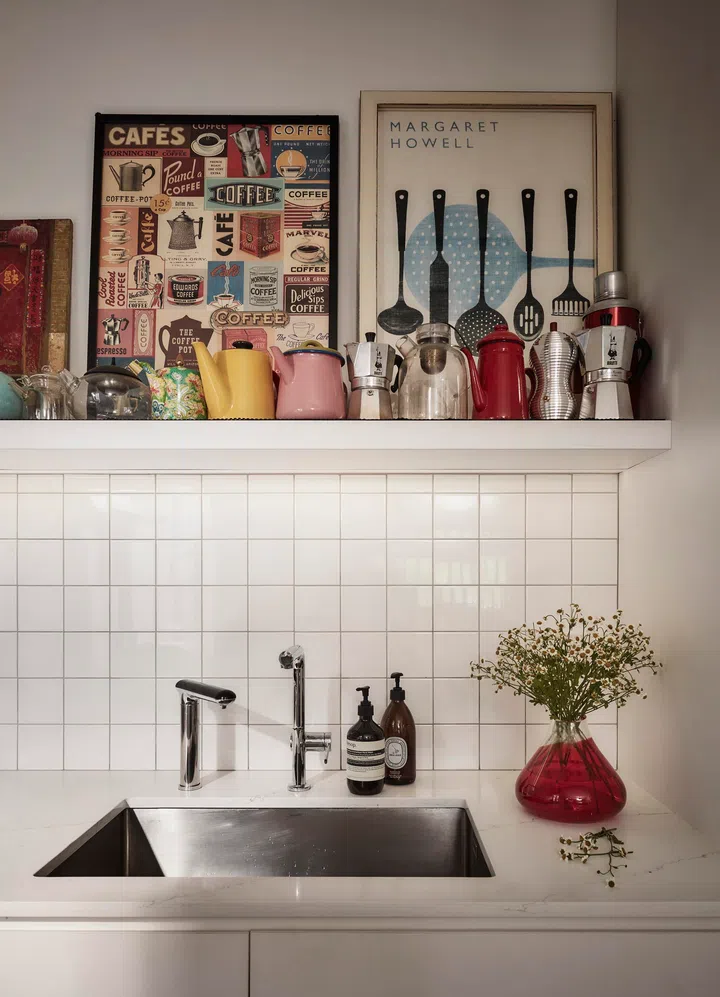
Open shelves display coffee tools, teapots, and daily-use objects, reflecting the homeowners’ belief that living with visible, well-used items makes the kitchen feel more mindful and lived in.
Kitchen: Living with What’s Used
In the kitchen, the homeowners’ preference for living with objects rather than storing them away is most clearly expressed. Everyday items are kept in view, allowing routine tools to become part of the space itself.
“Having everyday items out in the open makes the home feel more lived-in and honest,” Boon Bee shares. “Things like coffee tools, teapots, or small objects we use daily become part of our routines rather than being hidden away.”
Visibility, she adds, also shapes how the home is experienced. “When objects are visible, they’re appreciated more, and we naturally become more intentional about what we choose to keep around us.”
This approach extends beyond practicality, influencing the atmosphere of the space. The kitchen feels active but not busy, shaped by objects that are used daily rather than styled for display, reinforcing a sense of mindfulness in everyday routines.
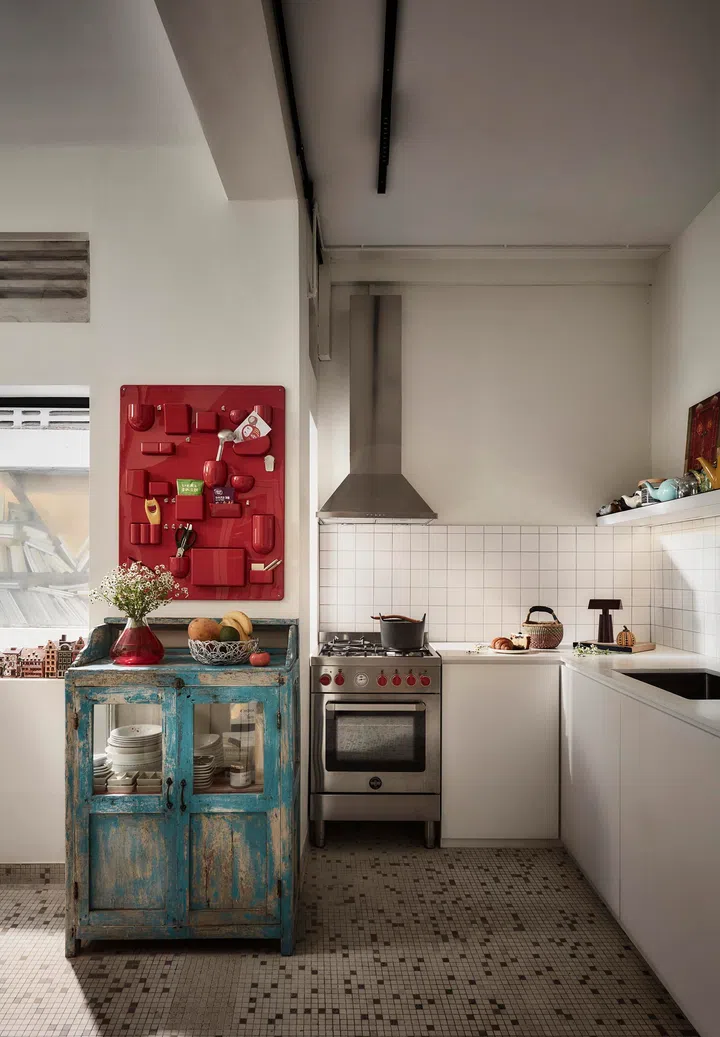
A rustic cabinet left behind by the previous owner was retained and repurposed, its weathered patina adding character while holding everyday kitchen items in open view.
One of Boon Bee’s favourite pieces is a rustic cabinet left behind by the previous owner. Rather than replacing it, the couple chose to keep it. “Its weathered patina and character felt very much in tune with the spirit of the house,” she explains.
Over time, it has taken on both functional and sentimental value, serving as a quiet reminder that the home carries layers of history, now gently interwoven with their own.
That continuity was central to Vanessa’s design approach. “We treated the original features as the foundation of our ‘timeless’ concept rather than obstacles,” she says. “In the kitchen, we purposely retained the existing vintage flooring and built a modern, functional kitchen over it.”
By allowing old and new to coexist, the space becomes “a visual timeline where the old supports the new,” ensuring the home’s heritage remains part of daily life rather than a decorative gesture.
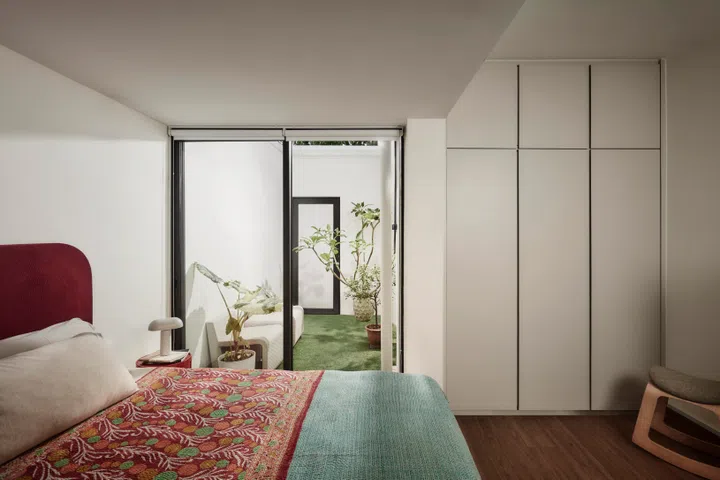
The master bedroom is kept calm and uncluttered, with soft furnishings and greenery bringing warmth into a restful, light-filled space.
Bedrooms
In the private spaces, the same principles of continuity and familiarity guide the design. The master bedroom is kept calm and pared back, allowing colour and texture to surface through soft furnishings rather than built-in features. Openings towards the airwell bring in light and greenery, reinforcing a sense of quiet retreat without disconnecting the room from the rest of the home.
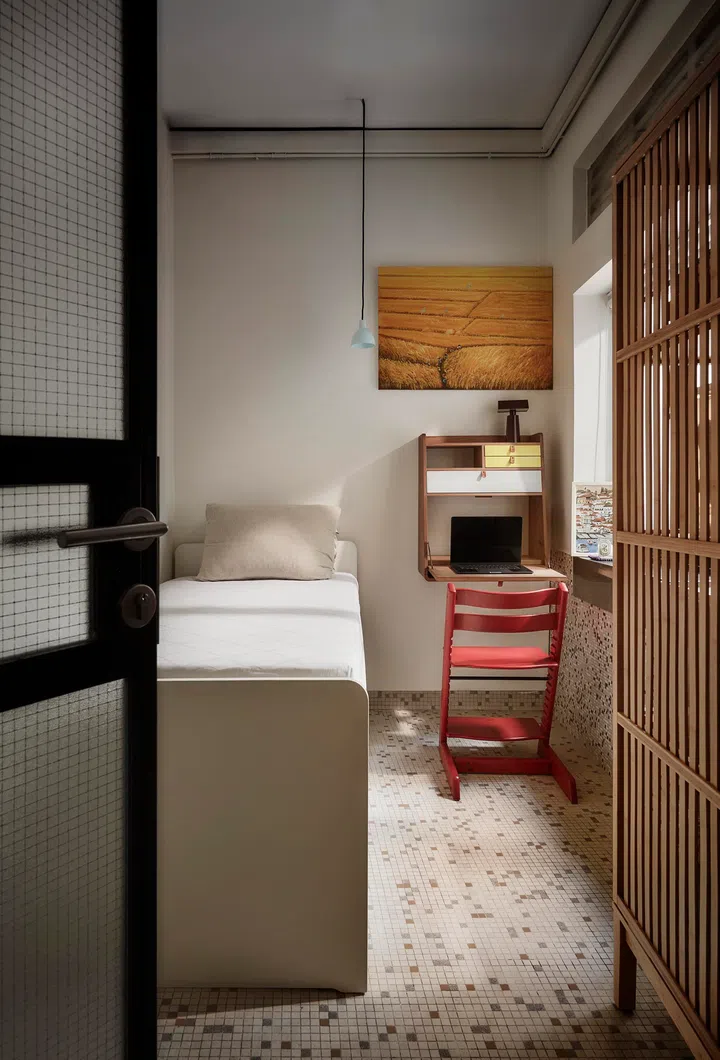
A compact second bedroom is designed for flexibility, accommodating work, rest, and long-held furniture that continues to adapt with family life.
The second bedroom reflects a more adaptive approach to use. “I tend to keep things that carry emotional value or have proven themselves useful over time,” Boon Bee shares. “If an object has travelled with us through different homes, or still fits naturally into our daily routines, it usually earns its place.”
One such piece is the Stokke Tripp Trapp chair, bought when their daughter was born. “It has quite literally grown with her over the years,” she adds. Today, it continues to be used as a dining or study chair, carrying both practical purpose and deep sentimental value.
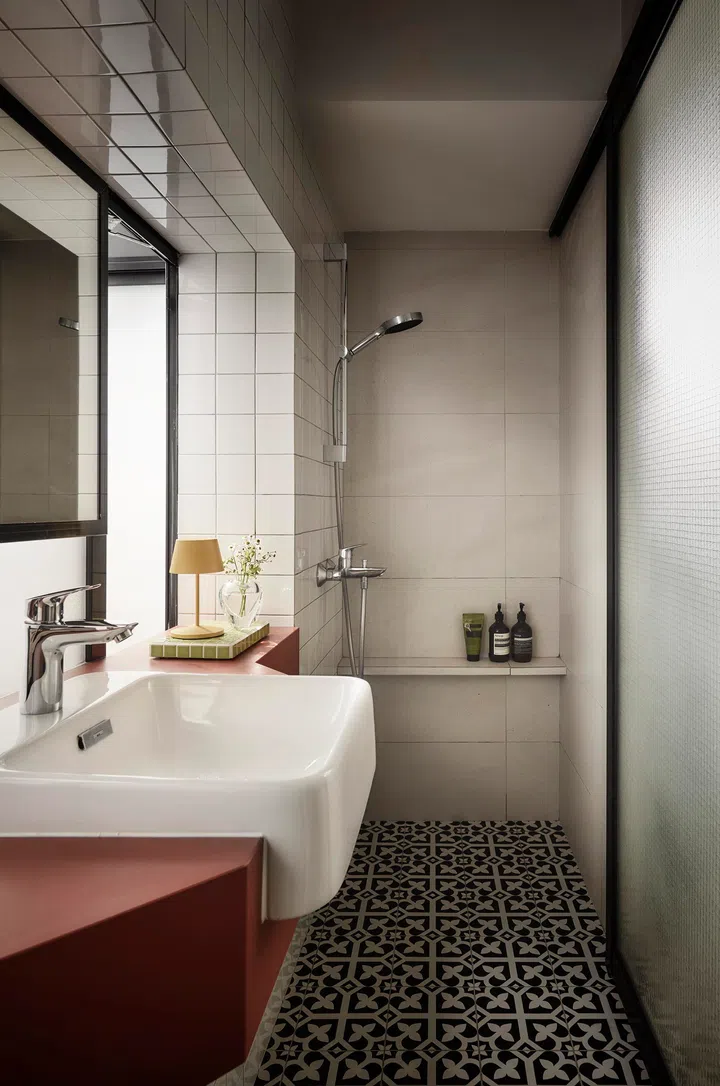
The bathroom balances modern fittings with subtle heritage references, creating a space that feels both comforting and characterful.
Bathroom: Old Charm, Reinterpreted
For Boon Bee, the bathroom stands out as a space that balances comfort and character. “Personally, I also love how Vanessa designed the bathroom,” she says. “It’s modern, yet retains a hint of the house’s old charm. Every time I step in, I feel both comfort and delight—it’s a space that perfectly balances style, personality and character.”
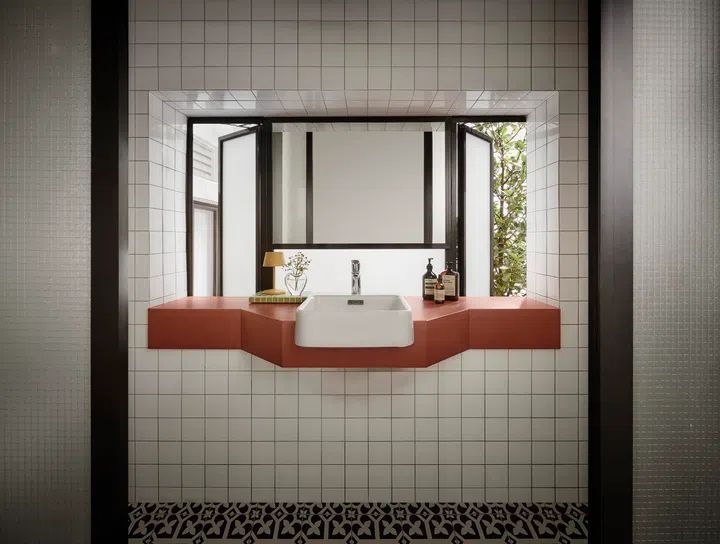
A customised terracotta-toned basin was designed to echo the retro character of the Tiong Bahru estate, grounding the bathroom in the home’s history.
That balance is achieved through careful material choices rather than overt references. Vanessa explains: “In the bathroom, we created a customised basin with terracotta colours. This specific shade was chosen to replicate the retro essence of the Tiong Bahru estate, grounding the wet areas in the building’s history.”
The resulting bathroom feels contemporary in use, while remaining quietly connected to the home’s broader heritage.
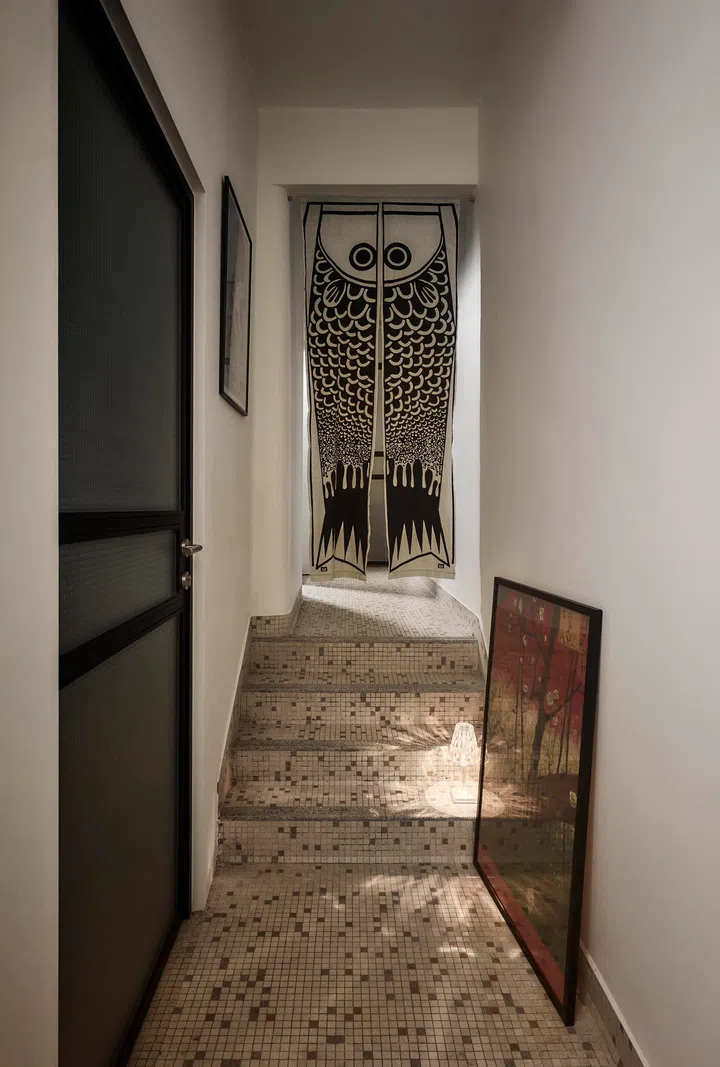
A quiet passageway lined with original mosaic flooring and personal artwork captures the spirit of the home—layered over time, shaped by use, and comfortably lived in.
$80,000 Renovation cost
The renovation came in at $80,000 over a four-month period, shaped less by a full cosmetic overhaul than by thoughtful, selective decisions. Much of the budget went into upgrading essential services and integrating modern functions sensitively within a conserved flat, while original features such as the mosaic flooring were retained.
“I hope people take away the idea that a home doesn’t need to be completed all at once,” Boon Bee says. “It’s something that grows with time, shaped by lived experiences, memories, and daily habits.” Rather than investing in everything at once, the couple focused on a few timeless pieces that could move with them over the years.
“Ultimately, I hope it encourages people to build a home that reflects who they are and how they live,” she adds, “evolving slowly, thoughtfully, and with intention.”