
House Tour: Sustainable terrace house in Serangoon designed by architect-owner
By Home & Decor Team -
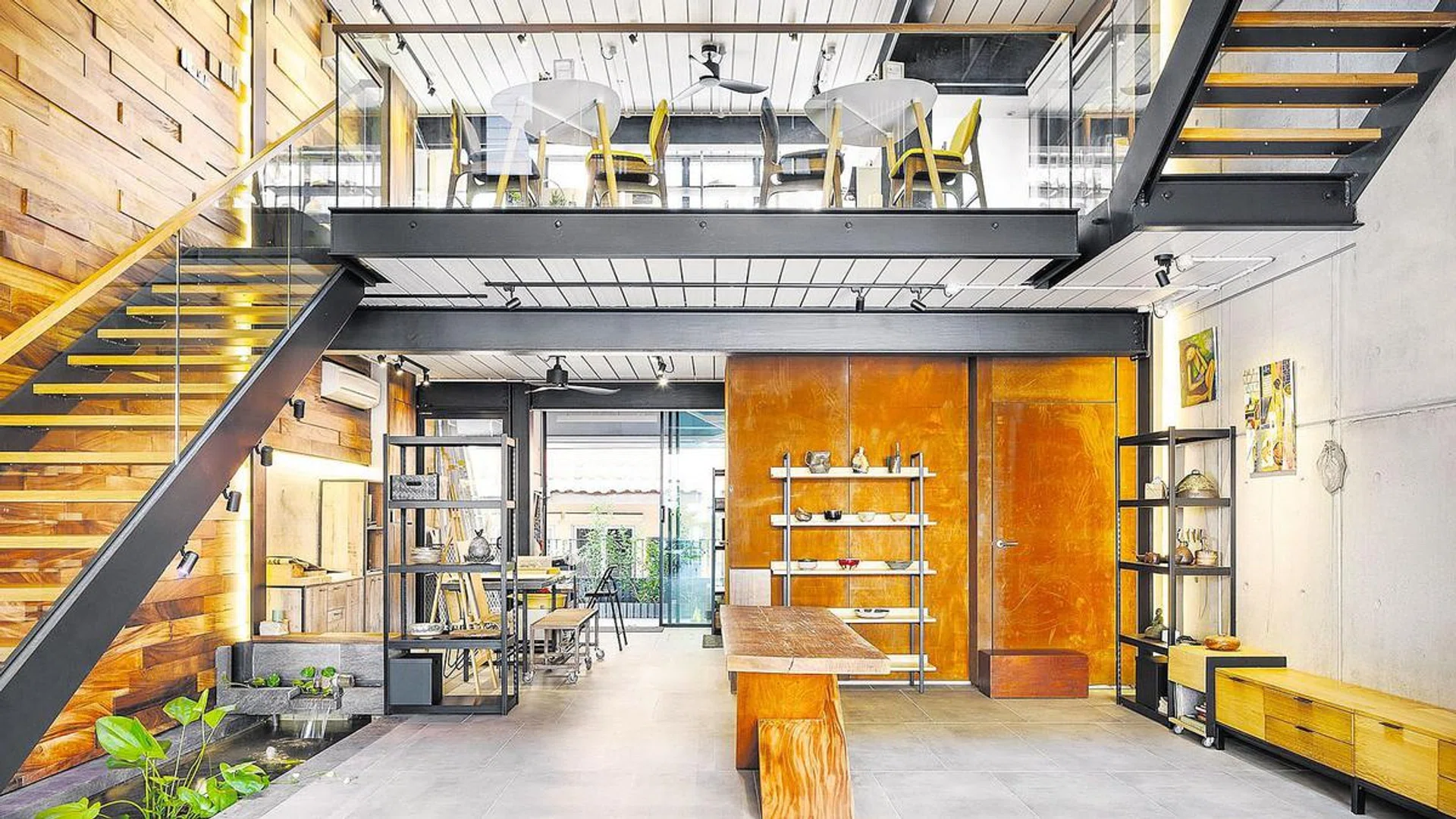
Theodore Chan’s 30-year architectural career has been a colourful one - namely, green. He spent much of his time on eco-friendly projects such as Yishun Community Hospital and National University Hospital Medical Centre. Earlier this year, he was conferred a Green Architect title by the Singapore Green Building Council and the Building and Construction Authority.
So when it came to designing his home, “It was only right that I walk the talk,” says the senior director at CIAP Architects.
Home is a 3,900 sq ft two-storey plus attic intermediate terrace house in Serangoon Gardens which he shares with his wife Delphine Sng, a potter and artist.
The house is both an example of how to live sustainably and comfortably in Singapore’s tropical climate and how to create unique spaces you can’t have in an apartment.
“You can do more with the space in a landed property, so there’s no point making it box-like, like in an apartment, says the former Singapore Institute of Architects president.
Since terrace houses tend to be dark within, Mr Chan got around the problem by installing glass sliding doors in front and at the back. He also installed a skylight in the attic where light streams in from the top. During the day, there is hardly any need for any artificial light.
To avoid the usual narrowness of such houses, Mr Chan had some design tricks up his sleeve. One obstacle is the conventional single staircase that connects all the floors but cuts into the width of the house and results in wasted landing space. Instead, Mr Chan designed single-flight stairs to transverse split level floors. The house instantly looks and feels wider. Going up shorter flights of stairs is also less arduous than a long single one.
Each split level or landing space is used differently. The first flight leads to a cafe-like space with a kitchen and two small dining tables. Ms Sng’s students sometimes hang out here after class.
The next flight of steps leads to the living room where a series of movable floor to ceiling timber panels provide privacy and when open, allow a gentle breeze into the home.
The home, designed in association with MKJY Architects, is conceived like a live-work studio.
The ground floor is Ms Sng’s workshop and gallery space. She holds classes here and this is where clients come see her when they want to commission her work.
Mr Chan not only made the design environmentally-friendly, he also carefully selected his materials. Off form concrete is used on one wall on the first floor to create a gallery-like feel. Elsewhere, the walls are made from teak and raintree wood, the latter of which are from felled trees. The wood not only adds warmth but absorbs sound well.
Any heat that rises to the upper floors is easily dispersed through the skylight. “Most of the time, these glass panels are open and there is plenty of ventilation in the house, says Mr Chan. In fact, the air conditioning is seldom used. “It is all too easy to switch on the air conditioning to cool spaces, and I didn’t want to do that.” Through his design, he’s managed to shave 30 per cent off his utility bills, compared to other similar-sized homes.
Mr Chan points out that there are hardly any applied colours in the home, so the result is a timeless, harmonious aesthetic that only nature can provide, making it sustainable and naturally beautiful.
He has shown some clients around, with one immediately commissioning Mr Chan to design a green home for him.
“Not many architects get to build their own homes. This house is an embodiment of my belief in sustainability,” he says.
Photos by Zee and Marina Photography.
This story was first published in The Business Times. Click here to read the original story.