
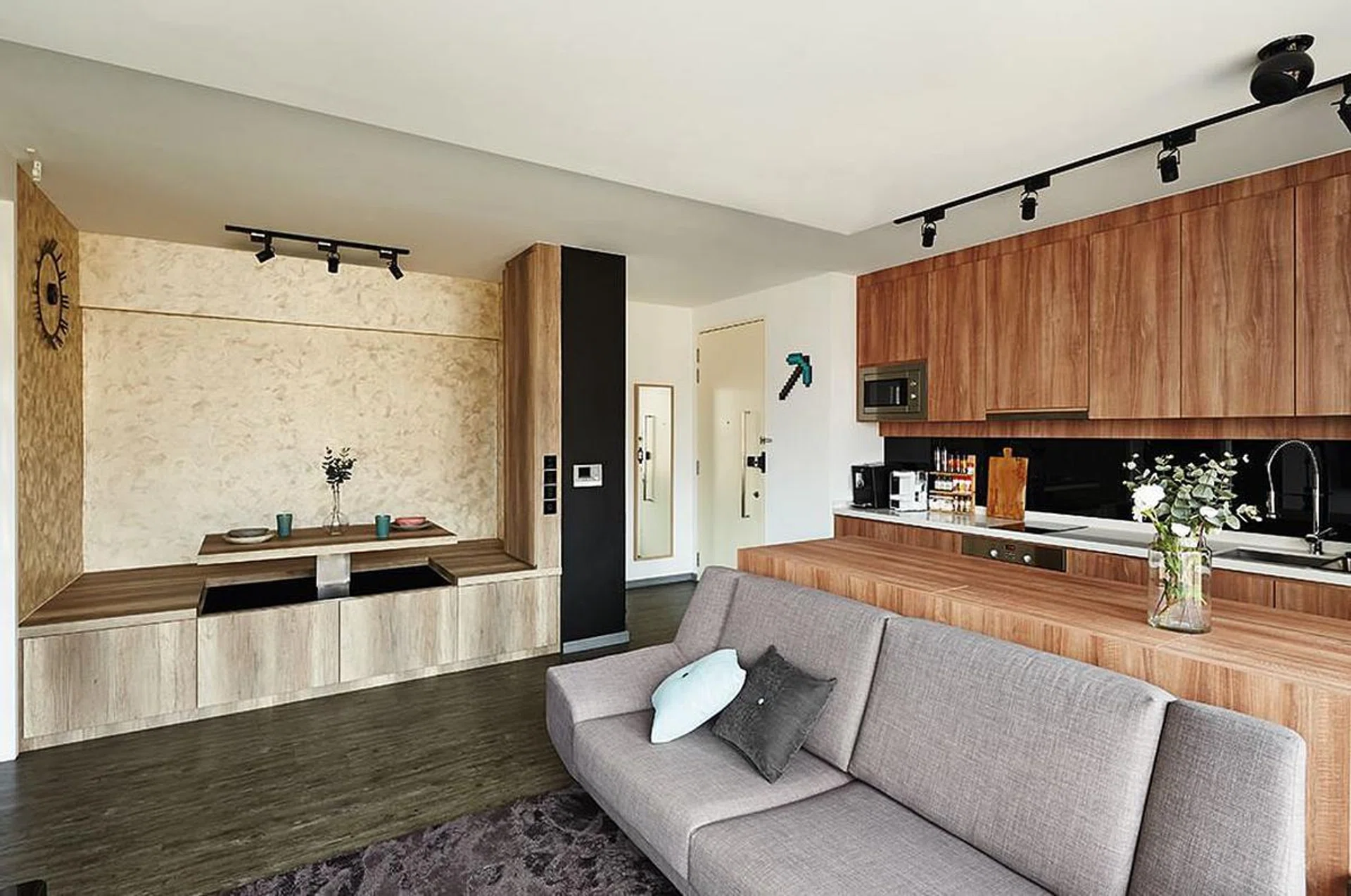
This home may only be 646 sqf, but this one-room condominium apartment in Geylang has been designed with so many multi-purpose spaces that you realize that dedicated space for a specific activity is not really necessary.
The homeowners initially wanted a Scandinavian look but their interior designer Andrew Ching from D5 Studio Image persuaded them to add more textures and utilise bolder and darker clothes.
One of the clever multipurpose spaces in the home would be the customised platform in the dining area. Part of the platform can be raised to create a dining table to seat guests.
When it is lowered, it becomes a cosy corner for reading and relaxing. The drawers below also provide storage space. Nippon Momento special-effect paint adds texture and dimension to the flat walls of this cosy corner.
The designer chose black glass for the kitchen backsplash to make a strong stylistic impact in the interiros, as the living, kitchen and dining areas are all part of one big open-concept space.
The kitchen island doubles as a work space, with electrical lift mechanisms which allow their computer monitors to be stowed within the countertop when not in use.
Being a freelance editor and art director in the media industry, the homeowner wanted “a home that would inspire him”. With the help of designers from Artistroom, he was able to turn his 775 sqf, three-room HDB flat in Everton Park to do just that.
The design team from Artistroom gave the owner's home a clean and sleek look inspired by Italian design, with a masculine colour palette of black, grey, white and dark wood tones. The walls however, were kept white, in order to best exhibit the many paintings, photos and prints of the owner's.
A proper study area – one that is open and connected to the other spaces – was especially important, as he works from home. He says, “I needed it to be spacious, as I have lots of reference books and 1,001 press kits and materials.
As a result, the design team from Artistroom demolished the walls of the second bedroom to make way for an open-concept study.
The footprint of the master bedroom was reduced; its walls were demolished and rebuilt to make way for a walk-in wardrobe and additional circulation space around the main living area.
Reworking the bathroom meant that a dedicated vanity area, which bridges the master bedroom to the shower area, was possible.