
$120,000 Family-centered renovation for a strata-landed home in Moulmein
A characterful strata-landed home is carefully updated with warm materials, retained finishes, and an open layout designed around everyday family life.
By Gwyneth Goh -
Share this article
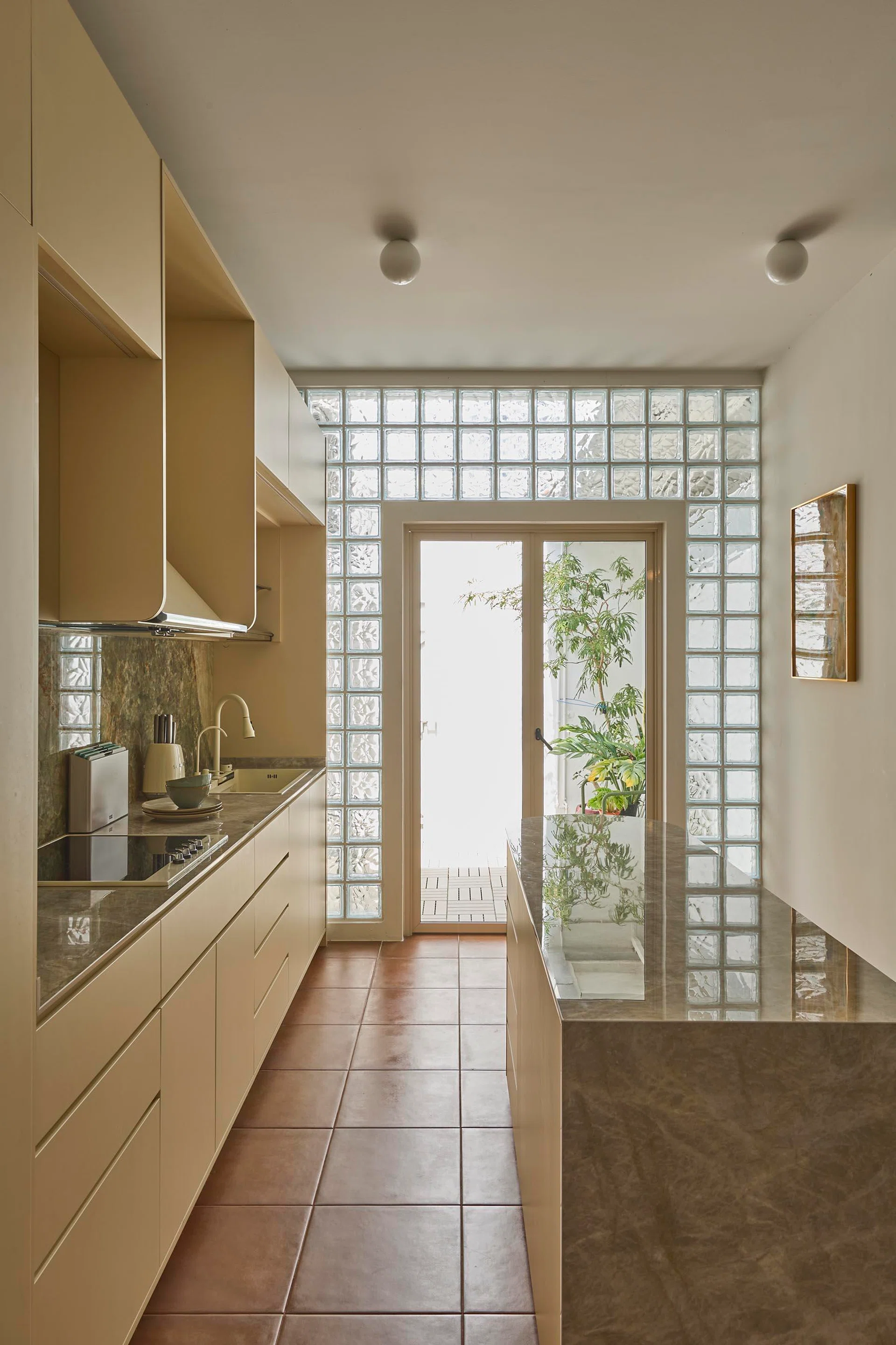
Standing at the kitchen island, the view extends through a frame of glass blocks into a small courtyard beyond, where light filters in and softens the edges of the space. The sequence is simple but deliberate—a working kitchen that opens outward, anchored by a solid stone island and lined in warm cream cabinetry, with terracotta tiles underfoot. Here, cooking, movement and quiet moments unfold within sight of one another.
The decision to move here, however, was not immediate. “At first, my wife was not keen on the listing and was hesitant to view the property,” the homeowner recalls. Fortunately, “a last-minute meeting cancellation allowed her to tag along for a lunchtime viewing”.
That visit shifted everything. “The moment she stepped into the home, it was love at first sight — it immediately felt like home,” he says. The house felt “spacious and interesting enough to comfortably support a family of four”, offering a kind of openness they had not found in their previous BTO flat or rental. Its central location, with proximity to the MRT station, shopping malls and daily amenities, further strengthened its appeal.
More than just practicality, the couple had been deliberate in what they were looking for. “We were intentional about seeking something distinctive in the resale market; had this fallen through, we would likely have opted for a new launch.” Instead, they found a home with character—one they would go on to reshape carefully, retaining what mattered while reshaping the layout to better support the way they live today.
Who Lives Here: A couple in their late thirties, their two young daughters, and their Samoyed–Spitz mix, Friday
Home: Strata-landed home along Shrewsbury Road
Size: Approx. 1,400 sq ft (1,800 sq ft design scope)
Interior Designer: Jake Lee, Persqft
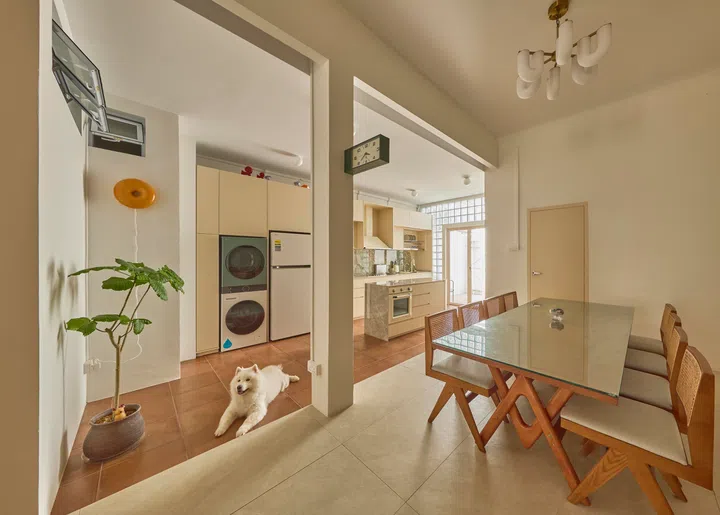
The dining area sits between living and kitchen zones, framed by wide openings that preserve clear sightlines across the home.
Opening Up for Family Life
Reworking the layout began with a clear priority: creating a home that allowed the family to stay connected throughout the day. Walls were opened up to form a continuous flow between the living, dining and kitchen areas, allowing movement—and sightlines—to remain uninterrupted.
“We wanted to maintain visual connection and easily keep an eye on the children,” the homeowners share, a requirement that shaped the planning from the outset.
For interior designer Jake Lee of Persqft, the brief was less about a fixed style and more about distilling what the homeowners wanted the space to feel like. “The words they chose were warmth, light-filled, family-oriented,” he says. “We always like to do the poetic approach—sitting down with the client and diving deep into what they want in each space.”
That approach translated into a layout that is both open and purposeful. Along the long entrance corridor, storage is consolidated into a single, continuous line to eliminate dead space, creating a clearer, more legible path into the home. At the front, the children’s play area is positioned to receive natural light, while remaining visually connected to the rest of the house—a small but important move that reflects how the family uses the space day to day.
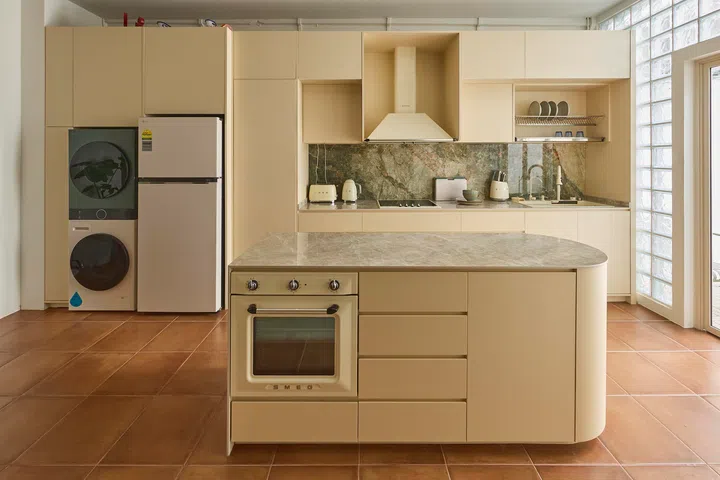
The kitchen is organised around a central island, with full-height cabinetry and a restrained palette creating a calm, cohesive backdrop.
A Kitchen Shaped by Light and Use
If the earlier interventions established openness, the kitchen refines it into something more tactile and grounded. Anchored by a central island and framed by full-height cabinetry, the space is efficiently organised, allowing multiple activities to unfold without overlap.
For the homeowners, this clarity was essential to how the space would be used day to day. “(Our) non-negotiables included an open living, dining and kitchen layout to maintain visual connection and easily keep an eye on the children,” they share. Positioned within clear sightlines of the dining and living areas, the kitchen becomes part of a continuous, shared environment rather than a separate working zone.
For Jake, the kitchen was always central to the brief. “We really poured our heart and soul into the kitchen, the dining and the alfresco dining… and the glass blocks,” he says. “For them, the goal was to really stay home a lot—with the dog and kids, everyone staying home—so we wanted to build something that would make them want to stay home.”
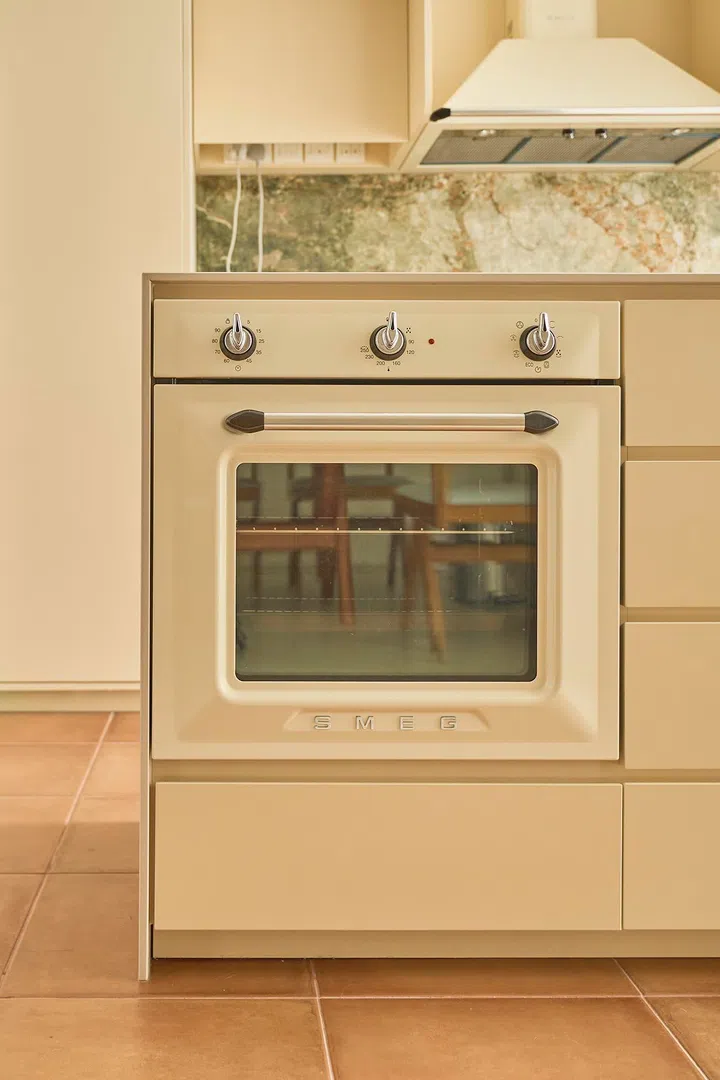
Integrated appliances are kept visually quiet, allowing the material palette to take precedence.
That intention is reflected in the material palette, which balances familiarity with restraint. “We were trying to find a material that brings back some of the older language in this house,” Jake explains. “For example, the terrazzo which is traditional—but also making a comeback. We had to angle our materials to what was already on site.”
Terracotta floor tiles were introduced to sit comfortably against the existing terrazzo, while glass blocks extend that nostalgic language, filtering light into the space while maintaining continuity.
Against this, the carpentry takes on a contemporary expression. “For carpentry we wanted a more modern take,” Jake says, “so we created this juxtaposition where we have a very modern-looking countertop kitchen.” The island, with its rounded edges and clean lines, becomes both a functional work surface and a visual anchor within the room.
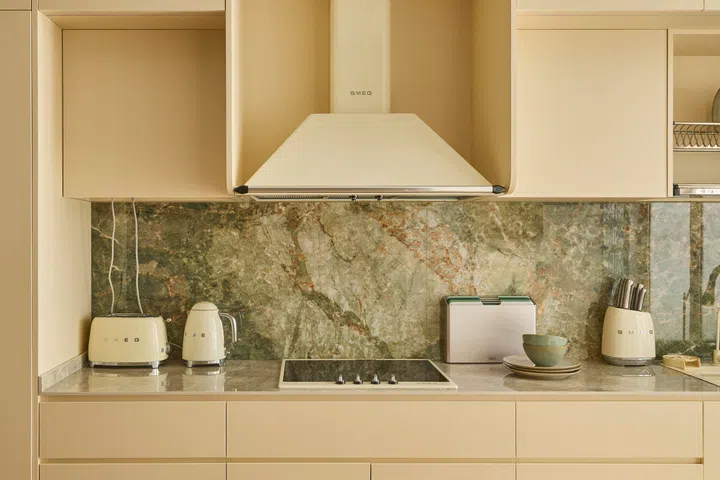
A veined stone backsplash introduces subtle variation, pairing with warm-toned cabinetry to soften the overall composition.
Material choices are also guided by longevity and daily use. “For the tabletop, purely because the owners really liked the colours, [we used] jade-green sintered stone… we wanted something that will last the longest possible, especially when maintenance is key,” he adds.
Used across the backsplash and work surfaces, the stone introduces variation while tying the entire composition together.
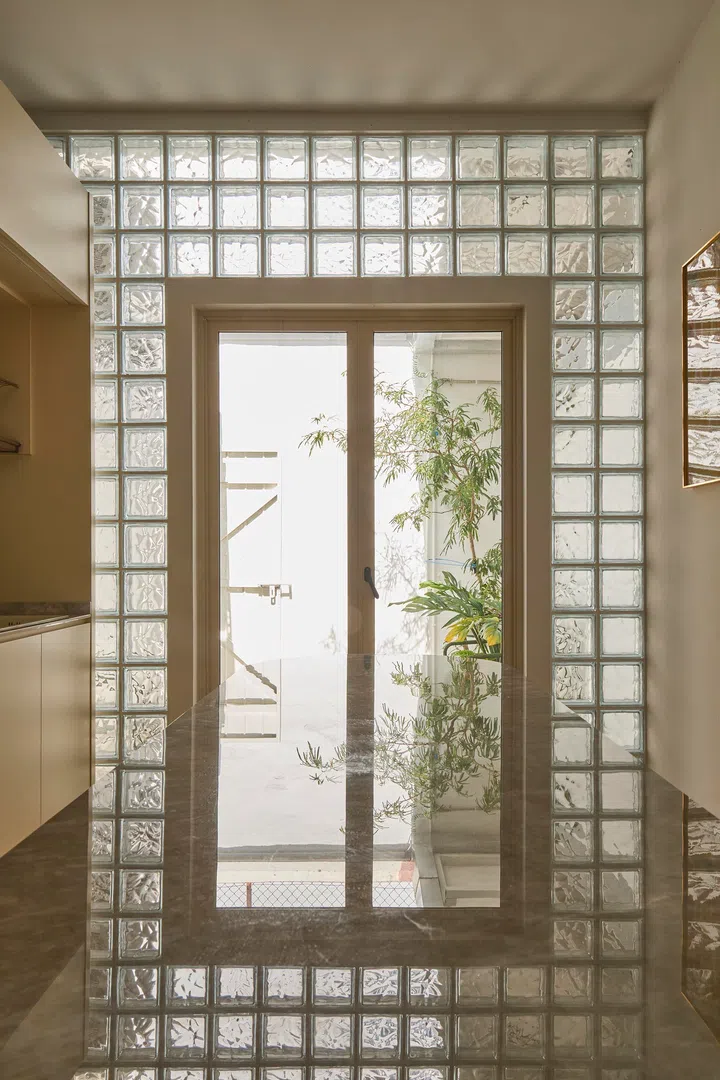
Glass blocks filter daylight into the kitchen, diffusing light softly across surfaces throughout the day.
Glass Block Wall
At the far end, a wall of glass blocks filters daylight into the kitchen, diffusing it gently across the surfaces. Throughout the day, light shifts across the stone and cabinetry, giving the space a quiet sense of movement—subtle, but integral to how the home feels and functions.
“Even though I don’t cook, I really enjoy the look and feel of the kitchen,” the homeowner remarks, “and my wife loves how it turned out.”
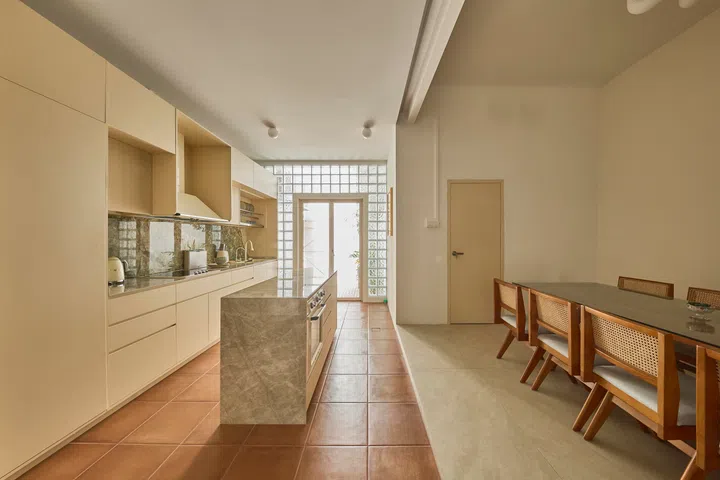
The dining area sits at the heart of the open-plan layout, created by integrating a former bedroom into a larger shared space.
A room shaped around ritual
The dining area sits at the centre of the home, both physically and in how the family uses it. What was once a bedroom has had its walls torn down and reworked into a single, generous space—one that prioritises gathering over separation.
“It used to be 3 bedrooms, we converted one at the back of the house,” says Jake. “We tore that down and made it into our grand dining area.”
That decision reflects one of the homeowners’ clearest priorities from the outset: an open layout so they could easily watch over their children. Instead of compartmentalising functions, the plan allows the family to remain aware of one another throughout the day, whether cooking, working, or moving between spaces.
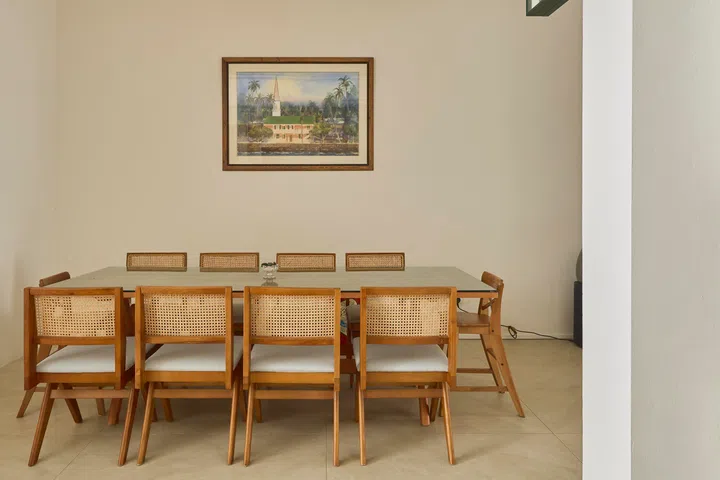
A long dining table supports a daily ritual of shared, no-phone dinners centred on conversation and connection.
Dining Room
More importantly, the dining area is not occasional—it is used with intention.
“A key daily ritual is having dinner together at the dining area—a dedicated no-phones time focused on conversation and connection,” they share. In that sense, the space is less about furniture and more about what happens around it: a pause in the day that the layout actively supports.
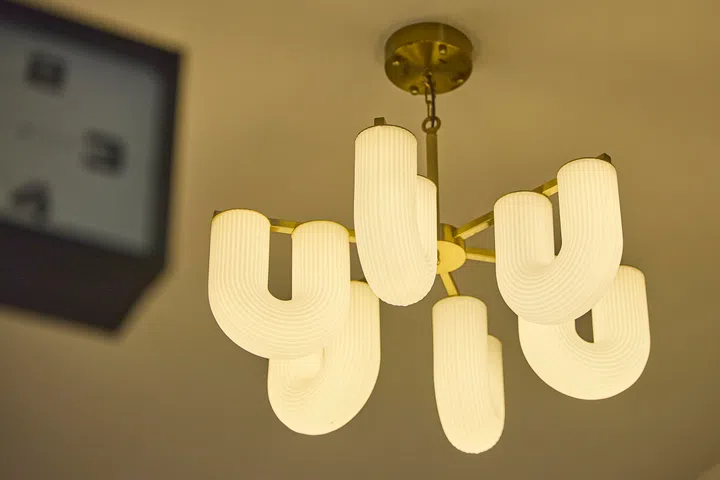
Hanging lights sourced from Hock Siong lend warmth and a layered, lived-in quality to the dining space.
The furnishings reinforce this lived-in quality. Pieces sourced from Hock Siong—including the dining chairs and pendant lights—sit alongside collected objects and artworks, lending the space a familiar feel.
“These pieces lend character and a layered, lived-in quality to the home,” the homeowners note, with the Dulton double-faced clock becoming “one of the most talked-about items by visitors.”
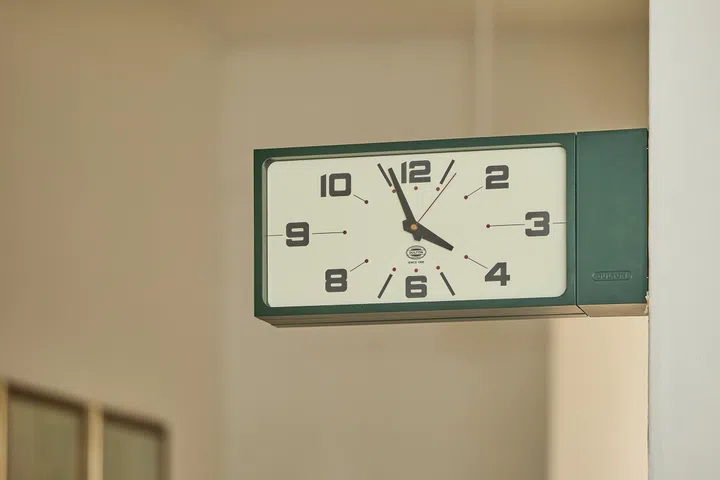
The Dulton double-faced clock—one of the most talked-about pieces—adds character and a sense of everyday rhythm.
Together, these decisions reflect a broader approach to how the home is organised. Rather than relying on overt statements, the design is guided by small but deliberate choices—“a strict no-television rule in the bedrooms”, “clear separation between private and communal zones”, and an open communal core that keeps the family connected. The dining room, placed right at that core, becomes the clearest expression of that intent.
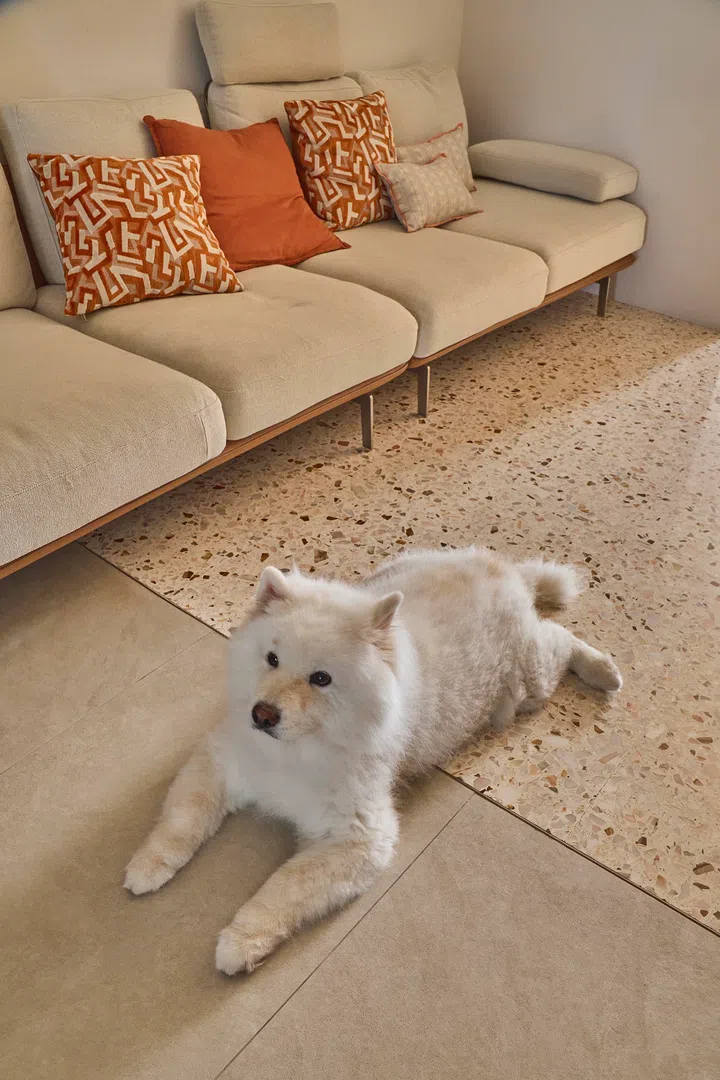
Original terrazzo flooring was retained and levelled, creating a continuous surface that unifies the living area.
Holding on to what matters
Stretching along the front of the home, the living area reads as a calm, continuous plane—something that wasn’t always the case. “The original house had multiple floor levels, with three to four different height changes between the living room, kitchen, bathrooms and backyard,” the homeowners share. What appears today as a seamless expanse is the result of careful reworking beneath the surface.
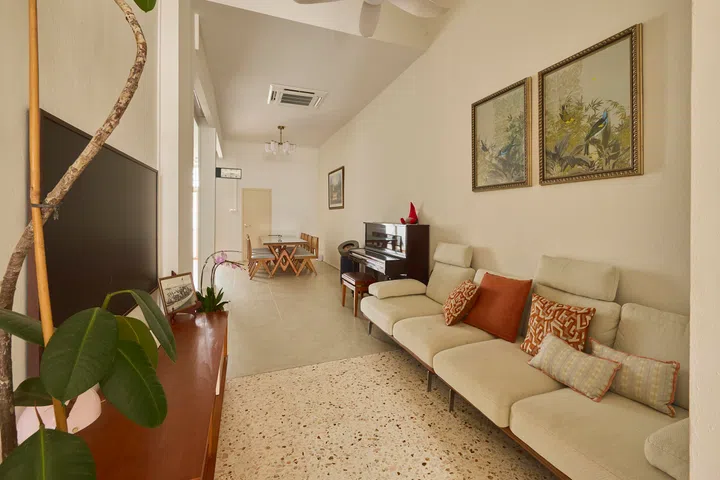
Previously split across multiple levels, the home was reworked into a single, seamless plane linking living, dining and beyond.
Levelled Floor
“A significant portion of the renovation involved levelling the floors to achieve a seamless flow,” they add. That move does more than simplify circulation; it allows the space to function as a true communal zone, where movement between areas feels natural and uninterrupted. The long sightline from living to dining reinforces this continuity, with each space flowing into the next without thresholds or breaks.
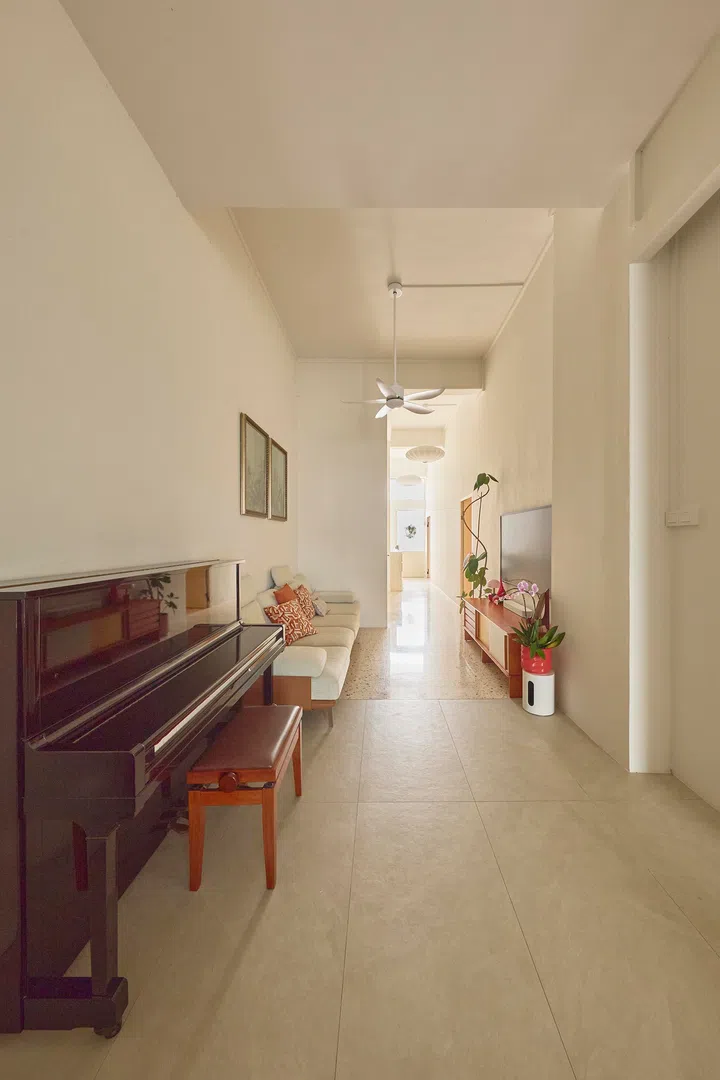
Long sightlines reinforce the sense of flow, with the living area forming part of a continuous communal zone.
Original Terrazzo Flooring
Within this newly unified plane, the decision to retain original materials becomes more apparent. “We are glad we managed to retain many original elements, including the terrazzo flooring in the living areas and bedrooms,” they say.
Underfoot, the terrazzo carries the memory of the house forward, its subtle variation bringing quiet texture to the space. Paired with low, linear furnishings, the room settles into a rhythm that feels both grounded and unforced—less about statement, and more about continuity across generations of use.
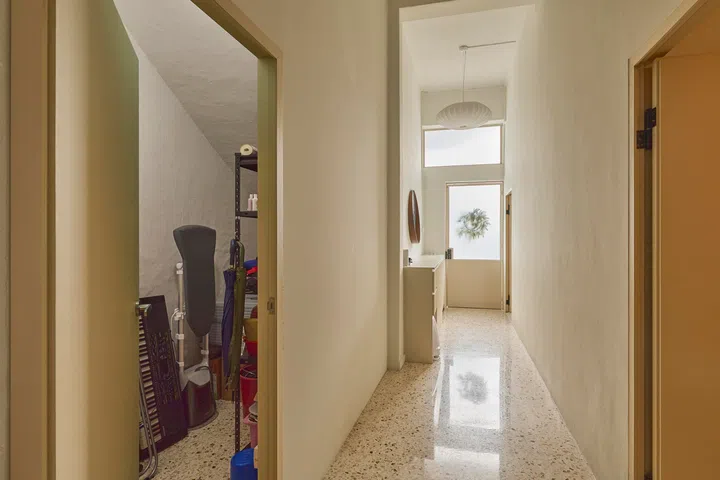
A hidden storeroom is integrated along the corridor, consolidating storage and preserving a single, uninterrupted path through the home.
A long axis
Beyond the main living areas, the home narrows into a long, linear corridor that organises movement towards the front of the house. Rather than breaking this stretch into smaller pockets, the design leans into its length—clarifying circulation and consolidating function along a single path.
“Long entrance: the design is forced to follow how the space operates,” says Jake Lee. “So we stacked the storeroom along the long walkway. There is a hidden storeroom where there was dead space, so you get a nice long walkway and only one single walkway instead of multiple tracks of dead space.”
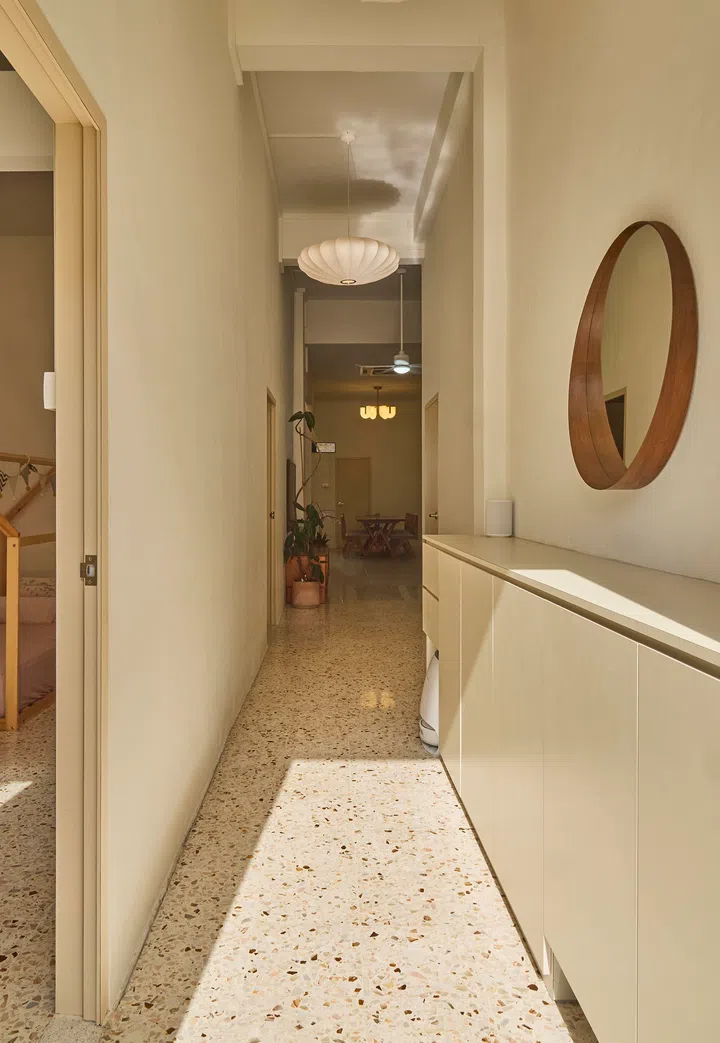
Low cabinetry lines the passage, keeping daily clutter contained while maintaining a clean, continuous spine.
Storage
That decision keeps the passage legible and uncluttered. Storage is absorbed into the architecture, allowing the corridor to read as a continuous, purposeful spine rather than a series of leftover zones. As it progresses, natural light gradually intensifies, drawing the eye forward.
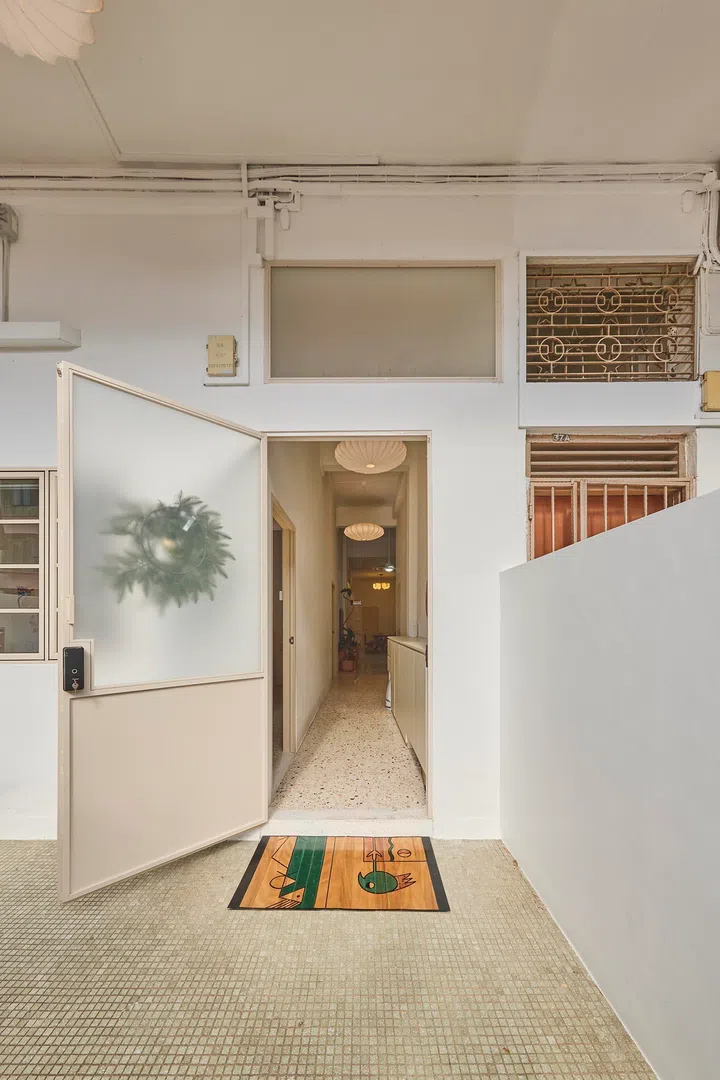
Light draws the eye towards the entrance, where the corridor opens out to the front patio.
Patio
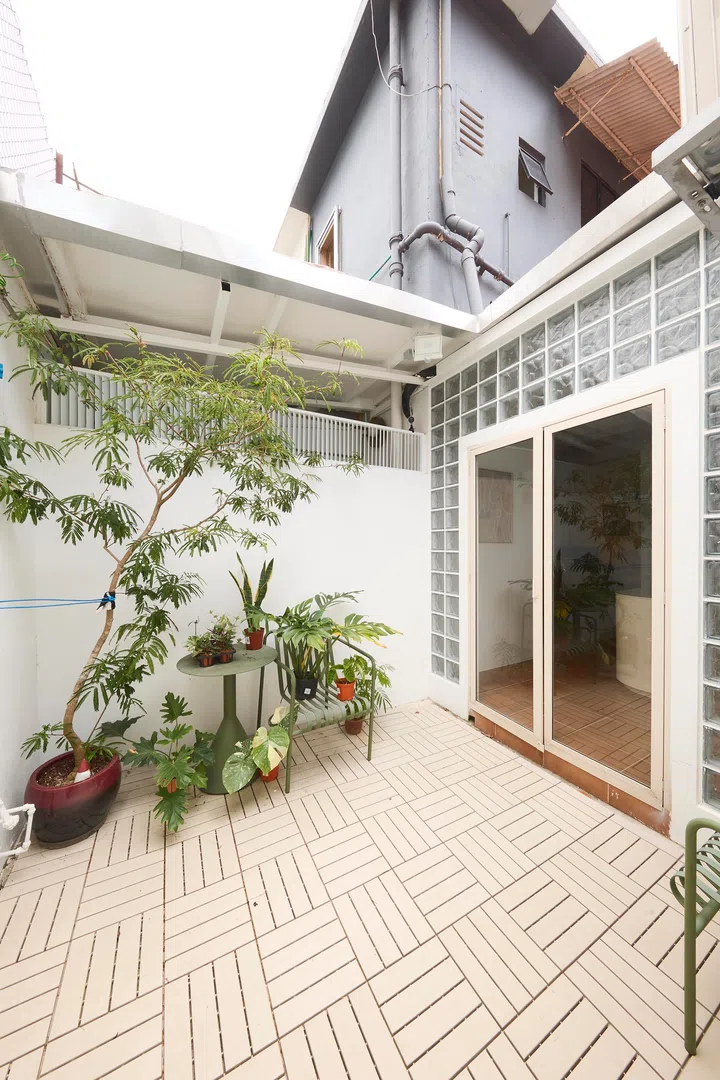
At the end of this sequence, the space opens out towards the entrance patio and front yard. While modest in scale, these outdoor areas quietly define how the home is experienced.
“While nothing elaborate was done to the front yard and backyard, these two spaces are a unique strength of the house,” the homeowners share. “We may not spend a lot of time there, but they play an important role in shaping the atmosphere and overall feel of the home.”
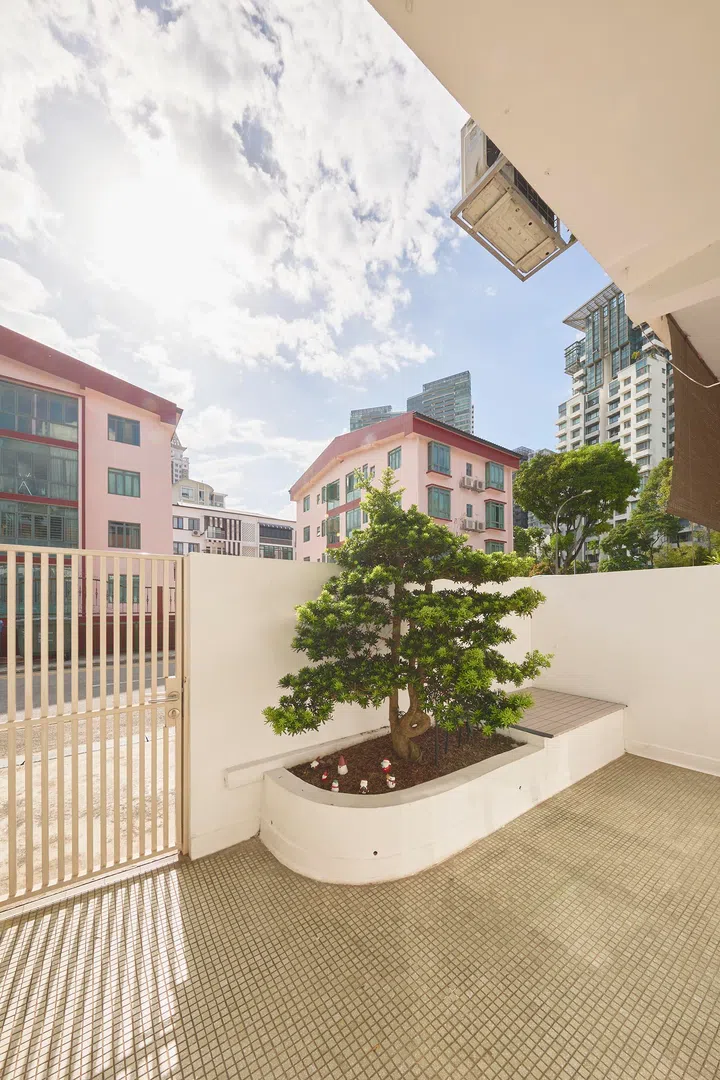
A Podocarpus bonsai sits at the entrance, creating a quiet, welcoming first impression against the retained mosaic tiles.
Bonsai Tree
Helmng the threshold is a carefully chosen bonsai, positioned to greet both residents and visitors on arrival. “A Podocarpus bonsai tree in the front yard… we spent considerable time and care sourcing it,” they add. “The front and backyard allow us to plant and grow greenery, offering a luxury we didn’t have in our previous homes.”
The transition also reflects a broader intent to retain traces of the original house. “When you enter the house, the first window is the kids’ area,” Jake notes. “We wanted to try to keep characteristics of the old house… as you can see, the tiles are not new.” The pale mosaic tiles at the front have been left intact, serving as a subtle link between past and present, grounding the home even as its internal layout has been reworked.
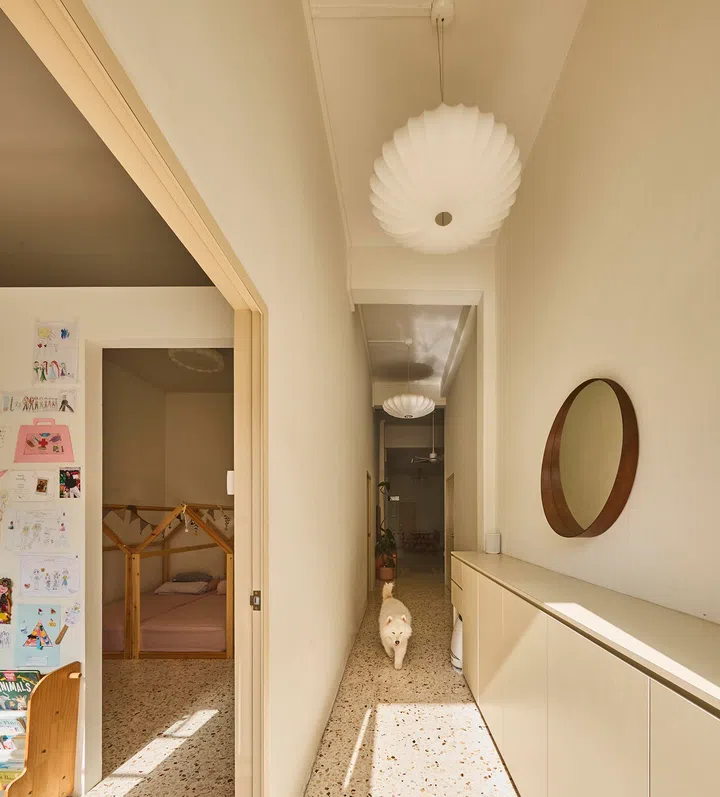
The children’s room opens directly off the corridor, keeping play and rest close to the centre of daily life.
Spaces that grow with the family
Along the same corridor, the children’s room branches off as a distinct but connected zone. “With young children who enjoy running and playing, having a ground-floor unit was important to avoid disturbing neighbours below,” the homeowners share. “In our previous rental, we experienced complaints from the downstairs neighbour due to noise.”
The strata-landed property has allowed the family to rethink how space is allocated. “This home allows for a designated play area for the children; previously, play happened in the living room, which made the space feel cluttered.” Here, activity is given its own territory, freeing up the rest of the home while still keeping the children within sight and reach.
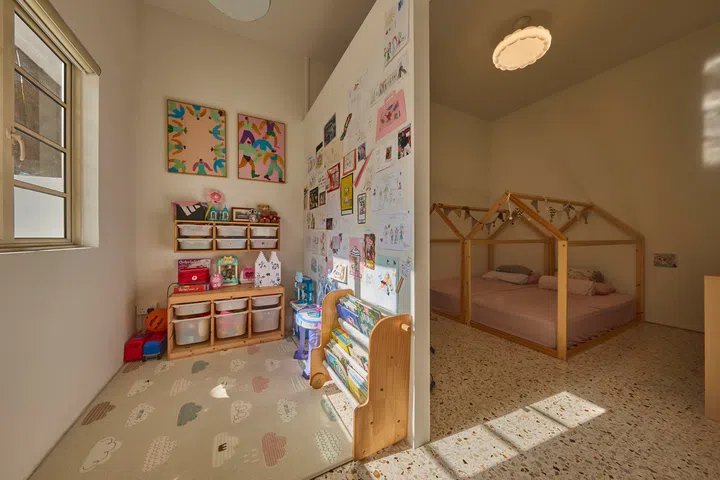
A simple partition separates play, study and sleep areas, allowing the room to function as multiple spaces at once.
Within the room itself, a simple partition quietly organises different modes of use. “For the kids, they wanted segregation of spaces—this wall… created segregation between the play space, the study space and where they slept,” says Jake. Rather than relying on doors, the division is kept open and visual, allowing the room to feel continuous while still accommodating different routines.
Light was crucial in shaping the space. “A keyword was light-filled—so we tried to find ways to create more light. The window in the play space, we built that to let in light,” he adds. This ensures the room feels bright and active during the day, supporting both play and rest without additional intervention.
Not every idea made it through. “We wanted to build netting for the kids to play with, but there’s a lot of safety involved… it would require a lot of professional assessment which would delay the project, so we dropped the net idea.” The decision reflects a broader approach—balancing imagination with practicality, especially where young children are concerned.
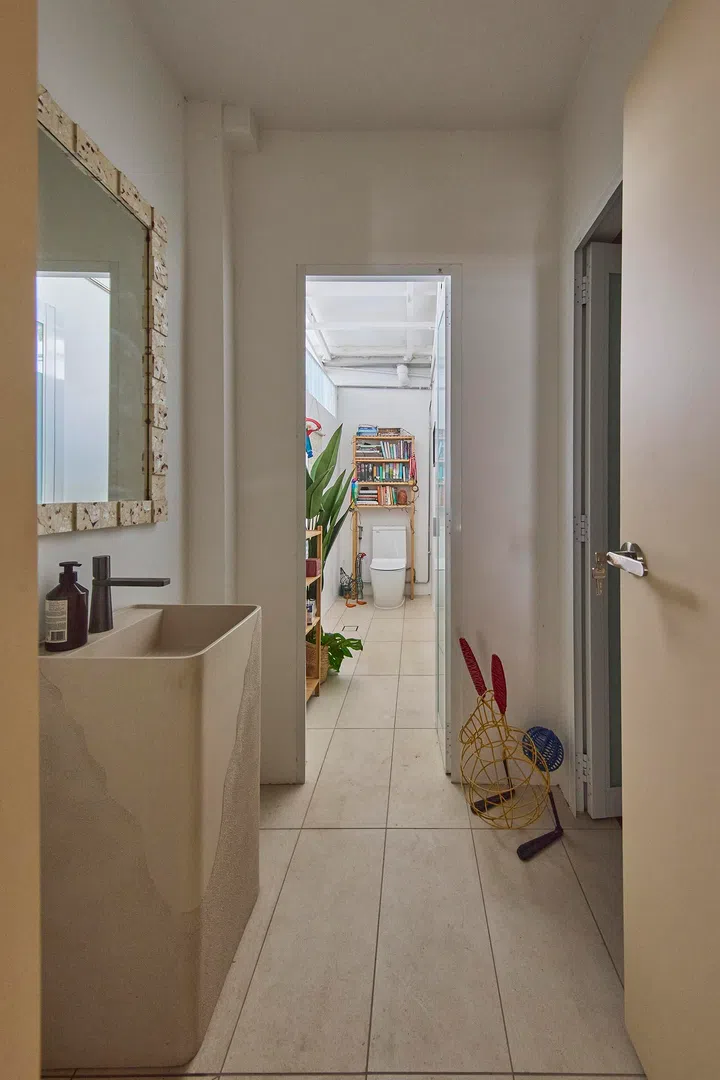
A textured basin and framed mirror add character to the common bathroom.The common bathroom adopts a lighter palette, maintaining material consistency in a more understated form.
Common bathroom
The common bathroom continues this balance of character and function. A textured, freestanding basin sits against a pared-back backdrop, paired with a mirror sourced from Hock Siong—one of several pieces that bring a layered, lived-in quality to the home. Beyond, the space opens into a brighter utility zone, where everyday routines unfold without interrupting the calmer areas of the house.
Together, these spaces reinforce a consistent idea: that a family home is not just about openness, but about giving each activity—play, rest, daily rituals—room to happen without friction.
$120,000 Renovation Cost
The renovation itself was completed over a span of four months, from conceptualisation to handover. Not every idea made it through in that span, which Jake expresses some regret for: “I wish there was less regulation so we could’ve built fun netting for the kids.”
The homeowners are extremely pleased with their home nonetheless. “We are delighted to see the transformation… the process has been very rewarding,” they share. More than the physical changes, the home now supports their daily lives in ways their previous space could not.
“Most importantly, the house truly feels like a home, and we are glad we took the leap,” they say. “Just a year in, the home still feels fresh and exciting. Regardless of where we may live in the future, this unique home will always hold a special place in our hearts.”