
This Jalan Lempeng strata family home was designed to wow—from the moment you walk in
Designed for a family of six, this modern luxury home pairs dramatic lighting, custom detailing, and cleverly planned spaces with the flexibility to host up to 30 guests in comfort.
By Gwyneth Goh -
Share this article
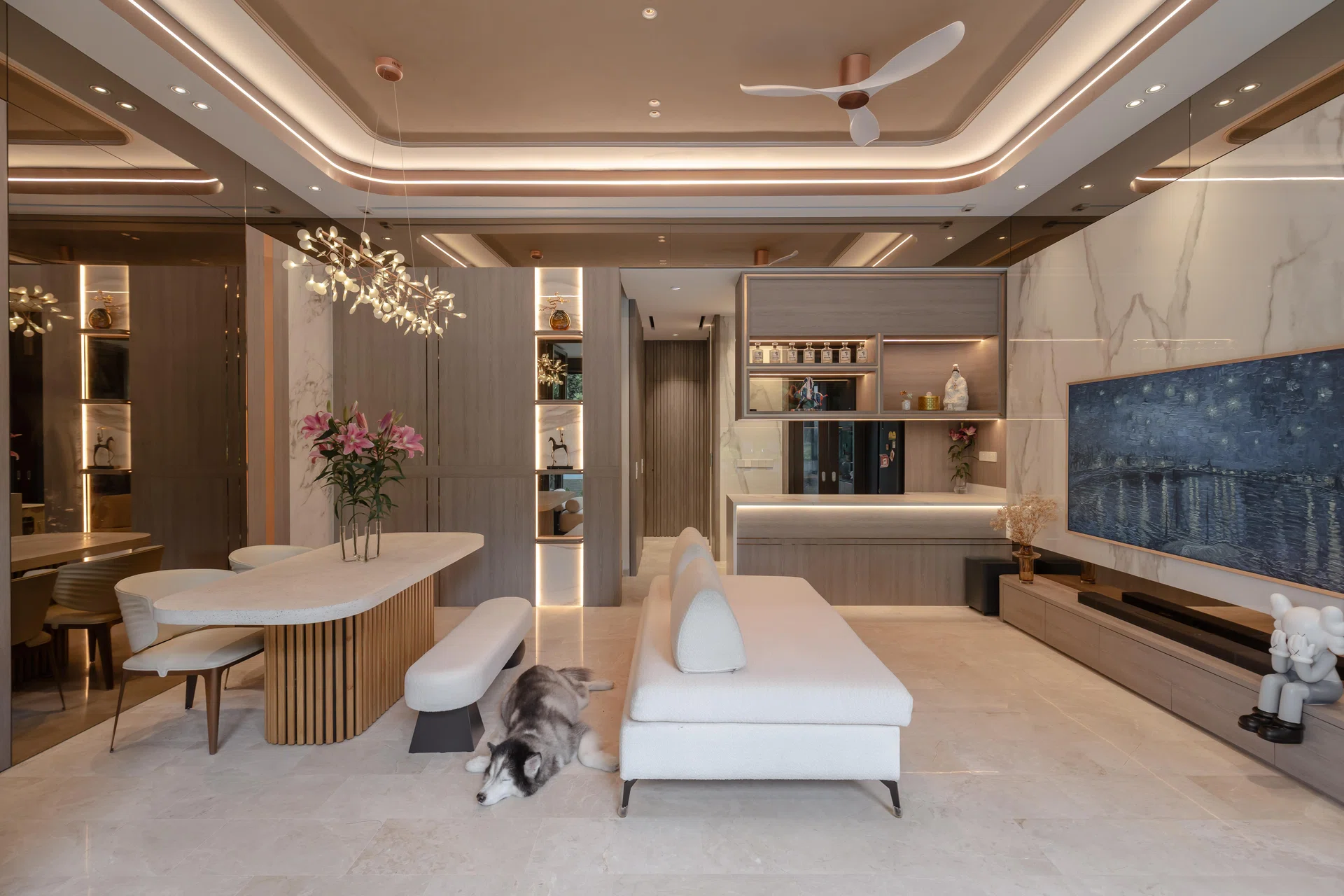
Stepping into Mr and Mrs RV’s strata-landed home at Jalan Lempeng, the intended effect is immediate: wow. A layered ceiling draws the eye upward, warm pools of light wash across reflective surfaces, and beyond the open frontage, the shimmer of a 50m pool brings movement and greenery into view. In Mrs RV’s words, “The brief we gave our designer was actually very simple—create a “WOW effect.”
Karen Lim of Rezt and Relax Interior translated that vision into what she describes as “a modern luxury home that feels warm, comfortable, and practical for daily family living, while still having a strong ‘wow factor’ when guests enter the space.”
That ambition was rooted in the home itself, which the couple had spent the past eight years searching for. “What drew us to this home was its many unique qualities—a good-sized living hall, an unblocked view, and its direct facing towards the pool,” says Mrs RV. “We also appreciated that there is no sliding door at the front, giving it a fully open and unobstructed frontage.”
Who Lives Here: Mr & Mrs RV, their four children
Home: A 4-bedroom strata-landed home in Jalan Lempeng
Size: 2,700 sq ft
Interior Designer: Karen Lim and Nicky Haw, Rezt and Relax Interior
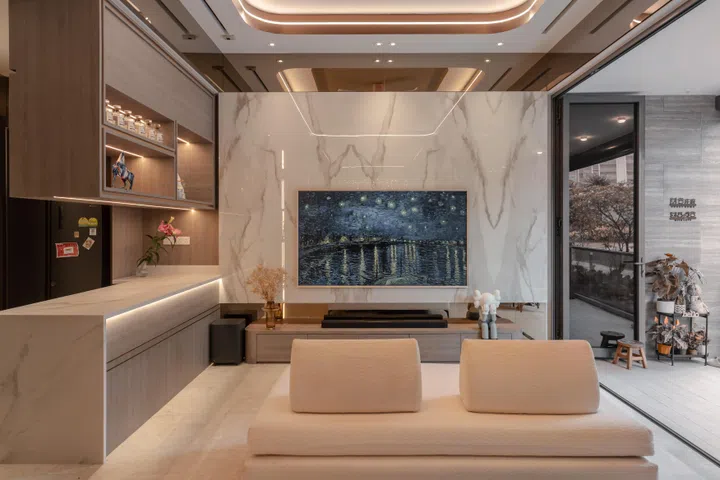
The living room was intentionally kept open, with no coffee table, so the space feels larger and movement remains easy for exercise, family life, and their husky.
Opening up the view
For a family of six with an active lifestyle, openness was never just an aesthetic preference. Mr RV is an Ironman athlete, a commitment reflected even at the home’s entrance, where an Ironman logo nods to his passion and dedication.
“He exercises every day—going to the gym daily, running twice a week (about 13km each run), swimming once a week, and cycling once a week (approximately 100km per ride),” shares Mrs RV. Her own routines are no less energetic; she enjoys long morning walks several times a week and has even started a walking club in her community.
That energy shaped how the communal spaces were planned. Rather than filling the living room with decorative furniture, the family opted for flexibility and openness.
“We don’t have a coffee table so that he has enough space to do push-ups and sit-ups comfortably,” says Mrs RV. A custom double-sided sofa helps define the living area while preserving circulation, while a customised dining table was designed to suit both the family’s needs and the proportions of the space.
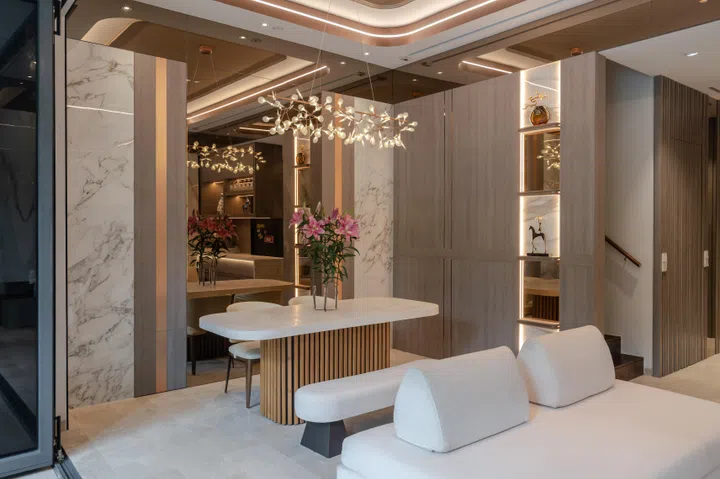
Custom pieces, including the two-sided sofa and dining table, help define the open-plan layout without making it feel crowded.
The sense of openness is amplified by a significant layout change. Originally, the orientation of the living and dining zones did little to make the most of the home’s setting.
“The original view faces pillars and the power station, making it feel rather dull and uninspiring,” says Mrs RV. By flipping the layout, the dining area now enjoys a livelier outlook over the pool and landscaped grounds. “With swimmers in motion and lush greenery throughout the compound, this creates a far more vibrant and lively atmosphere,” she explains.
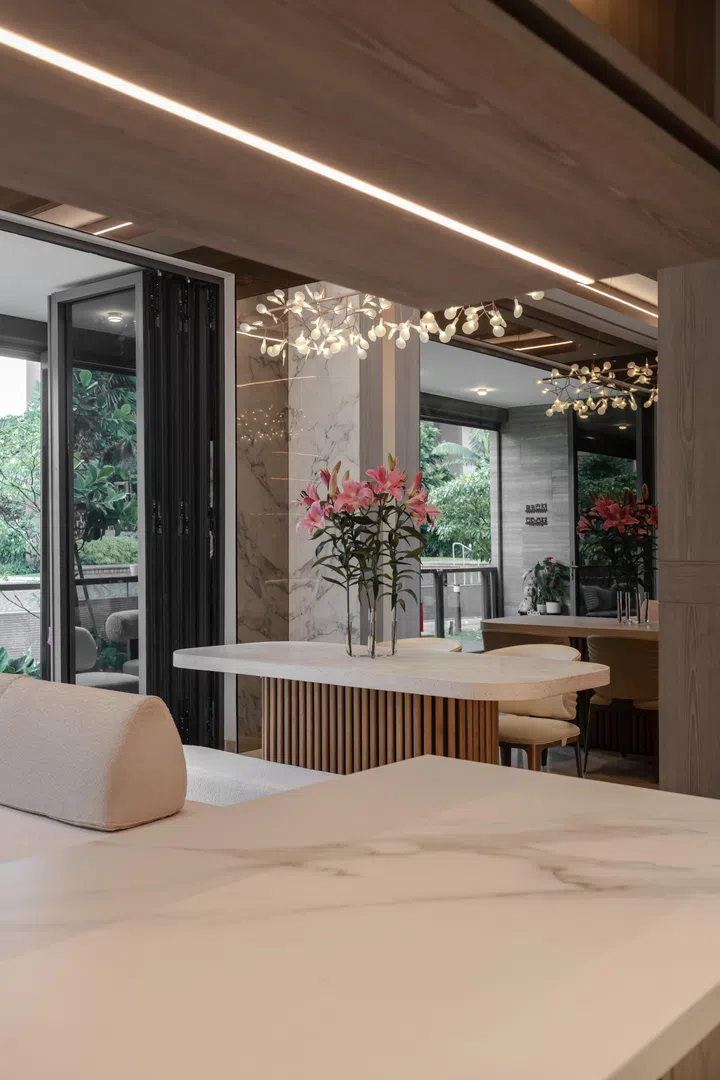
The living room, dining area, and patio were designed to flow as one connected entertaining space, allowing guests to move comfortably between zones during larger gatherings.
Designed for gathering
For all its glossy finishes and carefully considered detailing, the home was ultimately designed to be lived in—and shared. Karen describes the guiding principle for the project as “luxury with livability”.
“We wanted every feature to feel aesthetically refined while still being practical and comfortable for everyday family use,” she says. “The design was never only about visual impact, it was equally about how the family would experience and enjoy the home daily.”
“When we host up to around 30 people, the layout naturally supports different zones of activity,” says Mrs RV. “Most of the main gathering happens in the living room, dining area, and patio, which flow well together and allow guests to move around comfortably.”
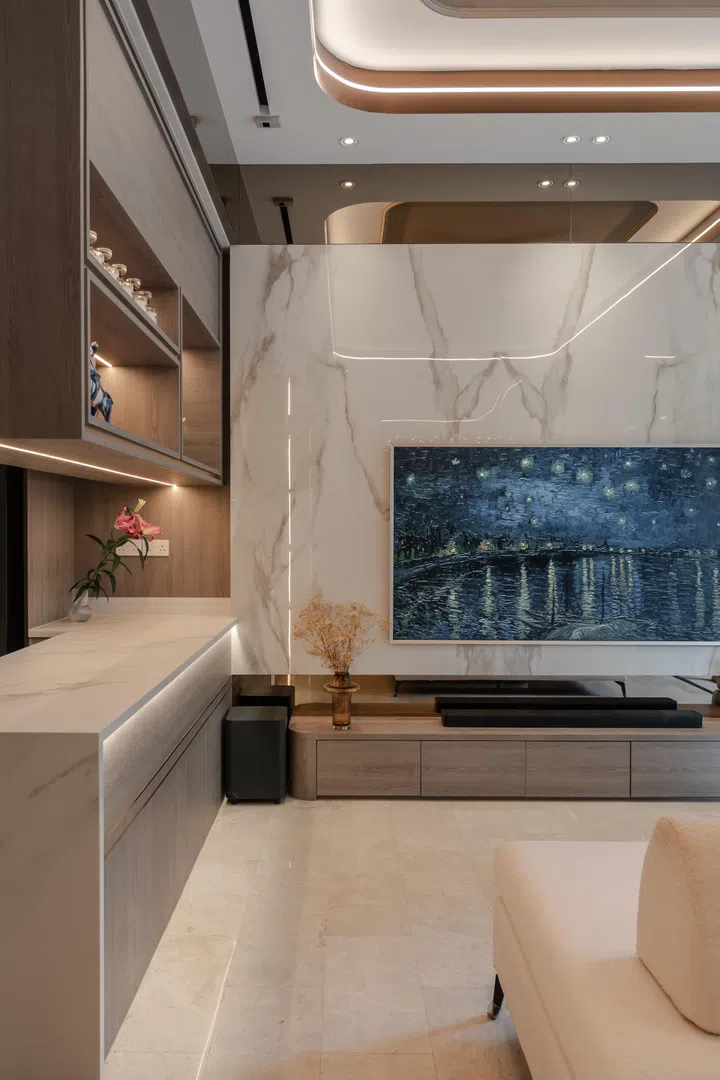
Custom joinery and integrated surfaces help the entertaining zones feel polished yet practical, in keeping with the home’s “luxury with livability” approach.
That adaptability was intentional. Rather than relying on fixed furniture arrangements, the family opted for loose pieces that can be easily moved around depending on the occasion. “We intentionally chose to use more loose furniture so we can easily reconfigure the space based on our needs,” she says. “We also have a mobile dining table, which can be moved around easily depending on the setup we need.”
The home’s multi-generational appeal extends to younger visitors too. “The younger ones often end up in the loft bedroom, where they play games and have their own chats in a more private, cosy setting,” says Mrs RV. It is this balance of openness, flexibility, and warmth that gives the home its easy sociability—equally suited to a quiet evening in or a lively house full of guests.
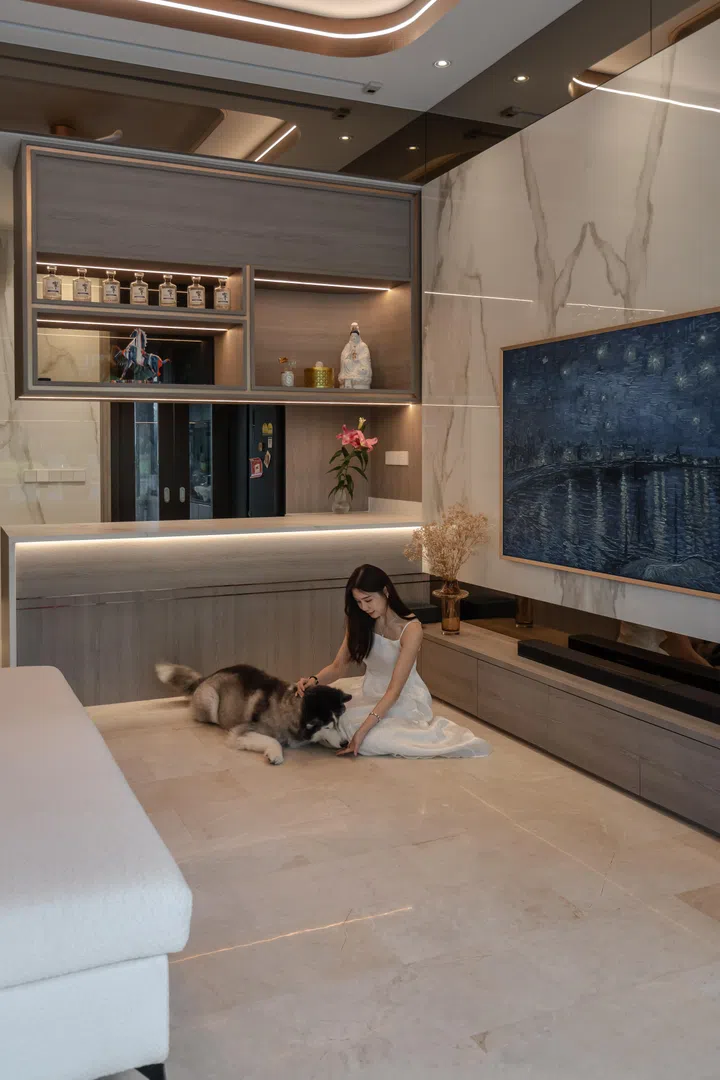
A dedicated Guanyin feature was carefully integrated into the living space, balancing the family’s spiritual priorities with the home’s modern luxury aesthetic.
A space for meaning
The home also makes room for long-held beliefs and personal rituals. One of the most important features for the family is the dedicated Guanyin altar, carefully integrated into the main living space rather than treated as a separate or visually disconnected element.
“Our Guanyin has been with us since the day we got married, this marks our 30th year together,” says Mrs RV. “Because of her significance, we made it a priority to ensure she would be properly accommodated in our new home.”
That significance shaped both placement and design. She adds. “We engaged a well-known feng shui master to identify an auspicious location, ensuring it aligned with both spiritual and traditional considerations.”
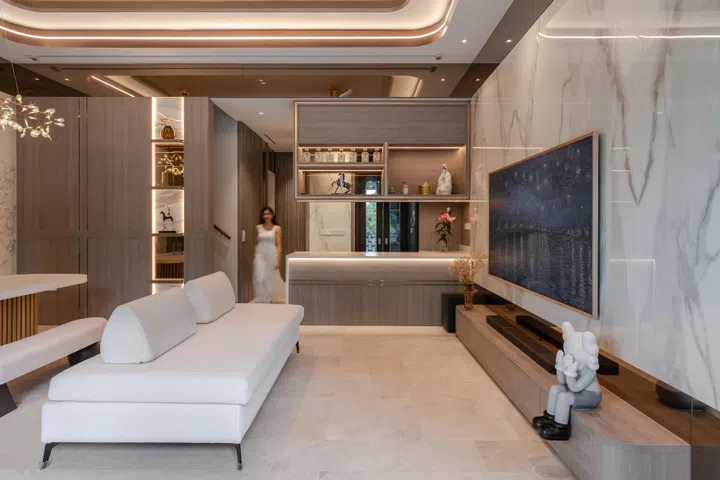
Rather than treating it as a separate element, the altar was designed to sit naturally within the broader material palette and custom joinery of the main living area.
Karen saw the altar as an opportunity to turn an existing constraint into a meaningful design feature. Rather than removing the original top-hung metal rack above the dry kitchen island, she adapted the structure with a curved cabinet form that gracefully echoes the softer lines used throughout the home. “This approach allowed us to preserve the original framework while creating a meaningful focal point that blends functionality with serenity,” Karen notes.
The altar feels naturally integrated rather than ornamental. “We worked closely with our interior designer to create a feature that would blend seamlessly with the home’s modern aesthetic,” says Mrs RV. “The result is a modified space (without removing the original structure) that feels harmonious, respectful of its spiritual significance while still fitting naturally within the overall design of the home.”
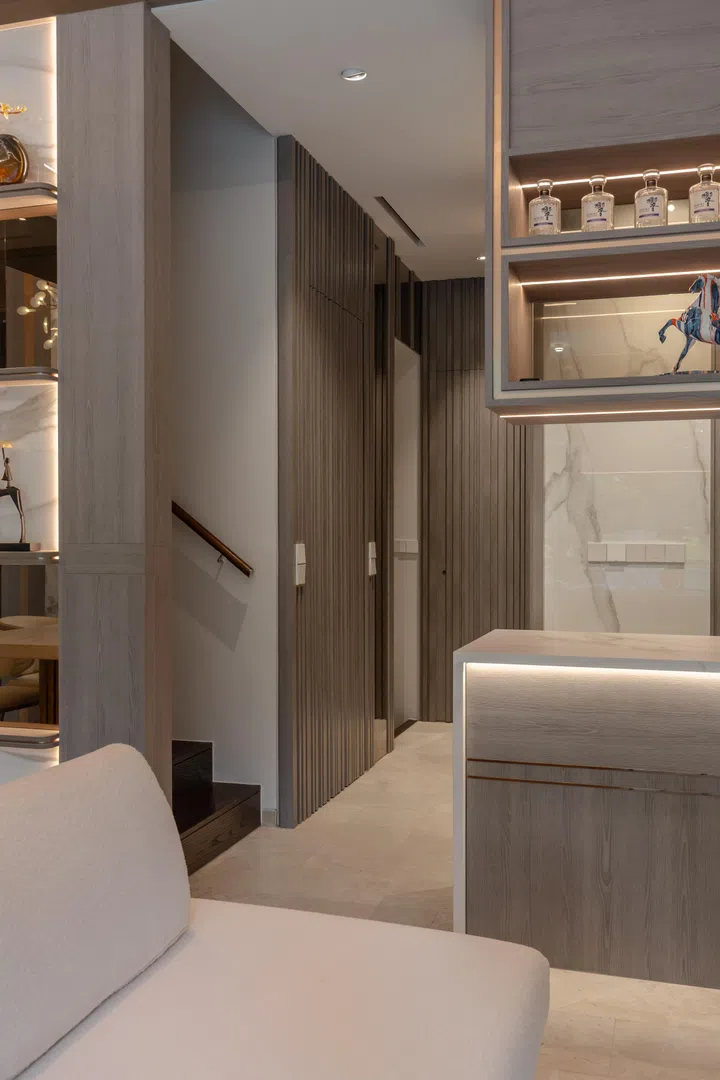
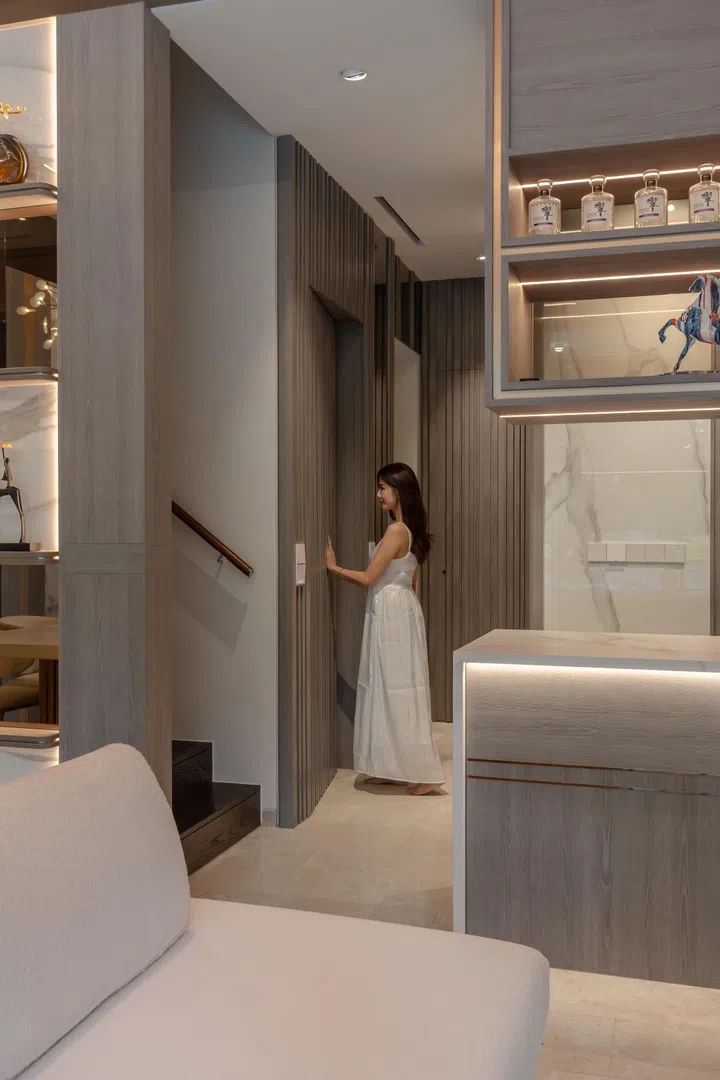
Concealed doors and continuous wall panelling keep the circulation spaces visually calm, extending the home’s elegant design language beyond the main entertaining areas.
Refined in every corner
A sense of sophistication carries beyond the main entertaining spaces into the quieter corners of the home. Rather than breaking up the visual flow with obvious door frames and contrasting finishes, Karen continued the same warm timber-look panelling along the circulation spaces, concealing doors so they recede almost seamlessly into the walls. It is a small but effective move that maintains the home’s composed, hotel-like calm even in transitional areas.
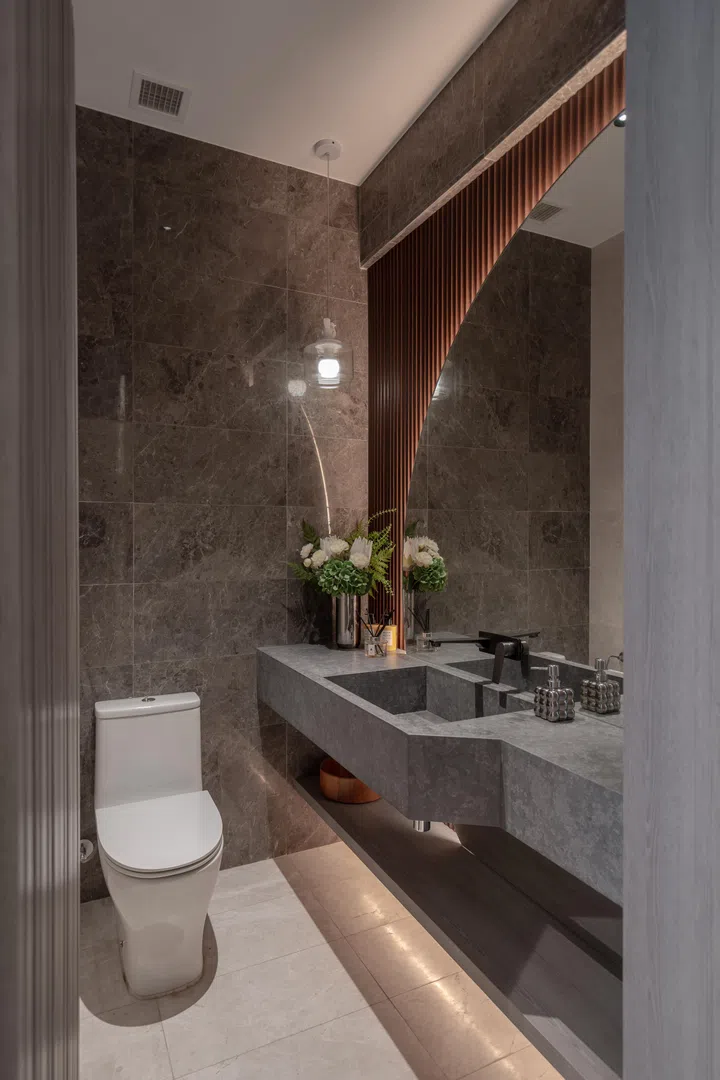
The powder room carries the same sense of considered luxury, with dark stone-look surfaces, warm lighting, and sculptural detailing.
That same attention to detail extends to the powder room, where everyday function is treated with the same design intent as the more public spaces. Dark stone-look finishes, warm lighting, and a sculptural mirror elevate what could have been a purely utilitarian room into something more considered.
The effect is consistent with the broader brief: a home where practicality and visual impact are never treated as separate ideas. From here, the staircase leads up to one of the home’s most popular spaces with younger family members and guests alike—the loft bedroom.
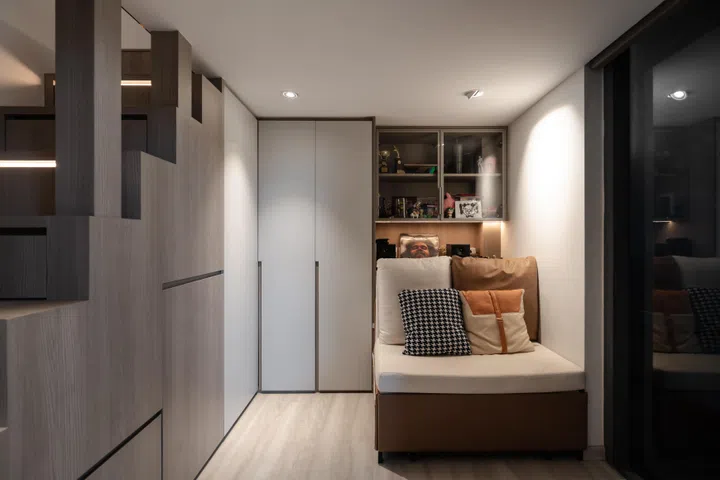
Designed across two levels, the shared bedroom gives the siblings distinct sleeping zones while making efficient use of the room’s vertical volume.
A room of their own
While the main floor was designed for openness and gathering, the loft introduces a more personal layer to the home. Created as a shared bedroom for the couple’s youngest son and daughter, the compact two-level space was carefully planned to give each child a sense of ownership despite the smaller footprint.
“The loft quickly became a favourite space for the kids when it was first completed—they were really excited about it,” says Mrs RV. “It’s actually a shared bedroom for two of them, thoughtfully designed across two levels. The lower floor is used by my youngest son, while the upper loft area is for my youngest daughter.”
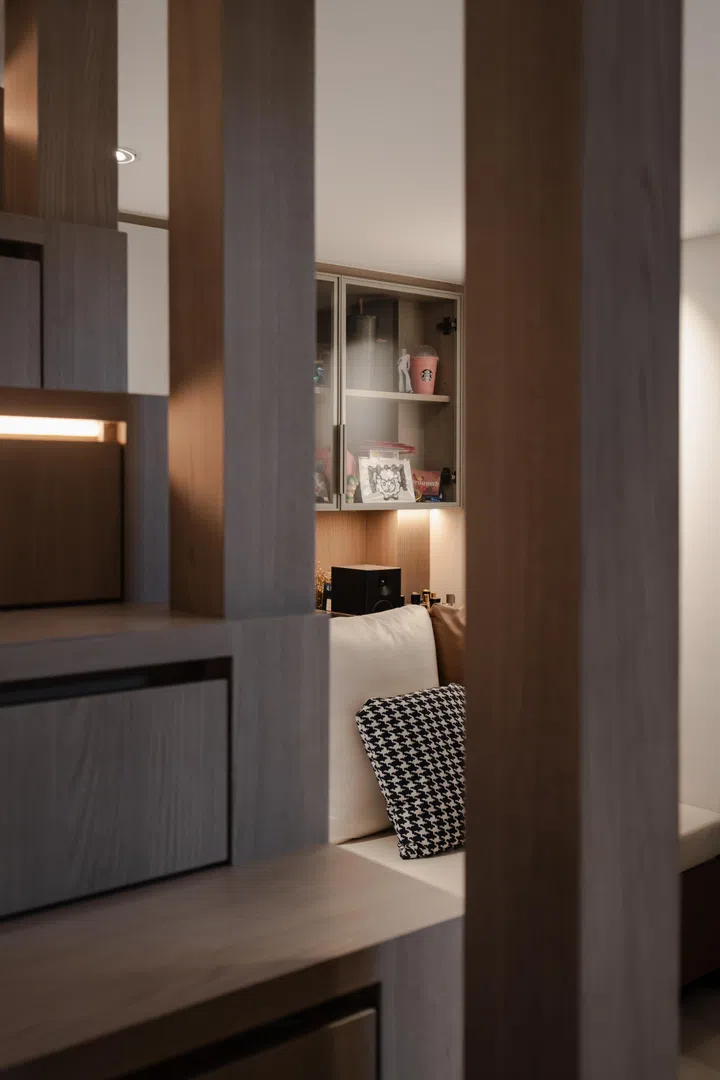
Integrated shelving, concealed storage, and warm lighting help the compact room feel personal rather than crowded.
For Karen, the challenge was making the room work hard without feeling overbuilt. Designed for the pair of 17- and 24-year-old siblings sharing a single bedroom, the loft maximises the room’s vertical volume by stacking one sleeping zone above the other, while still carving out space for study areas, wardrobes, and integrated storage.
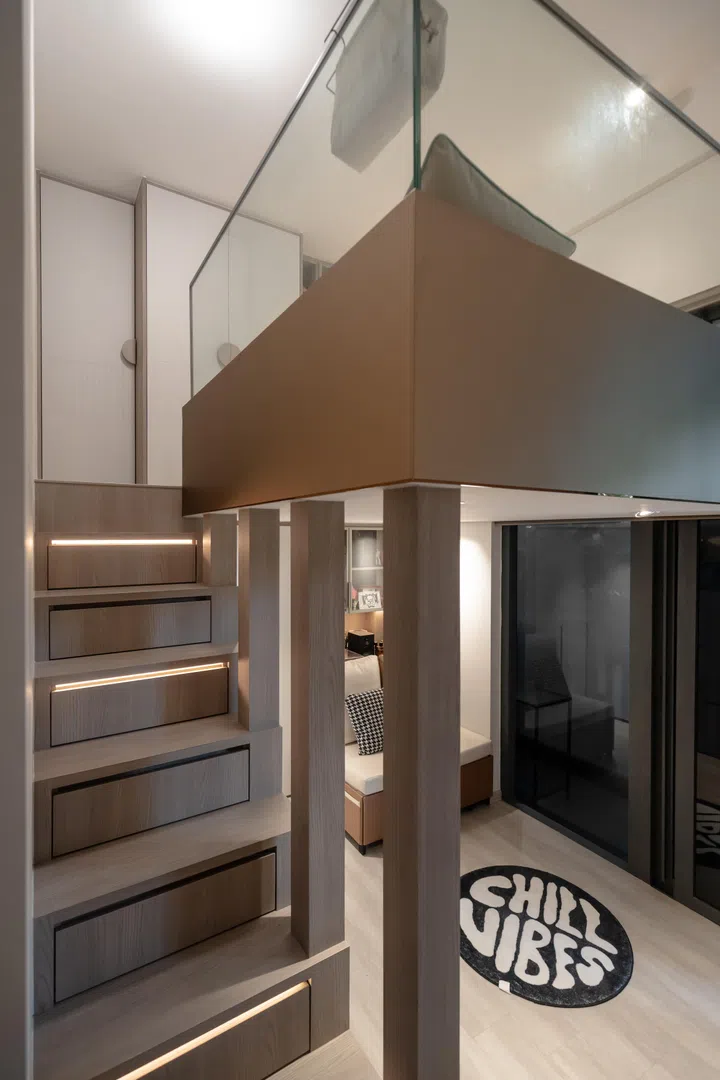
Custom carpentry makes every inch work harder, with storage built into the staircase and a loft structure designed to feel sturdy without overwhelming the room.
“Careful consideration was given to the proportions and circulation within the room to ensure the space did not feel overly cramped or heavy,” Karen says. “The built-in carpentry was also strategically planned to integrate storage beneath the staircase and along the wall areas, allowing the room to remain organised and functional.”
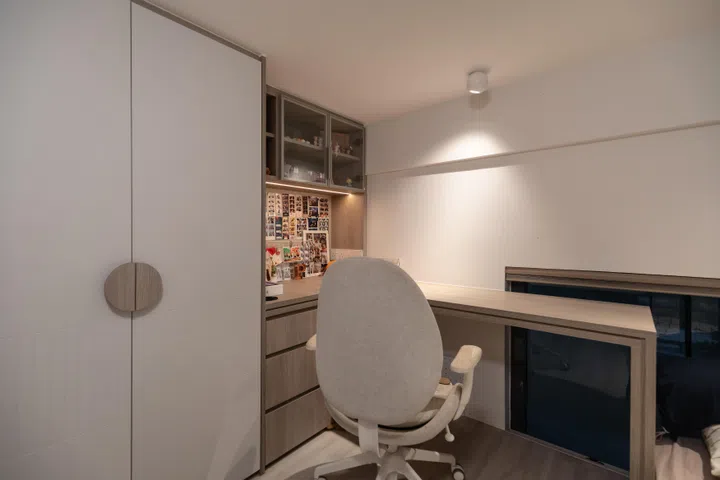
Each sibling has their own study area and storage, ensuring the shared room remains practical for daily routines while remaining comfortable to live in.
“Even though it’s a compact space, it’s been planned to ensure each of them has their own study table, wardrobe, and a cosy bed,” says Mrs RV. “They both really enjoy the setup—it feels personal, comfortable, and a little special with the loft element.”
For a home shaped around both practicality and family life, it is a thoughtful solution—one that gives two young adults their own distinct zones within a shared space.
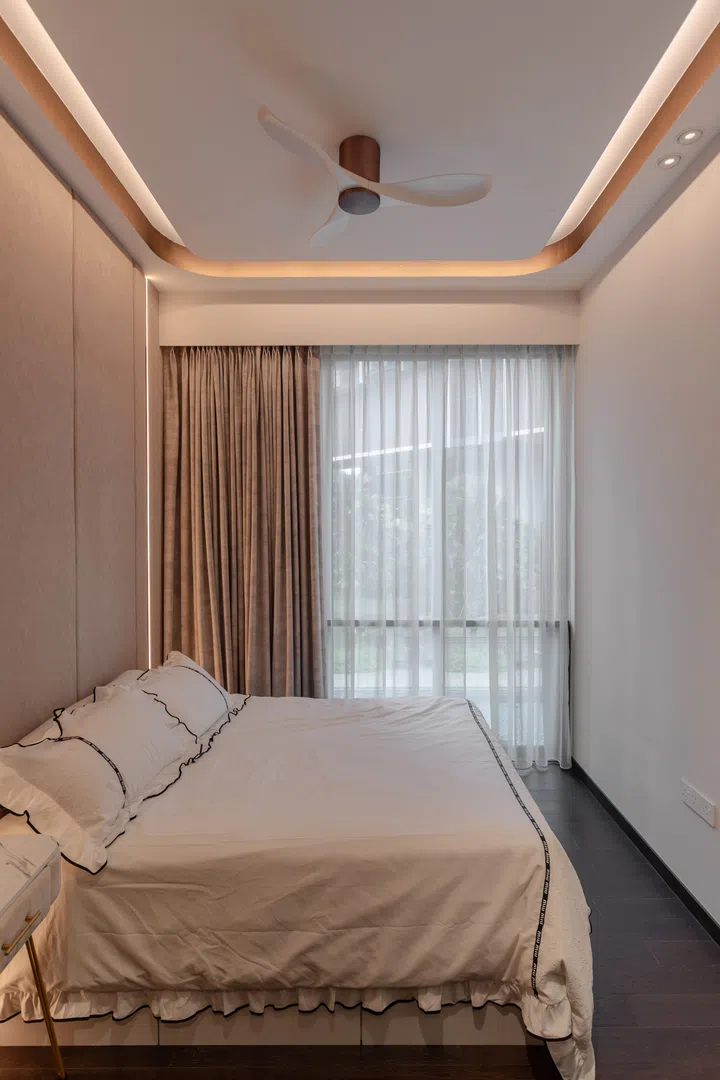
The master bedroom takes a softer approach, with integrated lighting, upholstered finishes, and warm material tones creating a calm retreat for rest and privacy.
A quieter retreat
After the visual intensity and sociability of the main living spaces, the master bedroom takes a softer approach. Here, the palette is pared back, with upholstered wall panels, warm timber tones, and integrated lighting creating a calmer, more restful atmosphere. While the broader home embraces visual impact, the private spaces feel intentionally quieter.
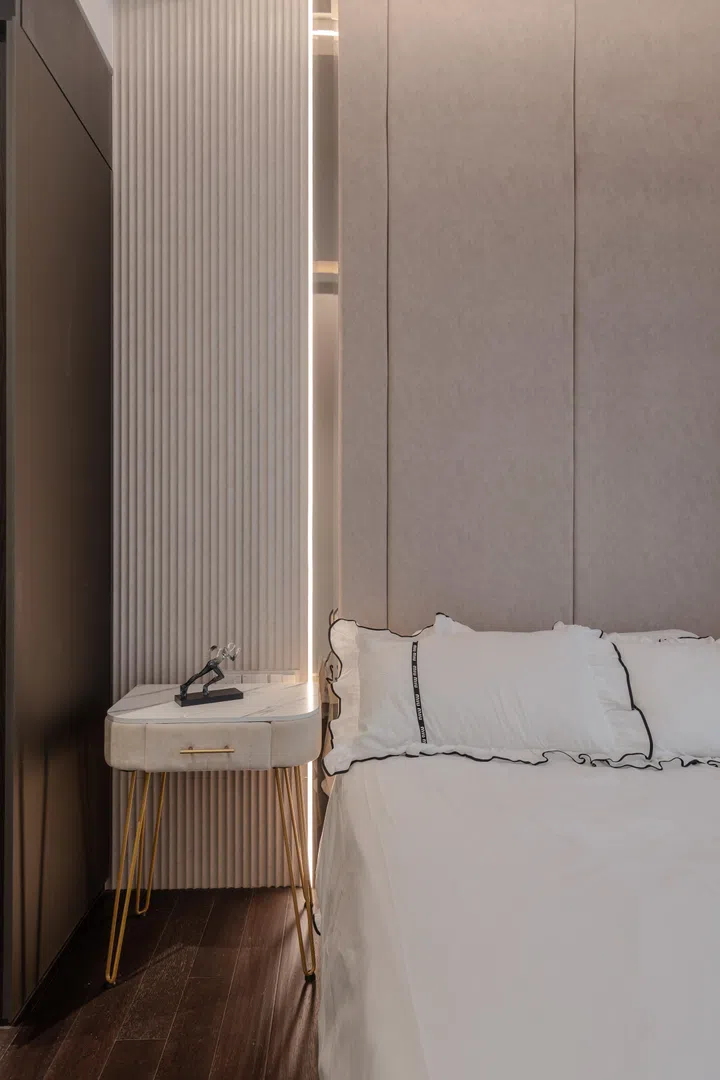
Tailored detailing, from the fluted wall treatment to the upholstered headboard, gives the room a quiet sense of luxury without unnecessary embellishment.
The same attention to detail remains evident. Rather than relying on decorative excess, Karen kept the room restrained, allowing subtle material contrasts and lighting to do the work. A softly coved ceiling adds warmth overhead, while tailored joinery and gentle textural layering lend the room a boutique hotel-like comfort without feeling overly formal.
As with the rest of the home, the effect is one of considered luxury—but in a more intimate register, designed for winding down rather than entertaining.
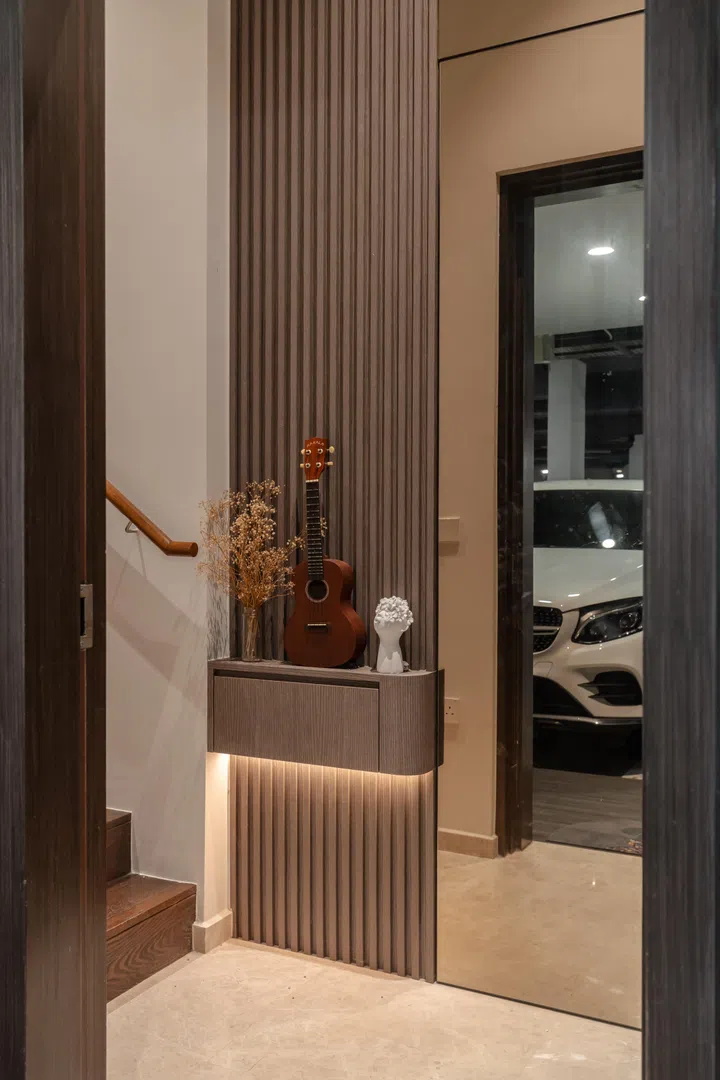
Even transitional spaces were carefully considered, with custom detailing and integrated lighting extending the home’s design language all the way to the basement entrance.
Over $250,000 renovation cost
The renovation cost over $250,000 and was completed in approximately four to five months, with the overall timeline extending to around seven months after the family moved in to accommodate a series of refinements.
“After handover, we made several refinements, including changing the sintered stone on the island table, adjusting the aircon ducting, installing concealed bedroom doors, replacing the bedroom flooring with vinyl, and covering the wall in the dry kitchen so that no bare wall is visible.”
Still, the original brief has clearly endured. “It all makes us feel good as a family,” says Mrs RV. “The home looks great, and friends are often amazed at how the spaces have been designed, especially where awkward corners have been cleverly concealed.”
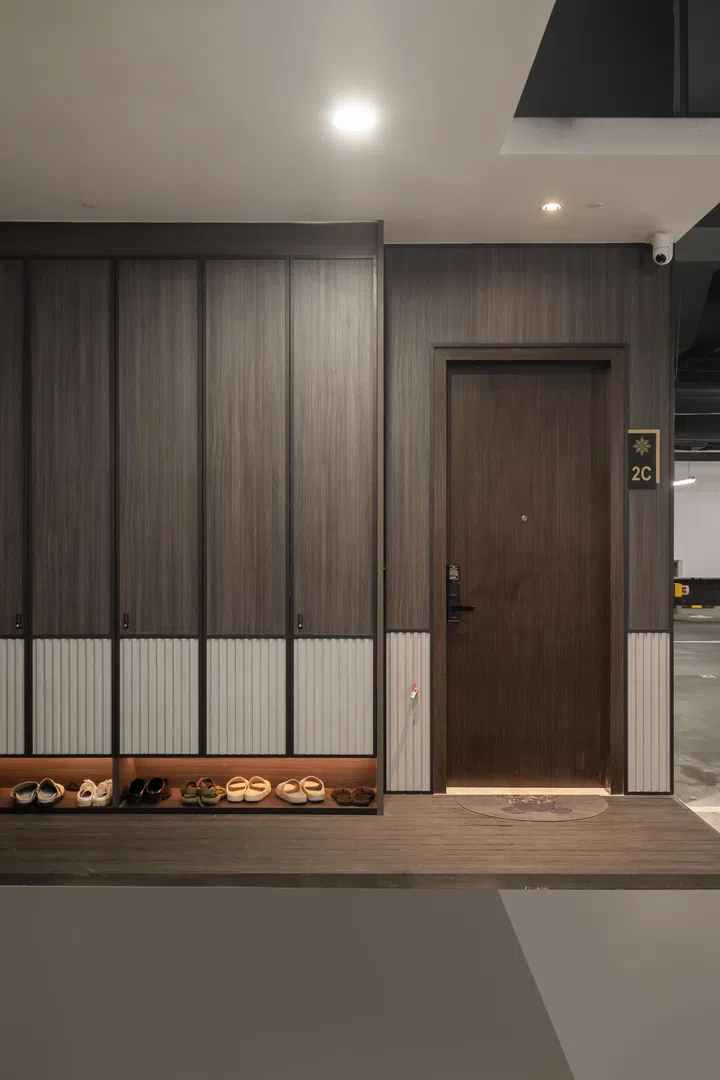
Viewed from the carpark, the home’s private basement entrance was designed with the same attention to material continuity and concealed storage seen throughout the interior.
She adds: “Generally, I like every corner of my home. Each space was created with thoughtful planning and love, together with my husband. The hall is especially grand and never fails to impress our guests.” So much so, she says, that “we often even have unexpected neighbours asking to visit our home.”
For a family who asked simply for a home with wow factor, that reaction may be the clearest sign that the brief was met.