
Share this article
In Singapore, the air in late January or early February carries an excitement in the air. As the Tamil month of Thaipusam approaches and the full moon nears its peak, the Hindu community prepares for Thaipusam—a festival of faith, endurance, and deep gratitude dedicated to Lord Murugan, the deity of youth, power, and virtue.
Thaipusam commemorates the moment Goddess Parvati gave Lord Murugan the Vel (a divine spear) to vanquish the demon Soorapadman. In Singapore, this is more than a religious event; it is a national spectacle of devotion.
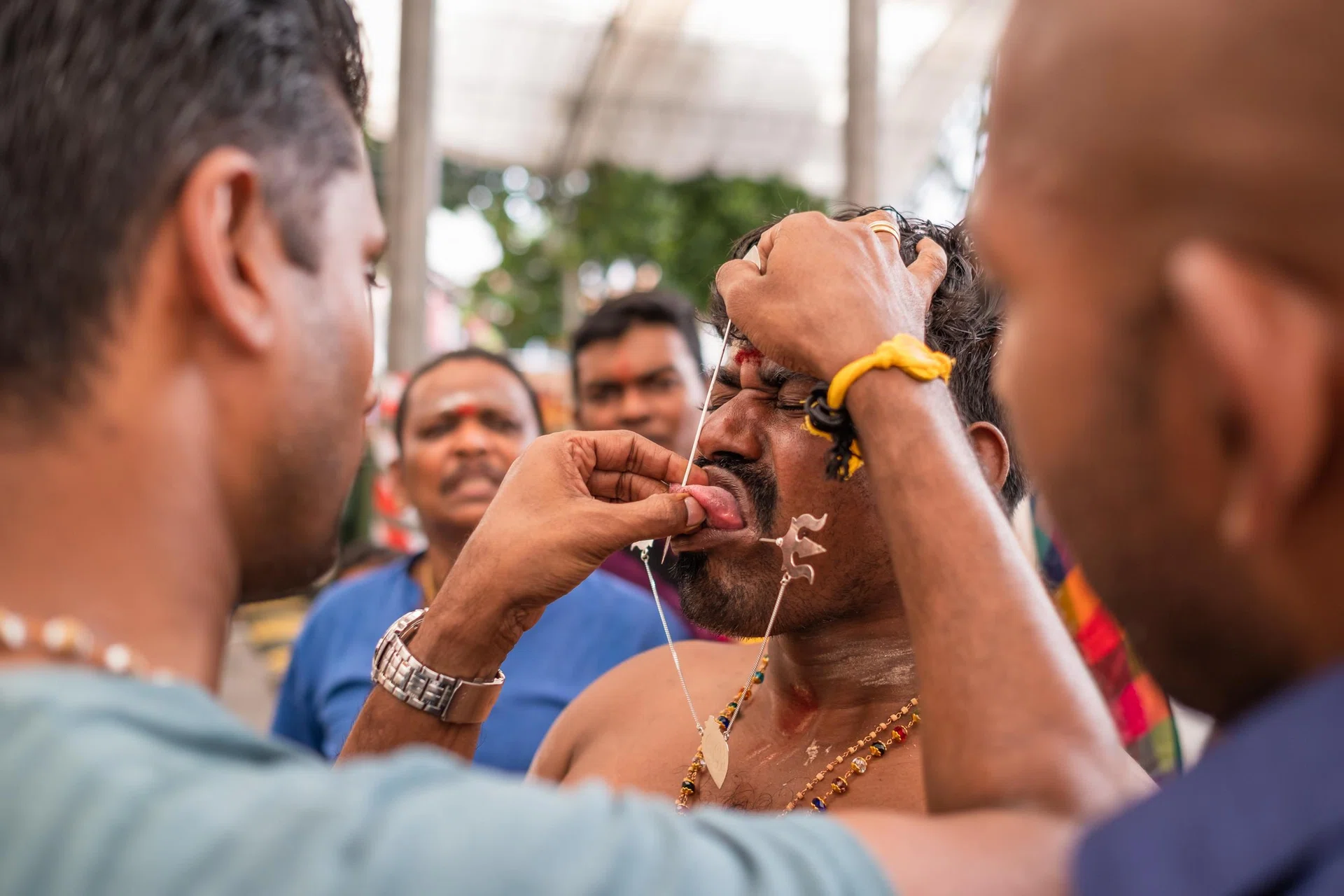
The heart of the festival lies in the 4km foot procession from Sri Srinivasa Perumal Temple in Serangoon Road to Sri Thendayuthapani Temple on Tank Road. Devotees carry kavadis—ornate structures attached to the body via hooks and skewers—or pots of milk known as paal kudam, symbolising the carrying of a physical and spiritual burden in exchange for divine blessings.
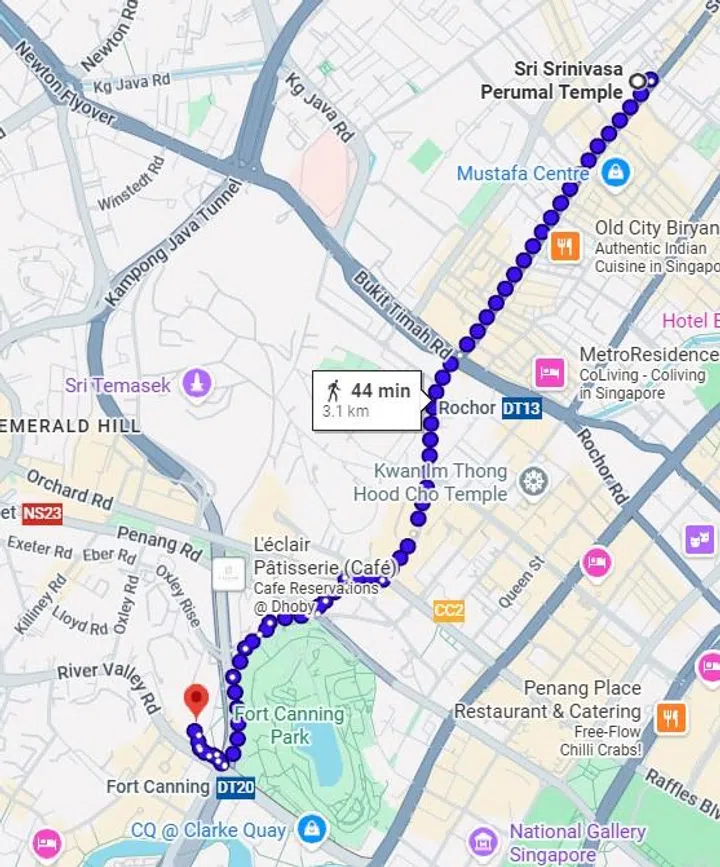
The annual Thaipusam festival in Singapore sees a 4km foot procession from Sri Srinivasa Perumal Temple in Serangoon Road to Sri Thendayuthapani Temple on Tank Road.
Prepare Your Home for Thaipusam
For many Singaporean families, the physical journey on the streets begins weeks earlier within the home. Creating a sacred corner is an essential ritual, transforming a quiet nook of a HDB flat or a landed terrace into a high-energy spiritual portal.
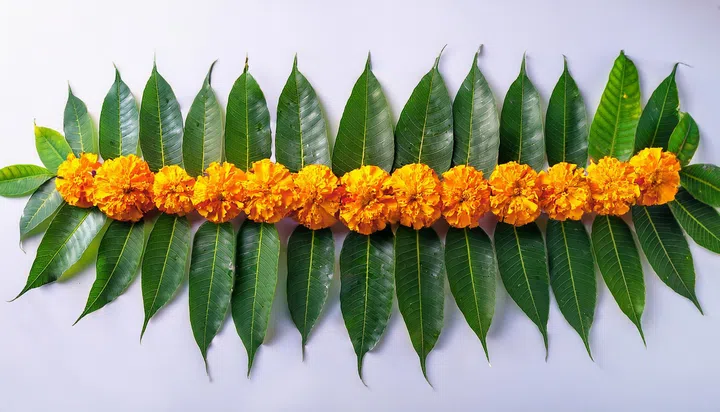
Indian flower garland of mango leaves and marigold flowers.
Purification
The space is thoroughly scrubbed, and the entrance is adorned with maavillai (mango leaves) and kolam (intricate floor patterns made of rice flour) to invite auspiciousness.
Maavillai (mango leaves)
In Hindu mythology, Lord Murugan and his brother Lord Ganesha were said to be particularly fond of mangoes. Legend has it that Murugan himself instructed devotees to tie mango leaves during ceremonies to invoke prosperity and fertility.
In rituals involving the Kumbam (a sacred water pot topped with a coconut), the mango leaves represent the limbs of the deity, while the coconut represents the head. By hanging them at the door, the family signifies that the home is a temporary temple for the Lord.
Traditionally, mango leaves are believed to ward off negative energy and “evil eyes.” Scientifically, devotees often note that the leaves stay green long after being plucked, symbolising everlasting life and the persistence of faith even under the heat of the Singapore sun.
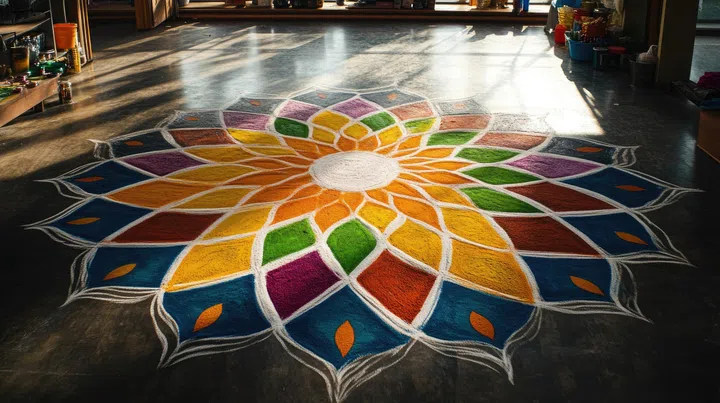
Kolam (Rice Flour Floor Art)
A kolam is an intricate geometric pattern drawn at the entrance of the house or in front of the altar. Historically, kolams were made from edible rice flour. This serves as a daily offering to feed ants, birds, and small insects. In the spirit of Thaipusam—a festival of selflessness—this act represents the devotee’s commitment to caring for all living beings, no matter how small.
The symmetrical nature of the kolam—often featuring the Peacock (Murugan’s mount) or the Vel (his spear) during Thaipusam—is meant to trap negative vibrations within its lines, preventing them from entering the home.
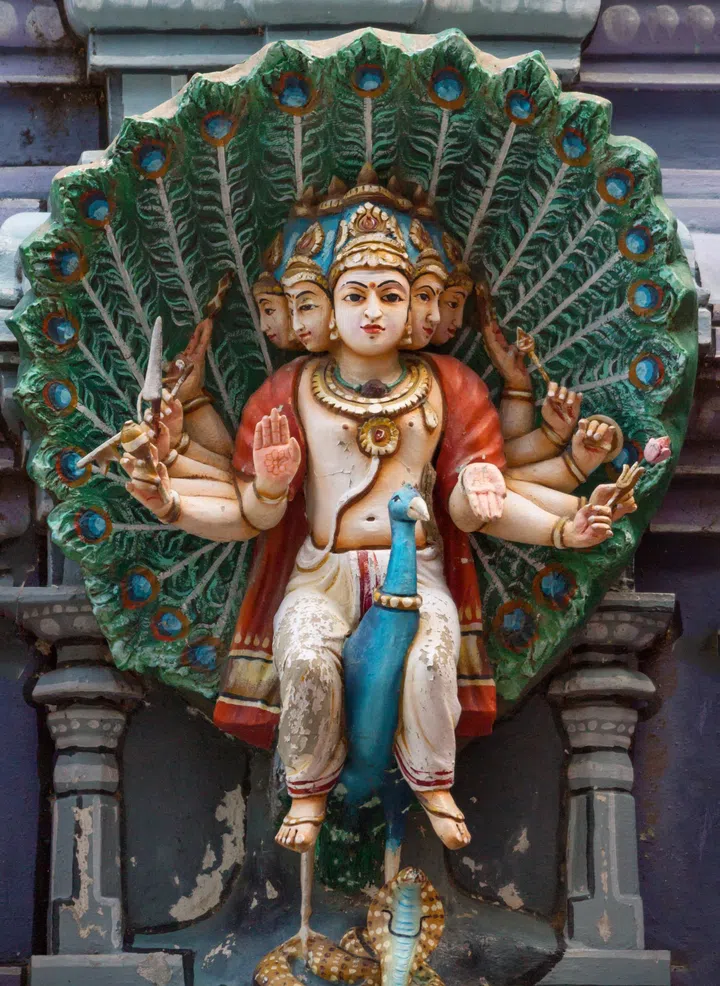
Altar Setup
A portrait or statue of Lord Murugan, often depicted with his Vel and his peacock mount, is placed centrally. In Singaporean homes, it is common to see the altar draped in vibrant yellow or orange fabrics—colours synonymous with the deity.
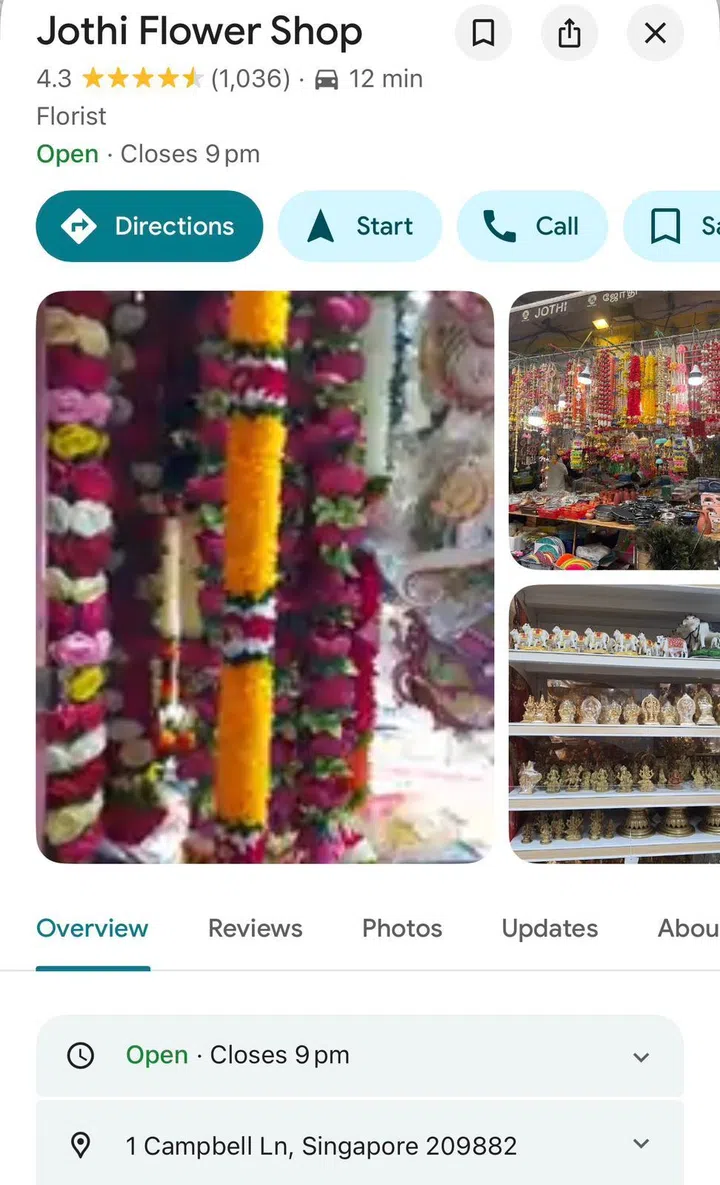
Jothi Store and Flower Shop (1 Campbell Lane) is perhaps the most iconic prayer supply store in Little India, Singapore.
In Singapore, the quest for a Lord Murugan statue usually leads devotees to the vibrant heart of Little India. Whether you are looking for a small idol for a modest HDB altar or a grand brass masterpiece for a dedicated prayer room, there are several storied establishments and modern options available.
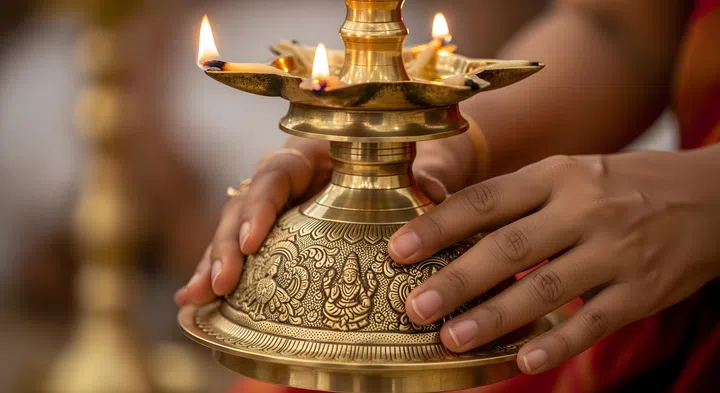
Traditional Indian brass oil lamp known as a Kuthu Vilakku
Sacred Flame
A kuthu vilakku (traditional oil lamp) is kept lit, symbolising the light of knowledge over darkness. The scent of sambrani (incense) and fresh jasmine garlands fills the room, creating an atmosphere of “theevarthanam” or divine presence.
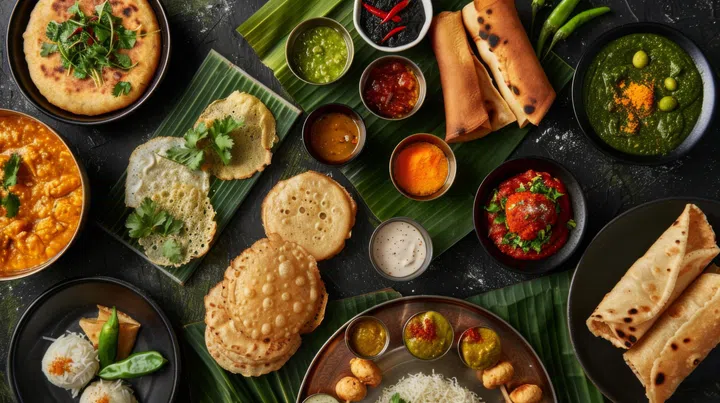
A traditional South Indian breakfast spread featuring dosas, idlis, vadas, and assorted chutneys, showcasing the region's rich culinary heritage.
Home Traditions
The preparation for Thaipusam is a rigorous exercise in discipline. Devotees undertaking the pilgrimage observe a vratam (fast) for up to 48 days.
This involves consuming only sattvic (pure vegetarian) meals, sleeping on the floor, and maintaining celibacy. The home becomes the focal point for daily prayers and the chanting of the Kanda Sashti Kavasam, a hymn seeking Lord Murugan’s protection.
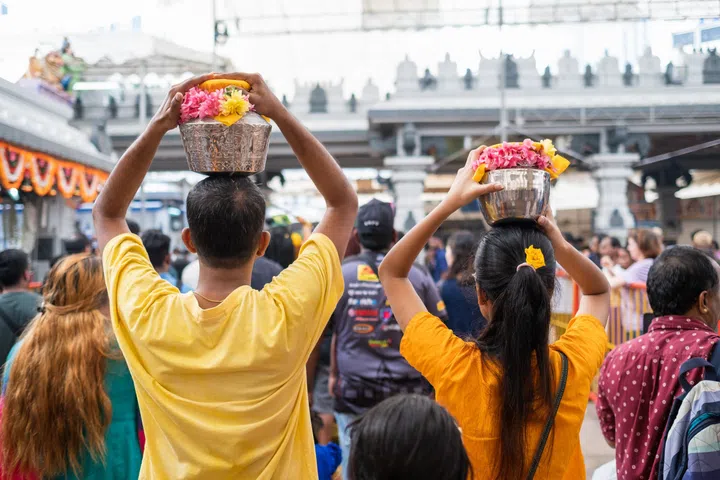
SINGAPORE, SINGAPORE - Feb 08, 2020: Thaipusam is a religious celebration by devotees. Its highlight is a barefoot walk of devotees carrying milk pots and dancing with prickly kavadis.
Eve of Thaipusam
On the eve of the festival, the family gathers in this corner to prepare the paal kudam (translates from Tamil as “milk pot”). Milk is considered one of the most sattvic (purest) substances in Hinduism. Carrying it represents the devotee offering their own inner purity and devotion to the Lord.
The brass pots are polished until they gleam like gold, filled with fresh cow milk, and sealed with yellow cloth and a coconut. This isn’t just a chore; it’s a communal act of love. Younger family members watch their elders, learning the weight of the tradition they will one day inherit.
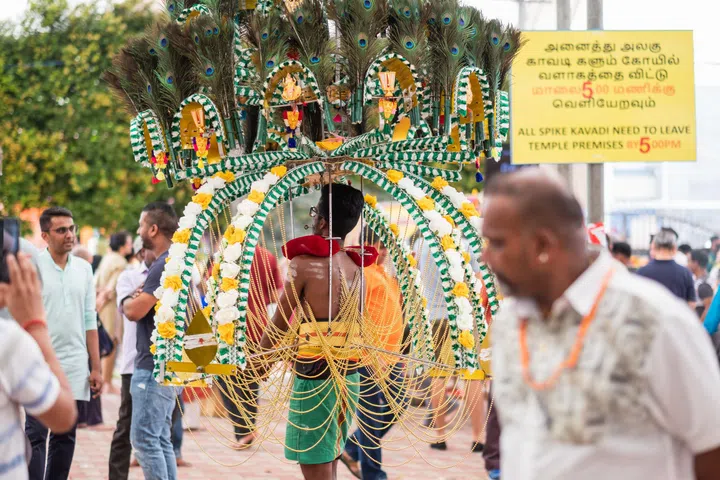
SINGAPORE, SINGAPORE - Feb 08, 2020: Thaipusam is a religious celebration by devotees. Its highlight is a barefoot walk of devotees carrying milk pots and dancing with prickly kavadis.
Morning of Thaipusam
When the day finally arrives, the home is filled with the rhythmic chants of “Vel Vel Vetrivel!” (Victory to the Vel). Before leaving for the temple at the crack of dawn, the devotee prostrates in prayer, seeking strength for the walk ahead.
While the world sees the dramatic sights of the kavadi bearers on the streets of Little India, the true foundation of that strength is the quiet, fragrant corner of the home where the spirit was first steeled.