
Share this article
Best Minimalist
- Interior Designer: Khai Toh (SIDS ID1.)
- Address: 430 Ang Mo Kio Ave 3 #24-2598, Singapore 560430
- Contact: 9012-9492
- Website: www.ktarch.io
- Type of home: 5-room HDB
- Size of home: 1,345 sq ft
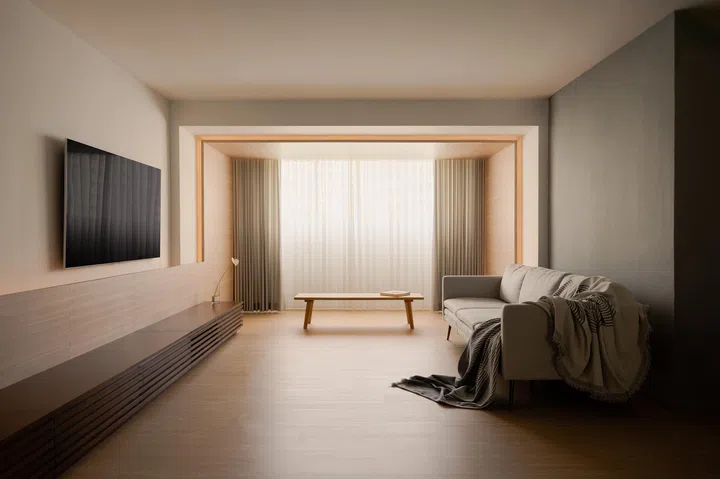
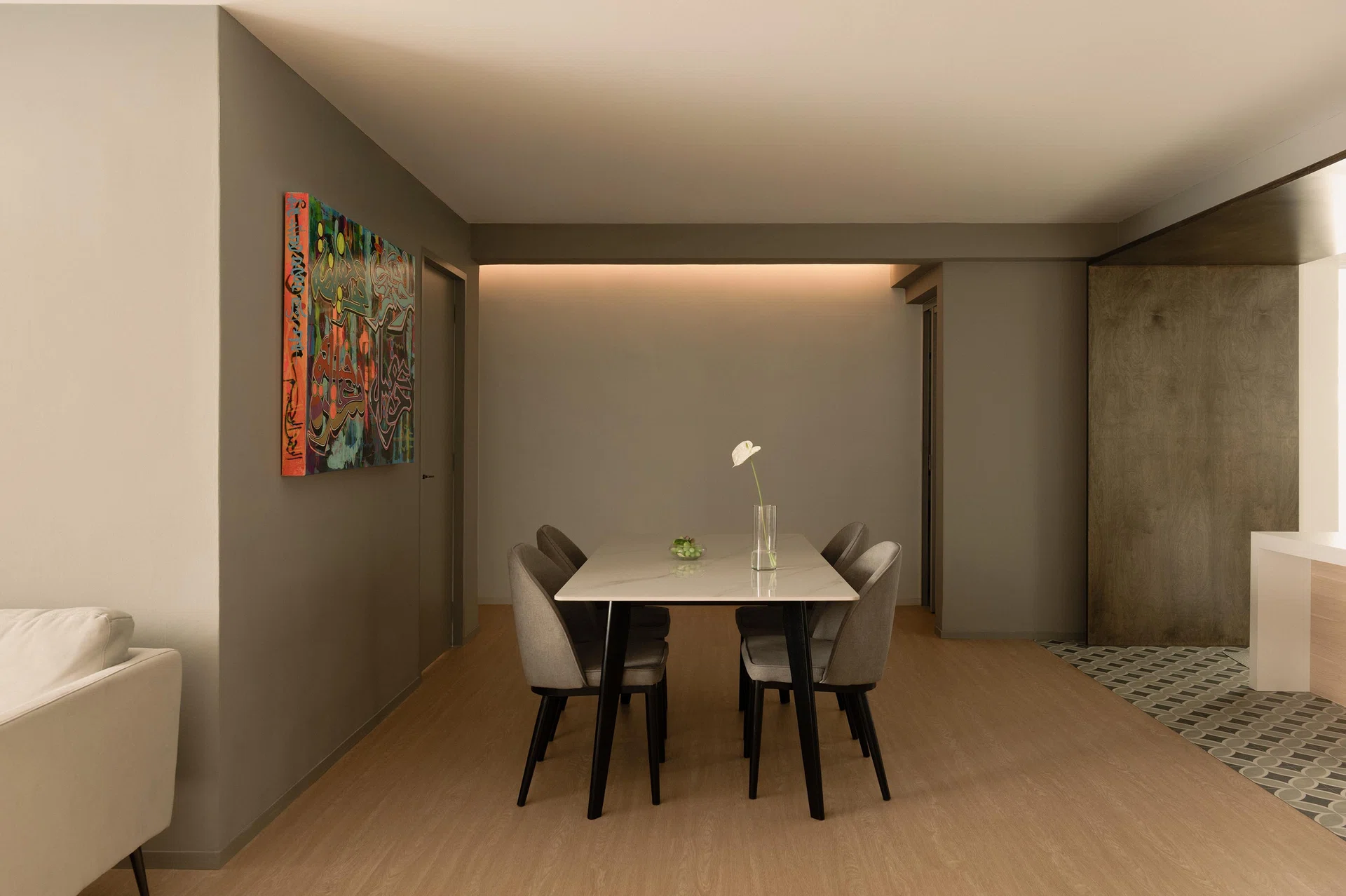
A sense of stillness permeates the house.
The Brief
Home to a musician and an educator, this 5-room HDB flat was envisioned as a sanctuary for rest and renewal. “A home for a musician and an educator should embody a sense of stillness—a certain sense of quietude and calm so that users can soak in contemplation and for renewal,” says Khai.
The homeowners sought openness and connection while keeping costs modest and improving spatial quality. Low ceilings and awkward room layouts made the interiors feel confined. “The design needed to raise the ceiling height and strategically push in and flip room openings to restore the home’s original sense of proportion and flow,” Khai explains.
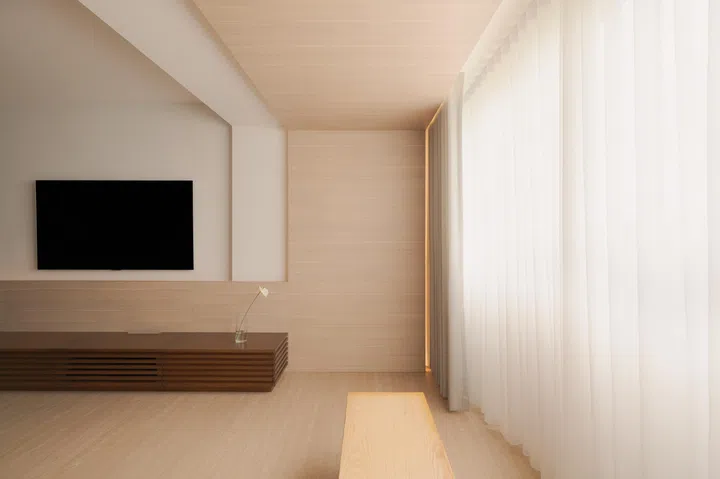
The interior design strategically created a sense of spaciousness in the house.
Stillness as Design
For Khai, minimalism is not a style but a discipline, a mindset “where interior design is approached from an interior architecture standpoint rather than mere styling.” Stillness, he explains, “becomes both an idea and atmosphere—a return to calm, composure, and the ability for users to soak in contemplation and in thoughts.”
This sensibility guides both form and feeling. “The interiors are conceived with clear spatial order, a clear figure-ground relationship where each element has its own rightful place,” says Khai.
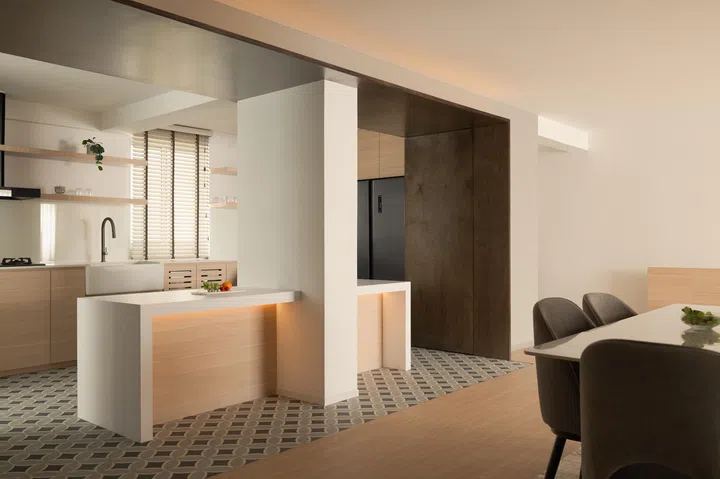
That sense of order is clearest in the living room, where a structural beam once fractured the ceiling line. Reworked into “a seamless architectural portal gesture,” the beam now defines rather than divides the space, “turning a technical constraint into an integral part of the design’s strength.”
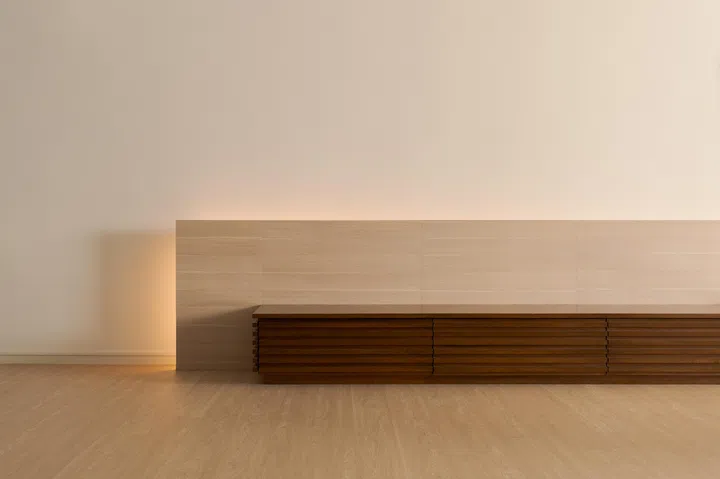
The interior designer prioritised a sense of order in design.
Beauty in the Ordinary
Khai saw this project as a challenge to reveal beauty in the ordinary. “HDB being the lowest denominator of housing stock in Singapore and resided by 80 per cent of the common citizen, this project challenges itself by utilising everyday common building materials to bring out the inherent beauty of the ordinary,” he says.
Rather than rely on luxury, he worked with what most homeowners know: tile, laminate, paint, and plywood. “The materials used in this project are everyday ordinary materials, none of luxurious marble or granite,” says Khai. The maple-plywood portal to the kitchen captures this humble spirit, turning a utilitarian element into a crafted feature “as, if not more, beautiful than materials of higher value.”
To Khai, this simplicity carries both material and human meaning. “It stands as a metaphor,” he says, “suggesting that beauty lies in the ordinary and need not rely on luxury, but can arise from sincerity, authenticity, restraint, and craft.”
What excites me most is the successful translation of abstract ideas—the intangible emotional needs of those who inhabit the space—into tangible reality through built form.
Intelligent craftsmanship can transform both atmosphere and experience.
Light, Craft, and Emotion
Khai’s favourite space is the living room—“for its emotive, contemplative, calm and quiet composure, especially through the effects of filtered light.” By day, it feels tranquil; by night, cinematic. The family now gathers here for Friday movie nights, a ritual that reflects how deeply they enjoy the space.
In the kitchen, the maple-plywood portal threshold takes centre stage. “Great care and craftsmanship were exercised three-dimensionally—from the precise detailing of panels that conceal storage behind, to its alignment with the floor tile module, cabinetry, and where the portal meets the ground,” says Khai.
Each element was meticulously resolved to achieve “a quiet expression of precision and craft, where function and form resolve seamlessly into a singular gesture.” Here, emotion and execution meet, demonstrating how intelligent craftsmanship can transform both atmosphere and experience.
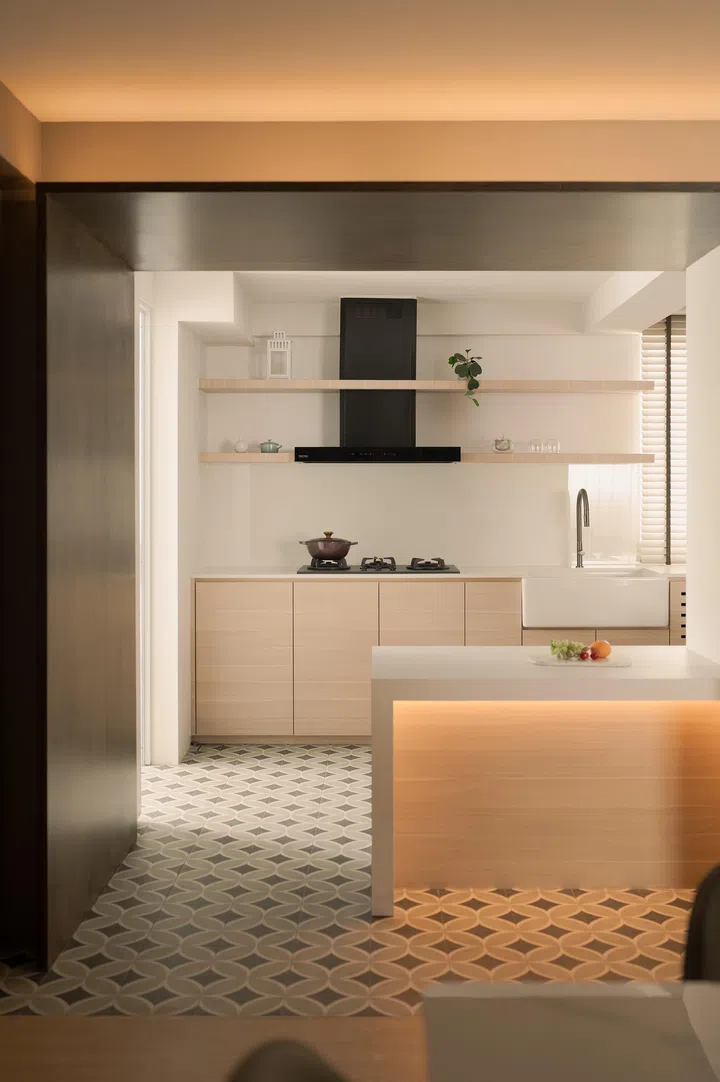
The interior designer worked with tile, laminate, paint, and plywood.
The Appeal
Architecture of Stillness finds poetry in the everyday HDB home. Through discipline and craft, Khai Toh transforms modest means into an architecture of depth and dignity—proving that beauty, when built with sincerity, needs no luxury.
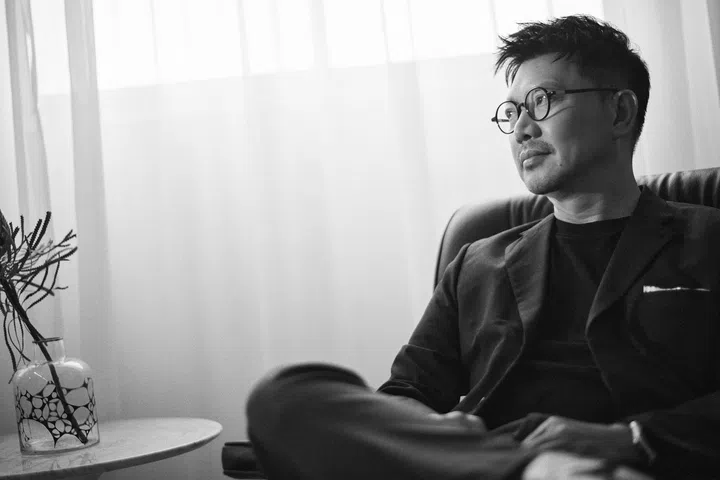
KTARCH is a boutique architecture and interior design studio led by Chicago-licensed architect Khai Toh (pictured).
KTARCH
Founded in 2023, KTARCH is a boutique architecture and interior design studio led by Chicago-licensed architect Khai Toh. With more than three decades of global experience—including 25 years in the United States and the past decade in Singapore—Khai’s work spans multiple scales, from interiors and architecture to urban design.
Educated in the Bauhaus tradition, he holds a Bachelor of Arts degree in Interior Design from the Harrington Institute of Interior Design in Chicago, and a Master of Architecture and Urban Planning from the University of Wisconsin–Milwaukee.
Khai is a member of the American Institute of Architects (AIA), and licensed under the National Council of Architectural Registration Boards (NCARB) in the US. He is also a LEED Accredited Professional (LEED AP), bringing deep expertise in sustainability and green building strategies to his practice.
Khai’s international career covers workplace interior, retail, residential and commercial projects, as well as healthcare and research laboratory facilities. He has been involved in urban redevelopment projects in Southeast Asia, global corporate headquarters for Fortune 500 companies as well as the restoration of 15th-century monastic relics in Bhutan. Khai’s work has received recognition from the American Institute of Architects and the American Society of Interior Designers.
At KTARCH, Khai views design as a conversation between people, culture, and place. Every project begins by listening: understanding the uniqueness of each client, lifestyle, and the calling of the site. For him, meaningful design uplifts the human spirit and enriches life. As he puts it, “we aspire to create a poem out of each project, allowing the voice, caesura and rhythms of our conversations to shape the form.”