
Home Tour: Young painter William Rushton's dark & moody warehouse loft-style home in Alabama
By Karine Monié -
Share this article
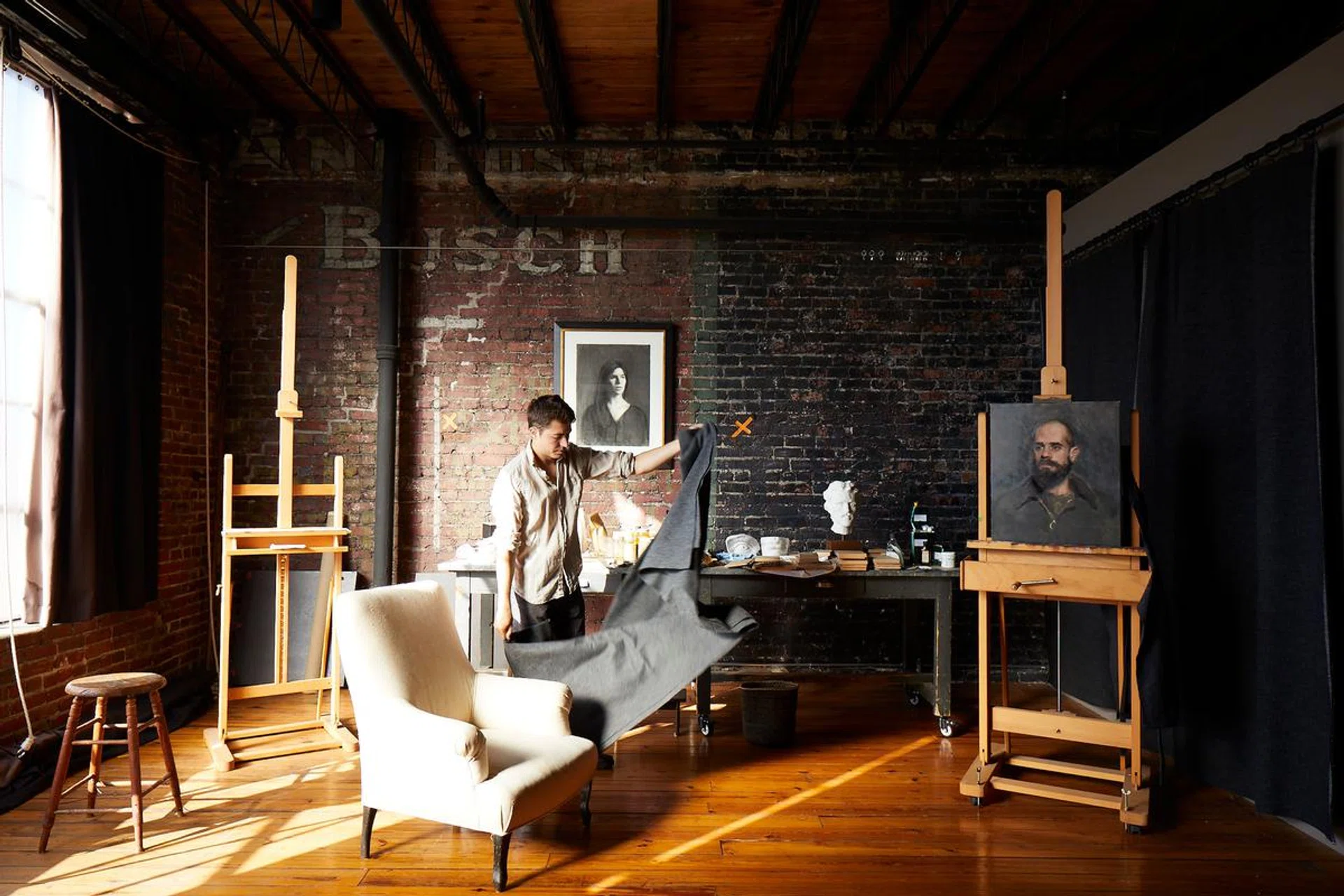
Young artist William Rushton made this historic loft with architectural character into his home and creative studio with the help of architect Paul Bates.
Situated on the third and top floor of what was originally a furniture warehouse built in 1918, this one-bedroom, 150 sqm loft was remodeled with the objective of preserving the history of the place.
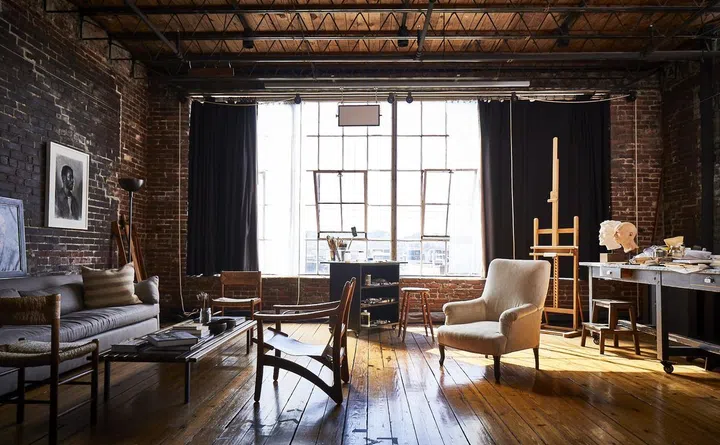
Warehouse in Birmingham
Situated in downtown Birmingham, Alabama — a growing U.S. city gaining lots of attention in recent years — this building, which was converted into condominiums in the 1980s, is where William Rushton lives and works.
A young American portrait painter and sculptor, Rushton trained at the Charles H. Cecil Studios — an atelier in Florence, Italy — and regularly spends time in Europe, as well as in New York where he is opening a second art studio.

Warehouse Windows
“I love that this loft is ancient, has a history and is centrally located,” says Rushton. “Most importantly, the main window is wide and tall enough for my painting needs (I only use natural light).”
For the transformation into a casual, practical, visually interesting and versatile space, the artist trusted Paul Bates, who helms Paul Bates Architects.
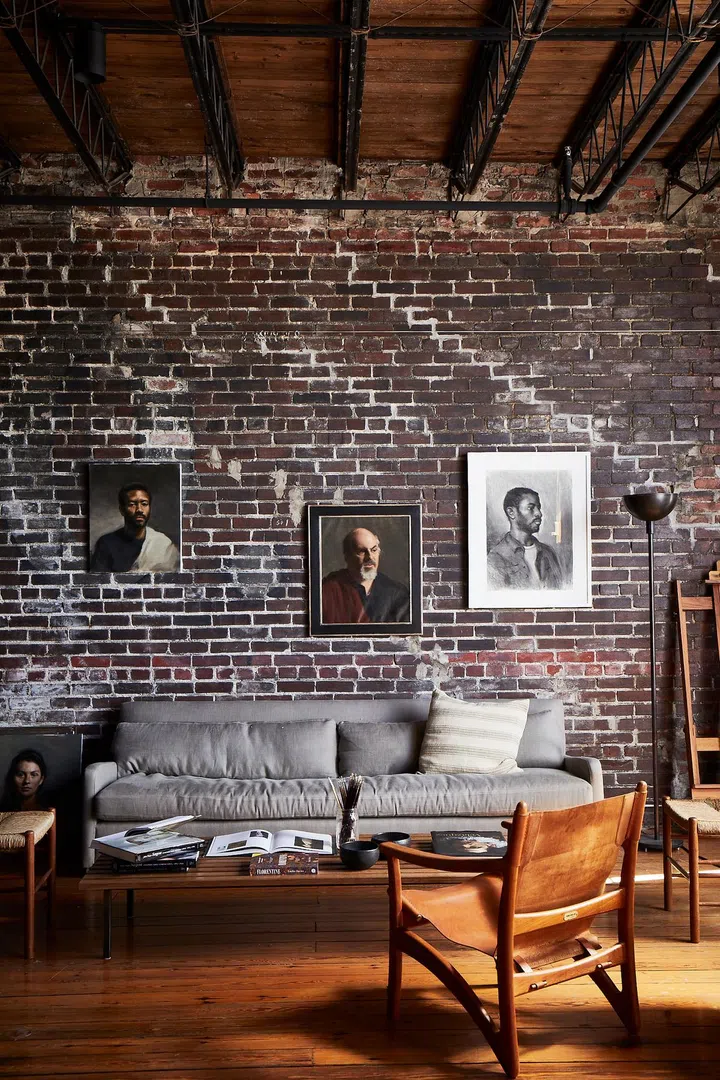
Exterior Brick Walls
“Both brick walls of William’s loft were originally exterior walls to two separate buildings that were used for hand painted advertising murals,” the architect says.
“We kept the remnants of some of these old murals and we left the space very raw, very honest. William wanted to make sure things were not over-designed and to uncover a natural unpretentious spirit that always existed in this space. It seemed natural that his work, his paint, and his tools were a part of the architecture.”
Dark Interiors
The tones were mostly determined by what was already there, such as the dark brick walls, wood and black floors, dark metal joists and wood ceiling.
The new partitioned areas were painted white, and a black soapstone kitchen island was added. The few surfaces that were painted feature a soft gray.
“The limited colors of the space mirror my limited palette as a painter and the tones of sculpting materials (plaster, terracotta and bronze),” says Rushton. The materials didn’t have to be too precious; resistance to oil paints or clay was not a requirement — as the artist uses the space as his creative studio, and it evolves with the art.
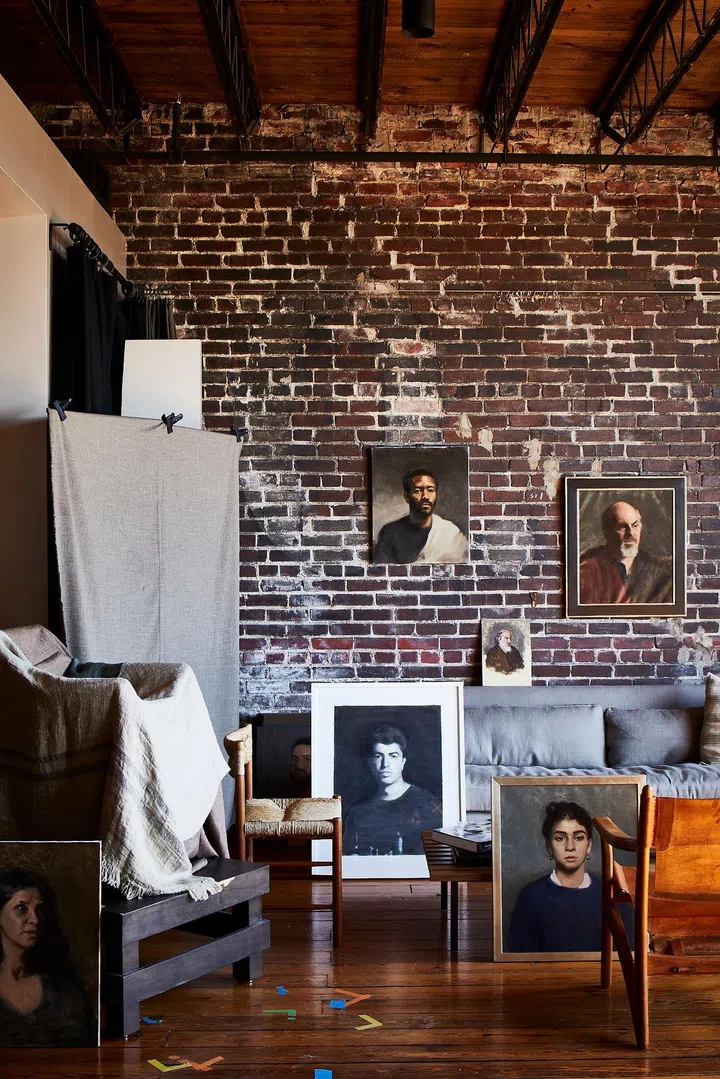
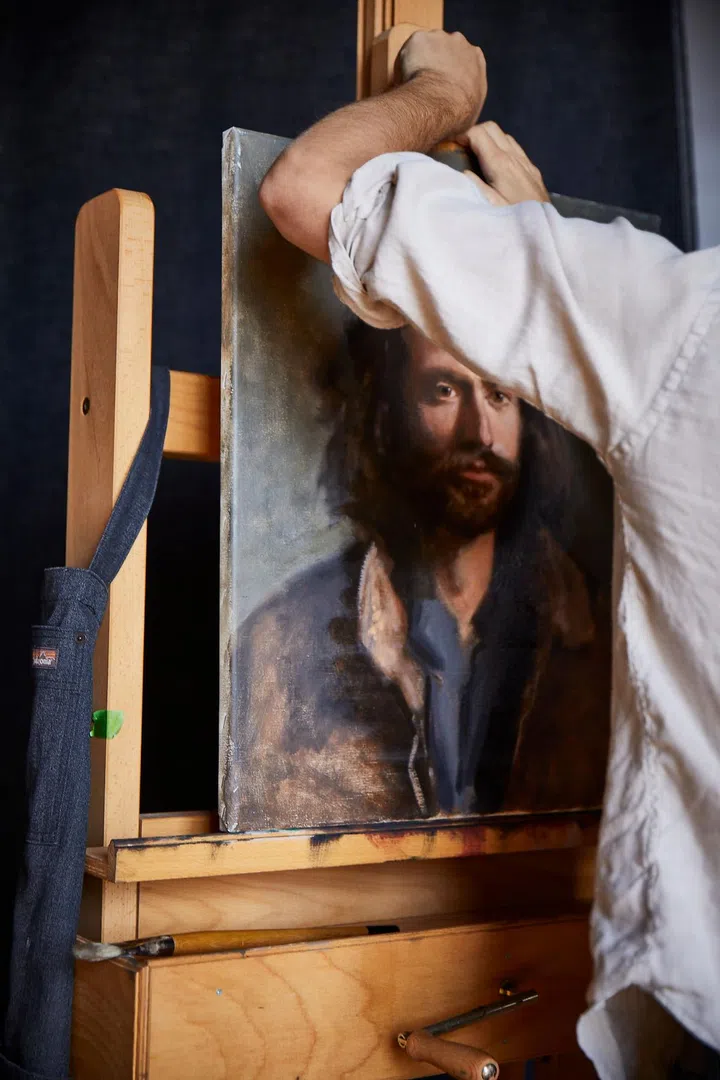
William Rushton Art
“William’s art is very strong — somewhat brooding, but passionate and thoughtful,” says Bates. “The space became the backdrop. I knew both the art and the architecture could not fight each other; one had to lead. I think of William's art and tools as the most important part of the architecture.”
Many of the pieces of furniture are family heirlooms, which mix and match in the different nooks. “Nothing is new, which is why it feels settled,” says Rushton.
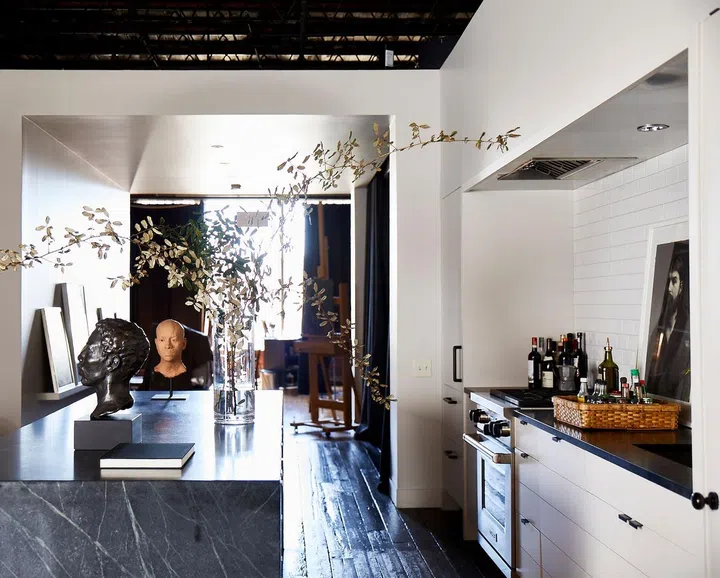
Quiet Interior Design
“Paul understood that I wanted something understated, something that wouldn’t announce itself. He has an amazing eye and was able to create a new, quiet interior that respected the cragginess of the loft’s envelope by exposing the ceiling’s metal joists, and leaving the old brick walls, the steel windows, and the original wood floors as they were, with all of their irregularities.”
Multifunctional and humble, this inspiring loft, which was stripped down to its essentials is, however, filled with character.
Photos by Brie Williams. Styling by Betsy Brown. Architecture by Paul Bates Architects.