
3 Executive Condominium Rule Changes in May 2026 (You must know!)
Your 5-minute guide to the latest EC news.
By Home & Decor Team -
Share this article
Over the last decade, Executive Condominium (EC) prices have more than doubled to record highs. Because of this, the new changes are meant to cool down the market, ease the fierce competition, and ensure that people are buying these homes to actually live in them, rather than using them as quick investments.
The government has introduced some new rules in May 2026 for future ECs to make them more affordable and accessible for first-time home buyers. Let’s make it simple to understand. Here’s a quick 5-minute read:
10-Year Minimum Occupation Period (MOP)
In the past, buyers only had to live in their EC for 5 years before they could sell it on the open market. Under the new rules, this period has been doubled to 10 years. This longer commitment strongly emphasises that ECs are meant for genuine owner-occupation and discourages buyers who are just looking to “flip” the property for a quick profit.
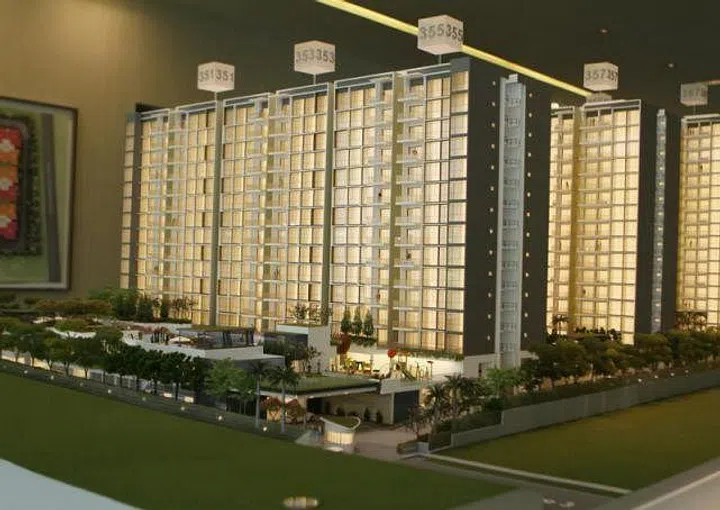
Wandervale Executive Condominium (EC)
No More Deferred Payments
The second major change affects how you pay for the EC. Previously, developers were allowed to offer a Deferred Payment Scheme (DPS). This past rule allowed buyers to pay just 20 per cent of the purchase price upfront and defer the remaining 80 per cent until the condominium project was fully built and obtained its Temporary Occupation Permit (when you collect your keys).
Now, this deferred scheme has been completely removed to encourage financial prudence. Buyers must now use the normal payment scheme, which means making progressive payments tied to the different construction milestones as the condominium is being built.
The normal condo payment scheme in Singapore is widely known as the Progressive Payment Scheme. Under this framework, you do not pay for the entire property all at once; instead, payments are staggered in stages and are only called for by the developer when specific construction milestones are physically completed.
- Stage 1 (Booking): You pay a 5 per cent booking fee strictly in cash to secure the Option to Purchase (OTP).
- Stage 2 (Signing): Within a few weeks of signing the Sale and Purchase Agreement, you pay the remaining 15 per cent downpayment (using cash, CPF savings, or both).
- Stage 3 (Foundation): You or your bank are billed 10 per cent once the foundation work of the building is physically completed.
- Stage 4 (Superstructure): Another 10 per cent is billed when the concrete framework and reinforced structure of your unit’s block are fully erected.
- Stage 5 (Brickwalls): A 5 per cent payment is called for when the brickwalls of your unit are completed.
- Stage 6 (Roofing): Another 5 per cent is due once the ceiling and roofing of the building are successfully installed.
- Stage 7 (Plumbing & Wiring): You pay 5 per cent when the electrical wiring, internal plumbing, and plastering work are finished.
- Stage 8 (Car Parks & Roads): A 5 per cent payment is called for upon the completion of the car parks, roads, and structural drains serving the project.
- Stage 9 (TOP / Key Collection): A substantial 25 per cent is due when the project obtains its Temporary Occupation Permit (TOP), which is the exciting milestone where you finally get your keys.
- Stage 10 (CSC / Legal Completion): The final 15 per cent is paid when the project receives its Certificate of Statutory Completion (CSC), marking the absolute final sign-off of the building.
90% Priority for First-Time Buyers
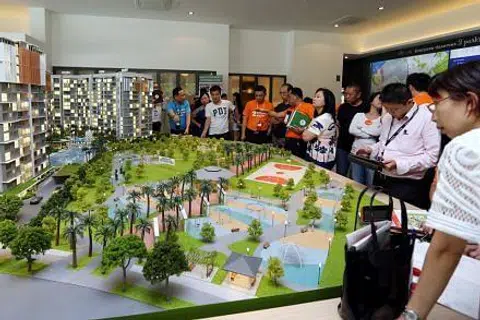
Finally, the government has significantly changed the quota rules to prioritise first-time buyers. Under the old rules, property developers only had to reserve 70 per cent of their EC units for first-timers, and this priority window only lasted for one month.
With the new changes, developers must reserve a massive 90 per cent of the units for first-time buyers, and this priority period has been extended to a full two years. This gives first-timers much more time to plan their finances and far better odds of securing a home without having to compete with second-time buyers who might have more cash on hand.
What is an Executive Condominium (EC)?
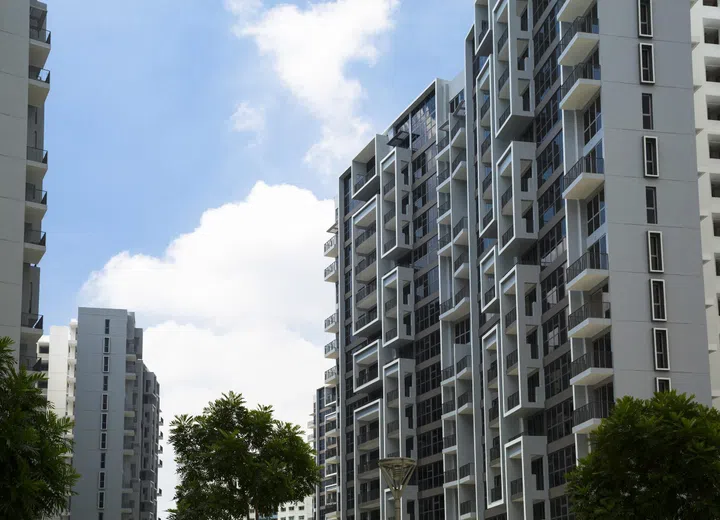
An Executive Condominium (EC) is a unique, hybrid type of housing in Singapore that starts its life as public housing but eventually evolves into private property. They were specifically created to cater to the “sandwiched class”—Singaporeans whose household incomes have exceeded the ceiling to buy a standard Housing & Development Board (HDB) flat, but who still find fully private condominiums out of financial reach.
How Did ECs Come About?
The EC scheme was rolled out by the Singapore government back in 1995.
During the mid-1990s, Singapore’s economy was booming, and private property prices were skyrocketing. A large group of middle-income Singaporeans found themselves stuck in a frustrating “sandwich”: they were making too much money to qualify for a brand-new HDB flat, but private condominiums were becoming far too expensive.
To bridge this widening gap and prevent asset inequality from splitting the population, the government introduced the EC scheme. It allowed the sandwiched class to enjoy the lifestyle and capital appreciation of private gated housing at a subsidised price, fulfilling the ultimate Singaporean dream of upgrading to private property.
Are Executive Condominiums built by HDB?
The short answer is no, HDB does not build them. While ECs are bound by strict HDB eligibility criteria, subsidies, and regulations during their initial launch, they are entirely designed, constructed, and marketed by private developers (just like ordinary private condos). You can think of it as a partnership: the government provides the land and the subsidised framework, while a private developer builds the actual property.
Condo vs ECs
The main difference is price. New ECs are typically priced 20% to 30% cheaper than brand-new normal condos at launch because the government subsidises the land cost.
The next difference you need to understand is the EC’s timeline of privatisation. While normal condos are fully private, and have zero buying or selling restrictions from day one, ECs undergo a gradual privatisation process
In the first place, you must meet HDB eligibility rules to buy a new EC (e.g., you must form a family nucleus, be a Singapore citizen, and adhere to a strict $16,000 household income ceiling). You cannot rent out the whole unit, and you cannot sell it within the Minimum Occupation Period (MOP).
Once the EC hits its 10-year Minimum Occupation Period (MOP), it becomes semi-privatised. You can now sell it on the open property market, but only to Singapore Citizens and Permanent Residents (PRs).
The EC completely sheds its HDB status after 15 years. It becomes a normal private condo, meaning you can now sell it to anyone, including foreign buyers and corporate entities.
Note that this new 15-year privatisation rule only applies to EC projects built on Government Land Sales sites with tenders closing after the policy announcement. Any existing EC projects already launched on the market, or the few upcoming developments where the land had already been awarded before the change, will strictly stick to the old 10-year privatisation timeline.