
These were the first 5 condos built in Singapore - are they near you?
Before the 1970s, the concept of a “condominium” did not exist in Singapore.
By Guanlin Tan -
Share this article
Before the 1970s, the concept of a “condominium” did not exist in Singapore. Homeowners basically chose between landed properties or standard public housing flats. That all changed when pioneering architects and developers introduced the idea of “bungalows in the air”—high-rise private apartments that combined individual ownership with shared luxury facilities like swimming pools and security.
These early developments paved the way for modern private housing in the city-state. Here is a look back at the first five condominiums built in Singapore that transformed the nation’s skyline.
1. Beverly Mai (1974 - 2006 en bloc)
Completed in 1974 along Tomlinson Road, Beverly Mai is universally recognised as Singapore’s very first condominium development. Designed by architect Timothy Seow, the 28-storey freehold tower cost S$4 million to construct and introduced features that are standard today.
It was the first private residential project to feature split-level maisonettes (double-storey units) and apartment units without shared party walls, ensuring complete acoustic privacy.
It introduced the modern practice of shared recreational amenities, featuring a communal swimming pool, barbecue pits, and large open terraces.
At launch, apartments cost between S$141,000 and S$162,000. In 2006, the development was sold via a collective sale (en bloc) to Hotel Properties Ltd for S$238 million and was subsequently demolished.
2. Futura (1976 - 2006 en bloc)
Following closely in 1976 was Futura, located at 14 Leonie Hill Road. True to its name, this 25-storey luxury tower stood out for its highly futuristic, organic architectural curves inspired by the Brutalist movement and international avant-garde designs.
Futura was the first condominium in Singapore to feature private lifts serving its 69 exclusive units. It also boasted iconic spaceship-like exterior pod balconies.
After anchor-defining the skyline of the Orchard area for over three decades, the freehold development was sold en bloc in 2006 for S$287.3 million. It was demolished and has since been replaced by the current New Futura condominium completed in 2017.
3. Pearl Bank Apartments (1976 - 2020)
Completed in June 1976 on Pearl’s Hill in Outram, Pearl Bank Apartments was a pioneer of high-rise, high-density private living. Designed by Singaporean architect Tan Cheng Siong, it was both the tallest and the densest residential building in Singapore at the time of its completion.
Standing at 113 metres with 38 storeys, the building was instantly recognisable by its hollow, three-quarter cylindrical tower resembling a giant horseshoe. This shape allowed for maximum natural light and ventilation, while the rear opening faced west to keep the afternoon sun away from the units.
It housed a total of 280 apartments and eight commercial units, functioning almost as a vertical village.
Despite intense public campaigns by heritage enthusiasts to conserve its unique Brutalist architecture, the 99-year leasehold site was sold to CapitaLand via a private treaty collective sale for S$728 million in 2018. It was demolished in 2020 to make way for One Pearl Bank completed in 2024.
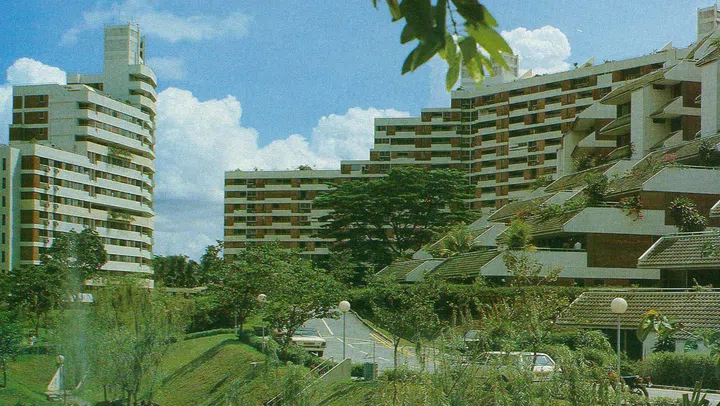
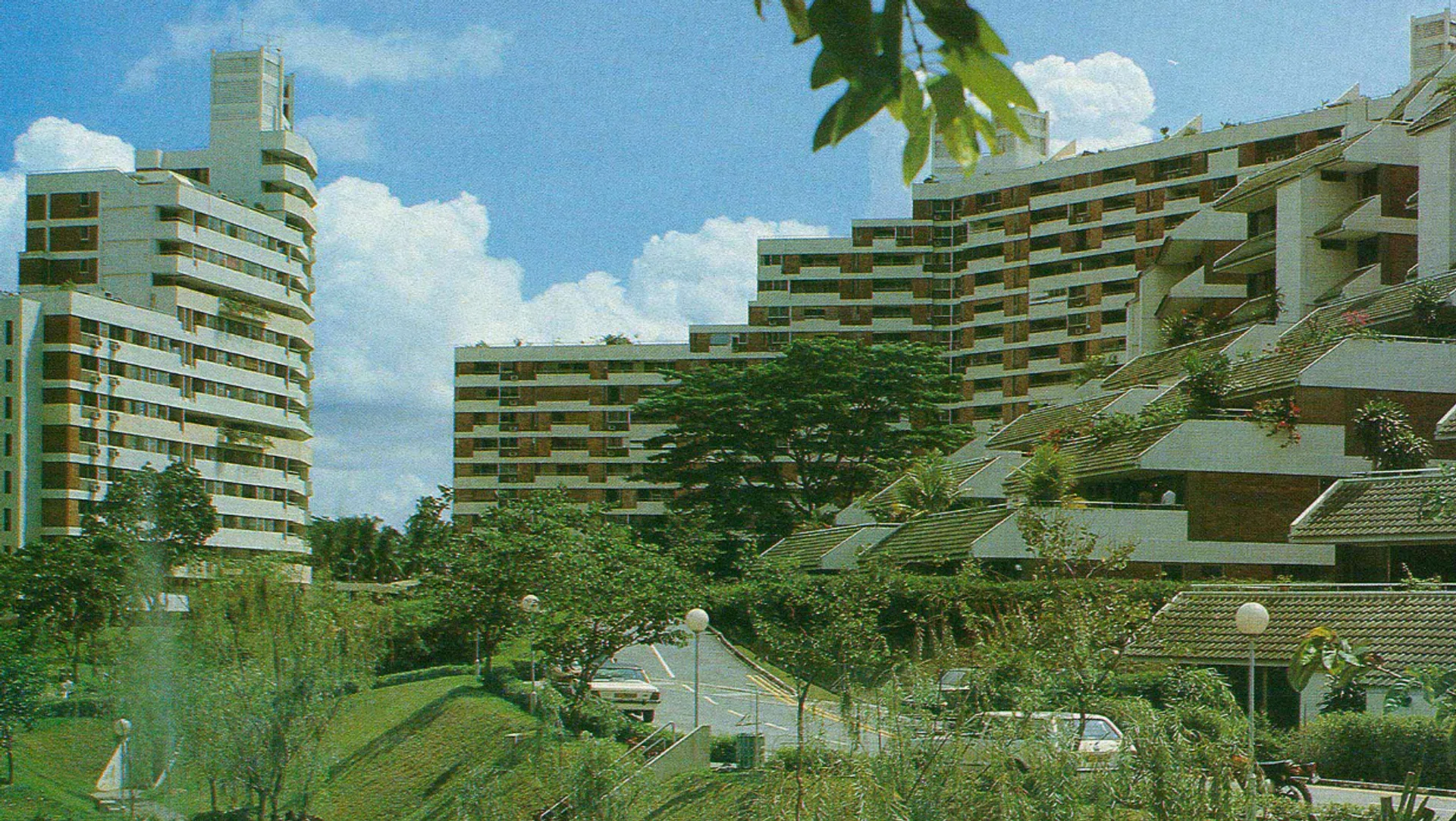
Pandan Valley condominium
4. Pandan Valley (1977)
Sprawling across a massive 3.5-hectare site in Ulu Pandan, Pandan Valley was completed between 1977 and 1979. Developed by DBS Realty (a subsidiary of DBS Bank), it was built during a property market downturn to test whether middle-income Singaporeans would embrace large-scale community living.
Because of its immense scale (605 residential units), it was the first project to integrate landed townhouses, high-rise apartments, on-site convenience shops, cafes, and educational childcare centres within the same private compound.
According to DBS, “when Pandan Valley first launched, buyers could sell back their properties at the original price to the developer within 5 years”.
Unlike its contemporaries, Pandan Valley still stands today. Its large freehold land footprint and massive unit sizes remain highly sought after.
5. Mimosa Park (1979)
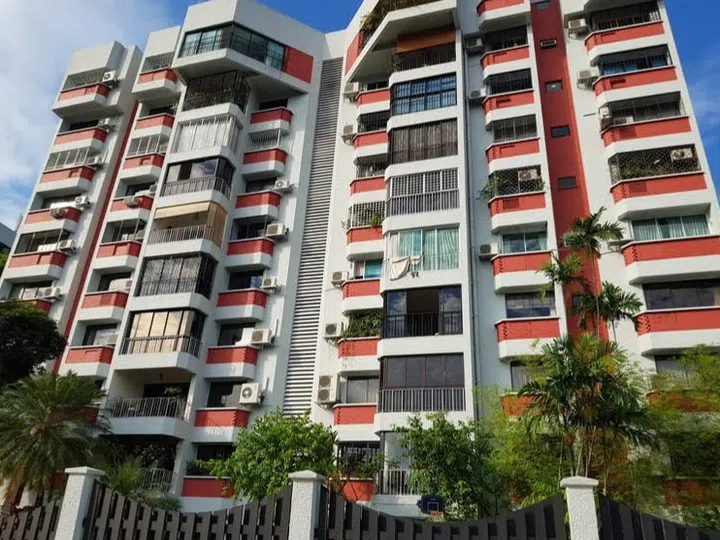
Rounding out the final years of the experimental 1970s condo boom was Mimosa Park, completed in 1979 in the Seletar/Yio Chu Kang enclave.
Mimosa Park reflected the late-70s design philosophy where condominiums were built strictly to replicate landed properties. The freehold development mixed low-rise townhouse units with conventional apartments spread across sprawling, low-density green lawns.
It featured a standard element of early Singaporean luxury condos—the inclusion of dedicated squash courts, a recreational facility that fell out of trend in newer developments by the late 1990s.
Mimosa Park remains standing as a classic example of early suburban condominium layouts, prized by residents for its immense space and tranquil, low-rise surroundings.