

Share this article
Due to the immobile nature of real estate, location has always been one of the golden rules of buying properties. Arguably, location matters to many Singaporeans. Areas located nearer to the city centre command a higher price because of the savings in travelling time.
Thus, Build To Order (BTO) flats offered in mature, Prime, and Plus estates often see high application rates despite their higher prices. In one of the most classic HDB examples back in the 2010s, home buyers were also willing to fork out a hefty premium for resale HDB flats at The Pinnacle @ Duxton, which is located in the city area.
However, in Singapore, being near to the city centre might not be so important after all. Here are some reasons why:
1. Every HDB estate is designed to be self-sufficient
Each housing estate, regardless of its location, is planned such that residents can fulfil their everyday needs without having to travel long distances. Amenities such as supermarkets, F&B outlets, schools and parks have been integrated into all towns, thereby providing residents with almost everything they need. Hence it does not matter if one lives in central areas or not.

2. Decentralisation of workplaces
Since the 1990s, the government has been adopting a decentralisation strategy, where jobs are being shifted to secondary commercial hubs outside the city centre. Located in the east, west, north and north east regions, these regional centres aim to bring workplaces into the suburbs and nearer to homes, thereby creating a live, work and play environment.
3. Good public transport network
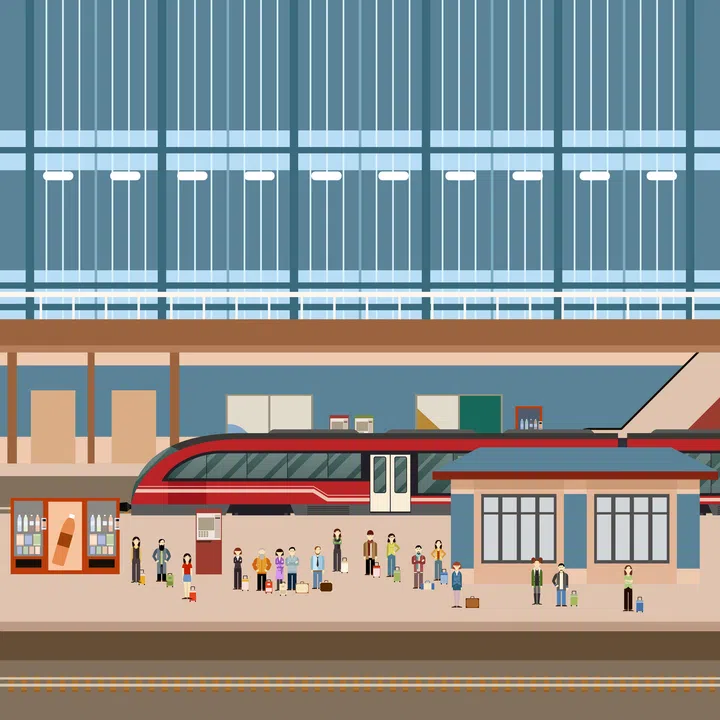
Commuting around the island is set to become easier. According to the Land Transport Master Plan 2013, it was mentioned that the rail network will be doubled by 2020 and by 2030, eight in 10 homes will be within a 10-minute walk of a train station.
As Singapore becomes more connected, inter town travelling will become less of a chore and therefore, the location of a home will become less important.
Hence, by purchasing a home in a less prime location, savings could be achieved without compromising too much on convenience. The savings can then be used to spruce up the house, which has a few benefits:
- More efficient use of space
- Easier to sell/lease
- Possibility of transacting at a higher price/rent than properties which are not renovated
Hence, instead of being overly concerned about a property’s location, it would perhaps be a better idea to focus on the interior of the house. After all, there is no bad location in Singapore.
Contributed by Eugene Lim (executive officer) and Seah Yao Hui (assistant manager of research) of ERA Realty