
Share this article
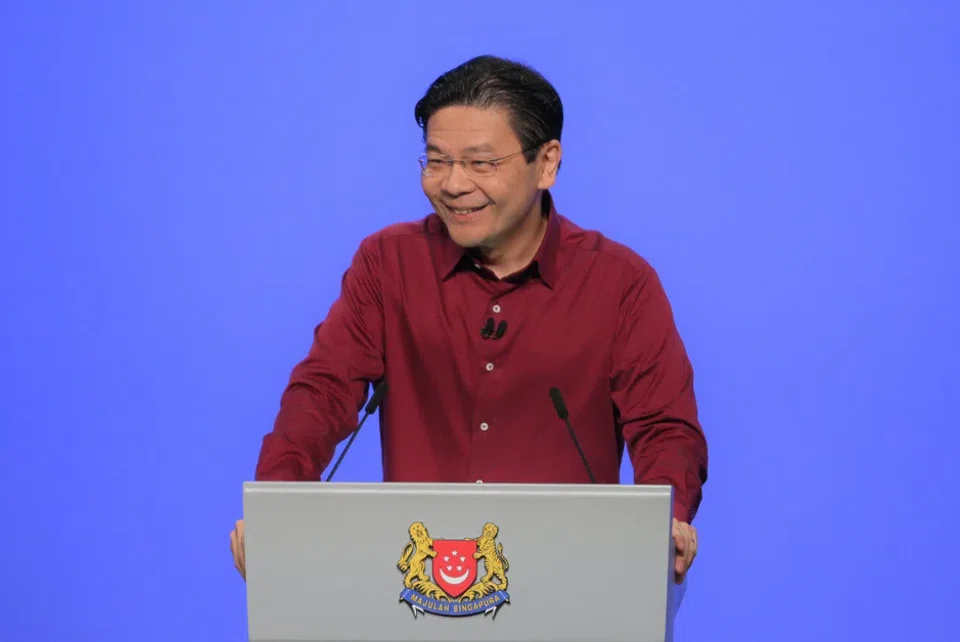
Prime Minister Lawrence Wong delivered his National Day Rally (NDR) 2026 speech, unveiling major policy shifts intended to make housing more accessible and reshape Singapore’s eastern coastline.
More BTO Ballot Chances If You Have Children
“We will also do more to help first-timer families with children secure a flat sooner. Today, we already give priority to couples who are engaged - as well as married couples. But once you have children, I believe you should receive even greater priority,” says PM Lawrence Wong. “So, we will give first-timer families applying for a new flat one additional ballot chance for every child they have or are expecting.”
Beginning with the February 2027 Build-To-Order (BTO) exercise, if it’s your first time applying for a BTO (also known as first-timer applicant), families with children will receive an additional ballot chance for every Singaporean child aged 18 and below.
For example, Parents with two children will receive two additional chances on top of their standard first-timer allocations, giving them significant priority over applicants without children.
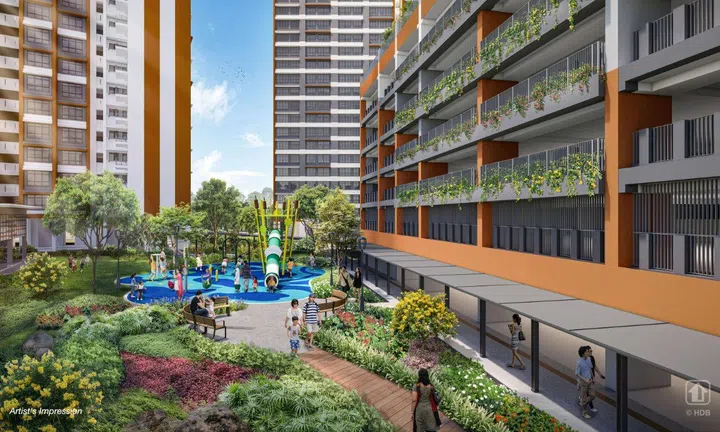
Artist's impression of Lakeview Cascadia BTO in Bishan, launched in the HDB BTO June 2026 sales exercise.
Higher HDB & EC Income Ceilings
“These days, Singaporeans are marrying later. By the time they settle down, many are further along in their careers and earning more. So, more young couples are crossing the current income ceilings,” explains PM Lawrence Wong. “We want to ensure that the vast majority of Singaporean couples can continue to have access to subsidised public housing. So, we will raise the income ceiling.”
To account for wage growth since the last adjustment in 2019, the government raised household income ceilings for public housing and Executive Condominiums (ECs). This raised $16,000 family ceiling also applies to HDB housing loans and CPF Housing Grants for resale HDB flats.
| HDB Type | Previous Income Ceiling (Monthly) | New Income Ceiling (Monthly) |
|---|---|---|
| Singles (Aged 35+) | $7,000 | $8,000 |
| BTO (Families) | $14,000 | $16,000 |
| Executive Condominiums (ECs) | $16,000 | $18,000 |
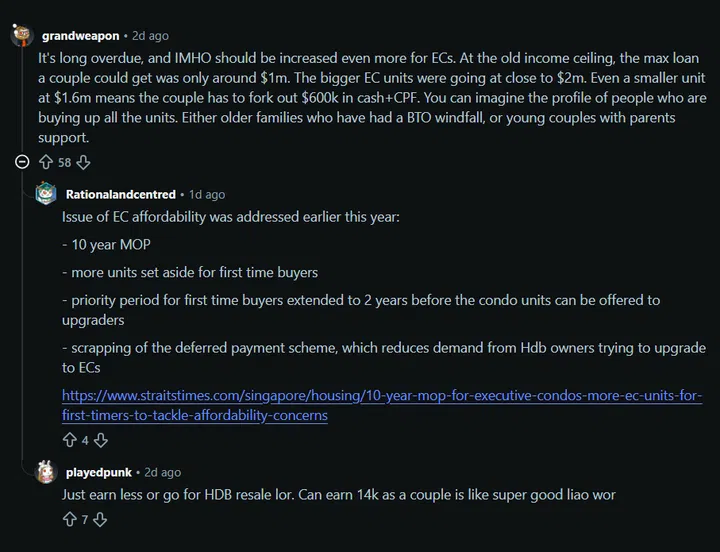
The increase was welcomed. On Reddit Singapore, netizens noted the adjustment was long overdue. User @grandweapon commented: “At the old income ceiling, the max loan a couple could get was only around $1m... Even a smaller unit at $1.6m means the couple has to fork out $600k in cash+CPF.”
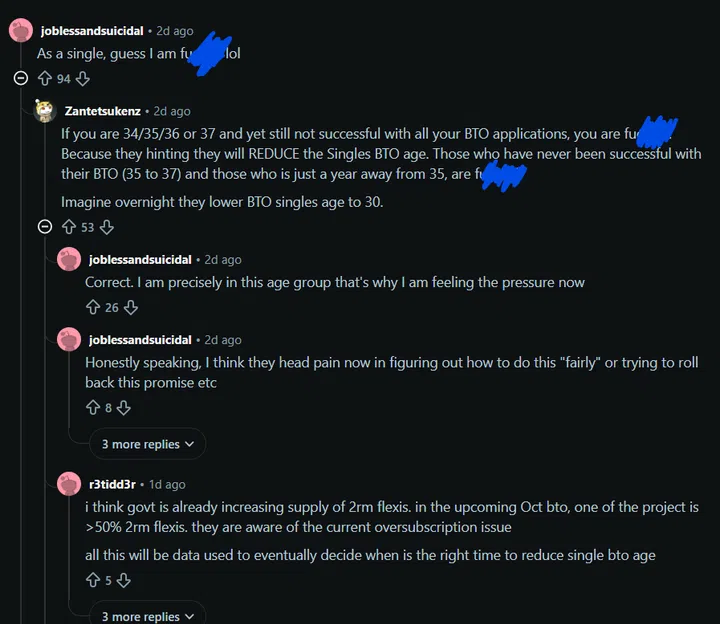
Admin: Sorry, language filter applied.
Singles’ Income Ceiling Increased to $8,000
The eligible age for singles buying a HDB or BTO remains at 35 years old. No changes were made.
Singles aged 35 and above benefit from the income ceiling bump to $8,000. This expansion allows working singles who previously exceeded the $7,000 threshold to apply for subsidised 2-room Flexi BTO flats or secure an HDB loan with housing grants on the resale market.
Reactions remain divided about the state of Singaporean singles’ eligibility for HDB and BTO purchases. While the raised $8,000 monthly income ceiling cap helps middle-income earners, several users pointed out that the age 35 barrier remains a key sticking point for young unmarried adults.
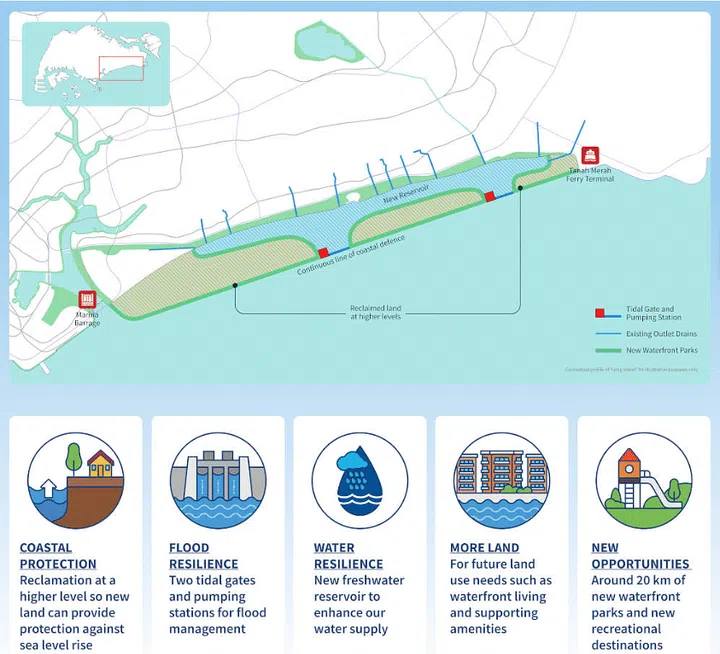
URA map for the East Coast Long Island plan. Image from URA Master Plan
East Coast Long Island HDB
"This part of Singapore is especially meaningful to me because my parents bought their HDB flat in Marine Parade in the early ‘70s. They would often tell me that much of the land around us used to be sea. In fact, my grandfather made a living in those very waters as a fisherman off Kampong Amber. At that time, some people worried that homes built on reclaimed land would sink,” PM Lawrence Wong recounts.
“Today, these homes are highly sought after because it’s hard to find HDB flats so close to the sea. One day, Long Island will become another new waterfront for future generations. They will live there, raise their families there, and perhaps, tell their own children that this too, was once part of the sea,” he continues.
Singapore’s “Long Island” project is a multi-decade land reclamation and coastal protection undertaking off the East Coast. While public housing (HDB flats) is a central component of the long-term land-use strategy, the residential rollout remains decades away. It is estimated to support tens of thousands of new homes (both public HDB flats and private residential).
The East Coast Long Island will be mirrored after Marine Parade - built entirely on reclaimed land in the 1970s as Singapore’s first seaside HDB town.
PM Wong re-emphasised Singapore’s long-term coastal defence strategy: the massive “Long Island” reclamation off the East Coast. Technical studies are underway, with preliminary land reclamation and coastal protection works scheduled to begin by late 2026.
The East Coast Long Island creates an 800-hectare tract (about twice the size of Marina Bay) intended for residential housing, public parks, and a new freshwater reservoir.