
Share this article
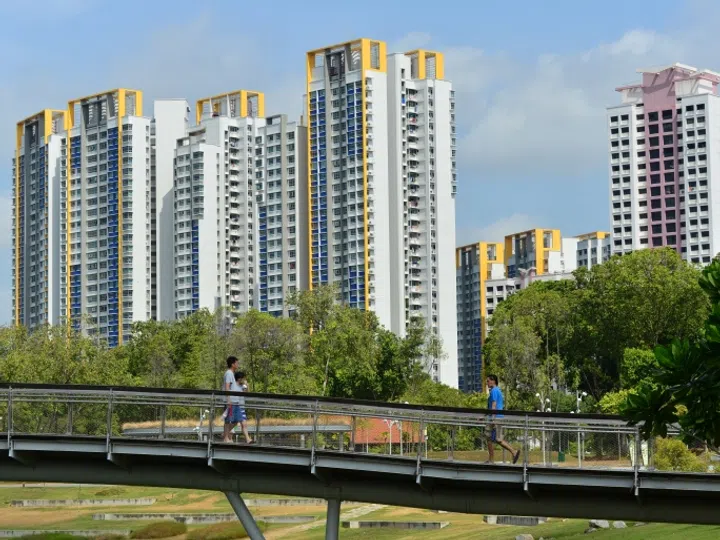
As of 2023, 3.2 million people live in HDB flats across Singapore. In other words, that means 78% of our country’s residents live in over a million flats across 27 HDB Estates.
But have you ever wondered what exactly is a HDB Estate, and how is it different from, say, the Districts in Singapore? Well, here’s a look at all 27 Estates in Singapore and their history.
What are HDB Estates?
Though they’re commonly known as Estates, HDB actually refers to most of them as Towns. HDB has a specific classification system, with 24 Towns and only 3 Estates. The Estates are Bukit Timah, Marine Parade, and the Central Area, and the Towns are, well, everything else listed below.
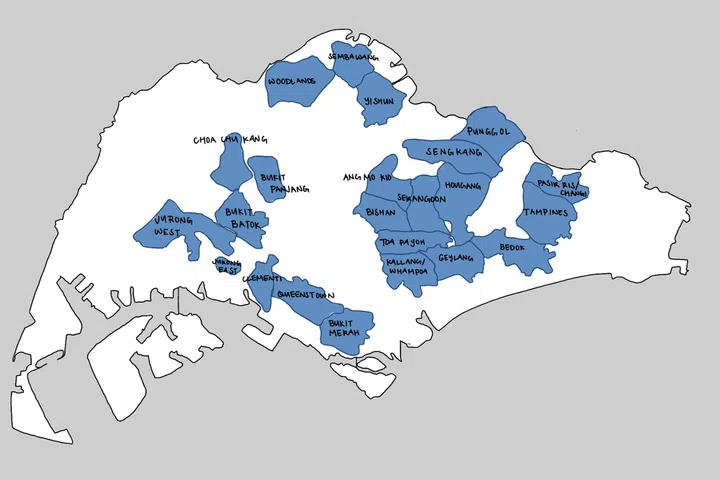
The 23 HDB Towns in Singapore, excluding Central Area and Estates.
New Towns or Towns are planned areas comprising of multiple neighbourhoods. They are designed to be entirely self-sufficient with recreational, housing, and employment zones and amenities. While HDB did not state what classifies as a Town or an Estate, some speculate that it may be due to the smaller population of HDB residents in the area or lesser dwelling units.
For the rest of this article I’ll be referring to both Towns and Estates by their layman term Estates, but now you know!
Town & Estate vs Districts
It’s important to note that unlike the 28 Districts, which indicate your postal code and are predominantly used by the real estate market, Estates and Towns do not refer to property regions in Singapore, but rather clusters of HDBs (and HDBs only).
History of HDB in Singapore
The Housing Development Board was set up on the 1st of February, 1960, to solve the housing crisis faced by Singaporeans, and to take over the Singapore Improvement Trust’s (SIT) responsibility of public housing. Singapore’s population nearly doubled from the 1940s to 1950s, growing from 950,000 to 1.7 million in the span of a decade.
Back then, only 9% of the population lived in government flats, and a large majority of the rest resided in slum and squatter settlements. Consequently, HDB initially focused on emergency housing, and resettling kampong residents into public housing.
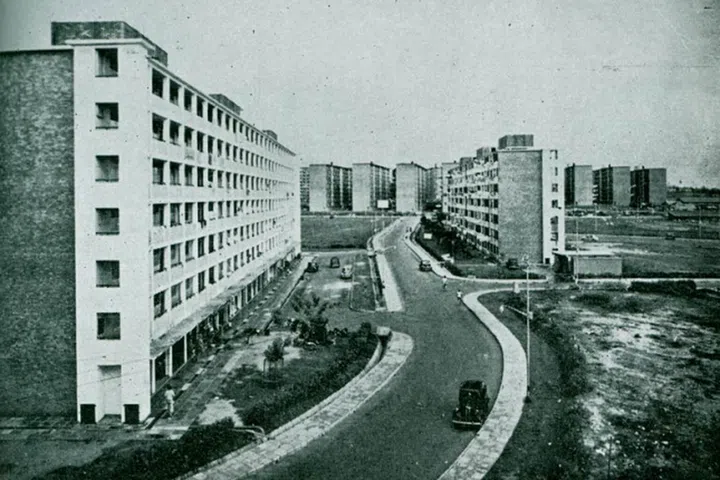
The first HDB flats in Queenstown
First HDB Estate - Queenstown
If you live in Queenstown Estate, congratulations! The first blocks ever completed were Blocks 45, 48, & 49 on Stirling Road, in October 1960. These blocks were inherited from SIT, unfinished, and the impending 99-year lease is a non-issue to residents as the block remain rental flats.
Queenstown was especially developed after a devastating fire that broke out and destroyed over 2,800 homes in the Bukit Ho Swee area in 1961. HDB was under pressure to accelerate the construction process and rehouse the 16,000 people that were left homeless, and the consequent speed of construction led to 3.5 housing units completed per day.
Apart from Queenstown, first New Town established solely by HDB was Toa Payoh, which included both industrial areas and a town centre for amenities. It served as a prototype for the New Town model, with a central recreational zone enclosed by housing units.
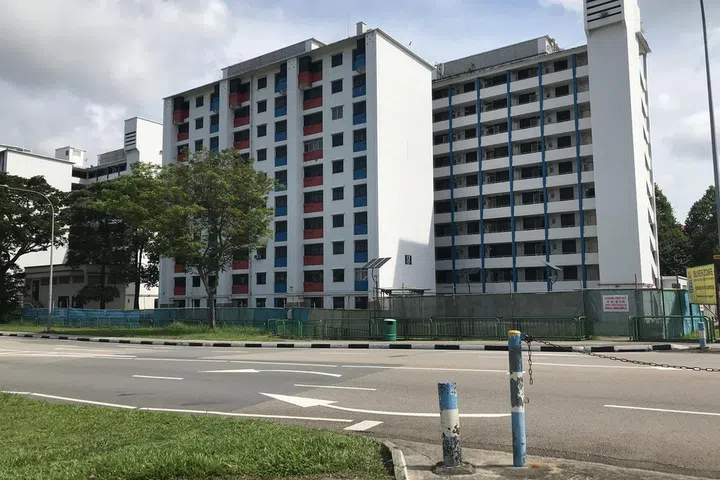
The first HDB blocks ever built; Blocks 12 to 14 Merpati Road
Kallang/ Whampoa was also among the first Estates established. The first flats HDB had ever independently built were on Merpati Road in Kallang. Unfortunately, most of these blocks were demolished 30 years ago, while Blocks 12, 13, and 14 Merpati Road are set to be demolished by the end of 2024.
All 27 HDB Estates
Curious to know more about your own HDB Estate? I’ve compiled some quick facts about each Estate in the list below!
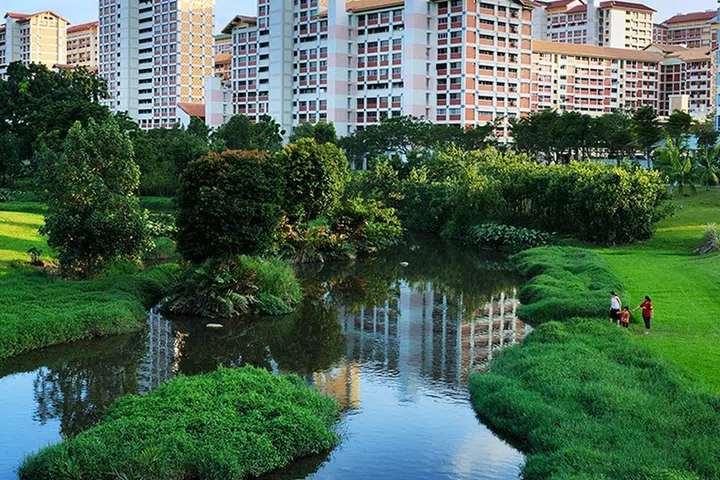
Bishan-Ang Mo Kio Park's naturalised river
1. Ang Mo Kio
Ang Mo Kio, named after the Hokkien phrase for “red-haired man’s bridge,” has evolved from a largely uninhabited area into one of Singapore’s most vibrant residential towns. Initially known for its rubber plantations in the early 20th century, Ang Mo Kio remained a rural district until its redevelopment in the 1970s.
In 1973, the Housing and Development Board (HDB) selected Ang Mo Kio as its seventh satellite town and the first to be built. The town quickly grew, with its first flats completed by 1975 and the town center taking shape by the late 1970s. Fun fact, Ang Mo Kio was the site of Singapore’s first town council pilot project in 1986, which eventually led to the establishment of the Town Council Act in 1988, leading to our 17 town councils today.
Throughout the 1980s and 1990s, Ang Mo Kio developed parks, amenities, and industrial areas, winning several architectural awards for the Bishan-Ang Mo Kio Park, Central Weave@AMK, and Ang Mo Kio 23 Nursing Home. Notably, Ang Mo Kio also became a commercial hub, with businesses like Sheng Siong supermarket chain starting in the town center.
Today, Ang Mo Kio is home to approximately 143,800 residents living in 50,733 HDB flats. As part of Singapore’s push towards a car-lite society, Ang Mo Kio is being transformed into the country’s first walking and cycling town, with new residential projects like Ang Mo Kio Court integrating old and new elements to cater to the community’s evolving needs.
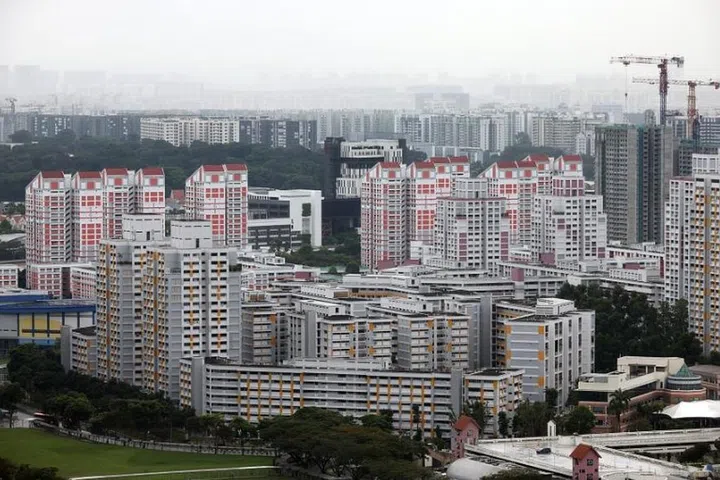
Aerial view of Bishan.
2. Bishan
Bishan was named after the Cantonese term “Peck San Theng,” which translates to “pavilions on the green”. The area was initially a large burial ground established in 1870 by the Cantonese and Hakka communities and its name reflects its past as a serene resting place surrounded by lush greenery.
In the 1940s, during the tumultuous period of the Battle of Singapore, Peck San Theng played a notable role as a refuge for many Singaporeans. However, by 1973, the cemetery ceased accepting new burials, and by 1979, the government began the process of redeveloping the land. This led to the exhumation of graves between 1982 and 1984 and paved the way for the creation of Bishan New Town, officially launched in 1983.
Bishan New Town marked a departure from the uniform, brutalist design of previous HDB towns. Instead, it featured innovative architectural designs with varied building heights and distinctive sloped roofs, which have since become iconic elements of the Bishan skyline. This unique design approach aimed to create a more visually appealing and community-centric living environment.
Today, Bishan is a vibrant residential town with a population of approximately 63,200 and 20,072 HDB flats. It also hosts several prestigious educational institutions, including Catholic High School, Raffles Girls’ School, and Raffles Institution, contributing to its reputation as a hub for quality education.
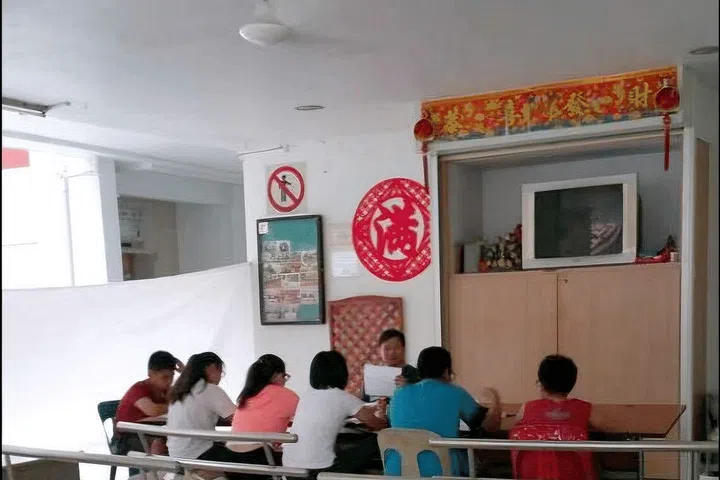
Children taking part in tuition classes at Block 702 Bedok Reservoir Road. PHOTO: COURTESY OF SANDY GOH
3. Bedok
Bedok, located in eastern Singapore, has evolved from a coastal village into a thriving residential and commercial hub. With an estimated 194,700 residents living in HDBs, and total population of 280,000, Bedok is the largest Town by population.
Named after the Malay word ‘Bedoh,’ which refers to traditional drum signals for prayer times, Bedok’s history dates back to the era of Sir Stamford Raffles. Originally a fishing village and agricultural center in the Tanah Merah region, it was known for its coconut plantations and fishing activities.
Modern development began in the 1960s with a reclamation scheme by the Housing and Development Board (HDB). Bedok officially became a new town in 1966, with the first residential flats appearing by 1975. Significant developments included new roads and infrastructure, and Bedok Jetty became a key entry point for Vietnamese refugees during Operation Thunderstorm.
Today, Bedok is a vibrant community blending modern amenities with green spaces, known for its diverse food scene, shopping centers, and parks. Revitalized through the Remaking Our Heartland (ROH) programme, it features landmarks like Bedok Mall, Bedok Interchange Hawker Centre, and the Bedok Integrated Transport Hub.

Aerial view of HDB flats in Bukit Batok
4. Bukit Batok
Bukit Batok, located in the western part of Singapore, has a population of approximately 114,000 HDB residents and 40,612 HDB flats managed as of 31 March 2018.
The name “Bukit Batok” is derived from Malay, with “Bukit” meaning hill and “Batok” possibly coming from “batu,” meaning granite, reflecting the area’s hilly terrain and historical quarrying activities.
Historically, Bukit Batok was dominated by rubber and pineapple plantations until industrialization began in the 1940s. The area saw significant action during World War II, with Bukit Batok becoming a key location for both Allied and Axis forces. The Battle of Bukit Timah, culminating in the British surrender at the nearby Ford Motor Factory, was noted by Winston Churchill as a major defeat.
After the war, Bukit Batok’s development was initially slowed by Japanese occupation but resumed with industrialization under British rule. The quarrying of granite became a significant activity, with the Poh Kim Quarry operating from the 1950s to the 1970s before being abandoned due to environmental damage.
Following Singapore’s independence in 1965, Bukit Batok was developed into a new town starting in 1975. The town has since become a self-sufficient area with shopping centers, parks, a stadium, and an industrial park. Efforts to preserve geological formations, such as those in Bukit Batok Nature Park, highlight the area’s historical and natural heritage.
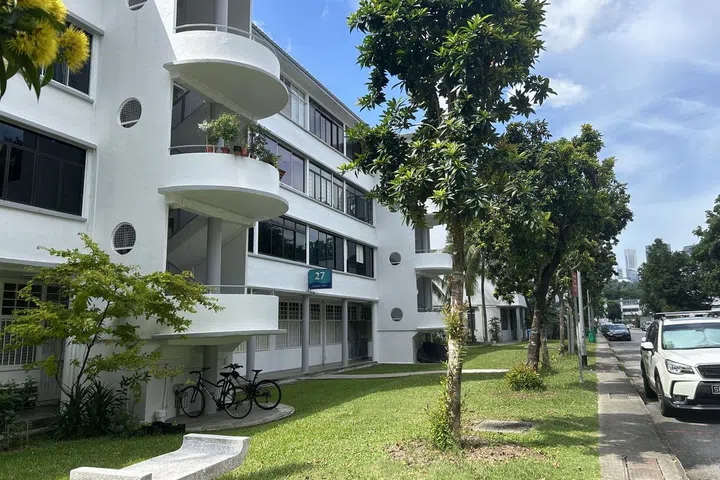
BLK 27 Lim Liak Street in Bukit Merah, completed in 1973
5. Bukit Merah
The name Bukit Merah, meaning ‘red hill’ in Malay, reflects the red soil uncovered during early excavations. Historically, Bukit Merah was significant for maritime trade and gambier plantations during British colonial rule.
In the 20th century, Bukit Merah became a center for heavy industry, with brickwork factories emerging in Henderson Hill and Redhill. The area’s first public housing estate, Tiong Bahru, developed by the Singapore Improvement Trust, set the stage for Queenstown, Singapore’s first new town. So, technically, Bukit Merah is home to the first ever estate, just not under HDB.
Bukit Merah’s transformation into a residential area began in the 1960s with HDB development, and HDB’s headquarters were located at Bukit Merah Central from 1987 to 2003 before moving to Toa Payoh.
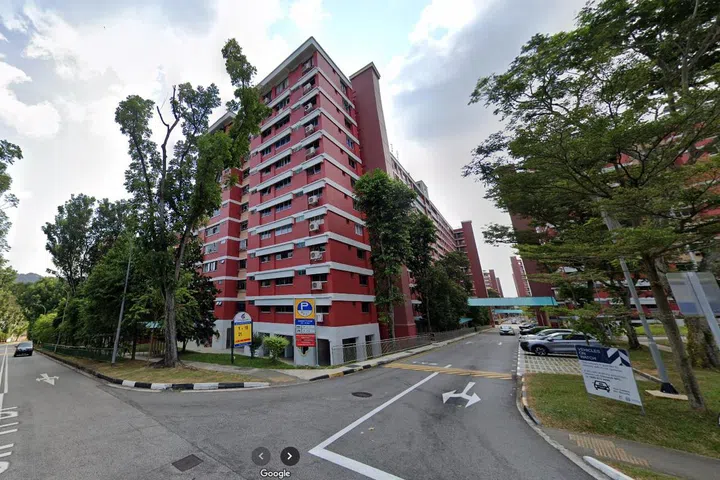
Street view of Toh Yi Drive HDBs in Bukit Timah.
6. Bukit Timah
Bukit Timah, located in central Singapore, has an estimated 8,400 HDB residents and 2,555 flats managed as of 31 March 2018. The town’s name has various interpretations. It is often thought to mean ‘tin-bearing hill’ in Malay, while others believe it refers to ‘Bukit Temak,’ or ‘hill of the temak trees.’
Bukit Timah Hill, Singapore’s tallest hill, is notable for two war memorials honoring Japanese troops and British defenders. The old Ford Factory, now a museum, was the site of the surrender of Allied forces to the Japanese in 1942.
During World War II, Bukit Timah was a key battleground in the Battle of Bukit Timah. Post-war, the area saw the transformation of Tai Tong Ah Sai Kai amusement park into Beauty World in 1947, which later became a shopping center in 1984.
You might also be familiar with the Bukit Timah railway station, one of the first railway stations in Singapore, which operated until 2011 and now forms part of the Rail Corridor.
Today, Bukit Timah is a high-value area known for its bungalows, high-rise condominiums, and affluent residents, with popular spots like Sixth Avenue and Turf City attracting both locals and expatriates.

Street view of Bukit Panjang Plaza.
7. Bukit Panjang
Bukit Panjang, which means “long stretches of hills” in Malay, is a residential town in northwestern Singapore that has evolved significantly over the years. Originally a rural area filled with kampongs and villages, Bukit Panjang has transformed into a modern and self-contained town.
The town’s development began in earnest in the 1980s, with advanced earthworks starting in June 1981. The first HDB flats were completed by 1985, marking the start of Bukit Panjang’s rapid urbanization.
Initially, Bukit Panjang was planned to be named “Zhenghua,” after the area’s former road, Jalan Cheng Hwa. However, the town retained its original name due to its familiarity among residents. The name Zhenghua is still preserved in places like the Zhenghua Park and the flyover connecting Bukit Panjang Road and the Bukit Timah Expressway.
Today, Bukit Panjang is home to approximately 121,100 residents living in 35,325 HDB flats. The town is known for its abundant greenery, with the Bukit Timah Nature Reserve to its south and the Central Water Catchment to its east, making it a tranquil yet modern residential area.
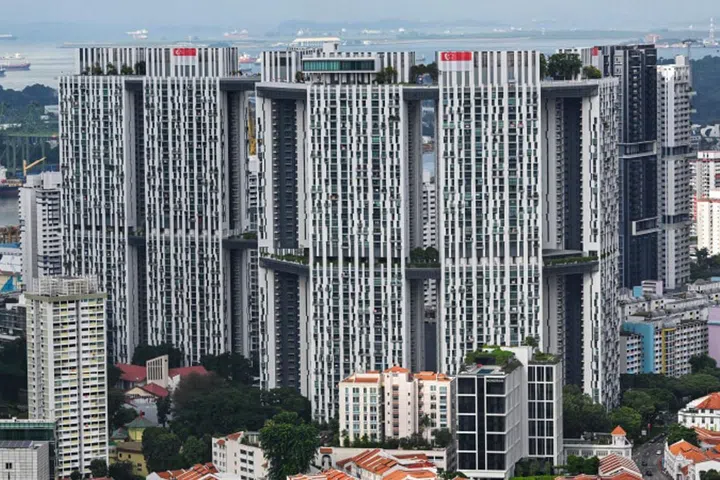
The Pinnacle@Duxton located in Outram is one of the HDBs in the Central Area
8. Central Area
The Central Area, often known as the Central Business District (CBD), encompasses diverse locales such as Marina East, Marina South, Newton, Orchard, Outram, River Valley, Rochor, and Singapore River. It is home to a mix of residential and commercial developments, managing 12,316 flats for 27,700 HDB residents as of 31 March 2018.
Historically, the Central Area’s development traces back to Sir Stamford Raffles’ Raffles Plan. Designated as a commercial hub due to its strategic location near the harbour, and it served as Singapore’s commercial and administrative center during the Colonial era. Thian Hock Keng Temple, constructed in 1839 along Telok Ayer Road, initially faced the sea and was the first stop for Chinese immigrants to offer thanks for their safe arrival. The temple, notable for its traditional southern Chinese architecture and historical significance, was gazetted as a national monument in 1973, and remains managed by the Hokkien Huay Kuan.
Today, the Central Area is a bustling, densely-packed district in southern Singapore, characterized by its towering skyscrapers and vibrant financial activities. Much of the Central Area, especially around Telok Ayer Road, was built on reclaimed land.
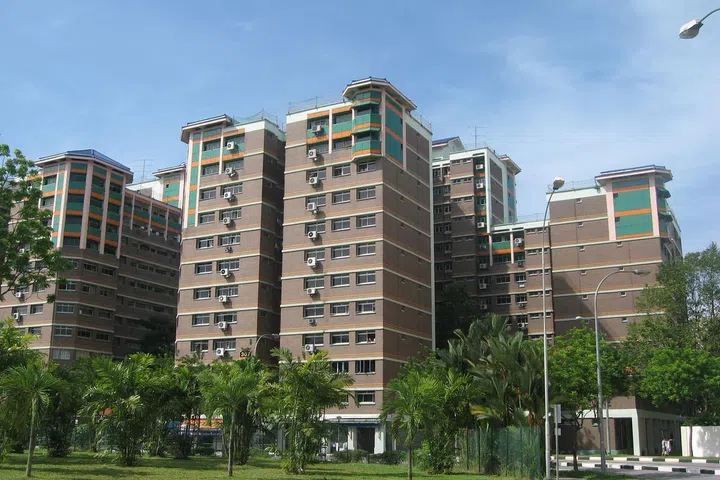
9. Choa Chu Kang
The coolest fact about Choa Chu Kang has got to be that the last wild tiger in Singapore was shot and killed here in 1930.
HDB wise, Choa Chu Kang has an estimated HDB resident population of 169,000, and includes seven neighbourhoods. Derived from the Teochew term ‘kang chu’, the name Choa Chu Kang refers to plantation owners, where ‘Kang’ means river, and ‘chu’ is the clan name of the headman. The area was known for its gambier and pepper plantations along the river banks in the earlier years of Singapore.
Choa Chu Kang’s development began in 1977 with its first neighbourhood at Teck Whye Avenue. Once a rural area with kampongs and rubber plantations, it has evolved into a modern estate with community and recreational facilities. Early settlers included Teochews who grew gambier and pepper, while Hokkiens established plantations for pineapple, rubber, and coconut.
From 1993 to 1998, Kampong Belimbing, Choa Chu Kang Village, and Kampong Berih were replaced by the National Shooting Centre and military areas. The town saw further development from 1985, with new neighbourhoods such as Yew Tee completed by 1997.
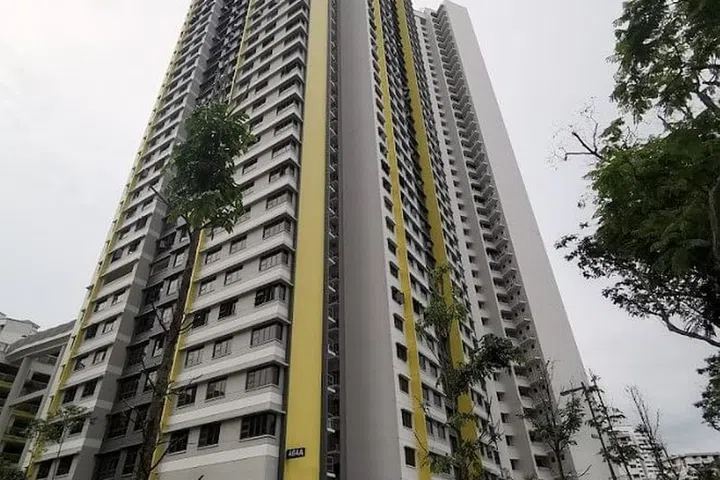
Clementi Peaks pictured from the ground floor. Image from Google Maps.
10. Clementi
Clementi, located between Jurong West and Dover, is home to an estimated 72,300 HDB residents, with 26,727 flats managed by HDB.
Named after Sir Cecil Clementi Smith, Governor of the Straits Settlements from 1887 to 1893, Clementi was originally a mix of swamp land, kampungs, and villages with squatter homes and farms. The development of Clementi began in the 1970s, with the aim of creating a self-sufficient town with ample facilities and job opportunities. Much of Clementi New Town was built on the site of the former Colombo Camp, used by the Singapore Guard Regiment until its closure in 1975.
Clementi New Town was developed between 1975 and 1979, with the Housing and Development Board (HDB) clearing the area in 1974 and resettling villagers. An iconic landmark in Clementi is the steel truss railway bridge over Sungei Ulu Pandan, part of the Jurong KTMB Railway Line. Constructed in 1963 and in operation until the early 1990s, the bridge and disused track are now popular with history and nature enthusiasts.
Clementi has since grown into a vibrant area known for its educational institutions, including Ngee Ann Polytechnic, Singapore Polytechnic, and the National University of Singapore.
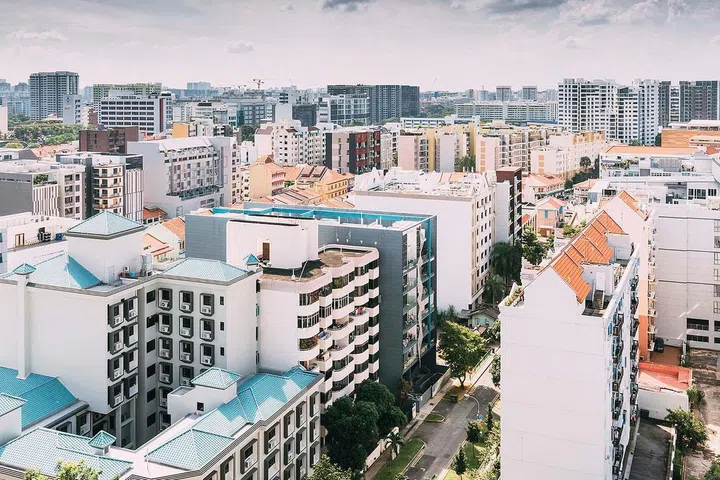
Singapore Geylang area’s residential building aerial view
11. Geylang
The development of Geylang can be traced along the main Geylang Road, which heads westward toward the city. Micro-businesses started by Malay, Indian, and Chinese entrepreneurs thrived here, including bicycle and motor repair workshops, suppliers of wood and tiles, and merchants dealing in rubber and plastics. Geylang also hosts a mosaic of temples, mosques, and churches, reflecting the spiritual and diverse needs of local worshippers.
A distinctive feature of Geylang’s architecture is its preserved shophouses, historically used by clan associations to help integrate newcomers between 1840 and 1940. Today, Geylang mirrors Singapore’s demographic diversity, where one in four residents is a foreigner.
In the 1930s, several exclusively Malay districts were established, including Kampung Melayu (Malay Village). The Geylang Serai Housing Redevelopment Scheme, starting in 1963 and completed in three phases, transformed the area into a modern housing estate. By the 1980s, the old kampungs had disappeared.
The name “Geylang” comes from the Malay word “kilang,” meaning press, mill, or factory, which were common in the area. Today, Geylang is a vibrant, multi-cultural neighborhood known for its rich Malay heritage and diverse HDB population.
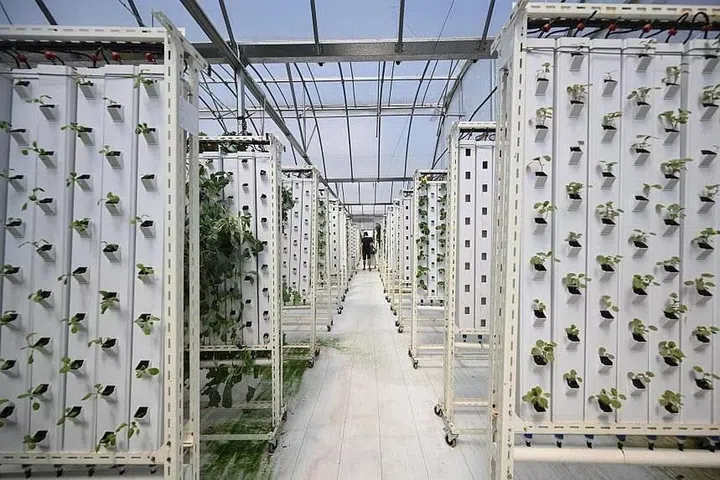
The Greenhood vertical farm is situated on the roof of Block 946A Hougang Street 92. ST PHOTO: SHINTARO TAY
12. Hougang
The name Hougang originates from the Hokkien and Teochew term “Au-Kang,” meaning “river end,” reflecting its location upstream of Sungei Serangoon.
Historically, Hougang was a large forested area with pig-rearing farms. By the mid-1990s, the last pig farmers were relocated to new HDB flats in the town.
The town’s development began in 1977, and by 1983, its first three neighbourhoods were completed, followed by Neighbourhoods 4–7 by 1992. Hougang’s town center was finished in 1994, and its last neighbourhood was completed in 2000.
Hougang Capeview, a Build-To-Order project completed in 2015, was the first public housing project to receive the CONQUAS Star from the Building and Construction Authority, achieving a Construction Quality Assessment System score of over 95, surpassing the national average.
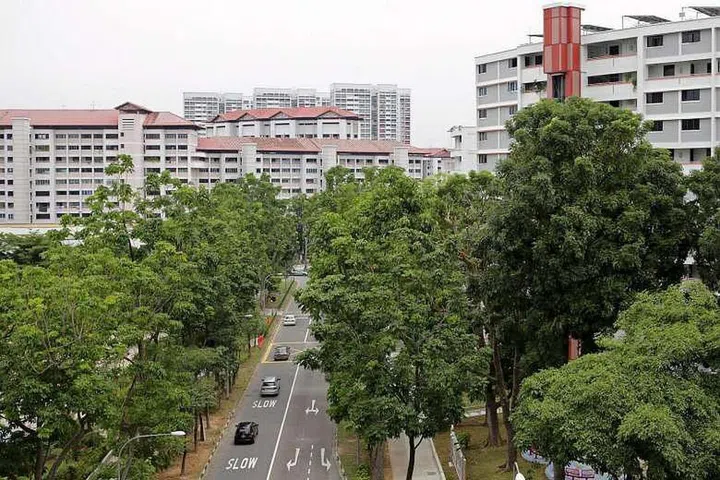
Aerial view of Jurong East HDBs
13. Jurong East
Jurong East includes the areas around Jurong Town Hall Road, the Pan Island Expressway, and the Teban and Pandan estates. It is part of Singapore’s largest industrial zone.
The town has an estimated HDB population of 78,000, with 23,897 flats under our management (as of 31 March 2018). The name Jurong likely derives from the Malay word for shark, ‘jerung’. It was also known as Peng Kang to the local Chinese community due to a former gambier plantation.
Development in Jurong East began in the 1970s with the establishment of estates like Boon Lay, Taman Jurong, and Bukit Batok, among others. The town is now recognized as the ‘Orchard Road’ of Western Singapore, with shopping malls such as JEM and Westgate.
Today, the town is undergoing revitalization under the Remaking Our Heartland programme, with plans to transform the Jurong Lake District into a new regional center. In August 2017, the Urban Redevelopment Authority introduced the Jurong Lake District Draft Master Plan, which includes the Jurong Gateway, Lakeside, and Lakeside Gateway precincts. The Kuala Lumpur-Singapore High Speed Rail terminus will also be located within the Lakeside Gateway, enhancing cross-border business and travel.
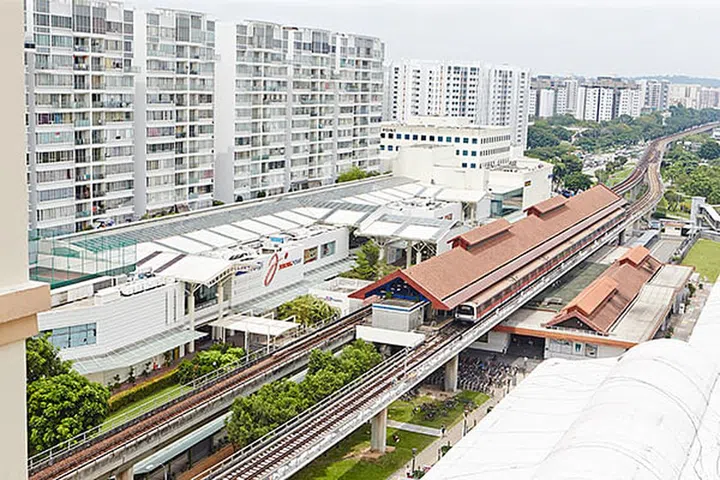
14. Jurong West
Jurong West was originally characterized by swamps, low hills, and dense jungle. In the 1960s, the government filled the swamps using land from the hills, transforming the area into an industrial estate with low-cost housing for workers.
Development began in the 1970s, with estates like Boon Lay, Taman Jurong, and Hong Kah forming Jurong West Town. The Jurong West Extension later included Pioneer and surrounding neighborhoods.
Jurong West, formerly known as Peng Kang due to gambier plantations along Sungei Jurong, was home to brickworks, palm oil plantations, and nurseries by the mid-20th century. The only public housing estates then were Boon Lay and Taman Jurong. In 1984, the HDB began planning a new town for Jurong West, which was divided into nine subzones. The area is expected to be further transformed by the upcoming Jurong Lake District, making it an attractive place to live, work, and play.

Street view of the Kallang Horizon BTO site. Screengrab from Google Maps.
15. Kallang/ Whampoa
Kallang and Whampoa were merged into a single HDB town, housing an estimated 106,900 HDB residents. The name Kallang is derived from the Malay term for ‘orang laut’, or sea gypsies who lived by the Kallang and Singapore Rivers. Another theory suggests it comes from the Malay word ‘kilang’, meaning mill or factory, reflecting the area’s industrial past.
Kallang is one of Singapore’s oldest housing estates and was the site of the country’s first airport, Kallang Airport, which opened in 1937. The Singapore Improvement Trust began constructing Kallang in 1959, and some older housing blocks have been replaced under the Selective En bloc Redevelopment Scheme (SERS), including The River Vista @ Kallang, a waterfront project along the Kallang River.
Kallang has been home to several national landmarks, including the old National Stadium and Singapore’s first purpose-built civil airport. The area is known for the famous Kallang Roar and Kallang Wave, which have their origins in the former National Stadium, a venue for numerous significant cultural and sporting events.
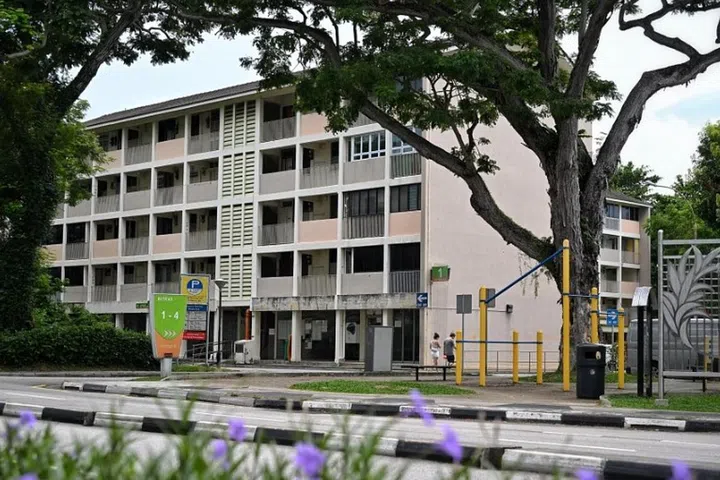
Block 1 in East Coast Road will be retrofitted with new features, such as a new lift and staircase, and get a fresh lease of life..
16. Marine Parade
Marine Parade is the first housing estate built on reclaimed land and houses about 21,600 HDB residents, and was originally named after a promenade along East Coast Road. Before land reclamation, it was part of Katong and used to be a beachfront.
Its land reclamation began in 1966, with the first housing blocks completed in 1972. By March 1975, over 7,000 flats had been finished. Marine Parade’s early history is linked to Katong, a favored area for the wealthy Peranakan community. Katong was known for its distinctive Straits Chinese culture, architecture, and the famous Katong Laksa dish.
Today, Marine Parade is a self-sufficient estate with a range of commercial, recreational, and leisure facilities. Its proximity to the sea adds a relaxed atmosphere. By 2024, the area will be served by two MRT stations along the new Thomson-East Coast Line (TEL).
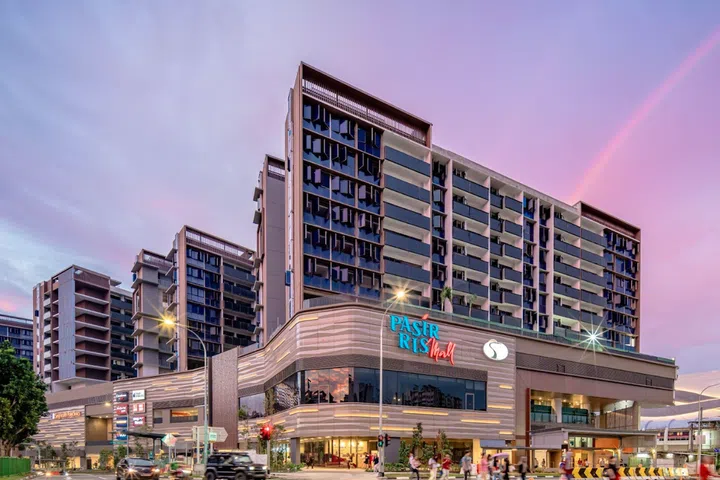
17. Pasir Ris
Pasir Ris is home to 108,400 HDB residents, with 29,654 flats under our management (as of 31 March 2018). Its name, which means ‘white sand’ in Malay, refers to the long stretch of white sandy beach along Singapore’s north-east coastline.
Previously, Pasir Ris was a low-lying area with Malay kampongs such as Kampong Pasir Ris, Kampong Bahru, and Kampong Loyang Besar, and Chinese kampongs along Elias Road. The area was renowned for its plantation estates, including Singapore United Plantations, Loh Lam Estate, Hun Yeang, and Thai Min Estates. The beach was a popular water skiing spot in the 1950s, and the Pasir Ris Hotel was a venue for memorable parties and gatherings in the 1950s and 1960s.
Development of Pasir Ris Town began in 1983, with Phase 1 covering Elias Road/Pasir Ris Estate. Today, White Sands Shopping Centre, located next to Pasir Ris MRT station, reflects the local place name.
Overall, it has evolved into a vibrant residential town with a seaside ambiance. The housing blocks reflect beach and sea themes, and the town is known for its intra-town cycling path network, making it a favorite spot for cycling enthusiasts.

Artist's impression of the Punggol Point Crown BTO estate facade.
18. Punggol
Punggol has an estimated HDB resident population of 187,800, with this number is expected to rise as new developments continue and more residents and young families move into the town.
Punggol’s history dates back 200 years before Sir Stamford Raffles founded Singapore. It was a well-established rural area with farmhouses and roads. Initially, the population consisted mostly of Malays, but Chinese immigrants who arrived in the mid-19th century were involved in rubber plantations and later in poultry, pig, and fish farming.
In September 2007, Prime Minister Lee Hsien Loong announced further plans under the Remaking Our Heartland (ROH) programme, selecting Punggol as one of the pilot towns. This included plans to dam Sungei Serangoon and Sungei Punggol, creating a man-made waterway to connect these reservoirs and promote waterfront living. The blueprint for Punggol 21 was first introduced in 1996 by former Prime Minister Mr Goh Chok Tong, envisioning Punggol as “A Waterfront Town of the 21st Century.”
In 2010, Punggol was designated as Singapore’s first Eco-Town, focusing on enhancing the living environment and promoting environmental sustainability. Punggol serves as a “living laboratory” for testing new ideas and technologies in sustainable development, with projects like Treelodge@Punggol leading the way.
The vision of waterfront living materialized with developments along Punggol Waterway, including Waterway Terraces I and II, and Waterway Ridges. In 2014, Punggol Northshore was introduced as a nature-centric district to test smart technologies, featuring an intelligent parking system, sensor-equipped lighting, and smart waste management.
New housing projects in the Punggol Point District, such as Punggol Point Crown and Punggol Point Cove, were launched in 2019, reflecting the town’s heritage as a fishing village.
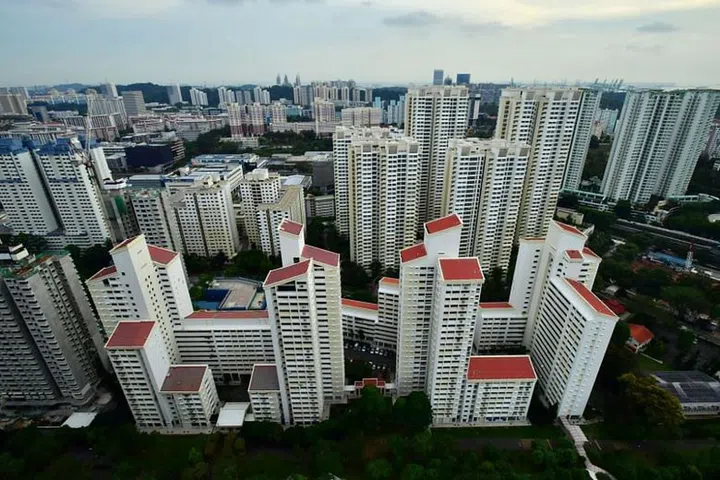
19. Queenstown
In Queenstown, there is an estimated HDB resident population of 82,500, with 32,678 flats under HDB’s management (as of 31 March 2018).
Named in honor of Queen Elizabeth II in 1952, Queenstown is Singapore’s first satellite town. Development began in the 1950s under the Singapore Improvement Trust (SIT) and was taken over by the Housing and Development Board (HDB) in the 1960s.
Major development occurred during the 1960s Five-Year Building Programme, establishing Queenstown as a self-sufficient town with amenities like a Sports Complex and Town Centre. The town remains vibrant through ongoing rejuvenation efforts, including new projects like SkyVille @ Dawson and SkyTerrace @ Dawson under the Remaking Our Heartland programme.
Originally a swampy valley with surrounding hills, the area was populated by a village of Hokkien and Teochew speakers living in attap-roofed huts. During World War II, Pasir Panjang Ridge was a battleground where the Malay Regiment fought against Japanese troops. Today, a war museum at Bukit Chandu commemorates this battle.
In 1947, the Housing Committee proposed creating self-contained residential areas, influenced by post-war urban planning in Britain. Queenstown was selected for development, building on the success of the Tiong Bahru public housing scheme. The first estate, Princess Margaret Estate, began in 1953, with notable landmarks like Forfar House, the tallest HDB flat at the time.
By the 1980s, Queenstown had matured, with many seniors residing there, though today it’s seeing an increasing amount of gentrification through swanky cafes.
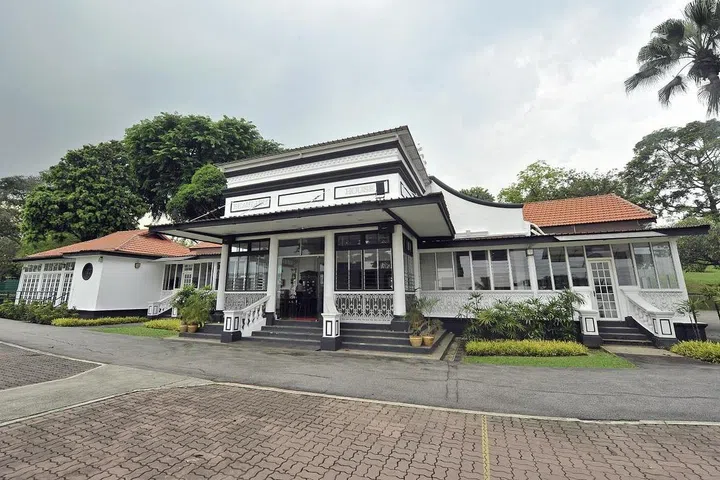
20. Sembawang
An estimated 73,500 HDB residents call Sembawang home, with 26,834 flats in the town. Named after the Sembawang tree found at Sembawang Park, the town was once the site of Nee Soon Rubber estate and a bustling naval base with shipyards.
From the 1800s to early 1900s, Sembawang was characterized by gambier, pepper, and pineapple plantations extending from Seletar River to Sungei Sembawang. In 1983, the opening of Singapore Naval Base spurred development, with military installations, airbases, and barracks established nearby. Today, Sembawang reflects its maritime past through nautical-themed design details and road names inspired by the Royal Navy.
Sembawang is supported by Sembawang MRT Station, with transportation links set to improve with the upcoming Canberra MRT Station, scheduled for 2019. The town features shopping centers like Sun Plaza and Sembawang Mart, with the New Generation Neighbourhood Centre, Canberra Plaza, also due for completion in 2019.
In the early 20th century, Sembawang hosted a major British naval base, established in 1928 and completed in 1938, which included dockyards, wharves, and administrative areas. The base was handed over to the Singapore government in 1968, becoming Sembawang Shipyard, now part of SembCorp Marine.
Sembawang retains one of Singapore’s last natural beaches, Wak Hassan Beach, at Sembawang Park. Former vegetable farms, rubber plantations, and Chinese graveyards have been replaced by modern housing since the 1990s. The town remains a key port, with Sembawang Wharves handling a high volume of bulk commodities.
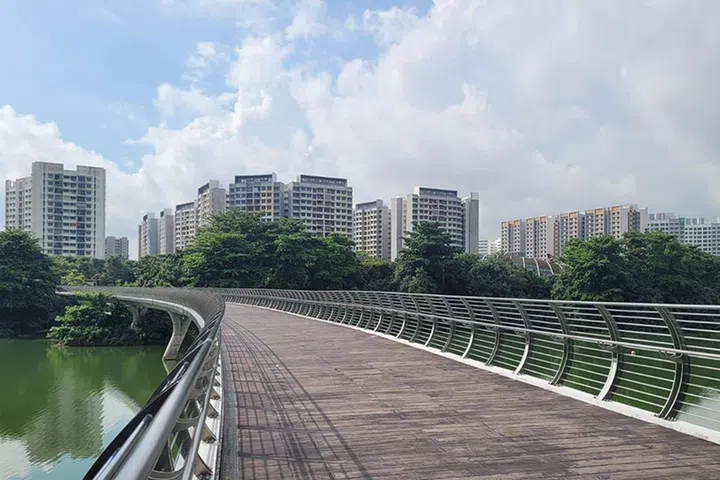
Sengkang Riverside Park
21. Sengkang
Sengkang, meaning ‘prosperous harbour’ in Chinese, was once a fishing village surrounded by rubber and pepper plantations. An estimated 212,100 HDB residents live in Sengkang today.
Sengkang has rapidly transformed from a fishing village into a modern township. It was the first satellite town where major public transport amenities, including the Sengkang Light Rail Transit (LRT) system, were developed alongside the public housing projects in the late 1990s.
The town’s development has embraced its nautical past, with housing projects reflecting maritime themes. Originally known as Kangkar, after the port and fishing village along Sungei Serangoon, Sengkang was home to various plantations by the mid-20th century. The area was largely undeveloped until 1994, when HDB began planning for a new town.
Sengkang was divided into seven subzones with a long-term plan for 95,000 public and private housing units. The town’s theme, ‘Town of the Seafarer,’ reflects its maritime heritage, with neighborhood names and designs inspired by its fishing and plantation history. The first apartment blocks in Rivervale were completed in 1997, and by September 2001, about 33,700 units were finished. Today, Sengkang has over 70,000 HDB units.
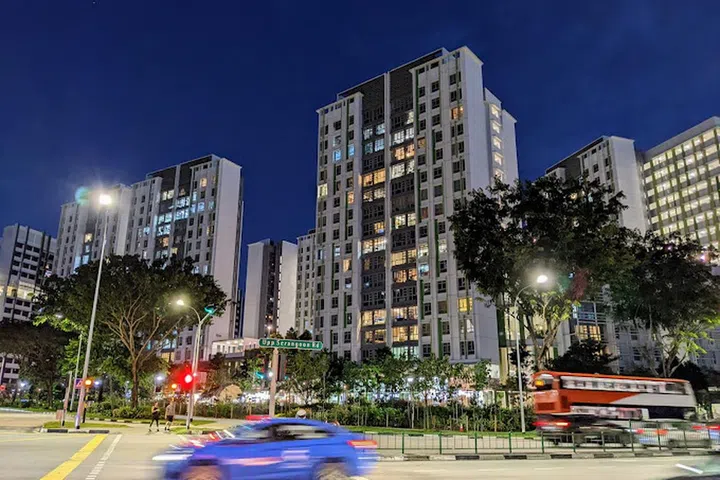
Night street view of the Alkaff Vista HDB estate from Upper Serangoon Road.
22. Serangoon
The name “Serangoon” is believed to have two primary origins. One popular explanation links it to “Ranggong,” the Malay term for a bird commonly found in the swamps surrounding the Serangoon River. The Malay word for “one,” or “satu,” is often shortened to “sa,” leading to the earlier name “Saranggong.” An alternative theory suggests that it comes from the Malay phrase “di-serang dengan gong,” which means “to surround with gongs,” potentially referring to the use of gongs to deter animals in the area’s forests.
In the years following World War II through the 1960s, Serangoon featured a blend of traditional kampung settlements, villages, rubber plantations, and various agricultural activities. Fun fact, there’s actually surprisingly little information readily available online on Serangoon’s history.
The area’s vibrancy increased significantly with the completion of Nex, a shopping mall that includes a bus interchange, along with the Serangoon Circle Line station in 2010.
Serangoon has become a popular destination for both residents and visitors, offering a wide range of retail, entertainment, and dining options, as well as convenient access to public transportation.
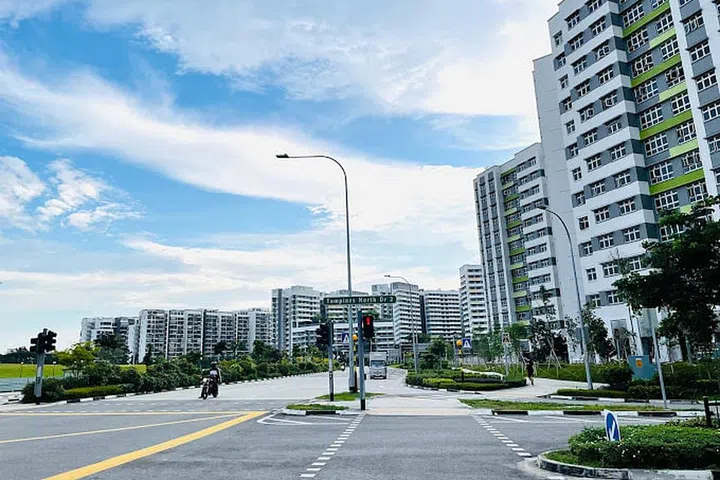
Tampines GreenVines BTO road view. Image Google Maps
23. Tampines
Tampines was named after the ‘Tempinis’ tree that once grew abundantly in the area, with 242,700 HDB residents that call it home.
Initially, Tampines was characterized by scattered squatter settlements and a landscape marked by sand quarrying, with more than 26 quarries operating at its peak. The sand extracted was used in the East Coast Reclamation project. By the 1970s, the area featured undulating hillocks and deep craters.
In the 1980s, HDB began developing Tampines Town, employing the Neighbourhood and Precinct Planning Concept. The first precinct, Tampines Neighbourhood 2, marked a significant milestone in HDB’s development history. The Town Centre was designed with an hourglass shape, contributing to the town’s unique urban design.
Tampines Town was awarded the World Habitat Award in 1992 for its innovative human settlements. Designated as a regional center since the early 1990s, Tampines now serves as a major hub for Singapore’s East.
In 2013, HDB introduced plans for new areas like Tampines North, which aims to enhance the existing greenery and expand the town’s living environment. The first public housing development in Tampines North, Tampines GreenRidges, was launched in 2014, with further developments expected in the next 10 to 15 years.
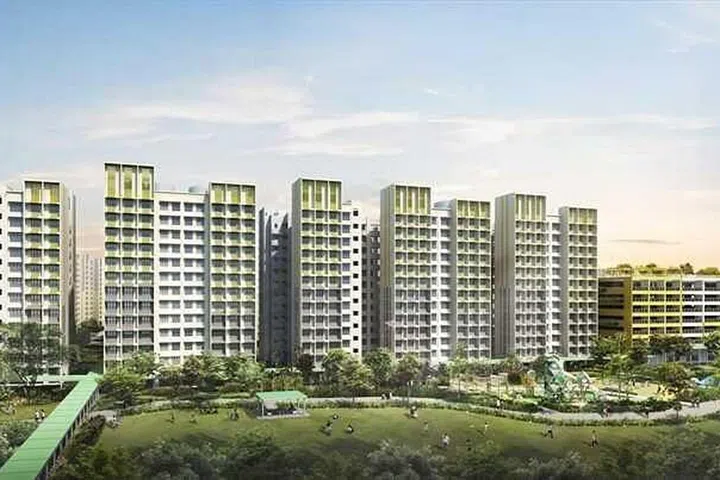
24. Tengah
Tengah will be Singapore’s first HDB town designed with smart technologies integrated throughout from the start. The town will emphasize green, sustainable features and community-focused spaces, offering new homes in the Western region of Singapore. It is situated near Jurong Innovation District and Jurong Lake District, fostering opportunities for residents to live, learn, work, and play.
Previously a military restricted zone, Tengah was designated for new housing developments in the URA Concept Plan 2001, making it Singapore’s newest HDB town since Punggol’s development in the late 1990s. In September 2016, HDB unveiled the official plans for Tengah, including its master plan and blueprint.
Following the demilitarization of the area, the first estate, Plantation Grove, was launched in November 2018. Tengah is organized into several districts: Plantation, Park, Garden, Market Place, Forest Hill, and Brickland Districts.

Potong Pasir's sloping HDBs. Potong Pasir falls under the Toa Payoh HDB estate.
25. Toa Payoh
Toa Payoh, meaning ‘big swamp’ in Hokkien, was named for the swampy area it once was. Development faced delays due to resistance from squatters, but by 1962, they had moved out, and preparation for HDB’s building program began in 1965.
The town was the first to be fully planned and developed by HDB, featuring a Town Centre at its core. Notable events include visits from Queen Elizabeth II in 1972 and 2006, and Chinese Premier Wen Jiabao in 2007. Toa Payoh also hosted the SEAP Games in 1973.
As Singapore’s second oldest satellite town, Toa Payoh underwent the Estate Renewal Strategy to modernize it. This revitalization has made it a vibrant area, now home to the HDB Hub.
In 2015, Toa Payoh was selected for further rejuvenation under the Remaking Our Heartland programme, with enhancements planned for commercial, recreational, and residential spaces. The new Bidadari estate within Toa Payoh is set to include a regional park and about 10,000 residential units.
Allegedly, due to its crime issues, including the Toa Payoh ritual murders in 1981, earned it the nickname “Chicago of the East”, though I’ve hardly heard anyone use that.
26. Woodlands
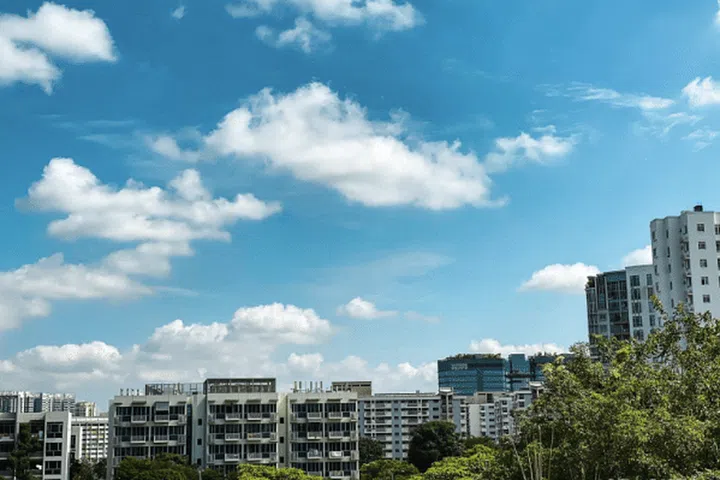
Woodlands, a bustling residential town in northern Singapore, has a story of transformation. Named for its once-wooded landscape visible from across the Johor Strait, Woodlands has evolved from a rural area into a key regional hub.
Back in the 1920s, Woodlands was known for its villages, where locals worked as shopkeepers, vegetable farmers, and in rubber plantations. The Johor-Singapore Causeway, which opened in 1923, marked the start of significant change by connecting Singapore to Malaysia.
Post-independence, the 1970s and 80s saw the development of Woodlands New Town. This was part of a broader effort to decentralize Singapore and build self-contained residential areas. HDB flats started going up in Marsiling in 1972, with more neighborhoods being developed throughout the 1980s and 90s. By the late 1990s, Woodlands was undergoing rapid expansion, becoming a key regional center.
Today, Woodlands is a thriving town with around 242,500 residents living in 68,153 HDB flats. It’s known for its large open spaces, parks, and recreational facilities. Woodlands also features Kampung Admiralty, an integrated development that includes healthcare, childcare, and commercial spaces. Plans are underway to further enhance the area with more recreational spaces and improvements along Woodlands Waterfront as part of the Remaking Our Heartland programme.
27. Yishun
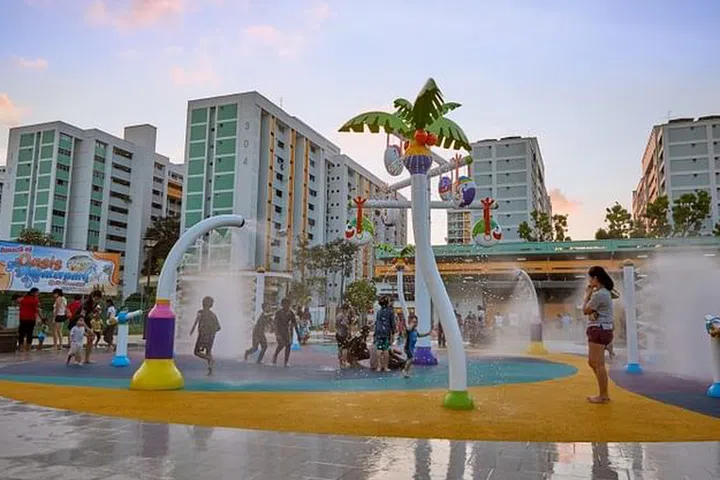
Yishun, formerly known as Nee Soon, is a lively residential town in northeastern Singapore with a population of around 196,600 and about 62,786 HDB flats as of 2018. The name “Yishun” reflects its roots in “Nee Soon,” after Lim Nee Soon, a key figure in the area’s history known for his pineapple and rubber plantations.
In the late 1800s, Yishun was also home to gambier and pepper plantations, but as their value declined, rubber and pineapple farming took over. Lim Nee Soon, dubbed the Pineapple King, played a pivotal role, leasing extensive land for these crops and popularising special pineapple farming techniques.
By the 1920s, Nee Soon Village, located at the crossroads of Thomson and Sembawang Roads, thrived with a post office, community center, and market. However, the 1980s brought significant change when Yishun New Town was developed, leading to the relocation of the village’s residents.
The 1980s saw Yishun’s transformation into a modern residential area, with HDB flats rising in Chong Pang. The town was revitalized under the Remaking Our Heartland (ROH) programme starting in 2007, ushering in updates that have shaped Yishun into the vibrant community it is today. Its blend of modernity with historical charm continues to make it a unique part of Singapore.