
Share this article
Many of us treasure our HDB flats as our homes, full of memories and comfort. But as years pass, wear and tear naturally takes its toll on walls, pipes, ceilings, and electrical systems.
The government’s Home Improvement Programme (HIP) gives our ageing HDB flats a much‑needed facelift to ensure it stays safe, comfortable, and up to modern standards.
This guide breaks down everything you need to know about HIP in 2026 — from eligibility and upgrades to costs, timelines, and what to expect during the renovation.
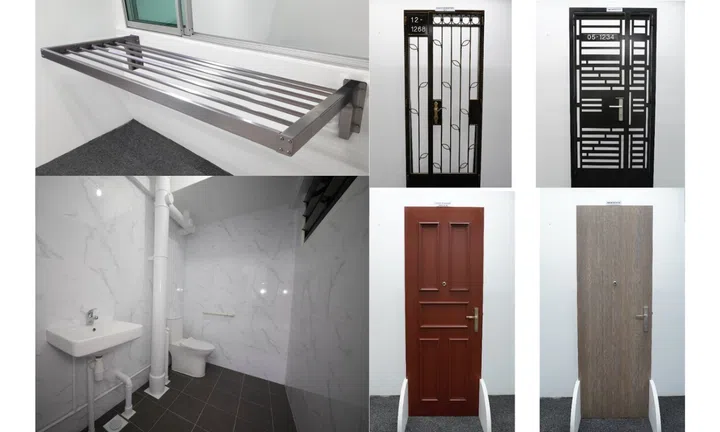
Optional upgrade features for HDB's Home Improvement Programme (HIP).
HIP was introduced in 2007 as a large-scale government upgrading initiative targeting HDB flats usually over 30 years old. Its main aim is to address common ageing issues such as structural cracks, ceiling leaks, deteriorating pipes, and outdated wiring.
The programme has three key parts:
- Essential improvements: Compulsory repairs fully funded by the government to ensure safety and maintain the flat’s basic functionality — you pay nothing.
- Optional improvements: Beautification and upgrade options residents can choose to add, like new bathroom fittings, entrance doors, and grille gates, subsidised but requiring a co-payment.
- Enhancement for Active Seniors (EASE): A special focus on senior-friendly home modifications like grab bars, slip-resistant floors, and ramps to help older residents live safely and independently.
Since its launch, HIP has upgraded hundreds of thousands of flats, improving living conditions across Singapore.
Who qualifies for HIP?
HIP targets HDB flats built before 1997, with upgrades scheduled based on the flat’s age and condition. When your block is up for HIP, HDB organises a poll among residents. The upgrade will proceed if at least 75% of eligible Singapore Citizen voters support it.
Permanent Residents do not vote or receive subsidies but can join if they become citizens.
How long does HIP take to complete?
The time required for HIP to be completed for a typical precinct (comprising 8 to 10 blocks) will take about 1.5 to 2 years. Works in each flat will take 10 working days or less, depending on the improvements chosen.
Here’s the process:
- HDB identifies eligible blocks and informs residents.
- Residents vote in a poll; a successful poll leads to upgrading approval.
- Surveys and preparations done before renovation.
- Renovation begins a few months later, lasting roughly 10 working days or less per flat.
- Full estate upgrading can take between 1.5 to 12 years depending on size and scope.
What upgrades will your HDB flat receive?
When your HDB flat is selected for the Home Improvement Programme (HIP), you can expect a comprehensive range of upgrades designed to enhance safety, comfort, and functionality.
As mentioned above, HIP comprises 3 components – Essential, Optional and Enhancement for Active Seniors (EASE) Improvements.
HIP Essential improvements
- Repairing structural cracks and damaged concrete.
- Replacing old waste and soil pipes to prevent leaks.
- Installing new pipe sockets and external retractable clothes drying racks.
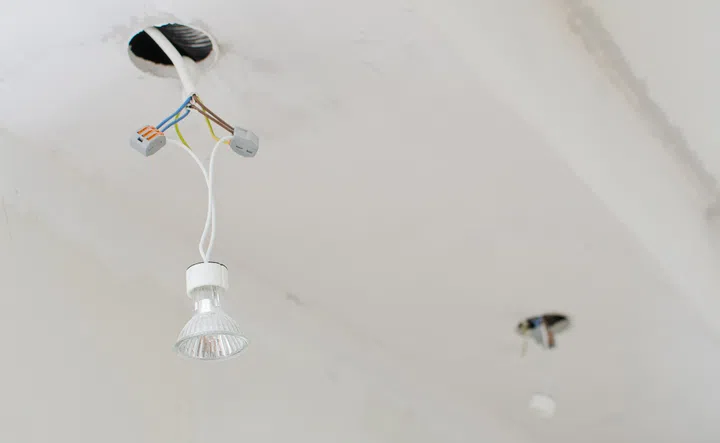
- Upgrading electrical wiring to meet current needs.
Optional HIP improvements
- Bathroom* renovations including new tiles, sanitary fittings, and ventilation.
- External retractable clothes drying rack, where technically feasible.
- New fire-rated or non-fire-rated main doors**.
- Decorative metal grille gates.
- Refuse chute hoppers replacement where applicable.
Your toilets must pass a water test for leaks to prevent ceiling leaks in the flat below, before you can opt out of the optional toilet upgrading.
HDB will assess whether your flat requires a fire-rated or non-fire-rated door based on SCDF‘s Fire Code. If your flat needs a fire-rated door, you can opt for it along with a home fire alarm device that will be installed as part of the fire safety upgrade. If not, you can choose the non-fire-rated door offered under HIP.
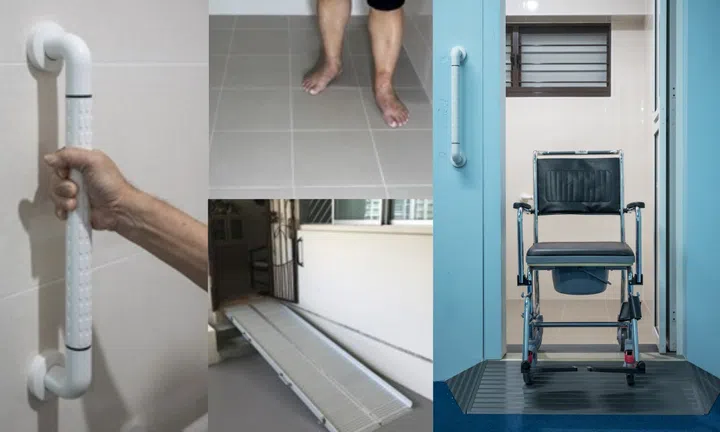
HDB EASE Improvements
- Grab bars for safer movement in toilets and around the flat.
- Slip-resistant treatment for bathroom tiles.
- Single-step or customised ramps to improve accessibility.
- Wheelchair lifters in flats where ramps cannot be installed.

How much does HIP cost?
HIP is heavily subsidised by the government, so most residents pay only a small portion of the total cost, especially for essential repairs and senior-friendly improvements.
However, there will be some payment involved for optional upgrades, and costs vary depending on your flat type and the improvements you choose.
Here’s a general estimate:
| HDB flat type | You pay | Subsidy by government |
|---|---|---|
| 1‑ or 2‑ or 3-Room | $599.50 | 95% |
| 4‑Room | $899.25 | 92.5% |
| 5‑Room | $1,199.00 | 90% |
| Executive | $1,498.75 | 87.5% |
Prices listed are for full optional packages with fire-rated door and home fire alarm device. For HIP projects polling after 30 March 2020. All amounts stated are estimates and inclusive of 9% GST. The final amount will be determined only upon completion of the upgrading works.
You may also use HDB’s e-calculator to calculate the cost of your HIP/ EASE improvement items and the monthly instalments required.
Singapore Permanent Resident households have to pay the full HIP upgrading cost. For optional and EASE improvements, they need not pay for items that they have opted out of.

Should you move out during renovation?
HIP renovations typically last about 10 to 20 working days per flat, during which there may be noise, dust, and disruption. Moving out is not mandatory, and many residents choose to stay in their flats to oversee the work and keep an eye on progress.
However, some find it more convenient and comfortable to temporarily relocate during the renovation period.
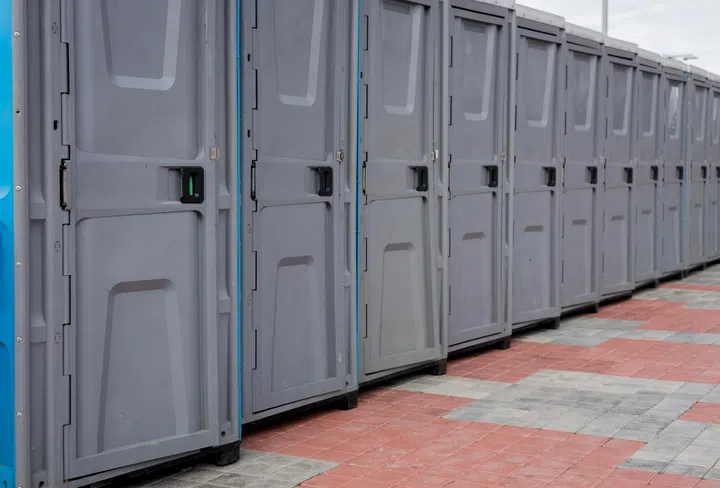
If you want to stay in your home during HIP renovation...
The works in each flat are carried out from Mondays to Saturdays, between 8 am and 6 pm, with dust and noise mitigation measures such as dust screens and dust extraction tools.
During this period, HDB also provides temporary facilities like portable toilets with hot water, air-conditioned rest rooms, and common toilets on the void deck to minimise inconvenience.
Your decision to move out depends on your personal comfort level and needs. If the renovation work significantly impacts your daily routine or poses health risks (such as dust sensitivity), temporarily relocating may be advisable. For those who can manage the inconvenience or want to save money, staying put is a viable option.