
Share this article
Celebrating our nation’s stories this SG61
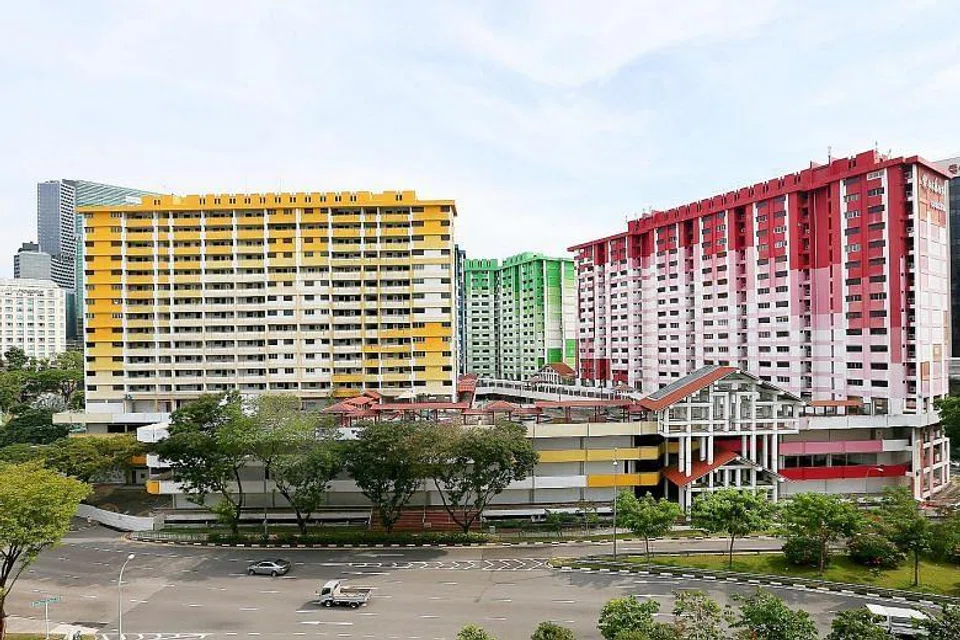
Reflecting on some of the aspects of Singaporean life that we admire, it’s hard for us design and property aficionados not to take a moment to think about–and appreciate–the country’s unique public housing setup.
Of course, many other countries have their own versions of public housing, but it’s not typically the same as Singapore’s Housing & Development Board (HDB), who are in charge of the country’s public housing. Most especially pertaining to the quality of properties, facilities and even shared community surroundings.
An Alice in Wonderland-themed playground for your children…A dog run park for your fur babies within HDB residential estates, like Blk 135 Simei Street 1…Your favourite local cafe or hawker stall for a quick bite just below your apartment…Or supermarket for that late-night snack run.

These housing estates are safe, overseen by government regulation and their surrounding areas are kept clean thanks to the island’s high national standards.
According to the Ministry of National Development, 80% of Singaporeans reside in HDBs, with over 1 million HDB flats across the country.
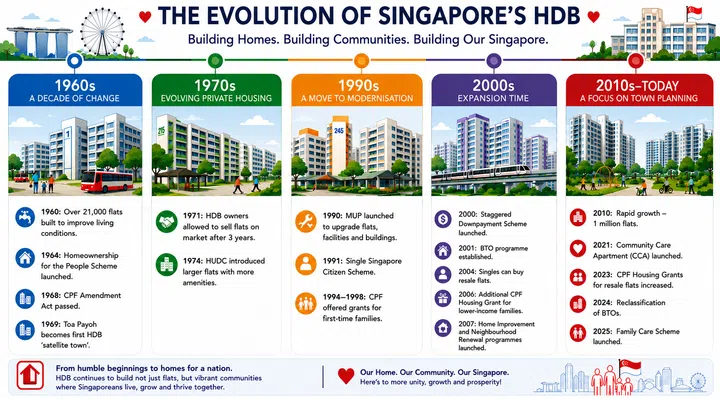
For non-Singaporeans, tourists, visitors and expats, it’s an interesting factor–and one to be admired. As something so uniquely Singaporean, we’re deep diving into the history and evolution of the HDB housing landscape in Singapore, chronicling how it started, evolved and what HDBs have developed into today in 2026.
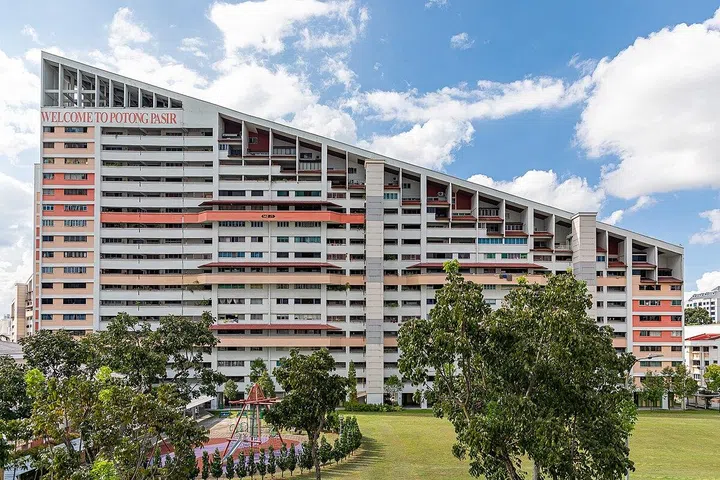
Block 142 HDB Potong Pasir. Aatu Dorochenko via Wikimedia Commons
How it all began
Before 1960 and the introduction of HDBs, the majority of Singaporeans resided in kampongs or in settlements. Singapore obtained independence from British rule in 1959, but fully became an independent republic separate from Malaysia by 1965.
Every year on August 9th, we celebrate the country’s independence, commemorating Singapore’s independence on National Day.
Not long after the country was unified, a public housing initiative was launched. Consider it as one of the first steps of transforming the country into the metropolis that it is today.
The 1960s: A decade of change
The 1960s saw rapid change for Singapore’s housing market, and it was during this period that the Housing & Development Board (HDB) laid the groundwork for HDBs as we know them.
Four major turning points for HDBs during the 1960s included:
- During the first three years, over 21,000 flats with clean running water and sanitation facilities were built and available to rent to Singaporeans.
- In 1964, the Home Ownership for the People Scheme was launched, allowing Singaporeans to buy these HDB flats at very affordable prices.
- Once the CPF Amendment Act was passed in 1968, Singaporeans were able to pay for HDBs using their CPF savings.
- Toa Payoh became the first HDB ‘satellite town,’ with its first occupants moving in circa 1969. The town included schools, sports and recreational facilities, a town centre, a bus interchange and industrial parks. This set the tone for future HDB neighbourhoods.

The 1970s: Evolving private housing
A successful decade of HDB living for locals meant more changes on the horizon. Two pivotal moments for HDBs in the 1970s included 1971 and 1974.
In 1971, owners of HDBs were officially allowed to sell their property on the market. But even back then, a MOP (Minimum Occupation Period) was still a thing. However, as opposed to the current 5-year MOP, owners only had to occupy the home for 3 years before selling the property.
Under a private company, the Housing and Urban Development Company (HUDC) scheme was established in 1974. Properties sold by HUDC were bigger and offered more private amenities compared to the standard HDBs. (However, this scheme ended in 1982, and these existing properties fell under HDBs.)
The 1990s: A move to modernisation
By the 1990s, HDBs had come a long way since the first blueprints of the 1960s, like HDB town amenities and property designs. By this stage, low-income and larger families could more easily obtain an HDB of their own. Important turning points for HDBs in the 1990s included:
- The Main Upgrading Programme (MUP) kicked off in 1990, drastically improving the designs of HDB buildings, facilities and the units themselves.
- As of 1991, under the newly introduced Single Singapore Citizen Scheme, single-occupant homeowners over 35-years-old could now purchase resale HDB flats.
- Between 1994 and 1998, the CPF Housing Grant Scheme was introduced for first-time families buying resale flats who wanted to live closer to or with their parents, and later extended to singles.
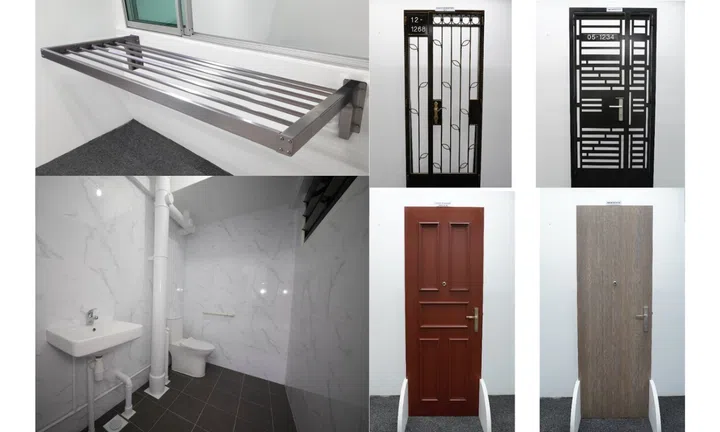
Optional upgrade features for HDB's Home Improvement Programme (HIP).
The 2000s: Expansion time
Now that HDBs had shifted to a more modernised approach, the 2000s focused on improving existing buying processes, as well as initiating new housing models. Key moments of the 2000s for HDBs included:
- To encourage younger married couples to buy homes, the Staggered Downpayment Scheme was launched in 2000. This meant couples could split their housing downpayment into two stages.
- The Build-To-Order (BTO) programme was officially established in 2001.
- As of 2004, under the Single Singapore Citizen Scheme, singles could purchase larger resale flats.
- The Additional CPF Housing Grant (AHG) was added in 2006, granting low-income families the option of choosing to buy a new or resale HDB.
- In 2007, both the Home Improvement Programme (HIP) and the Neighbourhood Renewal Programme (NRP) were put into action, focusing on further improving HDBs and HDB town neighbourhoods.
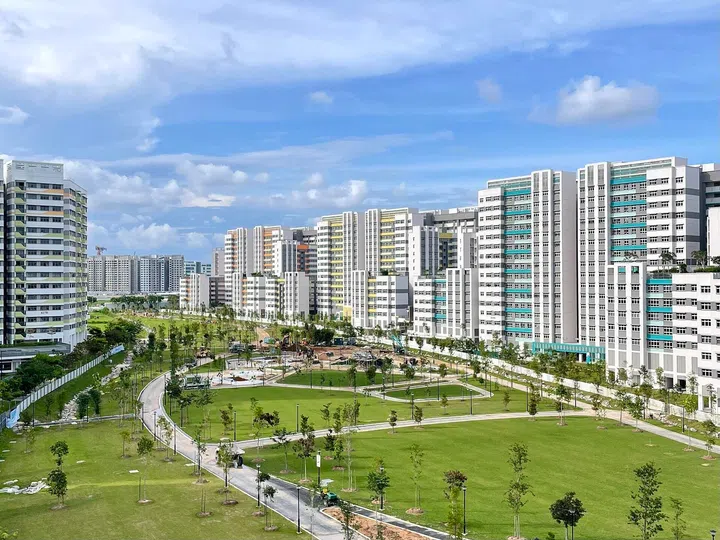
Tampines Boulevard Park
2020 to today: A focus on town planning
By 2010, the HDB’s initial 21,000 flats grew to a whopping 1 million! During this decade, a rapid increase in property demand meant an increasing number of HDBs springing up, including the creation of new housing neighbourhoods, like Punggol Matilda and Tampines North, as well as an entire development of 100,000 BTOs! Various types of new housing options became available, for example, the 2-room Flexi scheme.
Whilst the 2010s honed in on increasing the amount of properties and new types of housing grants, and the HDB landscape was well-established in its 60th year, the 2020s so far have focused on improving the town planning of HDBs in Singapore.
The year 2020 saw a global shift. During this year, the Designing for Life Roadmap was created, focusing on improved planning and design layouts to encourage better mental, social and physical well-being.
Catering to older Singaporeans, a new HDB model was launched later in 2021: the Community Care Apartment (CCA), offering senior-friendly homes with applicable care facilities.
In 2023, CPF Housing Grants for resale flats were increased. This same year, a new category was created, First Timer (Parents & Married Couples), for first-time buying, younger families.
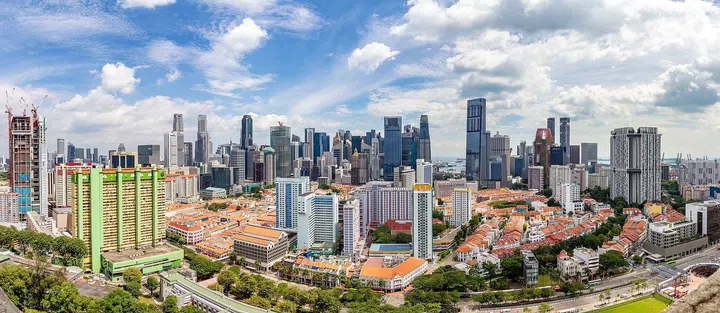
In 2024, new BTO projects were reclassified into Standard, Plus or Prime, including various levels of subsidies and restrictions, like town-based classification. Also in 2024, 2-room Flexi BTO flats in any location in Singapore became available for purchase to singles.
The Family Care Scheme (FCS) was created in 2025, specifically relating to BTOs. Married and single children-families who wish to buy a home near their parents or with their parents are now granted priority access.
As each year passes, Singapore’s Housing & Development Board continues to make improvements, benefitting first and foremost the people of Singapore, along with better living standards.
Marking its 60th year of independence, we can only imagine the continued transformation our beautiful Singapore is set to see in the next 60 years! Here’s to more unity, growth and prosperity, S’poreans.
SPH Media is a principal partner of National Day 2026