
Property agents need to close 3 transactions (per 3 years) or risk retaking exams
These changes, which will kick in from Jan 1, 2027, are part of a wider industry review aimed at raising professional standards.
By Joyce Lim -

Share this article
Property agents who fail to complete at least three transactions over a three-year period will have to pass a refresher examination to remain in the industry.
Property agents’ license valid for 3 years from 2027
This requirement will take effect as the Council for Estate Agencies (CEA) extends the validity period of agent registrations and agency licences from one year to three years.
These changes, which will kick in from Jan 1, 2027, are part of a wider industry review aimed at raising professional standards, improving transparency and giving consumers greater clarity and choice.
Speaking at the Singapore Estate Agents Conference on July 28, 2026, Senior Minister of State for National Development and Transport Sun Xueling said: “Consumers should be able to trust that their property agent’s advice reflects the latest rules and regulations.”
While most agents continue to upgrade themselves, stay active in the market and serve their clients professionally, feedback had been received on whether those who had not completed property transactions over extended periods remained current in their knowledge, she said.

Senior Minister of State for National Development and Transport Sun Xueling speaking at the Singapore Estate Agents Conference on July 28, 2026.
40% of property agents didn’t close 3 transactions (in 3 years)
A CEA spokesman said that as at Jan 1, 2026, about 40 per cent – or 12,920 – of the 32,967 agents who had been registered since 2023 did not complete at least three residential transactions between 2023 and 2025.
2 Residential transactions per agent annually
In the same period, the median number of residential transactions completed by each agent annually was two, she added.
Under what CEA described as a “currency requirement”, agents who do not reach the three-transaction threshold and fail the refresher exam will have to leave the industry. If they wish to return, they will have to pass the Real Estate Salesperson examination.

38,162 Property agents in 2026
As at July 1, 2026, there were 38,162 property agents and 1,018 property agencies registered with CEA.
The new rules come amid concerns that a significant proportion of agents may not be actively facilitating property deals.
Public expects property agents to close deals every year
Around nine in 10 consumers surveyed in CEA’s 2024 Public Perception Survey said they were satisfied with the services of their agents. But 74 per cent expected agents to complete at least one transaction a year to remain registered so that they would stay familiar with the latest rules and guidelines governing property transactions.
CEA executive director Chan Khar Liang said in a media statement on July 28: “During our engagements with industry stakeholders, they have consistently highlighted the potential risk posed by property agents who do not complete transactions regularly.”
He added: “These agents may be less familiar with evolving rules and regulations, property transaction processes, and market trends, which could inadvertently affect the accuracy of advice given to clients.”

Changes to take effect from end 2026
Agencies and agents renewing their registrations at the end of 2026 will enter the first three-year cycle, running from Jan 1, 2027, to Dec 31, 2029.
If an agent joins the industry later in the year, his registration will also end on Dec 31, 2029.
License renewals to take place at the end of each year
This reduces the administrative workload for agencies as they would have to manage the renewal of licences and registrations only once at the end of each year, rather than multiple times a year.
Under the currency requirement, there will be some flexibility for new entrants and agents facing exceptional circumstances.
In their first year, new agents will not have to complete any transaction, giving them time to build their skills and client base. To qualify for renewal, they must complete at least two transactions in the remaining two years of the registration period or pass the refresher exam.
Further details of the refresher exam will be announced by the first half of 2029.

Agents can appeal to CEA for waivers
Agents who fail to meet the requirement due to extenuating circumstances – such as serious medical issues or involvement in complex property transactions that may take more time – may be considered for waivers on a case-by-case basis, said CEA.
ERA Singapore key executive officer Eugene Lim said the currency requirement could lead to “some attrition among agents who have retained their registrations but are no longer meaningfully active in the industry”.
The new rule could shift agencies’ focus from overall headcount to the productivity and development of individual agents, added Lim, who is also president of Singapore Institute of Estate Agents.
Complements Continuing Professional Development
The currency requirement, which was developed in consultation with the industry, complements the existing Continuing Professional Development (CPD) regime.
Since Jan 1, agents have to complete 16 CPD training hours per year to maintain their registrations. This requirement will continue to apply after the validity period of registration is extended to three years.
CEA will also begin collecting commission data from property agencies and may eventually publish “aggregated, anonymised industry-level information” to help prospective property agents make better-informed career decisions, said Sun, adding that individual agents’ commission figures will not be published.
She also noted a common concern raised by both property agents and consumers about the prevalence of inaccurate, fake, duplicate and unauthorised property listings.
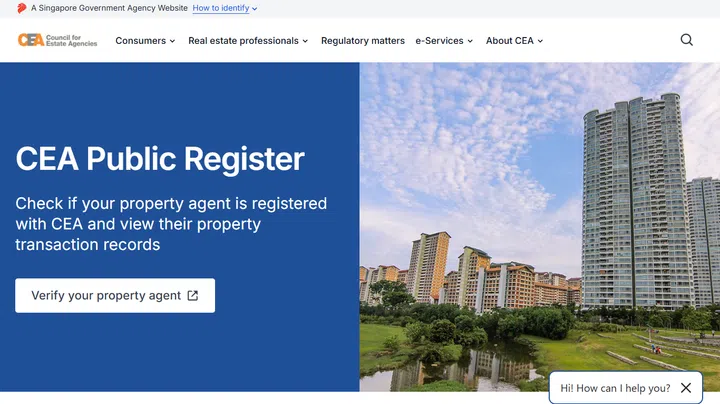
New CEA platform to tackle fake listings
To address this, CEA will launch a full-scale platform in 2027 to verify the authenticity of online property listings. It is also considering publishing consumer ratings of agents on its public register and making the register easier for consumers to access.
Other proposals in the pipeline include requiring agents and their clients to sign an Estate Agency Agreement before work begins, with agents disclosing whom they will be collecting commission from. CEA also plans to survey agents on the support they receive from their property agencies.
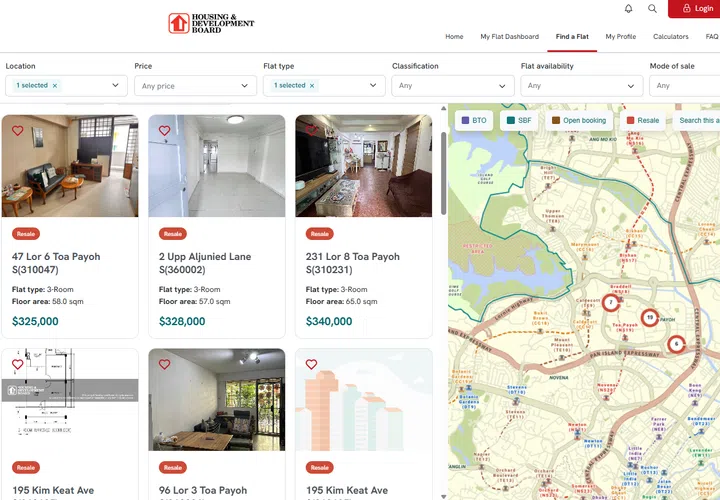
HDB Resale Flat Listing
Separately, the authorities are considering making the Housing Board’s Resale Flat Listing service the default platform for HDB resale advertisements.
Currently, it is not mandatory for property agents and sellers to list HDB resale listings on the platform.
Since its launch in May 2024, more than 12,500 verified listings have been published, with over 60 per cent resulting in completed resale transactions, said Sun.
HDB will seek feedback from buyers, sellers and agents before deciding on further enhancements to the service.
The authorities are also considering allowing sellers to list their properties directly on commercial portals, giving those who prefer to transact without an agent greater visibility and more options, added Sun.

Property agents have mixed views about changes
The agents The Straits Times spoke to welcome the currency requirement but had mixed views on some changes under consideration.
PropNex associate group district director Loyalle Chin said that while greater transparency in the industry should be welcomed, the currency requirement must be backed by robust checks to ensure the deals were genuinely handled by the agents credited for them.
“For example, an active agent could pass transactions to a spouse who is registered but inactive, simply to help that person meet the threshold,” he said.
“There should therefore be a more thorough assessment to verify that the agent actually carried out the work, rather than allowing agents to rely on personal relationships to earn quick commissions.”
Nicole Teo, a deputy branch associate director at OrangeTee, said releasing anonymised commission figures could help agents benchmark their performance against the wider industry rather than rely on anecdotal information. However, she added that how the data is used and protected would be critical.
Geryl Lim, another deputy branch associate director at OrangeTee, said gross commission figures could be misleading as they exclude business expenses. He noted that some agents spend tens of thousands a year on advertisements and subscriptions on property portals.
Teo also supports the removal of fake listings but questioned who would police advertisements posted by owners.
“If anyone can transact, why put real estate salespersons through such exams and regulate the industry?” she said, adding that owner listings could weaken safeguards and erode agents’ livelihoods.
This article was first published in The Straits Times.