
Subsidy clawback, 10-year MOP for new prime location HDB flats to keep them affordable
By Michelle Ng -
Share this article
If you're planning to purchase a Housing Development Board (HDB) flat in a prime location next time, you might have to wait 10 years for the minimum occupation period (MOP) to be over. Plus, additional subsidies will be clawed back by the government when you sell your flat.
These are among the key measures under a new prime location public housing (PLH) model, aimed at keeping prime HDB flats affordable and inclusive, announced by National Development Minister Desmond Lee on Tuesday (Oct 26).
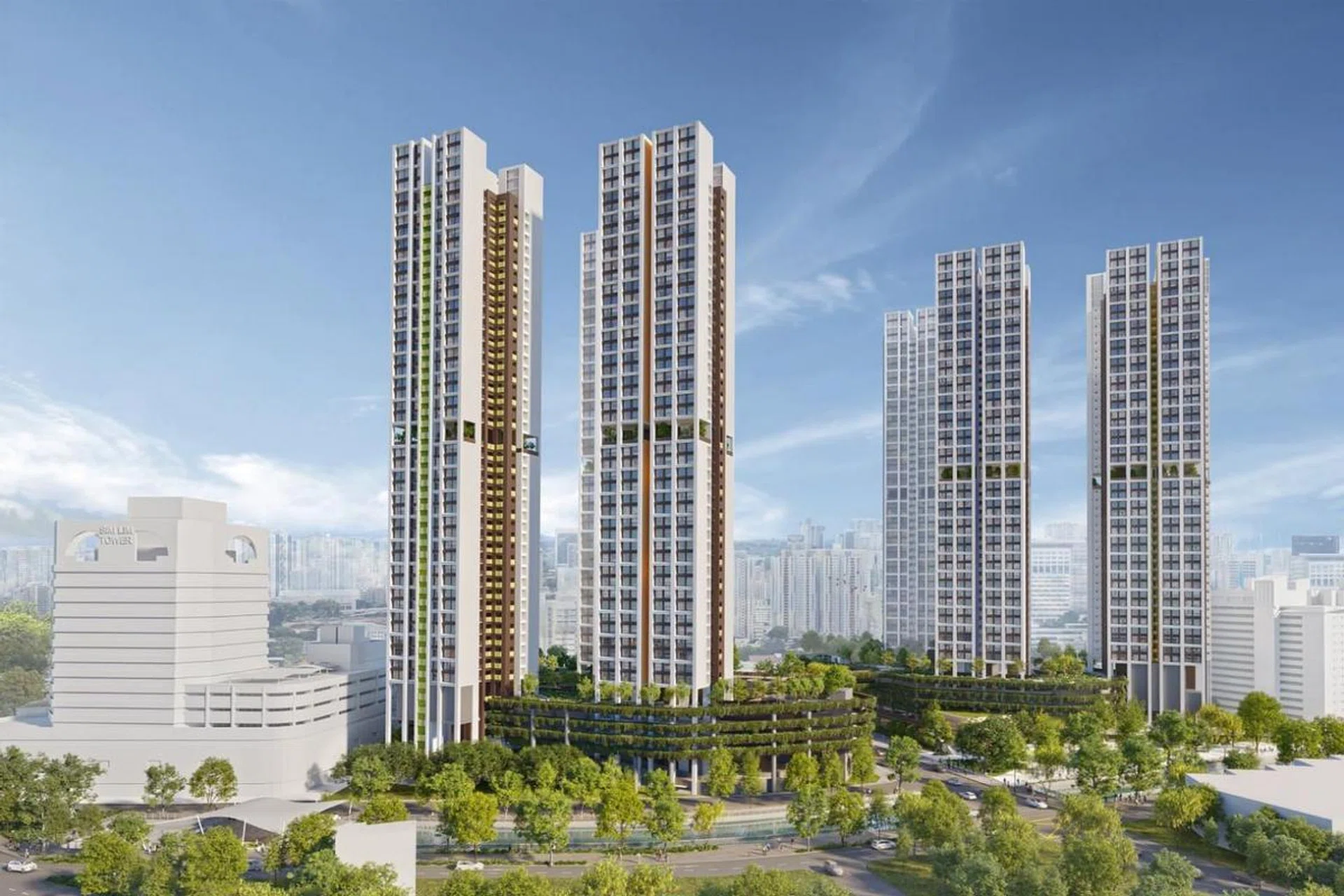
The first Build-to-Order (BTO) project under this model will be located in Rochor and launched next month.
The pool of resale buyers of these prime HDB flats will also be limited to households who earn not more than $14,000 a month and at least one applicant must be a Singapore citizen.
Under the PLH model, fewer flats may be set aside under HDB's Married Child Priority Scheme, which gives priority to applicants whose parents or children live in the same area.
Currently, up to 30 per cent of new flats are set aside under this scheme for families buying a flat for the first time.
At a media briefing on Tuesday, Mr Lee said the new model is to keep public housing in prime locations affordable, accessible and inclusive for Singaporeans, both at the initial purchase and at subsequent resales on the open market.
The PLH model will apply only to future public housing in prime locations and not to existing flat owners.
In order for HDB to launch these prime flats at affordable prices at the BTO stage, it has to provide additional subsidies on top of the those provided for all BTO flats, said Mr Lee.
"But the concern is whether this would lead to the lottery effect, excessive windfall gains and whether it would be fair to BTO buyers in other parts of Singapore, who would not get these additional subsidies," he said.
A record number of HDB flats have changed hands for at least $1 million this year.
In the first nine months of this year, there were 174 million-dollar HDB flats, compared with 82 for the whole of last year, which raised eyebrows and set off concerns about home affordability.
They came on the back of a buoyant HDB resale market, in which resale flat prices also hit a record high in the third quarter of this year.
To address these concerns, the Government will claw back additional subsidies provided to PLH flats.
Flat owners will pay a percentage of the resale price to HDB when they resell their home on the open market for the first time, he said.
This will apply only to those who bought the flat from HDB and not to subsequent resale transactions.
The exact percentage will be announced at the launch of the Rochor BTO project next month, which is the first site under the PLH model, and may be adjusted for other projects in the future, he said.
Other prime locations for public housing include the future Greater Southern Waterfront.
However, buyers who want one of these flats on the resale market will have to meet the prevailing eligibility conditions for buying a flat directly from the HDB .
These include having at least one applicant who is a Singapore citizen, meeting the household income ceiling of $14,000 and not holding a private property or sold any in the last 30 months.
"Without such restrictions, the resale prices of these homes in prime locations may rise beyond the reach of many Singaporeans over time," said Mr Lee.
The first BTO project under the PLH model will be located in Rochor and launched in November. PHOTO: HDB
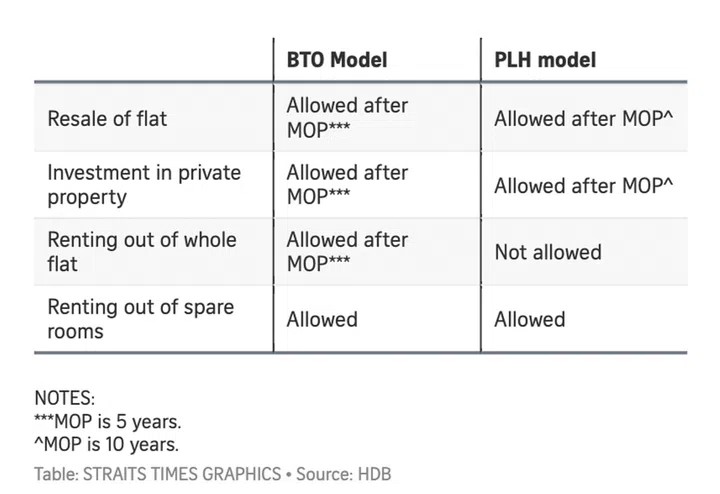
To ensure buyers are genuinely buying the flat to live in, instead of hoping to flip it for a windfall, the MOP for prime location HDB flats will be extended to 10 years, up from the current five.
Owners will also not be allowed to rent out their whole flat at any point in time, even after the MOP is over.
These conditions will apply to all flat owners who purchase BTO and resale flats under the PLH model.
The resale restrictions will be in place for at least half of the 99-year lease of each prime location HDB flat before the Government considers whether to review them, Mr Lee said.
"These policies will help to strengthen the owner-occupation intent of public housing and also seek to deter speculative demand and moderate resale prices," he added.
Key Eligibility Conditions for Purchase (Three-room and Larger Flats)
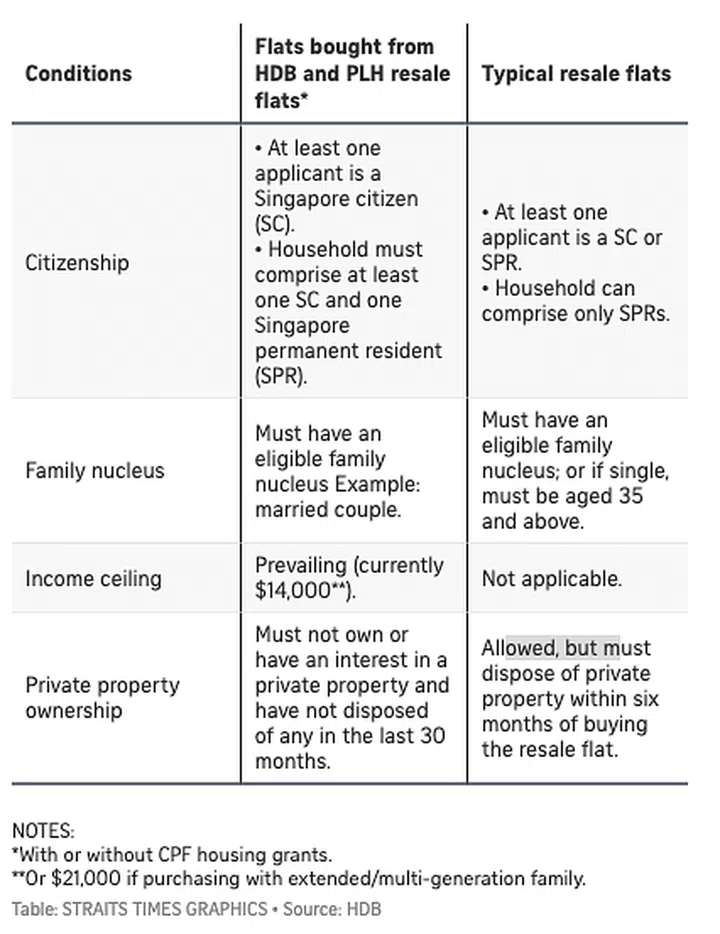
However, HDB housing grants will still be available for eligible buyers and the prevailing ethnic quota under HDB's Ethnic Integration Policy will apply.
Public rental flats will also be included at these sites where feasible, said Mr Lee.
He added that the new PLH model, which comes after almost a year of public consultations, strives to balance the many considerations and trade-offs, while fulfilling the key social objectives of public housing.
"As with all our policies, the new PLH model is not cast in stone. It is very new and we will continue to review the parameters over time, based on our experience from the projects that are launched along the way," he said.
Ownership conditions for BTO model versus PLH model
Originally published in The Straits Times.