
She Was Ashamed of Her Tiny HDB Flat. It Ended Up Defining Her Career.
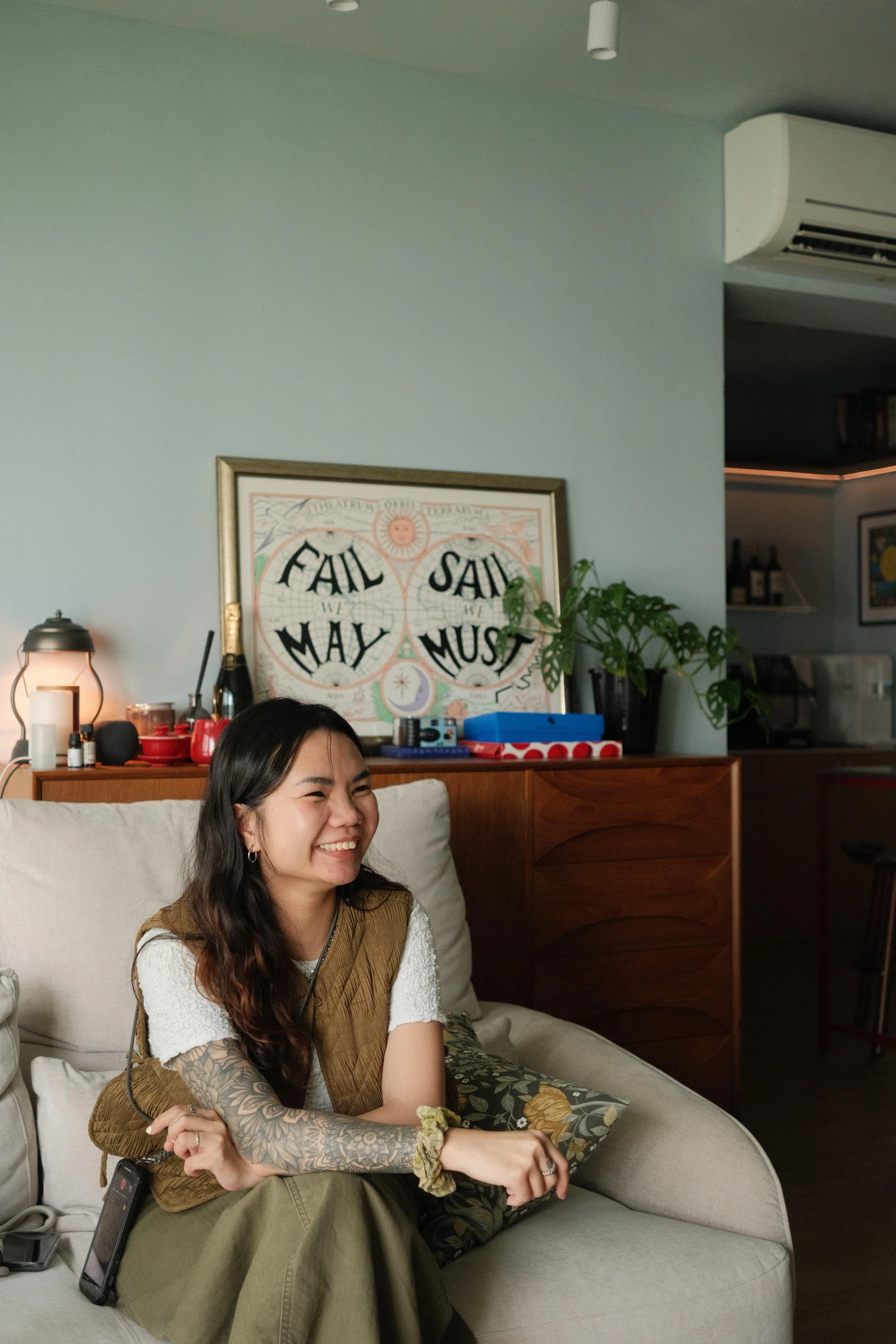
Knock Knock Studio’s founder, Jade Chiam, shares how growing up in a cramped HDB studio apartment taught her lessons she could never learn in design school.
By Joyce Yang -
Share this article
This article is part of Home & Decor’s monthly editorial topics series — crafted around real, current problems that many Singaporean homeowners face. Jam-packed with personal recounts, opinions, and expert takes, we hope that these weekly pieces will inspire you, and bring you solutions that you can take into your own home.
March’s topic: ‘Living Big in Small Spaces’. Article 1/4.
When Jade Chiam was in school, she would feel embarrassed whenever her friends talked about their homes. She avoided saying much about her own, a 3-room HDB studio apartment primarily built for elderly residents.
“At that age, your living arrangements were a symbol of status, and mine was one of the lowest,” she recalled.
Downgrade from Private Property to HDB Studio
That year, financial difficulties had forced her family of six to downsize from a spacious private property. Up to that point, Jade had enjoyed a comfortable childhood, with a helper at her service and all the toys and books she could possibly ask for.
“When I was a kid, I would even set up a small ‘library’ at home, stamping the front pages when my siblings pretended to borrow them,” Jade recalled, adding that downsizing meant bidding goodbye to some of her prized possessions.
“To me, it felt like we had lost everything.”
In Jade’s new home, space was scarce. The only spot she could truly call her own was the back of a bedroom door, which she decorated with stickers while wondering how soundly her friends must sleep in bedrooms of their own. As she grew older, she took to Tumblr, reposting images of beautiful rooms and imagining what it would be like to live in them.
In hindsight, those moments of yearning – spanning the years she spent in the studio apartment – had already begun steering her toward a future in interior design.
“As a child, I resented my parents for putting us through all that. Now, I’m proud to share how staying in a small home has shaped me.”
Creating within constraints
When Jade graduated with a degree in accountancy in 2015, she took a leap of faith by joining an interior design firm with no formal training or experience.
Today, she’s the founder of Knock Knock Studio and one of the few Singaporean designers to be featured on ‘Never Too Small’, a popular YouTube channel that spotlights small spaces around the world.
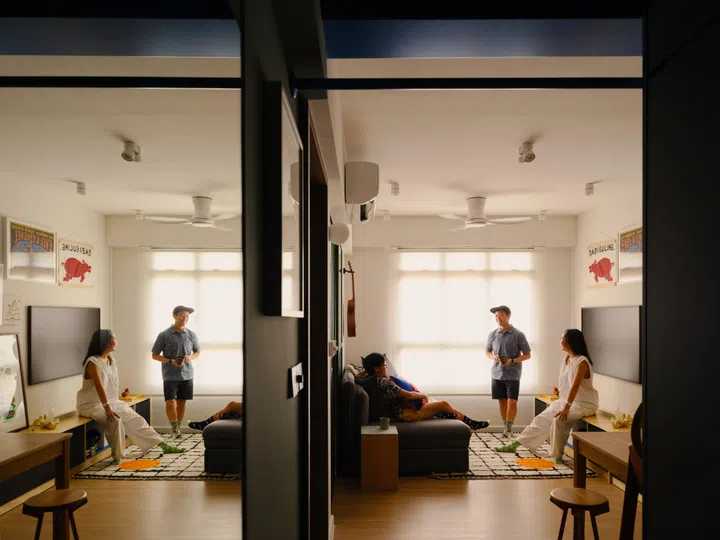
2-Room HDB in Sengkang
The project in question is a 2-room HDB flat in Sengkang which, among many things, showcases custom furniture Jade designed from scratch: a mobile kitchen island with a built-in laundry hamper, and a storage bench that slides neatly under the TV console.
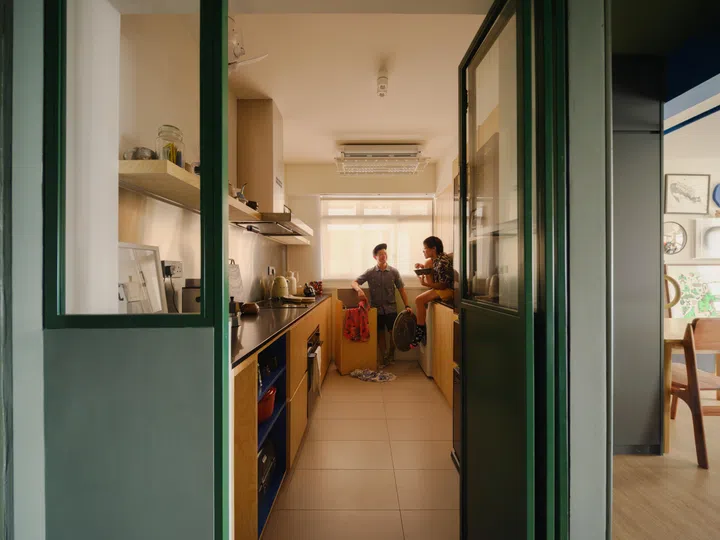
What the 10-minute video does not show, however, is the inspiration behind these pieces.
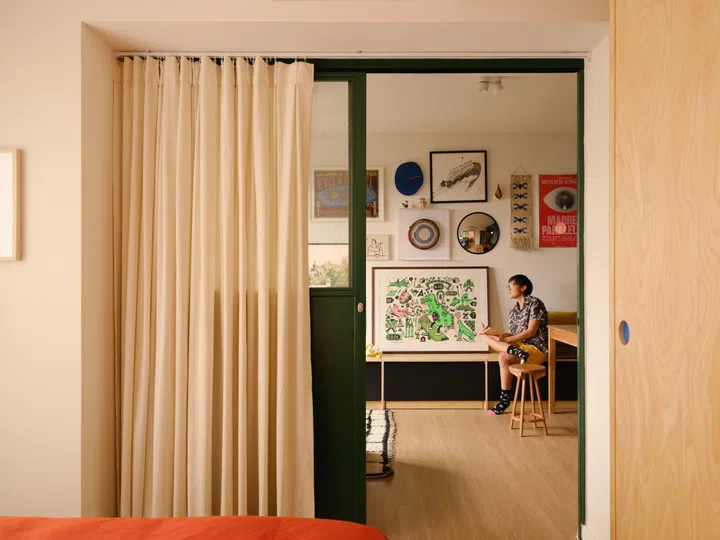
Growing up, Jade watched her father – a metal fabricator by trade – come up with “ugly but useful” solutions to make the downsizing easier on them. To give each child a sense of privacy, for instance, he used Toyogo boxes to create a “cosy corner” for her sister and her Hello Kitty dolls, and used a curtain to separate her brother’s sleeping area from the living room.
“Thinking back, it was pretty cool that we had little sections for ourselves,” Jade said.
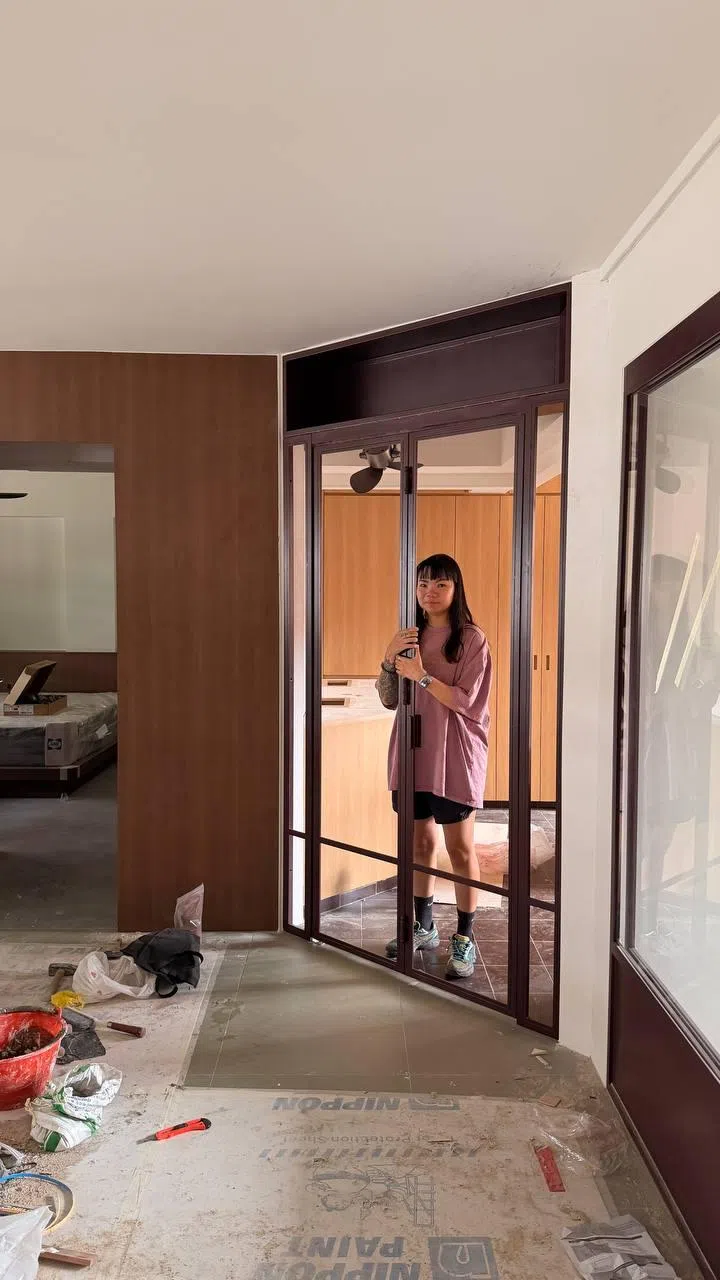
Today, Jade applies the same philosophy when demarcating small spaces, and is particularly fond of using wardrobes as dividers. When that isn’t possible, she uses changes in lighting and materials to signal transitions between spaces.
“Having a dad who likes to build random stuff to make life easier taught me that anything is possible if we think creatively.”
Having once shared a bomb shelter-turned wardrobe with her siblings, Jade also learned that many tensions in small homes stem from unclear ownership of space. To reduce friction, she plans storage deliberately, assigning specific units to specific people and purposes.
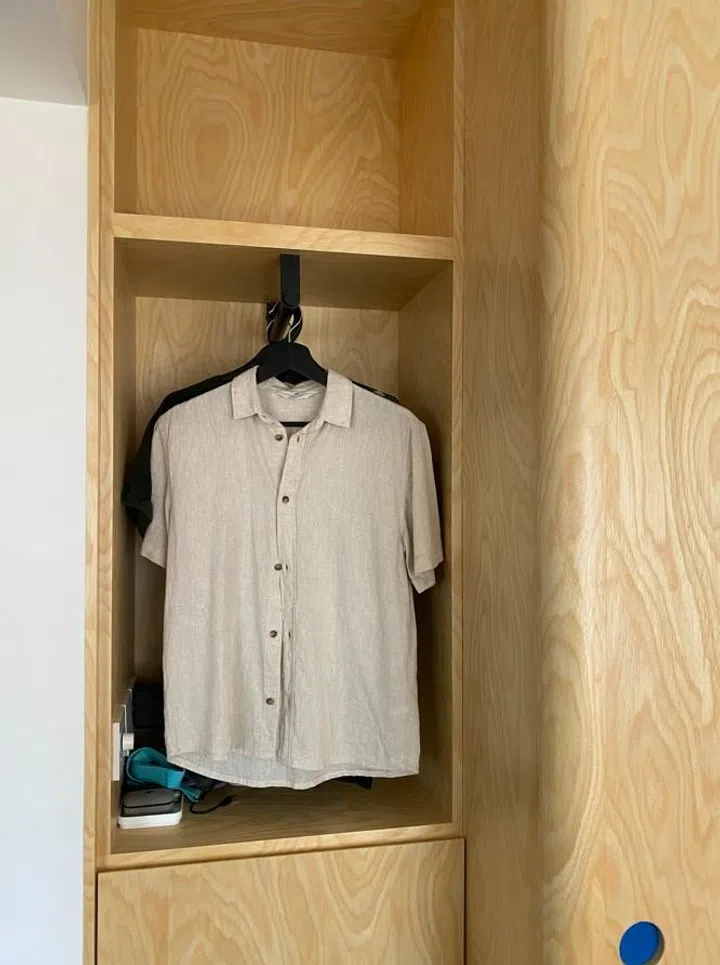
In the Sengkang HDB flat, for example, she built the wardrobe with an open cabinet at one end. This allows frequently worn clothes to be accessed easily, without forcing homeowners to navigate the narrow passage between the wardrobe and bed.
“I think my experience has made me more sensitive to the way a space affects daily life, and how good design can reduce friction even within a small footprint.”
Rediscovering what matters
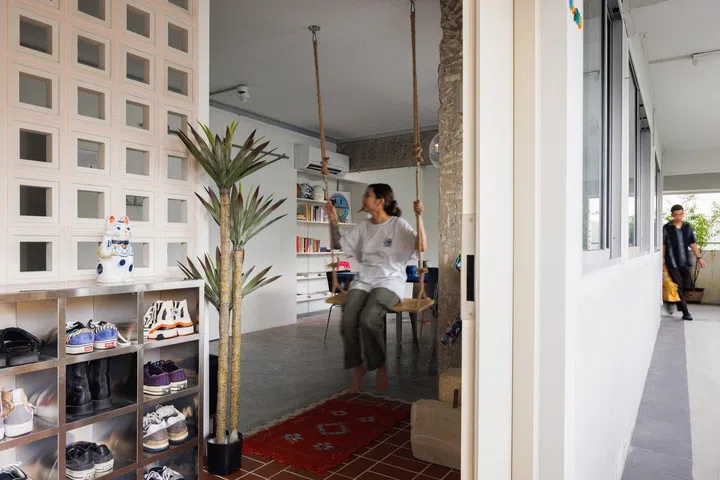
To the untrained eye, small homes may seem easier to design. But according to Jade, the opposite is true. It’s harder to hide bad design in small spaces, she said, as every decision becomes amplified.
“Small homes feel intimate and honest, and there’s something very pure about that.”
Just as designing a small space is a test of a designer’s skill, living in one is an exercise in restraint for its homeowners. They have to let go of the idea that more is always better and start curating their belongings, even if it means throwing out items with sentimental value.Jade, for one, noted that she hasn’t kept a single report book from her schooling days.

“If you approach this process with resentment, it will feel restrictive. But if you approach it with intention, it can be very freeing,” she said.
“Personally, I’ve realised I don’t need a lot of things to feel good,” she said.
Reflecting on her own experiences with her family, she added that sharing a small space can strain relationships, as emotions are easily heightened when disagreements unfold in close quarters.
“There’s nowhere to withdraw when you feel overwhelmed, but there was also an unexpected sense of closeness. We became highly aware of one another’s habits and learnt to understand and respect each other’s needs.”
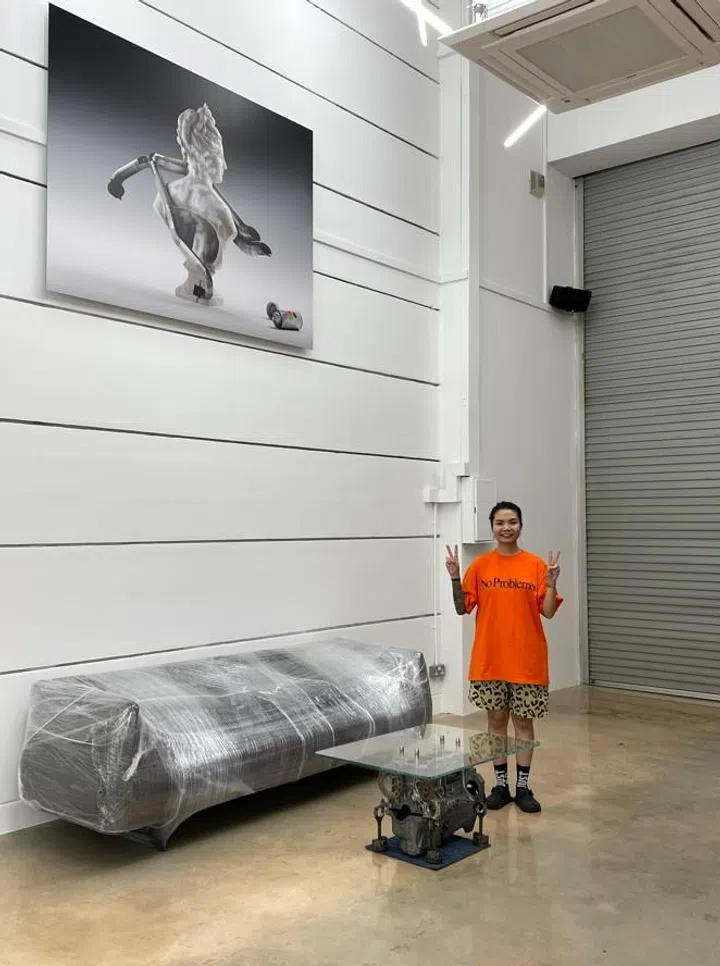
A few years ago, Jade experienced a full-circle moment when the same home that put her on this path needed to be redesigned for her mother, who had been diagnosed with cancer and was struggling with mobility. She rose to the occasion: measuring the space, discussing the options with her siblings, and going to IKEA together to shop for furniture.
Piece by piece, Jade and her siblings assembled everything themselves, easing their mother into this new chapter of life in the same way their father had once eased them into theirs. The transformation was modest compared to Jade’s other projects, but it reminded Jade why she had chosen this path.
“Interiors are not just about aesthetics, but about improving a person’s quality of life. In the end, a home isn’t defined by its size, but by how it supports the people inside it.”