
Share this article
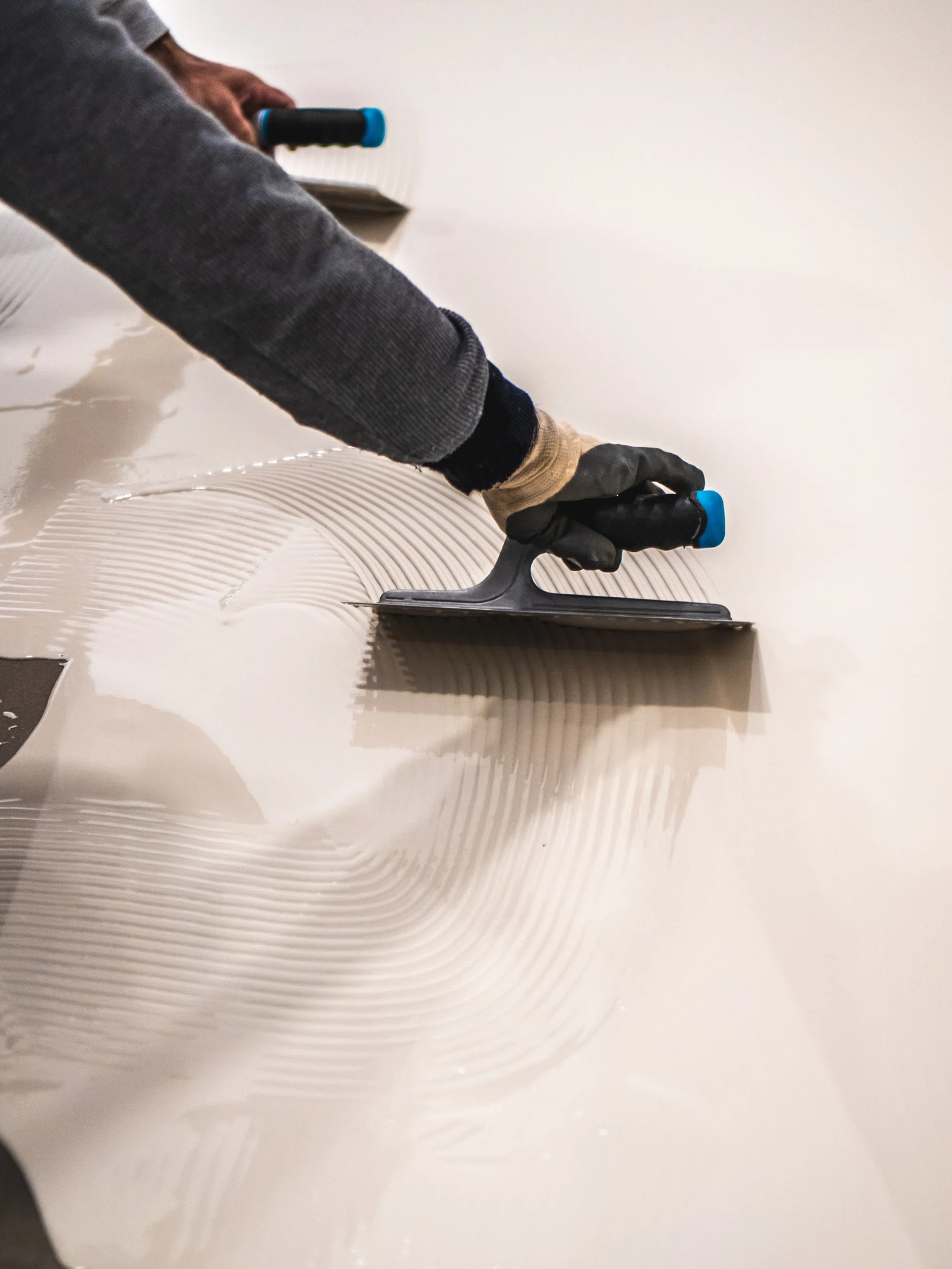
Microcement, also known as microconcrete or microbeton, is a decorative, cement-based coating used in modern home renovations. It creates a seamless, minimalist finish that can be applied to various surfaces, including walls, floors, stairs, kitchen counters, and even furniture.
Made from a mix of cement, resins, additives and pigments, microcement is applied in thin layers—usually just 2 to 3 millimetres thick—and sealed with a protective topcoat for water and stain resistance. It’s valued not only for its sleek, contemporary appearance but also for its versatility, durability, and ability to bond to almost any surface without needing to remove existing finishes like tiles or concrete.
Microcement originated in Spain in the late 20th century, growing out of industrial flooring techniques. It was initially developed as a practical, hard-wearing material for commercial and high-traffic environments, but soon gained popularity in residential design due to its refined texture and wide colour range. Its use spread throughout Europe and later to other parts of the world, becoming a hallmark of modernist and industrial-style interiors.
| Microcement Shop | Price Range |
|---|---|
| Aftertouch Works | $175 - $250 psf |
| CimentArt Singapore | $180 - $230 psf |
| Kraffit | $4,500 for bathroom |
| KWIX Solutions | Send floor plan for price quote |
| MicroLux | Send floor plan for price quote |
| FloorXpert | Send floor plan for price quote |
| Waldec | $1,382 - $1,467 |
| Lamitak | $69 per sheet of 4” x 8” |
Aftertouch Works
Aftertouch Works is a local surface design studio specialising in microcement, lime plaster, limewash, and Tadelakt. They are known for their expertise in creating seamless, durable, and aesthetically pleasing surfaces for both residential and commercial spaces.
For microcement, there are 3 types of materials provided - traditional microcement, acrylic modified microcement and Epoxy based microcement.
Traditional microcement mainly contains sand, white cement and acrylic resins. It requires a layer of polyurethane coating to prevent the porous looking surface and it is slightly harder than parquet. It can be applied to any surface but is not recommended for wet areas.
Acrylic modified microcement is generally the same except that it does not contain cement but minerals, making it much less permeable than traditional microcement. It can be used for wet areas and has a monotone effect when applied. Epoxy based microcement mainly contains sand, minerals and epoxy resins. It is waterproof even without the polyurethane coat, has a superior hardness and can be used for commercial floor projects and wet area floors.
For microcement works on dry and wet areas, Aftertouch Works has listed out some requirements and guidelines to follow before their takeover of the project. This includes having self-levelled cement or tiles without embossment or designs for them to apply the microcement on.
The detailed guidelines are all clearly published on their website, which makes it a lot easier for new homeowners who are doing their research. There is also a price list on the website itself detailing the estimated cost for each type of work, so there is transparency in the prices they charge.
- $175 per square feet for Traditional microcement (dry area)
- $175 per square feet for Acrylic modified microcement (dry area)
- $250 per square feet for Epoxy based microcement (dry area)
- from $1,000 for Acrylic modified microcement (wet areas)
- from $1,300 for Epoxy based microcement (wet areas)
Phone: +65 9296 4453. Address: 48 Hillview Terrace, #04-08, Singapore 669269 (By appointment only)
CimentArt Singapore
CimentArt is a Spanish company specialising in the manufacture and distribution of high quality microcement products. Established in 2010, CimentArt has expanded its presence globally, including in Singapore.
Their showroom at Woodlands offers a range of products including Traditional microcement that has a seamless finishing and is suitable for various surfaces, AQUA series which is the waterproof microcements used for wet areas such as bathrooms and kitchens, Decorative finishes that include oxide and metallic microcements to provide unique aesthetic effects, and the MicroStucco that offers a marbled finish with a soft, elegant texture.
CimentArt is a renowned brand globally, hence there is some assurance in the quality of products especially if you are a fan of the European Stucco textures.
Price: A customer review quoted $180 per square feet for traditional and $230 per square feet for Aqua.
Website: cimentart.sg. Phone: 6362 2608. Address: 61 Woodlands Industrial Park E9, #06-04, E9 Premium, Singapore 757047
Kraffit
A fairly new company, Kraffit was established in 2020, specialising in microcement applications, Terrazzo and concrete customisation, lime paint and plasters.
The microcement offered include satin, matte and gloss finishing with key features such as anti-fungal, fadeproof, waterproof, crackproof, fast drying, fire retardant and low carbon footprint. The design styles are also versatile, whether you are going for the industrial look, scandinavian or wabi sabi aesthetics, Kraffit is able to provide a microcement solution accordingly.
The cement used is from Germany and Kraffit is able to customise the colours directly so that you can achieve a unique colour that is tailored to your preference and home interior. Quotation is also given upon viewing of your floor plan or actual viewing on site.
Price: From $4,500 for 1 bathroom floor and wall
Website: kraffit.co. Phone: 8608 6900. Address: 1 Soon Lee St, Pioneer Center, #04-54, Singapore 627605 (By appointment only)
KWIX Solutions
KWIX Solutions is a local company specialising in comprehensive building materials and surface finishing solutions. Their offerings include microcement applications, terrazzo flooring, epoxy coatings, and marble polishing, catering to both residential and commercial projects.
With full five star ratings on Google reviews, most customers speak positively about the team’s professionalism in both the work delivered and the customer service. A review about the quality of the microcement mentioned, “the quality of microcement used is far different from others on the market. It’s not hard to walk on and cold to the touch like others.”
Microcement often leads to issues if not handled properly by trained professionals and many homeowners are faced with project delays due to the need to redo the entire flooring. If you are worried about delays in handover, you can be rest assured as one of the customers reviewed, “I had my studio floor and walls done up in microcement by KWIX. I was super impressed by the speed of completion of the project. The team is experienced and finished the project ahead of time!”
Price: Upon confirmation of floor plan
Website: kwixsolutions.com. Phone: 9847 0015 / 8688 3073. Address: 63 Hillview Avenue, Lam Soon Industrial Building #08-06, Singapore 669569
MicroLux
MicroLux is the microcement wing of PanelCraft Pte Ltd, a Singapore-based company that offers modern surface finishing solutions. Designed for both residential and commercial applications, MicroLux provides a seamless, durable, and aesthetically pleasing alternative to traditional materials like tiles and concrete.
If you are thinking twice about microcement because you are not keen on the dull industrial look, MicroLux might be the one to change your mind as they offer a range of 34 colour codes for their microcement products.
A look at their Instagram page, it seems that MicroLux is experienced in application of microcement in wet areas such as bathrooms and kitchens and also over carpentry, making them a reliable professional as microcement needs to be handled with high level of skills and care.
Price: Upon confirmation of floor plan
Website: microlux.sg. Phone: 8161 6271. Address: 6 Harper Rd, #02-07, Singapore 369674
FloorXpert
Established in 2010, FloorXpert offers premium flooring solutions with a diverse range of products, including vinyl, laminate, engineered wood, microcement, and outdoor decking. It started as a small family-owned business, and today they are the exclusive distributor of Belgium-made LURF® vinyl floors by Quick-Step, known for their durability and realistic wood aesthetics.
The microcement products used are from Topcret’s BAXAB® that is a 3mm thick smooth cement and polymer coating with great adhesive qualities for multiple surfaces. It is ideal for quick renovation projects as it does not require removing existing surfaces, thus saving both time and money.
All Topcret products are waterproof and slip-proof, making them versatile enough to be used across all types of surfaces including bathrooms and kitchen tops. There are a total of 8 colours to choose from but the colour palette leans towards the grey and darker shades, which would be perfect for those who are going for the industrial and sleek look.
However, do note that FloorXpert is only able to do microcement on dry areas.
Price: Upon confirmation of floor plan
Website: floorxpert.com. Phone: 6749 3128. Address: 71 Tannery Lane, #02-02, City Industrial Building, Singapore 347807
Waldec
If you are up for DIY, Waldec is an online shop to check out. Offering a wide range of coating products, Waldec imports and distributes high quality special architectural materials including concrete, mineral plaster, lime paint and microcement.
Waldec offers 4 different brands of microcement and the Wall2Floor Waterproof microcement is from Novacolor Italy. Wall2Floor is a multi-layer mineral system that allows for seamless, continuous coverings on horizontal and vertical surfaces. It is particularly suitable for humid environments and is highly resistant to wear and scratches.
The Wall2Floor Waterproof comes with a Primer, Fibremesh, Rasal base, Rasal Epoxy binder, Wall2Floor Waterproof Top Coat, Mineral Sealer and Topsealer. One set is generally able to cover approximately 20 square metres.
However, microcement requires skilled application as problems with water damage and cracking may occur if it is not sealed properly or if the base is unstable. Many reviews have also shown that poor workmanship will lead to growth of mould and algae especially in wet areas over time. Hence, it may be cheaper to DIY but you may have to do a lot of research on how to apply properly or you may end up spending more in the long run.
Price: $1,382 - $1,467
Website: https://waldec.com.sg/product-category/microcement/
Lamitak
If you are planning to design your house according to the trending wabi sabi look, Lamitak’s Salt Microcement is going to help you to achieve that. Lamitak’s Salt Microcement is a high-pressure laminate designed to emulate the refined, minimalist appeal of traditional microcement surfaces. It features a subtle Microdots texture, providing a soft, tactile surface that mimics the look of stucco, lime wash, or chalk paint.
The Salt Microcement laminate is popular for the clean and neutral tone that complements minimalist and wabi sabi inspired interiors. Its subtle texture adds depth and warmth, making it suitable for applications on walls, cabinetry, and custom furniture. It can also be applied onto doors to create a totally seamless and edgeless look, making the house look more spacious and open.
Besides the Salt microcement, Lamitak also offers other series - Smoke, Pebble and Mood with slightly different textures and colour tones. You may also request for a sample on their website before committing to the actual purchase. Alternatively, you may drop by their showrooms (there are 2) which offer a variety of laminates from wood to solids.
The 176 Google reviews mostly mentioned the large range of displays at the showroom and the knowledgeable service staff, and the biggest advantage would be the samples that you can bring home.
Price: $69 per sheet of 4” x 8”
Website: https://sg.lamitak.com. Phone: 6366 1212, 6592 5200. Address: 14 Senoko Loop, Singapore 758150, and 114 Lavender Street, CT Hub 2 #01-61, Singapore 338729

Frequently Asked Questions
Cement vs Cement Screed vs Microcement
- Cement is the core material used in many construction mixes.
- Screed is a thicker, levelling layer made from cement and sand.
- Microcement is a thin, decorative finish that offers both beauty and resilience, ideal for modern interiors.
Cement is a basic building material, typically a fine powder made from limestone and clay. When mixed with water and aggregates (such as sand or gravel), it forms concrete, which is strong and structural. Cement on its own is rarely used as a finished surface in homes—it’s a binder, part of the mix that makes concrete or mortar.
Cement screed, often just called screed, is a layer of cement and sand (sometimes with added fibres or other additives) laid over a structural concrete base. Its main function is to level and smooth floors before the final finish is applied, such as tiles, vinyl, or wood. Screeds are typically thicker than microcement—ranging from 25mm to 100mm—and are not usually decorative. However, in industrial or minimalist homes, some people choose to leave a polished screed exposed.
Microcement, by contrast, is a finish rather than a structural layer. Unlike screed, it is very thin and does not require a thick base. It can be applied over screeds, tiles, plaster, or even wood with minimal preparation. Its smooth, grout-free surface gives a continuous aesthetic, and it’s often chosen for wet areas like bathrooms and kitchens due to its waterproof properties once sealed.
Is microcement expensive in Singapore?
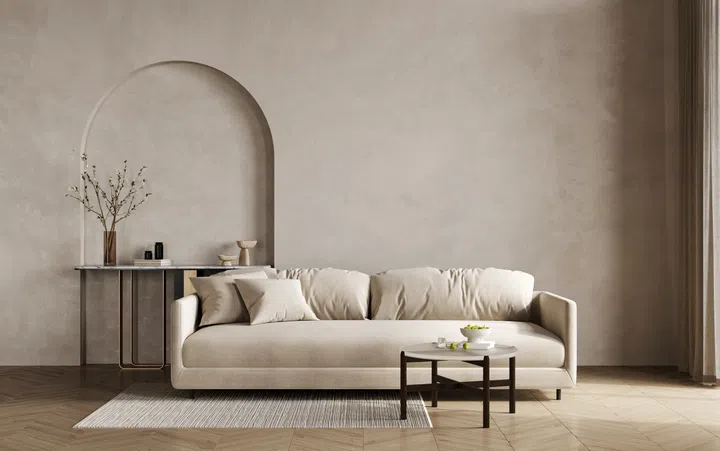
Microcement tends to be relatively expensive in Singapore compared to more conventional finishes like tiles or cement screed. According to our research, prices range on average $175 to $250 psf or $4,500 for a bathroom. This is largely due to the labour-intensive application process, which involves multiple layers and skilled workmanship to achieve a seamless, polished look.
The cost can vary depending on the surface area, complexity of the design, and the specific contractor or brand used, but homeowners can typically expect to pay a premium for its aesthetic appeal and versatility. While it’s often seen in high-end renovations or minimalist homes, some find the investment worthwhile for its durability, waterproof qualities, and modern finish.
Is microcement more expensive than tiling?
In Singapore, microcement is generally more expensive than traditional tiling. While tiles are mass-produced and widely available in various price ranges, microcement is a bespoke finish that requires skilled craftsmanship and a multi-step application process. The cost of labour for microcement is typically higher, as it involves careful surface preparation, layering, smoothing, and sealing.
Tiles, on the other hand, can be installed relatively quickly and replaced individually if damaged. Although microcement offers a seamless, modern look that many find appealing, it comes at a premium compared to the more economical and practical choice of tiling for most homeowners.

What are the disadvantages of microcement?
While microcement offers a sleek and modern look, it does come with several disadvantages that homeowners in Singapore should consider.
Firstly, it is relatively expensive compared to common finishes like vinyl or tiles, due to its labour-intensive application and the need for skilled professionals. It also requires a perfectly prepared substrate, as any imperfections beneath can eventually show through the thin layers.
In addition, although microcement is durable, it can be prone to scratching or staining if not sealed properly or maintained with care. Humid conditions in Singapore may also necessitate regular resealing in wet areas to maintain its waterproof properties. Lastly, repairs can be tricky, as patching up a damaged area may not blend seamlessly with the original finish.
Does microcement crack easily?
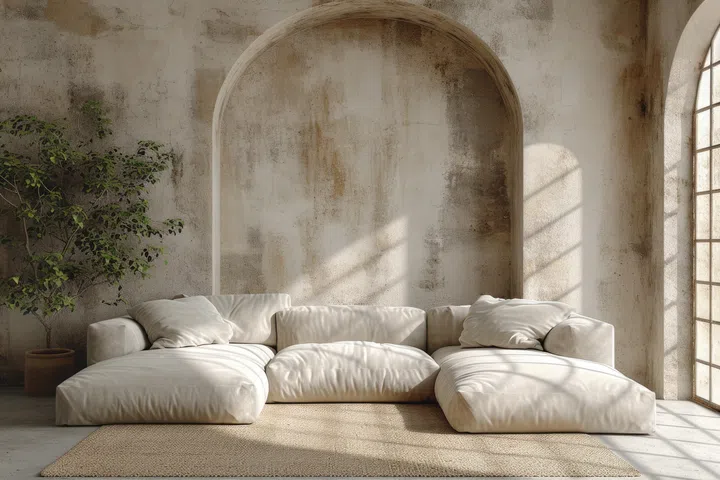
Microcement does not crack easily when applied correctly, but like any surface finish, it is not entirely immune to cracking—especially in Singapore’s humid climate and buildings with natural settling or movement. The material itself is flexible and applied in thin layers, which helps reduce the risk of cracking compared to traditional cement.
However, cracks can still occur if the underlying surface is unstable, if there’s poor preparation, or if structural movement happens underneath. To minimise this risk, it’s important to use experienced applicators who properly prepare and prime the substrate, and to ensure expansion joints are in place where necessary. With quality workmanship, microcement remains a durable and resilient finish.
Is microcement cheaper than polished concrete?
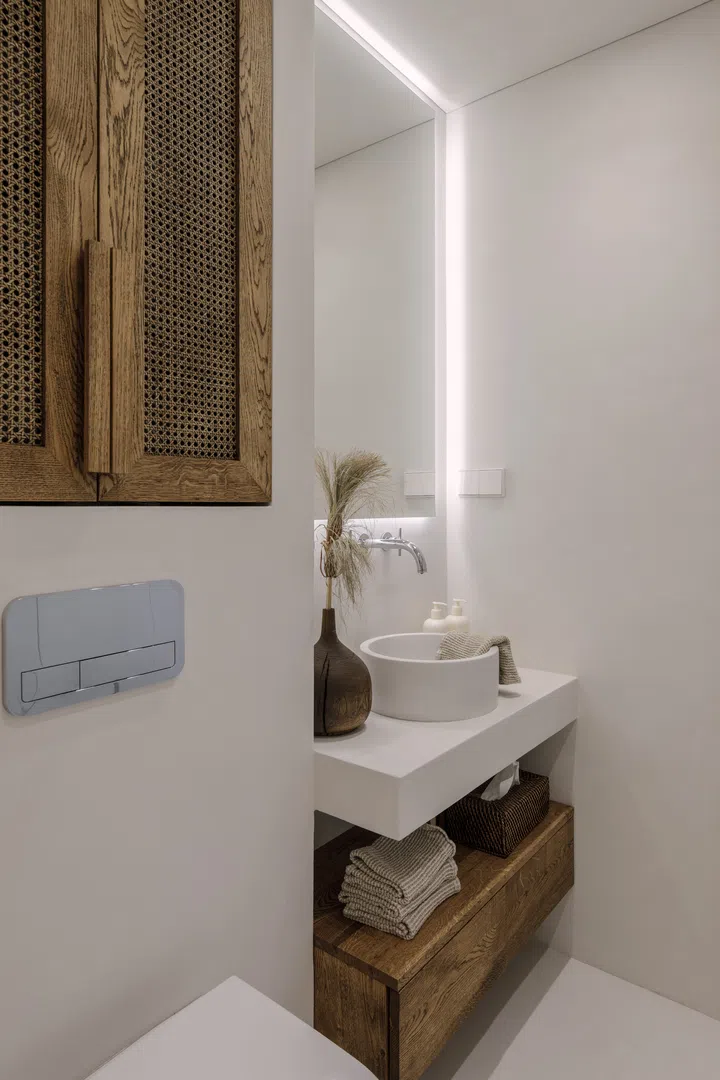
In Singapore, microcement is typically more expensive than polished concrete. Although both offer a sleek, seamless finish, polished concrete involves grinding down an existing concrete slab to achieve a smooth surface, which can be more cost-effective if the structural slab is already in place and in good condition.
Microcement, on the other hand, is a decorative coating applied in thin layers over existing surfaces, requiring skilled application and multiple steps, including sealing. While microcement provides greater design flexibility—being suitable for walls, furniture, and curved surfaces—polished concrete tends to be the more budget-friendly option for large floor areas.
How long will microcement last?
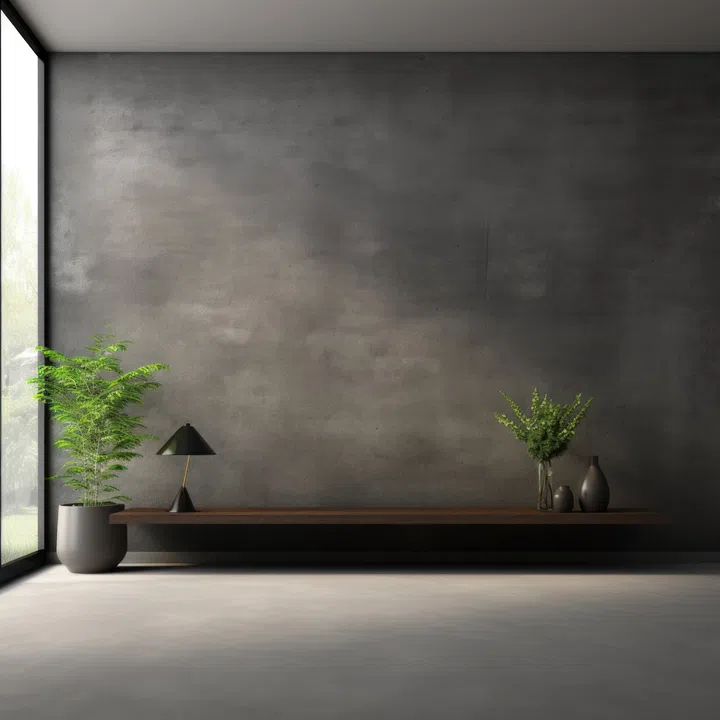
In Singapore’s humid climate, microcement can last for many years—typically 10 to 20—when applied and maintained properly. Its durability stems from the strong bonding of multiple layers, finished with a protective sealant that guards against moisture, stains, and daily wear.
However, its lifespan also depends on the quality of workmanship and how well the surface is cared for. In high-traffic or wet areas such as kitchens and bathrooms, resealing every few years may be necessary to maintain its resistance and appearance. When done professionally and maintained correctly, microcement offers a long-lasting, modern finish well-suited to Singaporean homes.
Is microcement cheaper than vinyl?
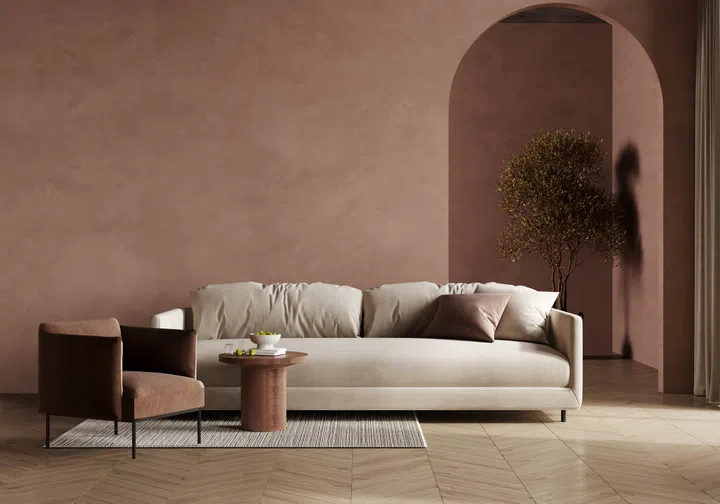
Microcement is generally more expensive than vinyl flooring in Singapore. While vinyl is a cost-effective and popular choice due to its ease of installation and wide variety of designs, microcement involves a more labour-intensive process, requiring skilled application over several layers and sealing for durability.
Vinyl sheets or planks can often be installed quickly and with minimal preparation, whereas microcement needs a properly prepared substrate and time to cure between layers. Although microcement offers a more seamless, bespoke aesthetic and is highly durable, especially in wet areas, the initial cost is usually significantly higher than most types of vinyl.
Is microcement high maintenance?
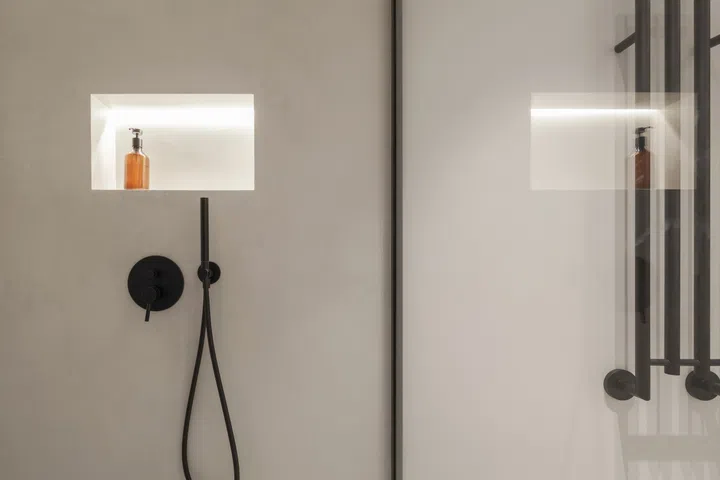
Microcement is generally considered low maintenance, but it does require some care to keep it looking its best over time. Its seamless surface makes it easy to clean—regular sweeping and wiping with a neutral pH cleaner is usually sufficient.
However, because it’s a thin coating, it can be prone to scratching or staining if harsh chemicals or abrasive materials are used. To prolong its lifespan and maintain its appearance, it’s recommended to reseal the surface periodically, especially in high-traffic or wet areas like bathrooms and kitchens. With proper upkeep, microcement remains a durable and stylish option.