
6 Renovation choices to rethink in Singapore’s weather
Interior designer Angelyn Wong walks us through renovation choices that need extra care in our climate, and what to know before incorporating them.
By Gwyneth Goh -
Share this article
This article is part of Home & Decor’s monthly editorial topics series — crafted around real, current problems that many Singaporean homeowners face. Jam-packed with personal recounts, opinions, and expert takes, we hope that these weekly pieces will inspire you, and bring you solutions that you can take into your own home.
April’s topic: ‘Living in the Tropics’. Article 1/5.
If you’ve been building a mood board for your new place, chances are you’ve bookmarked homes from halfway across the world on Pinterest. The trouble is, features designed for cooler climates don’t always translate well to Singapore’s heat and humidity.
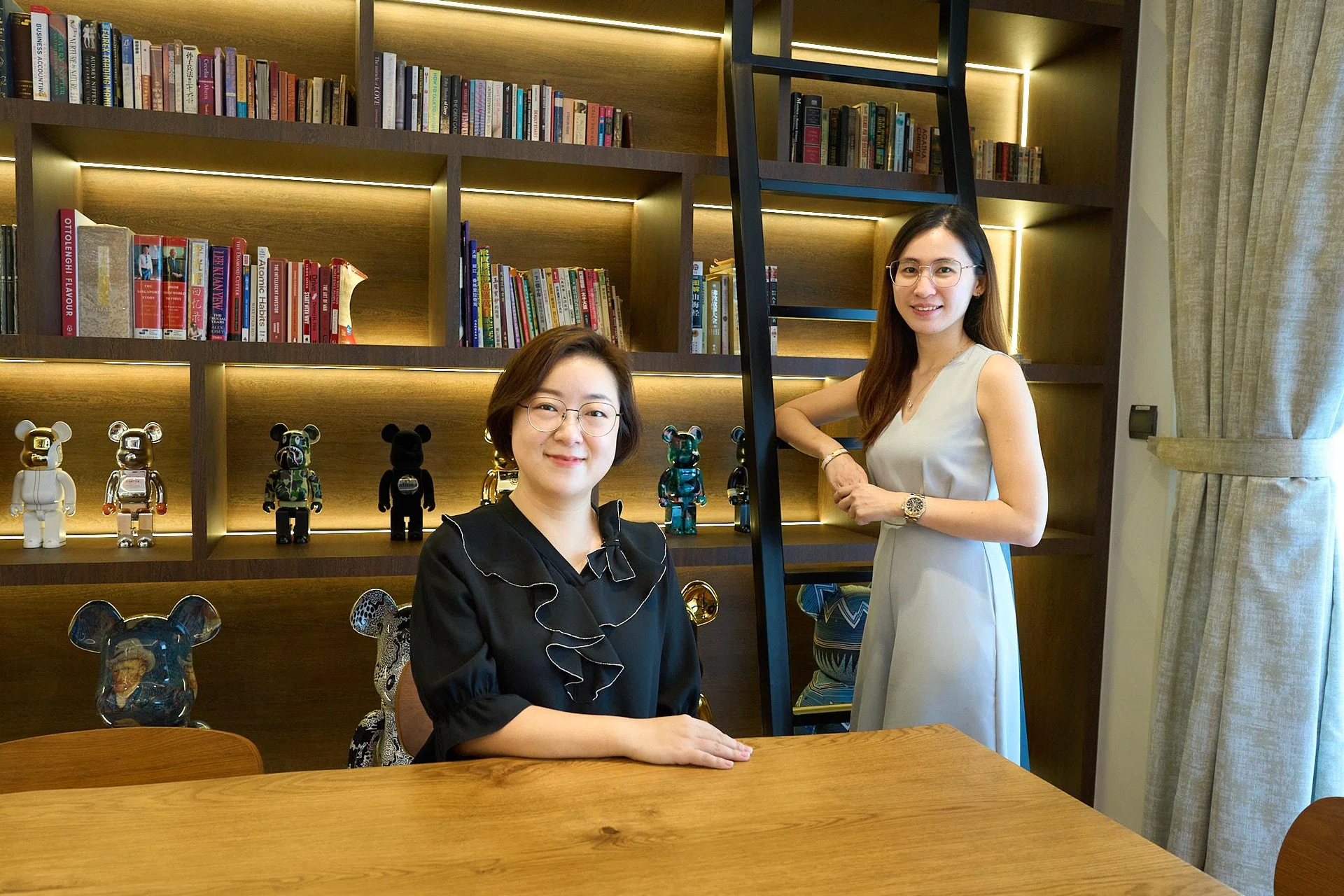
To find out what to avoid, we speak to interior designer Angelyn Wong of Rezt+Relax, who has helped several expats design their holiday homes in Singapore. Having seen her fill of stuff that looks good but doesn’t work, she shares five renovation choices she often advises clients against.
Natural materials
There’s no doubt that natural wood flooring offers a tactile quality that parquet or engineered wood can only imitate, but this comes at a cost. Unlike the latter, the gaps between natural wood planks tend to expand and contract in Singapore’s climate. The only workaround, Angelyn said, is to keep your home cool around the clock, which was exactly what her client from Norway did.
“He was willing to leave the air-conditioning on all the time, and went so far as to install air-conditioning units in the bathroom, kitchen, and yard area,” she said.
Beyond flooring, homeowners’ preferences for natural materials often extend to soft furnishings as well. The sustainability-minded, in particular, favours pure cotton and linen over synthetic options that have been treated with chemicals.
But natural fibres don’t just crease and stain more easily; they are also highly absorbent. And with the constant cycling of air-conditioning, they repeatedly dry out and absorb moisture, leaving them musty, damp, or even mouldy at times.
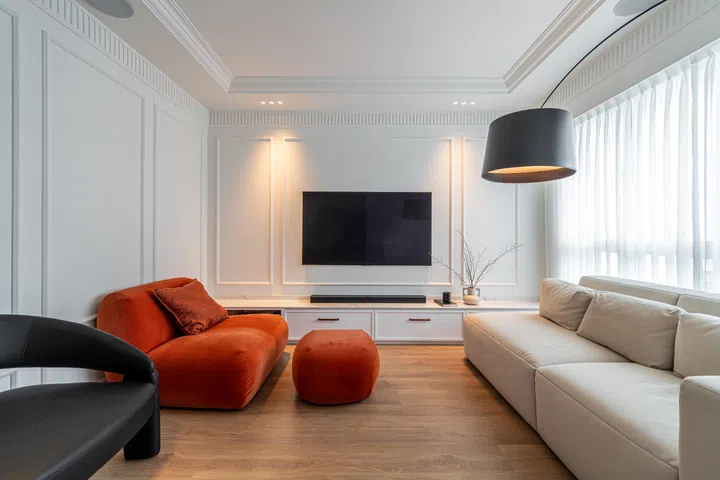
Wainscoting
Whether you’re going for a Parisian, Colonial, or Hamptons-inspired look, classic interiors often feel incomplete without wainscoting. Yet what appears to be a subtle detail is anything but simple.
As laminates don’t wrap neatly around irregular surfaces, wainscoting is created by fitting wooden panels into place before spray-painting them, making joint lines inevitable. As they expand and contract over time, they can cause the paint to crack, blemishing what was meant to be a seamless finish.
This is where workmanship makes all the difference, said Angelyn, who recommends working with vendors skilled in specialised techniques to better secure the joints and minimise movement.
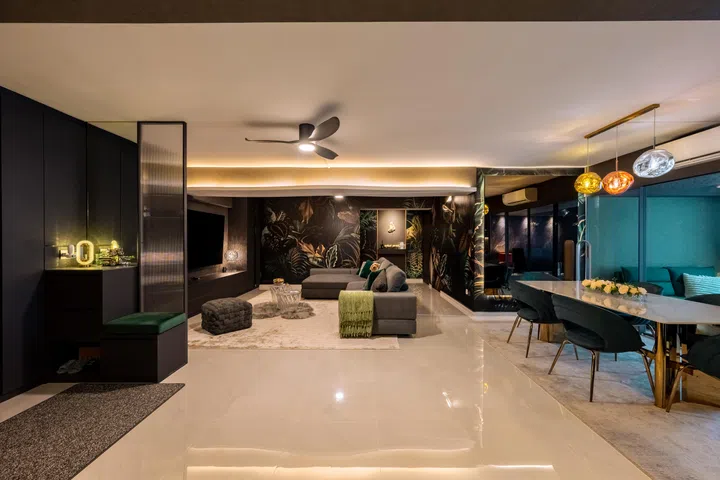
Wallpapers line the living room in a home in 220 Pasir Ris St 21, designed by Angelyn Wong of Rezt+Relax.
Wallpaper
Wallpaper is a quick, low-commitment option for homeowners looking to dress up a feature wall or a nursery for a baby on the way. But unlike what the movies would have you believe, applying wallpaper in Singapore is far less romantic than it looks.
In our humidity, Angelyn explained, the adhesive can lose its grip over time, leading to warped surfaces, air pockets, and peeling edges. Worse still, these imperfections can trap moisture beneath the surface, creating ideal conditions for mould to thrive. Before you know it, the illusion of a clean, continuous wall begins to unravel.
“To achieve the same look, I usually recommend clients to go for textured walls instead, which are much easier to maintain,” said Angelyn.
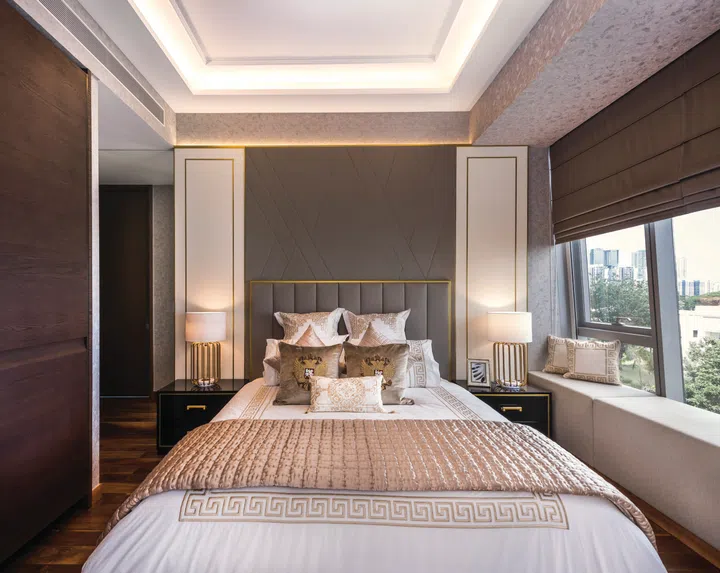
A bedroom with leather finishing in Gramercy Park.
Leather finishes
Leather has become a mainstay of the quiet luxury look, with many homeowners opting for custom leather headboards in their bedrooms. What they often fail to consider, however, is the level of upkeep it requires, said Angelyn.
While sweat and dirt build up easily on any high-contact surface, leather is particularly tricky to clean. It needs to be wiped down with a cloth that is damp enough to remove grime, but not so wet that it leaves water stains. It also requires conditioning to stay supple, though overdoing it can lead to discolouration. On top of that, it must be kept out of strong, direct sunlight, which can dry out and damage the material over time.
It’s not for everyone, but those willing to put in the effort can enjoy that boutique hotel feel right in their HDB bedroom.
Walk-in wardrobes
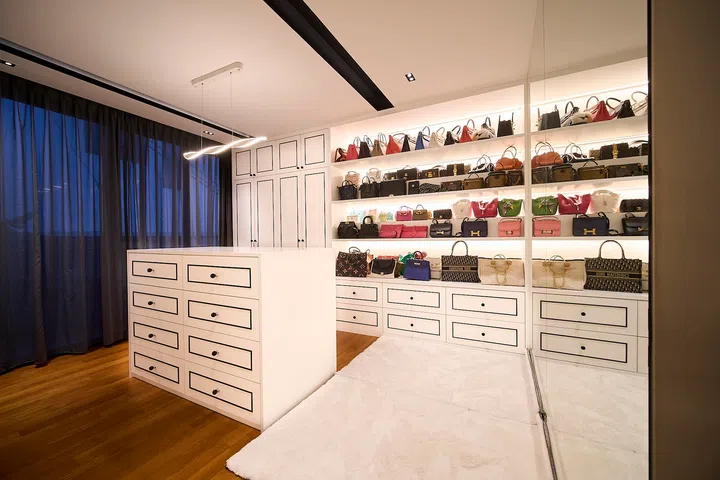
A walk-in wardrobe can seem like the answer to an ever-growing collection of clothes, bags, and shoes. But in Singapore, these large, enclosed spaces can be particularly unforgiving.
Without proper ventilation, humidity builds up easily—especially if there is an adjoining bathroom where you take hot, steamy showers. This creates ideal conditions for mould and musty odours to form and cling to leather jackets and purses.
“This is why you have to install a dehumidifier rod and replace it every three to five years,” said Angelyn, though even that is not always foolproof. She recalls a home near the Botanic Gardens, where the surrounding greenery creates a more humid microclimate. Despite installing a dehumidifier rod, the homeowners still found mould in their walk-in wardrobe shortly after moving in.
It’s nothing a few extra moisture absorbers can’t manage, but it does mean keeping up with regular replacements, especially during the monsoon season.