
Share this article
This article is part of Home & Decor’s monthly editorial topics series — crafted around real, current problems that many Singaporean homeowners face. Jam-packed with personal recounts, opinions, and expert takes, we hope that these weekly pieces will inspire you, and bring you solutions that you can take into your own home.
March’s topic: ’Living Big in Small Spaces’. Article 4/4.
Look up!
It’s true, homes are indeed becoming smaller and there are statistics to prove it. According to an analysis by Knight Frank Singapore based on data from Urban Redevelopment Authority (URA), the average floor area of non-landed private residences from new developments decreased by 35 sqm, from 118 sqm to 83 sqm, between 1995 and 2025. It is a similar trend for resale private units and HDB flats.
With this squeeze, every square metre counts. Most people tend to focus on maximising space in terms of the horizontal footprint, but the vertical expanse of space can also offer a lot of potential, especially if your home has the advantage of a high ceiling. The addition of a loft within a small unit can prove to be very valuable real estate that offers extra living or storage space.
Can my home have a loft?
For a loft to be feasible, you need a minimum ceiling height of at least 4 m. The existing structure should also be able to bear the additional weight of the loft, as well as the furniture that you are going to put on it. A Professional Engineer (PE) will be able to help you determine which walls are load bearing and whether they can support the new loft.
Access to the loft is also an important consideration before you decide whether it is possible to erect a loft in your home. “Often, the staircase is the make or break factor due to its location and how it will lead up to the loft,” says Wolf Woof design director, Carmen Tang, who has a wealth of experience with loft projects.
“In the case of a small space, there may not be enough room to incorporate a staircase. Even if there is sufficient space, the living area may be compromised as a result of the additional staircase,” she explains. In some instances, the space constraint may warrant a steeper staircase, which may then pose other practical issues such as being able to comfortably climb up the steps without too much effort.
Playing by the rules
Now that you have pretty much ascertained that it is possible to have a loft in your home, there are some important things that you should know in order to stay on the right side of the law. Needless to say, illegally carrying out any works that require authority approval is a no-no. You risk a fine of up to $200,000 and you may be asked to remove the changes and restore the space to how it originally was.
For land-titled residences such as terraced, semi-detached and detached houses, the renovation rules are less stringent and you do not need approval from the authority to add a loft.
For strata-titled residential units such as a condominium or strata landed unit such as a cluster house, planning permission from URA is not required if there is no increase in the Gross Floor Area (GFA) and the residential unit continues to function as a self-sufficient residential unit with the essential communal spaces and amenities.
The guidelines state: “Lofts that are designed as a furniture deck can be allowed within a residential unit without planning permission from URA. Such lofts / furniture decks are limited to one per residential unit and the size of the loft shall not exceed 5 sqm.”
The headroom of the loft space should also not be more than the headroom below the loft and based on guidelines from Building and Construction Authority (BCA), the headroom below the loft should be at least 2.4 m high. This refers to the habitable space that is measured from the finished floor to the lowest ceiling point below the loft.
Enlisting the help of a professional
Although BCA does not require any building plan submissions for lofts 5 sqm or smaller, you do still need to engage a PE to sign off on the loft drawings to ensure that the structure complies with safety standards. Your interior designer or contractor should be able to assist with this or connect you with a PE. You should also submit the PE endorsed drawings to your MCST for approval before commencing any renovation.
Case studies
Here is a library of real-world examples from some of the loft projects that Wolf Woof has completed over the years to illustrate various loft designs in terms of usage, layout and staircase access.
Staircases
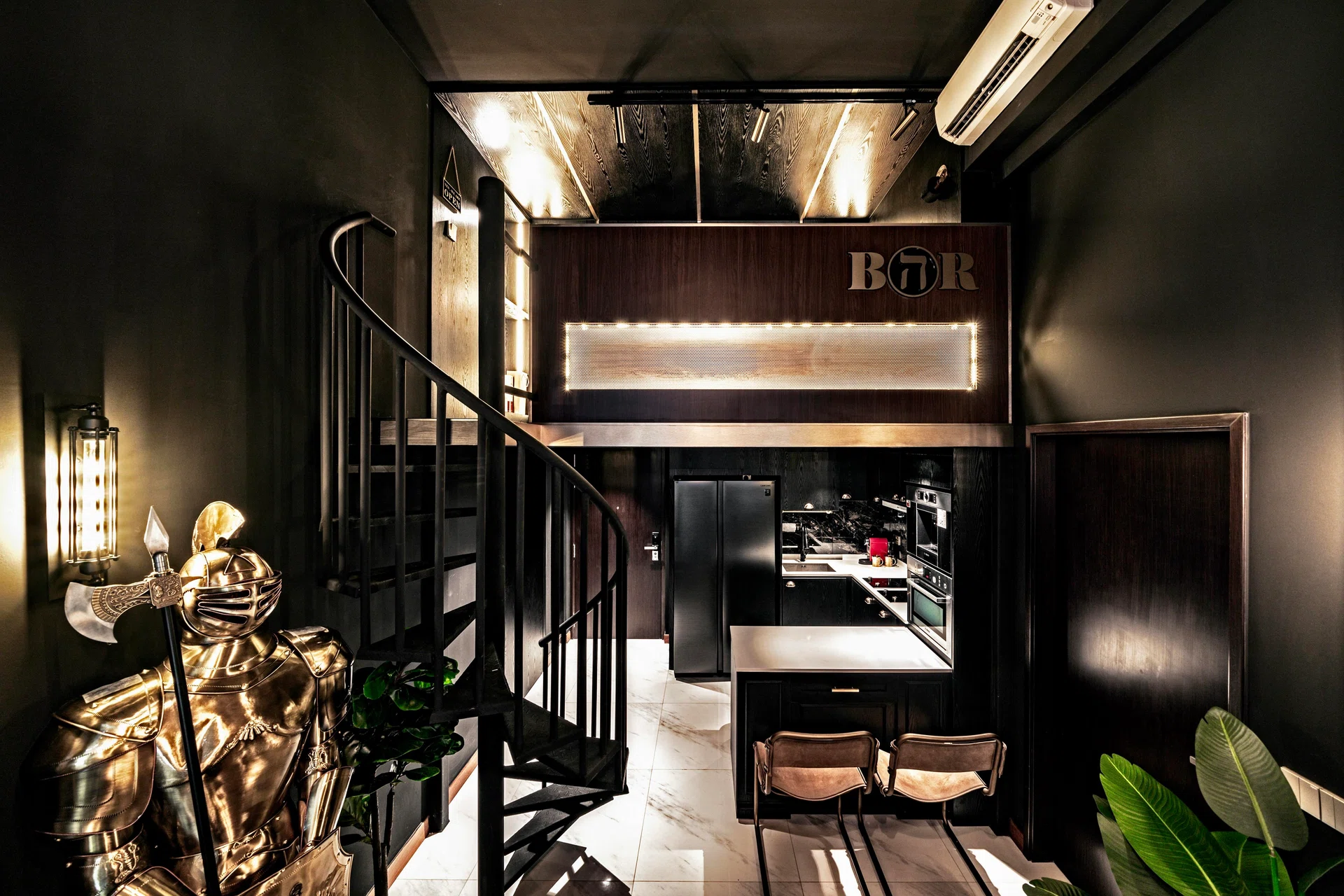
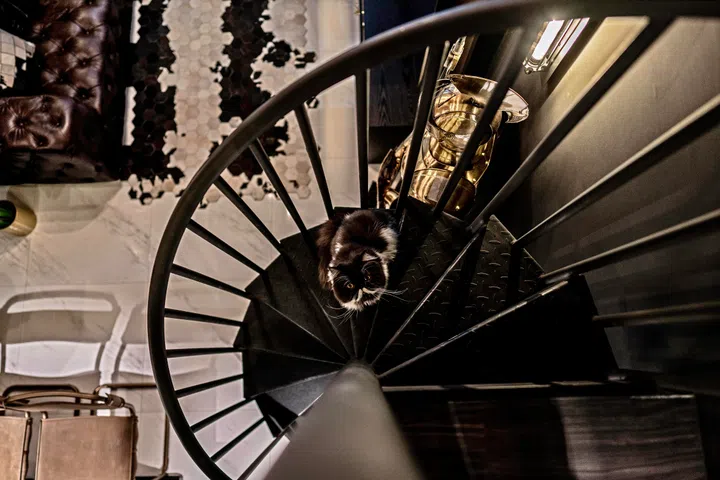
The biggest benefit of accessing a loft using a spiral staircase is the space advantage. Its compact footprint minimises encroachment into the space below the loft, as well as any disruption to the circulation and access to the other rooms. It is ideal for tight spaces, occupying typically only a 1.2 m to 1.5 m footprint and offers a stylish focal point in any home.
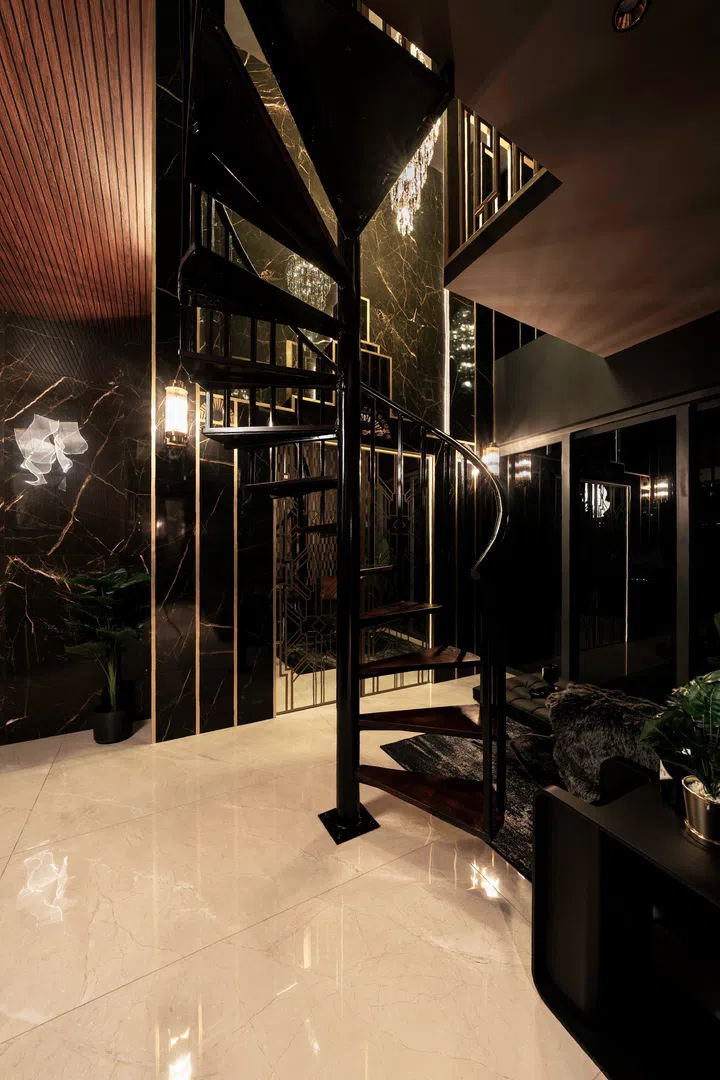
However, Carmen cautions: “They tend to be steep and because of their narrow, triangular steps, they are less comfortable, harder to navigate, and difficult for moving furniture compared to regular straight stairs that are safer and more comfortable.”
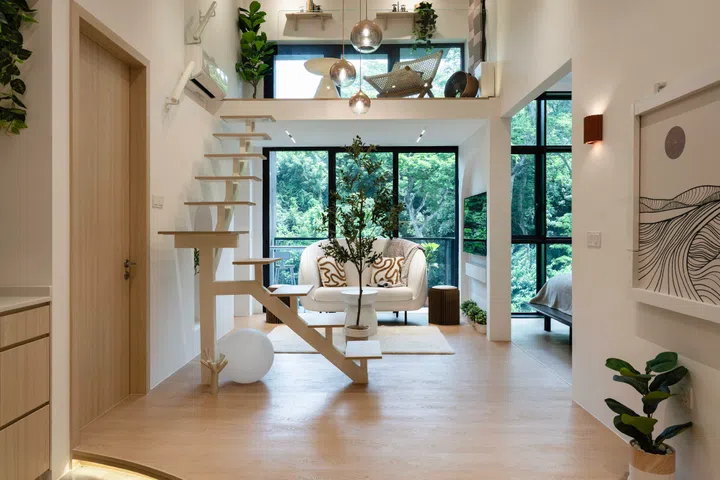
Instead of a straight flight of stairs, Carmen had to make this an L configuration to avoid obstructing access to the common bathroom.
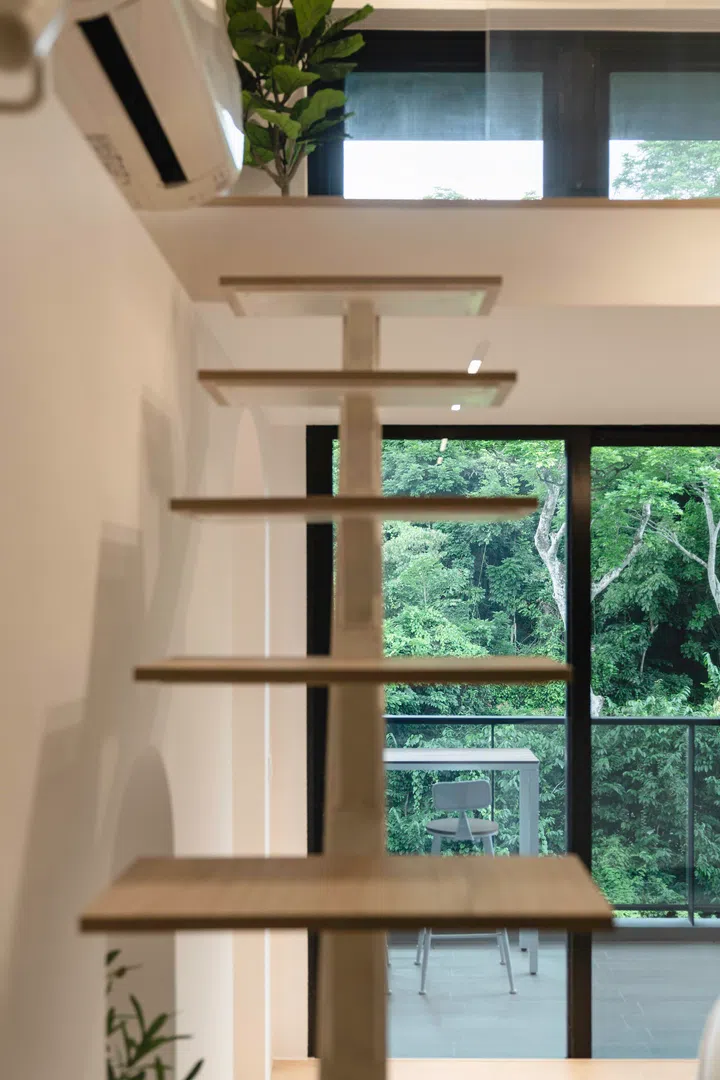
Besides the configuration, opting for an open-riser staircase helps to preserve the openness of the compact apartment and avoid obstructing the view of the surrounding greenery.
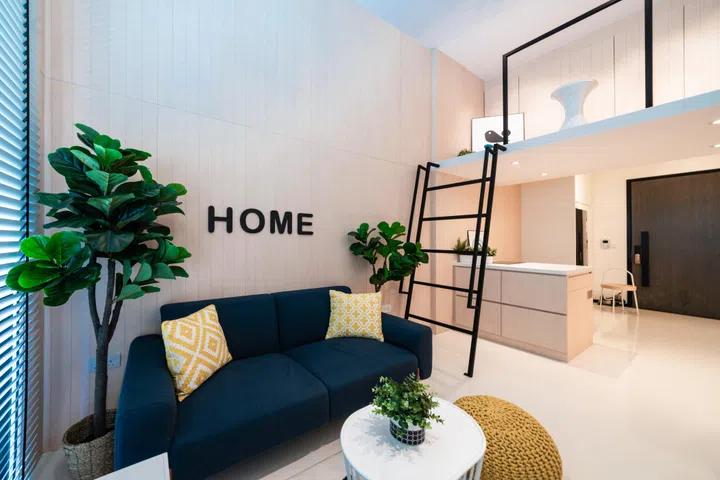
Due to space constraints, this loft is accessed using a ladder instead of a staircase, but positioned in an incline to make it easier for the homeowners to climb up and down.
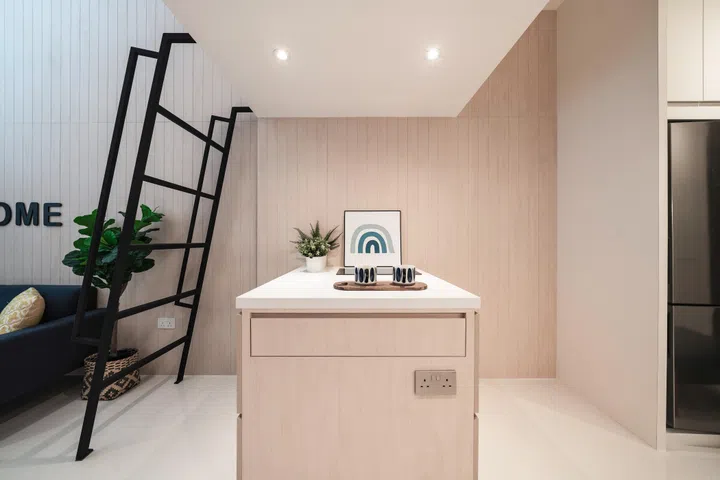
It was their dream to have a loft, so they were prepared to compromise and work around the access limitations.
Space below the loft or staircase
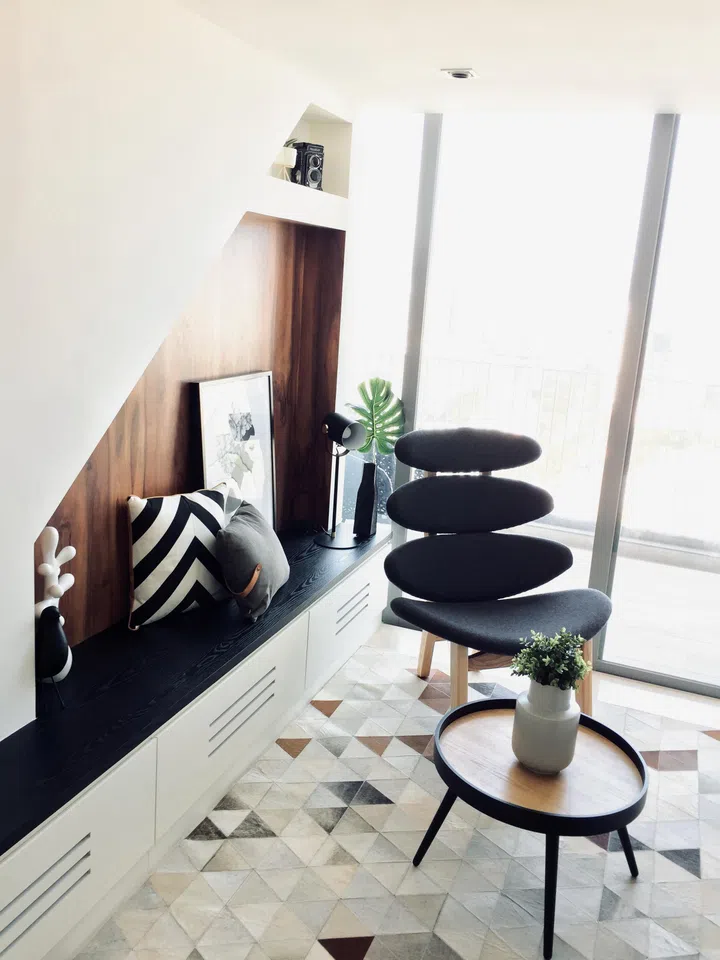
The space below the loft is fully utilised with a built-in bench in lieu of a sofa. Additional storage is incorporated underneath the bench. Downlights recessed into the underside of the loft platform offer a neat solution that does not compromise the headroom below the loft.
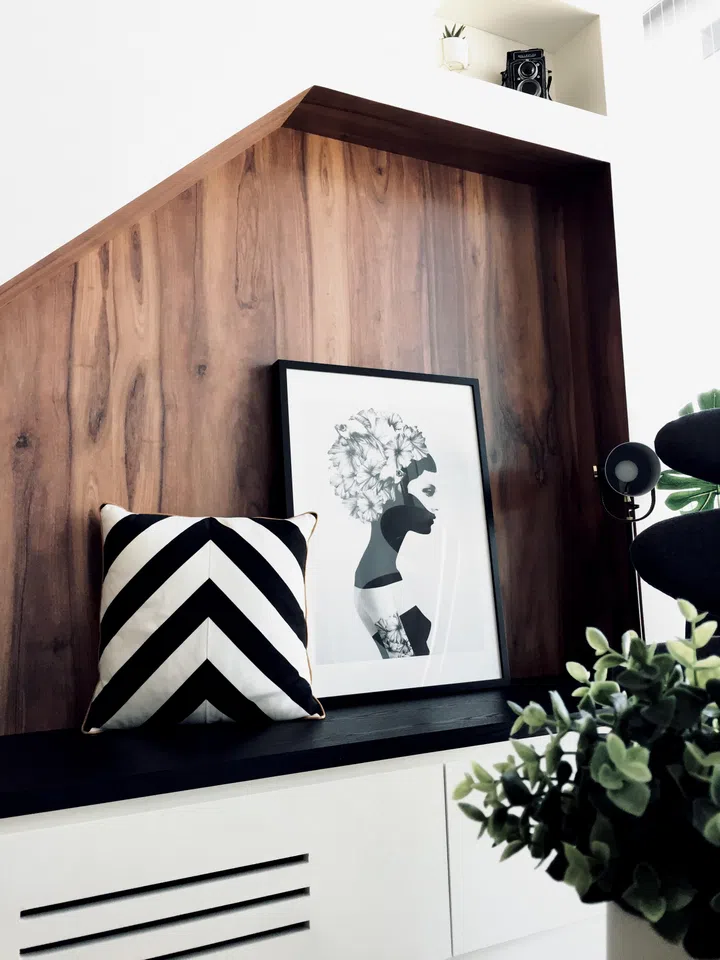
A tip from Carmen: “Make full use of the loft’s under deck to embed downlights or sleek magnetic track lights instead of say, conventional track lights which will take up more head room.”
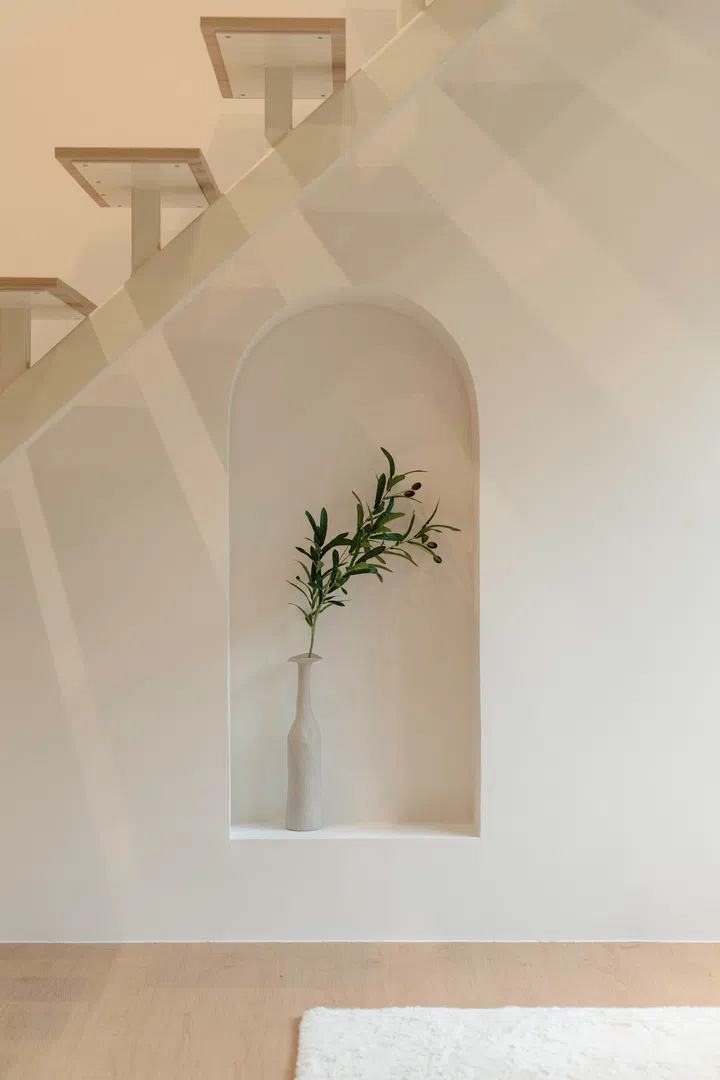
While many homeowners choose to maximise storage space by incorporating it into the loft staircase, the under-staircase area in this home was given an aesthetic twist with a contemplative arched display niche.
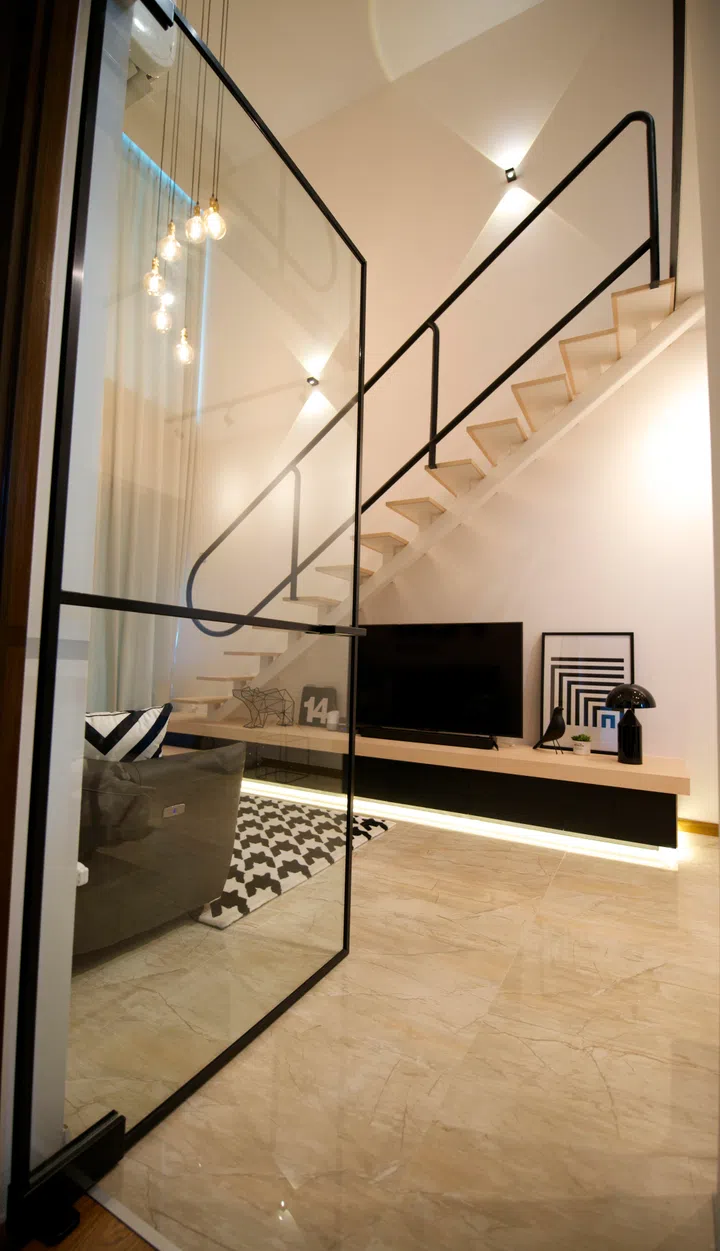
Instead of storage or a decorative element, the homeowners for this apartment decided to place the television console in the space below the loft staircase. In this instance, the open riser loft staircase and the geometric form of the balustrade become visual features in themselves.
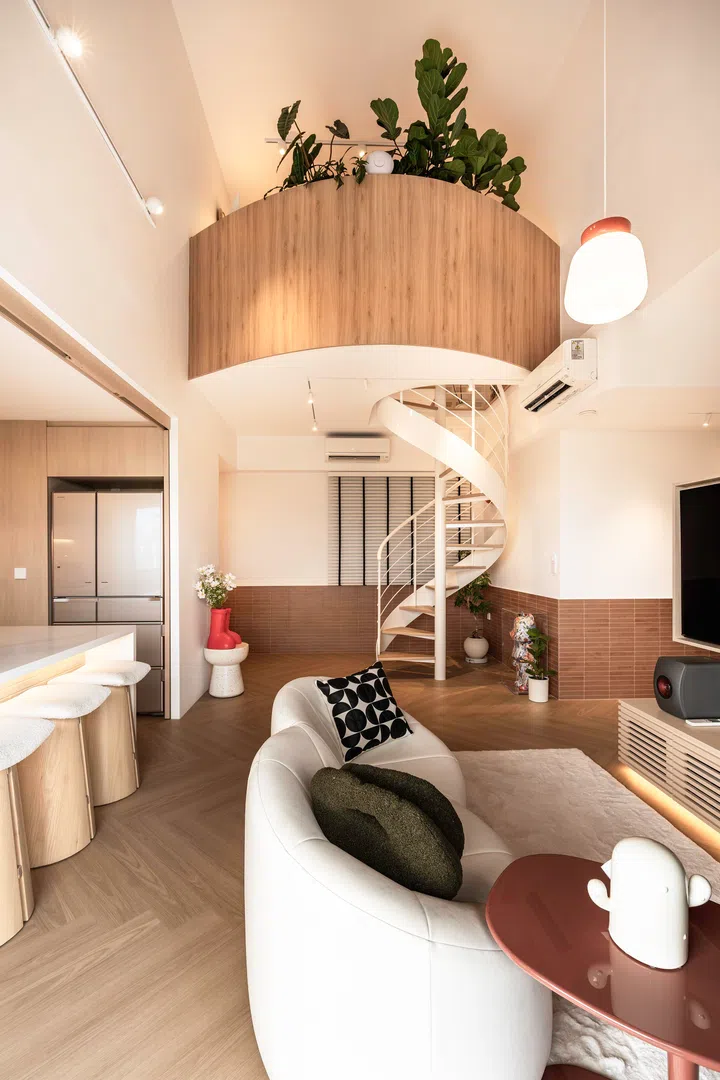
Circular loft
Most lofts have a rectilinear layout as the orthogonal shape tends to slot nicely into the existing interior.
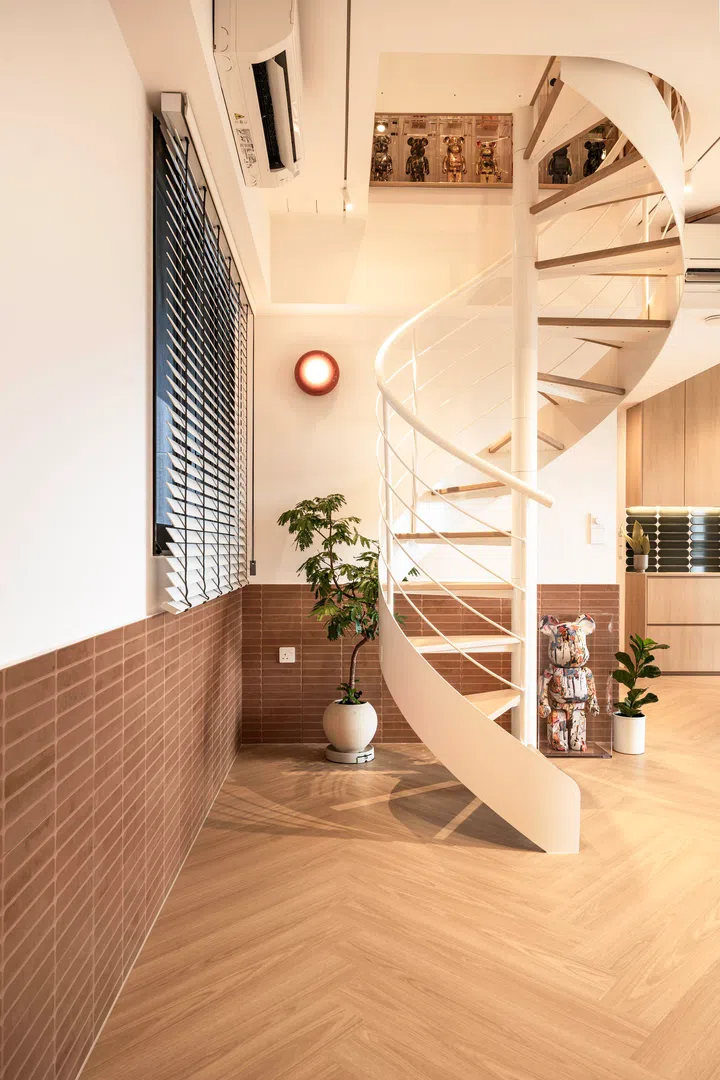
This loft, however, was designed to be a sculptural, treehouse-like element that stands out within the apartment, complete with a spiral staircase that echoes the loft’s circular form.
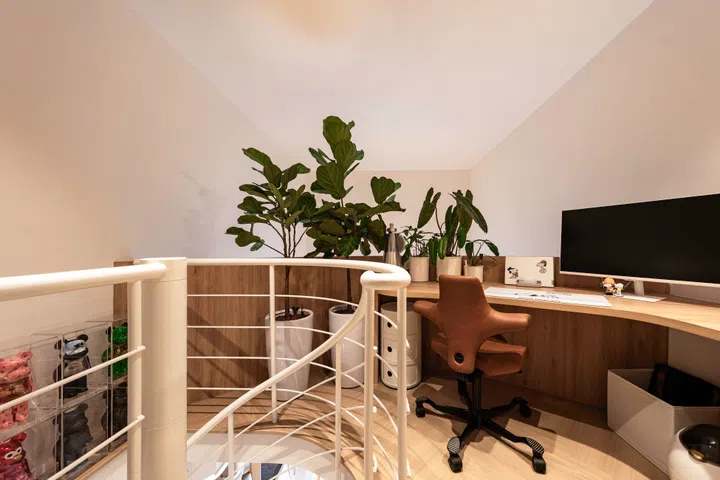
Designed as a workspace for the client, the desk follows the curved shape of the loft to achieve a cohesive result.
Unique loft uses
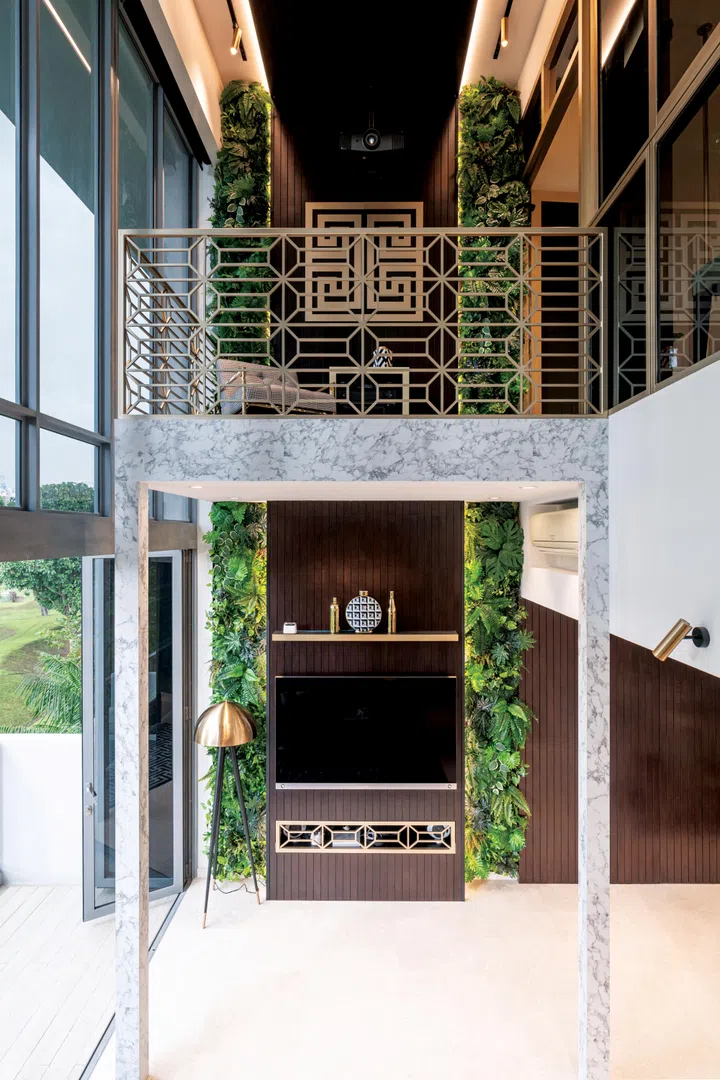
It is common for lofts to be used as a home office, a chillout lounge or for storage. This loft is a one-of-a-kind “air theatre” to create a cinematic experience for the clients who enjoy watching movies at home.
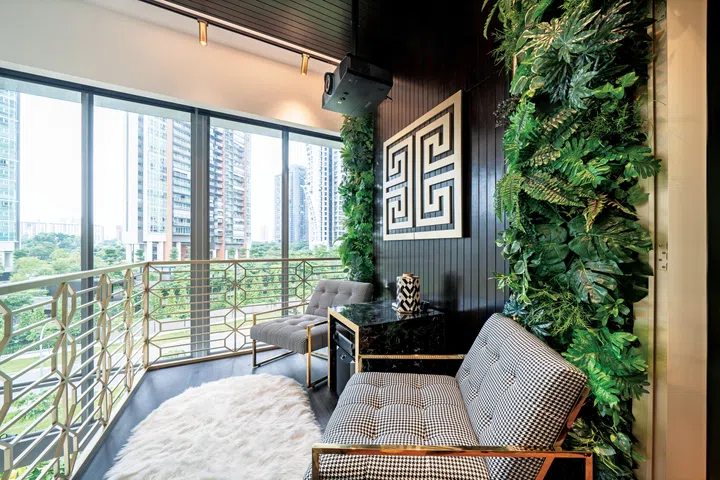
It serves as an extension to the master bedroom and access is through the bedroom rather than an independent staircase.
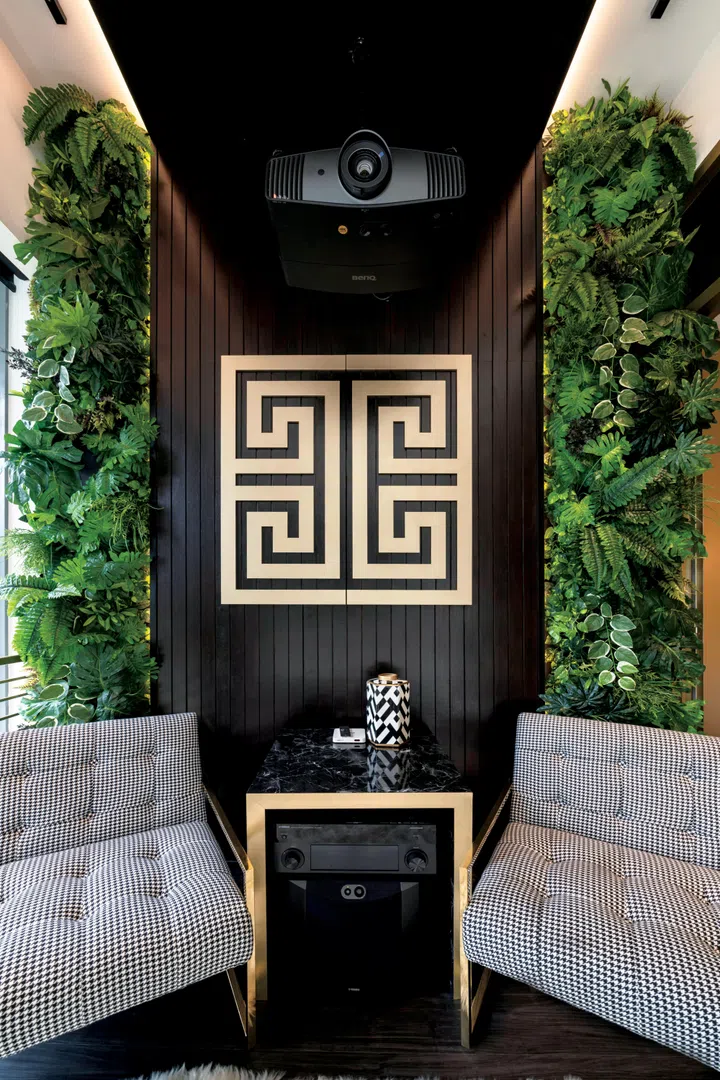
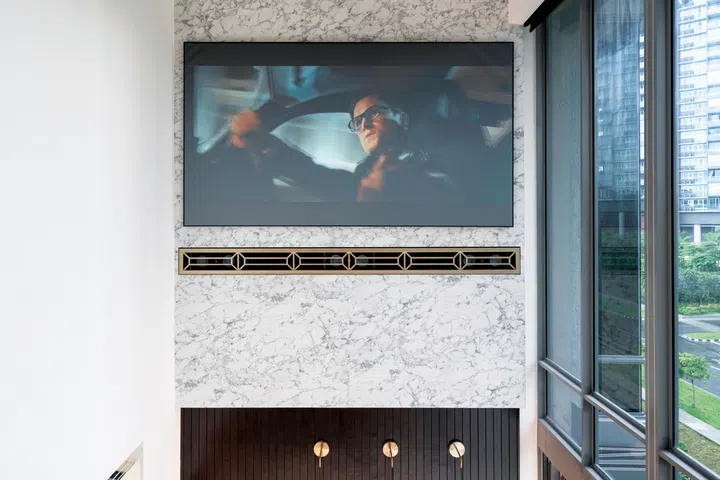
The projector is mounted in the ceiling above the loft and the screen is on the double volume wall across from the loft.
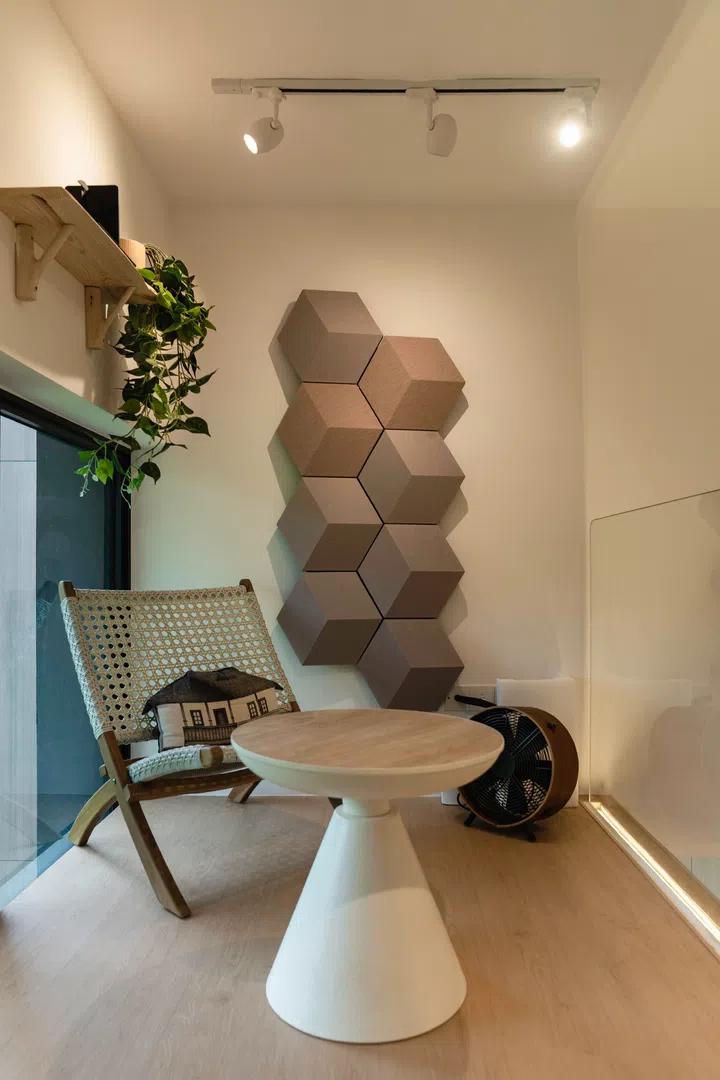
Furniture and fitments
Minimising built-ins and opting for loose furniture keeps things flexible and allows the loft to be used for different purposes depending on the homeowner’s needs. In this case, the loft reading and relaxation nook can be transformed into a yoga space by pushing the loose furniture to one corner.
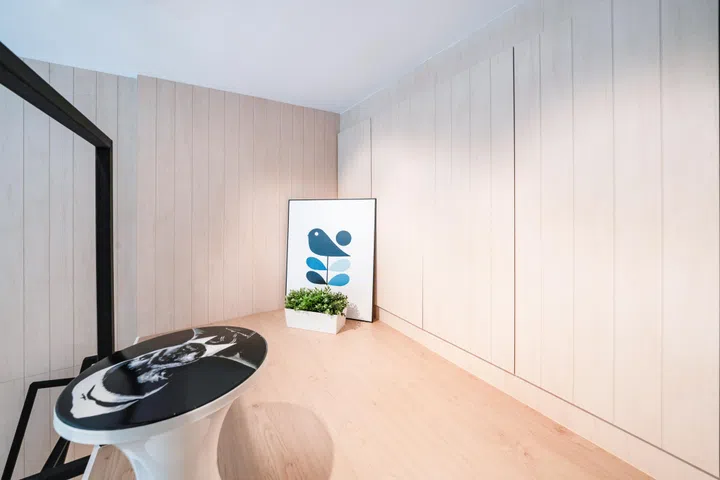
As this loft was created mainly for storage rather than for flexible use, built-in cabinetry made sense as it maximises storage capacity.
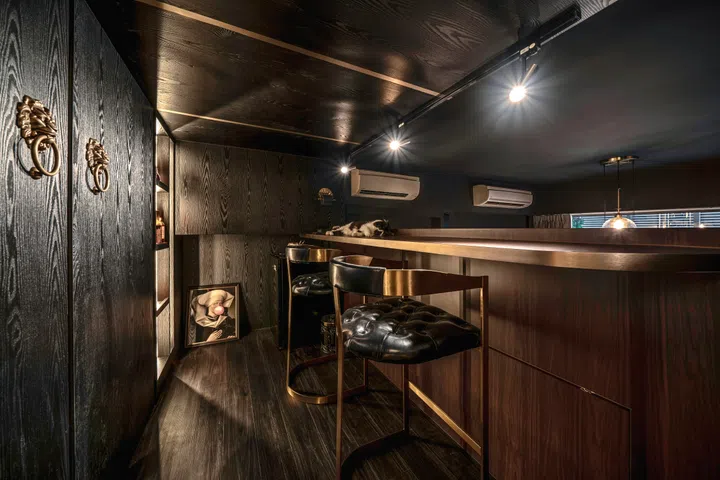
Since the size of a loft is restricted to no more than 5 sqm, a little bit of ingenuity goes a long way in maximising the efficiency of the compact loft space. In this example, a bar counter has been integrated with the loft railing to save space through its dual purpose.
When planning the locations for the air-conditioning within the apartment, consider where the fan coil units are mounted relative to the loft. This can make the loft more comfortable without having to install additional dedicated units.
Do’s and Don’ts
Here is a handy checklist of Do’s and Don’ts for your loft renovation:
Do’s
Be clear in the usage intention for your loft, so that the design can be strategic to serve your lifestyle needs.
For a stronger, more robust loft, steel beams are usually anchored into load-bearing walls or reinforced with steel supports, especially if the loft does not rest on all four legs on the apartment floor. Steel supports are not the most aesthetic looking visually and one should think of creative ways to hide them, be it to wall them up using partition board or drywall, or disguise them as part of a shelf system for example.
Ideally, the balustrades should be 1.2 m high to prevent falls, but minimally 1 m.
Ensure that all the steps leading up to the loft have the same rise (height) and tread (depth) to prevent tripping. The tread depth (the actual surface area available for your foot) should be at least 250 mm. The riser (the vertical height between steps) should not exceed 175 mm.
Ensure that the loft is well-ventilated (whether through fans or air-conditioning) because heat rises in general and it will get trapped in the loft.
Future-proof your loft’s resale potential by designing it with a comfortable height, so that should you decide to sell your home, the prospective buyer will not be put off by the low headroom when standing on the loft.
Don’ts
Limit the palette of materials in a small loft as it will make the space look visually less cluttered and less disjointed. In this case, less really is more.
Avoid using your loft to store items that you will need frequently or it will be a hassle to keep climbing up and down to retrieve your items. This is made worse if your loft can only be accessed via a ladder instead of stairs. Imagine climbing up the ladder with one hand and your bulky item in the other, which is very challenging, not to mention dangerous.
If you do not have the luxury of height above the loft, keep your light fixtures to streamlined ones to minimise bumping into them.
Most folks are fond of incorporating storage under the stairs, but the irony is that in creating more storage space, you may end up having a bulky staircase which in turn will make your space appear smaller. Weigh the pros and cons between whether the storage that you can carve out is worth making your space appear more crammed.
Crunching the numbers
Although the size of a loft does not vary significantly due to the 5 sqm rule, the cost for erecting one inside your home can differ depending on the usage, materials, finishes and structural requirements. As a ballpark, Carmen shares that a simple loft addition with a regular staircase can cost anywhere between $12,000 and $15,000. More complex designs can cost upwards of $15,000.