
Greener Construction in Singapore: $30.4M Research to cut construction carbon by up to 40%
A new initiative between SIT, A*STAR, and Woh Hup will test ultra-low carbon concrete, AI structural design, and recycled steel on real building sites to make Singapore’s built environment cleaner.
Share this article
Building a greener Singapore is no longer just about planting more trees or installing solar panels on HDB rooftops.
Starting from the ground up, local construction is getting a massive eco-friendly overhaul. The Singapore Institute of Technology (SIT), the Agency for Science, Technology and Research (A*STAR), and local construction giant Woh Hup (Private) Limited have officially launched a $30.4 million research programme to push low-carbon technologies straight out of research labs and onto actual building sites.
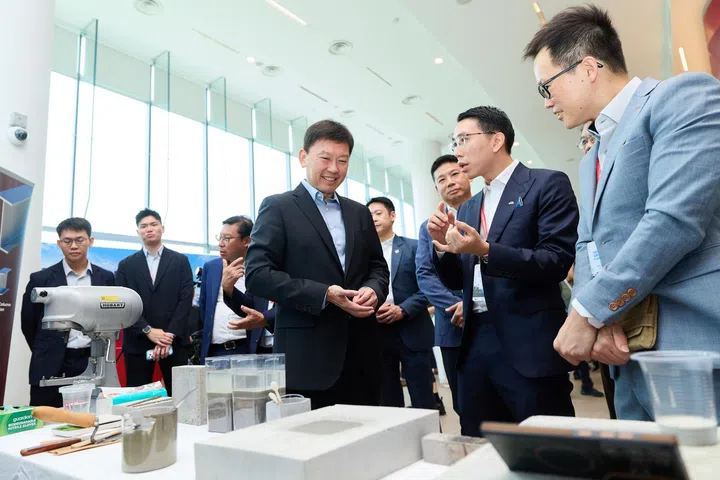
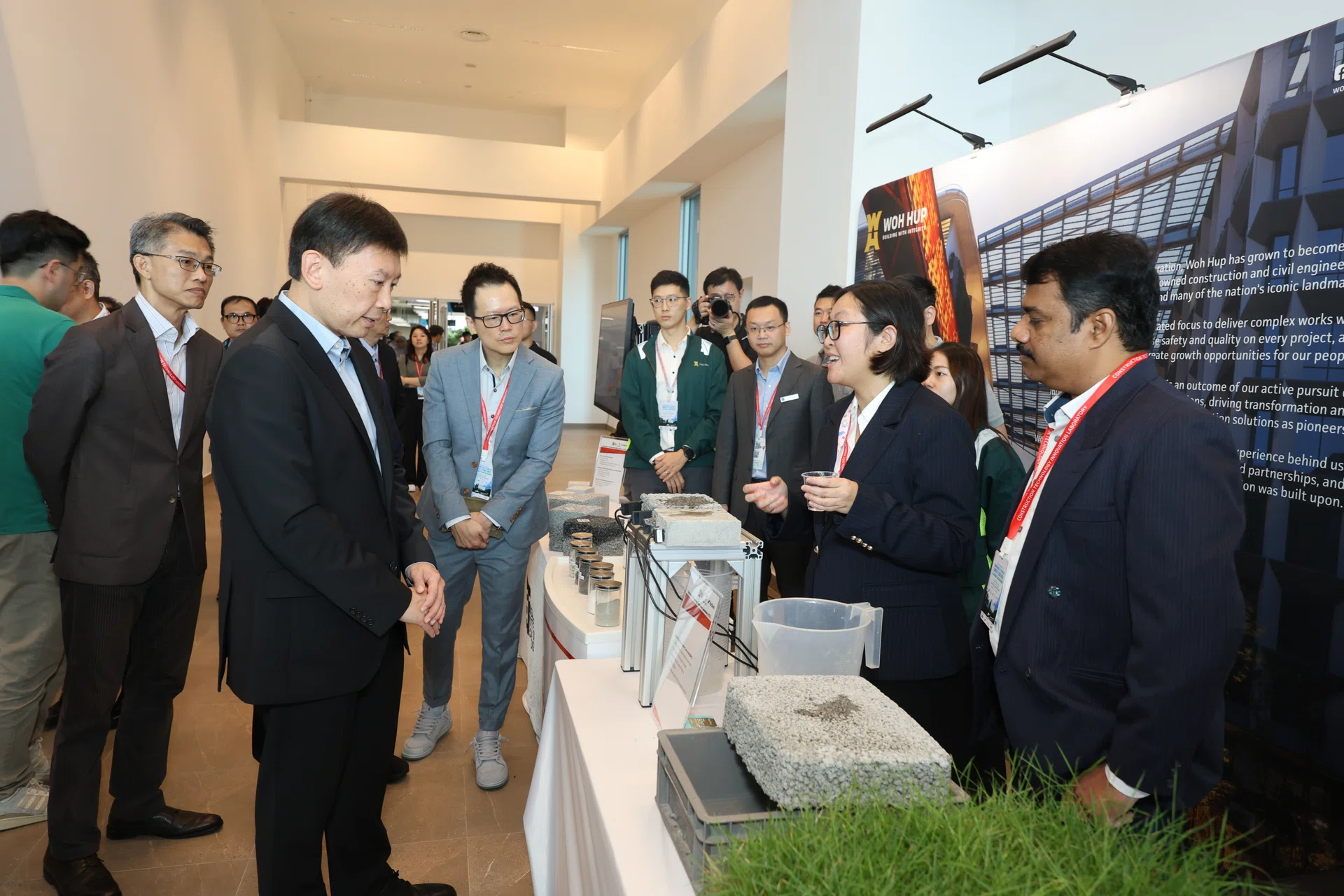
Minister for National Development Mr Chee Hong Tat viewing an ultralowcarbon concrete demonstration developed through the Woh HupSIT collaboration.
What is this initiative all about?
The new project, formally named the Woh Hup-SIT-A*STAR Consortium for Sustainable Construction Technology, brings together researchers, students, and seven key industry partners.
Instead of keeping green construction methods locked in academic labs, the consortium is testing practical, real-world solutions on live construction developments. Key technologies being developed include:
- Ultra-low carbon concrete: Creating concrete mixes that emit far fewer greenhouse gases during manufacturing.
- Recycled building materials: Converting demolition waste from old buildings into fresh construction materials.
- AI-driven structural design: Using artificial intelligence to help engineers optimize building designs, cut material waste, and improve productivity.
- Reusing structural steel: Safely repurposing high-strength steel beams to lower raw material consumption.
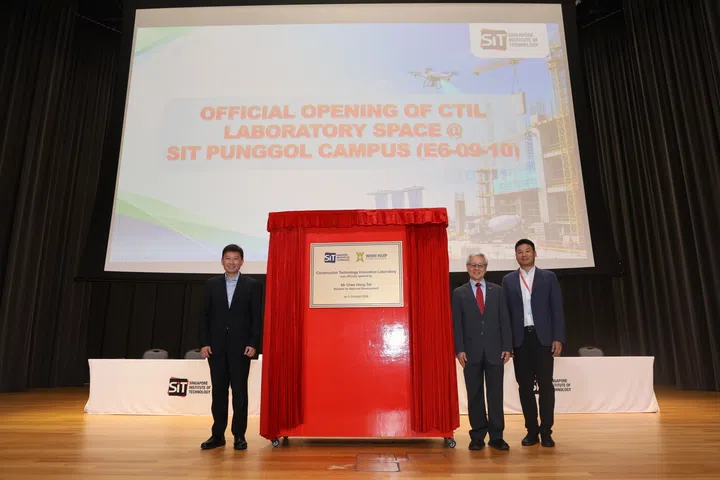
Official Opening of CTIL Space at SIT Punggol Campus.
Why does Singapore need this?
Traditional building materials like concrete and steel carry high levels of “embodied carbon” - the total greenhouse gas emissions generated during extraction, manufacturing, and transport.
By adopting these low-carbon solutions, the programme aims to slash embodied carbon in selected urban developments by up to 40%.
Furthermore, this private sector investment makes up roughly 10% of the entire Singapore built environment sector’s annual R&D spending, signalling strong business confidence in sustainable, highly productive construction practices.
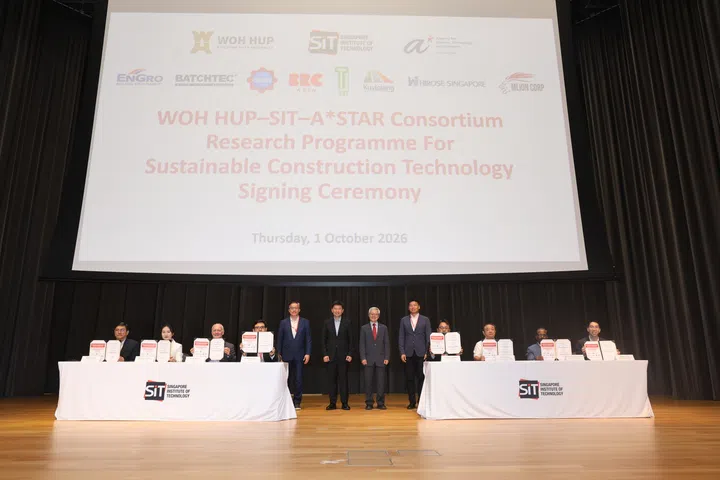
Official Signing Ceremony for Woh Hup–SIT–A_STAR Consortium for Sustainable Construction Technology.
How does this actually work in practice?
This initiative builds upon five successful years of collaboration between SIT and Woh Hup through the Construction Technology Innovation Laboratory (CTIL).
Rather than developing ideas in isolation, CTIL works directly on site challenges. A prime example is the HISTEEL kingpost - a steel foundation solution developed with partners Woh Hup and TTJ Design & Engineering.
By engineering a specialised welding protocol for super-strong S690 steel (nearly twice as strong as standard construction steel), engineers created a foundation that uses up to 40% less steel by weight while boosting site safety and productivity.
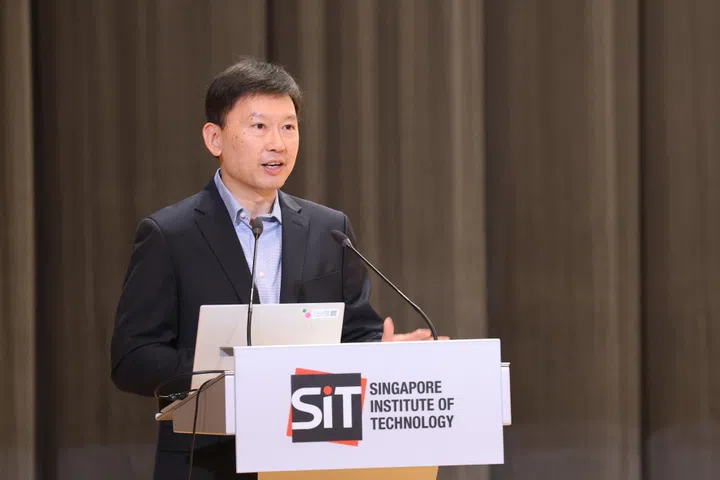
Speech by Mr Chee Hong Tat, Minister for National Development.
Where did this happen?
The announcement was made during the annual CTIL seminar on 1 October 2026 at the Ho Bee Auditorium, situated at SIT’s Punggol Campus, in the presence of Minister for National Development Chee Hong Tat.
Over the next three years, the consortium will refine and deploy these green technologies across local developments. The broader objective is to significantly reduce carbon footprints across selected projects in Singapore by 2029.
Proven successes from previous research, such as the HISTEEL kingpost, have already been successfully deployed at major developments including Newport Plaza and Marina View Residences, with approvals from the Building and Construction Authority (BCA) for broader industry use.
Preparing the next generation of builders
Beyond greener structures, this collaboration gives SIT students and young researchers direct hands-on experience on live engineering sites. By learning alongside seasoned industry experts, local graduates enter the workforce fully equipped to build a cleaner, smarter, and more sustainable Singapore.