
Share this article
In Singapore, the appetite for designer chairs has evolved from a niche pursuit of the elite to a mainstream symbol of “home pride” and wellness.
The current market is a blend of iconic mid-century silhouettes and high-performance ergonomic seating, reflecting the city’s dual identity as a design hub and a fast-paced corporate capital.
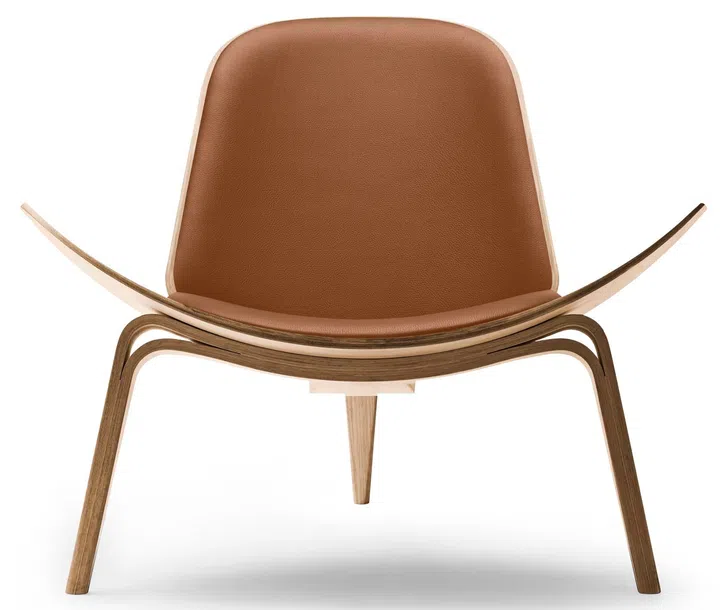
CH07 Shell Chair by Hans J. Wegner
CH07 Shell Chair by Hans J. Wegner ($5,500 - $8,000)
The CH07 Shell Chair, designed by Hans J. Wegner in 1963, is a quintessential masterpiece of mid-century Scandinavian design that earned the moniker “The Smiling Chair” due to the distinct, wing-like curve of its seat. Its significance lies in Wegner’s bold departure from traditional four-legged seating, opting instead for a three-legged construction that achieves remarkable stability through a tripod-like geometry.
The chair is a technical marvel of laminated plywood, featuring a tapered, arched leg structure and a generous, low-slung seat that provides a sense of weightless comfort. Although its avant-garde silhouette was initially met with hesitation in the 1960s—leading to very limited production—it was re-introduced by Carl Hansen & Søn in 1998 to immediate international acclaim.
Today, it is celebrated as one of the most iconic examples of “Organic Functionality,” proving that a chair can be a powerful sculptural statement without sacrificing ergonomic support.
Shop it here.
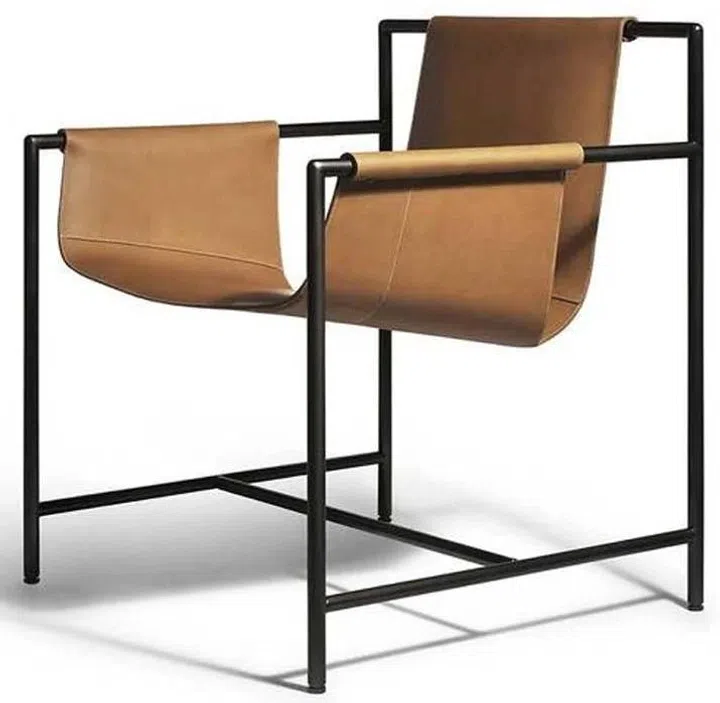
Ming’s Heart Armchair, inspired by the traditional Chinese Ming Chair, was designed by award-winning designer Shi-Chieh Lu (born in Taiwan) for Poltrona Frau.
Ming’s Heart Armchair by Shi-Chieh Lu, $5,360
Designed by Shi-Chieh Lu in 2016 for Poltrona Frau, the Ming’s Heart armchair is a sculptural synthesis of Eastern and Western design philosophies. It is a modern reinterpretation of the traditional Chinese “Ming” chair, deconstructing its ceremonial lines into a continuous, fluid loop of tubular steel that appears to float in space.
Its significance lies in the juxtaposition of this rigid geometric structure with a supple, hand-stitched shell made from a single piece of Poltrona Frau’s exclusive Saddle Extra leather. This high-tension leather seat provides a cradling, ergonomic comfort that belies its minimalist, architectural appearance.
The armchair is celebrated for bridging the gap between historical Chinese spirituality and contemporary industrial craftsmanship, resulting in a piece that is both a functional seat and a profound cultural statement.
Shop it here.
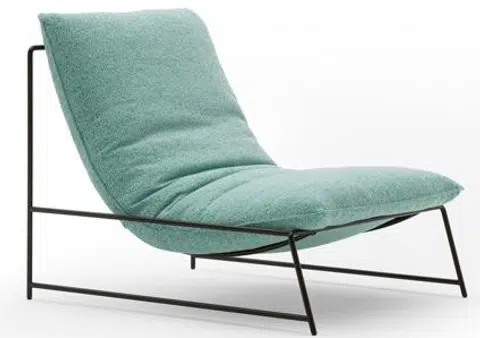
The Rito was designed for the Italian brand, Desiree, and it won the Archiproducts Design Award 2020 in Italy. It’s available in various fabrics and leather options.
Rito Armchair by Matteo Thun & Antonio Rodriguez, $3,800 - $7,200
The Rito armchair, designed by Matteo Thun and Antonio Rodriguez for the Italian brand Désirée (part of Gruppo Euromobil), is a masterclass in “sophisticated simplicity,” winning numerous accolades including the Good Design Award and the German Design Award 2023.
Its significance lies in the deliberate “game of opposites”—pairing a lightweight, architectural tubular metal frame with a generously oversized, slouchy cushion that appears to float within the structure. This creates a silhouette that is visually slim and tapered from the side, yet appears sturdy and inviting from the front.
The armchair is particularly notable for its versatility, as its clean-cut lines and compact footprint allow it to fit seamlessly into smaller Singaporean urban apartments without overwhelming the space.
Furthermore, the design has been adapted for both indoor and outdoor living, reflecting a contemporary trend towards fluid, trans-seasonal furniture that prioritises high-level comfort through varied densities of polyurethane and feather padding.
Shop it here.
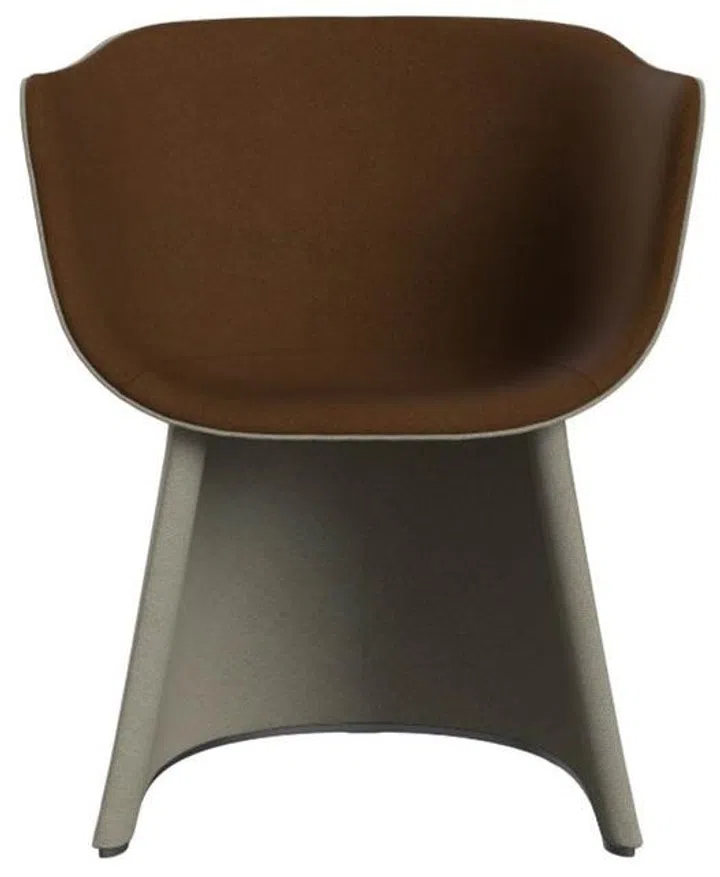
Monolit CM220 By Cecilie Manz ($2,900 - $4,200)
The Monolit CM220, designed by Cecilie Manz for Fritz Hansen and launched in 2024, is a contemporary masterpiece that redefines the boundary between a dining chair and a lounge armchair.
Its significance lies in its “monolithic” silhouette, which Manz conceived as a singular, sculptural form divided into two distinct parts: a protective, horseshoe-shaped base and an embracing, upholstered top. This design serves a dual purpose, providing the user with a sense of acoustic and visual privacy—a “room within a room” effect—while the subtle cut-outs at the front allow for freedom of movement and varied seating postures.
By utilising a padded plywood shell detailed with refined full-grain leather piping, Manz has created a piece that embodies “functional ambiguity,” meaning it is equally at home in a formal dining setting as it is in a relaxed lounge or lobby.
It represents the next generation of Danish design, where understated luxury meets ergonomic innovation to support the long, lingering social interactions typical of modern life.
Shop it here.
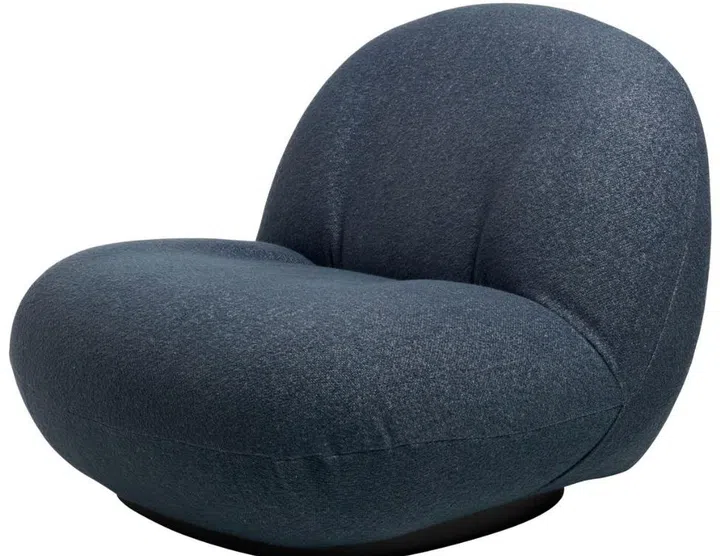
This plush Scandinavian-style lounger was designed by French designer Pierre Paulin for Gubi.
Pacha Lounge Chair by Pierre Paulin ($2,100 - $6,200)
The Pacha Lounge Chair, designed by the legendary French designer Pierre Paulin in 1975, is a groundbreaking icon that revolutionised the concept of “low-level living.” Its significance lies in Paulin’s visionary move to replace the rigid, post-war austerity of the era with a soft, whimsical form that prioritises the human body’s need for cosiness and “sitting on clouds.”
By eliminating traditional chair legs and raising the seat only slightly on a circular base, Paulin pioneered a more relaxed, floor-centric way of inhabiting domestic spaces. The chair’s curvaceous, organic silhouette is achieved through meticulously sculpted foam and inward-inclined stitching, creating a sense of plump, sculptural elegance.
Though it was considered far ahead of its time in the 1970s, the Pacha was successfully reissued by the Danish brand Gubi in 2018, rapidly becoming a staple of contemporary luxury interiors and a favourite of the global design community for its perfect blend of 1970s hedonism and modern ergonomic precision.
Shop it here.
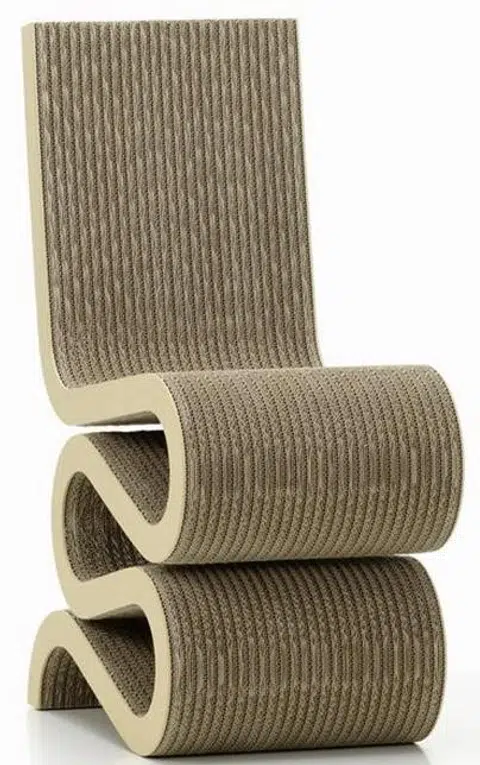
Make a serious statement with this curvy-wurvy design by Frank Gehry for Vitra, designed as part of his ‘Easy Edges’ 1972 furniture series.
Vitra Wiggle Side Chair by Frank Gehry
The Wiggle Side Chair, designed by Frank Gehry in 1972 as part of the “Easy Edges” furniture series, is a revolutionary achievement that transformed corrugated cardboard from a humble packaging material into a sophisticated medium for high design.
Its significance lies in Gehry’s architectural ingenuity; by laminating sixty layers of cardboard with the fluting running in alternating directions, he created a material of surprising structural integrity and durability.
The chair’s distinctive S-shaped “wiggle” is not merely an aesthetic flourish but a functional necessity that provides the necessary tension and spring for a comfortable, slightly flexible seat.
While it appears deceptively simple, the chair embodies the deconstructivist spirit of Gehry’s larger architectural works, challenging traditional notions of “precious” materials and proving that masterful form can elevate the most everyday objects into the realm of permanent museum collections, such as those at MoMA and the Vitra Design Museum
Shop it here.
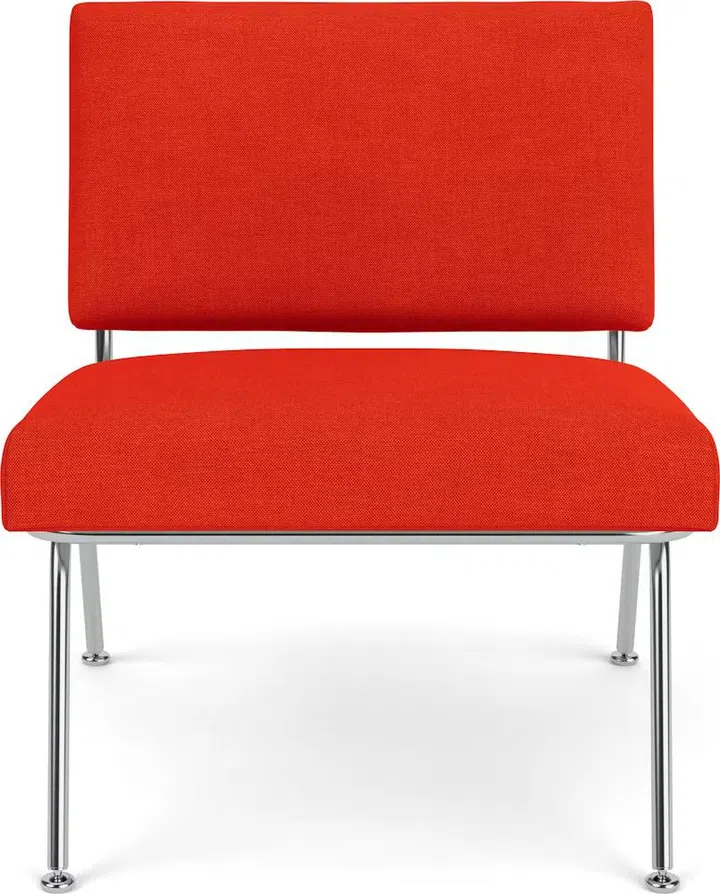
A signature piece from Knoll, the angular chair is available in various strong colours. It was first designed in 1954. Knoll reintroduced the chair in 2023.
Model 31 Lounge Chair by Florence Knoll
The Florence Knoll Model 31 Lounge Chair, designed in 1954, is a quintessential example of the “Knoll Look” and Florence Knoll’s philosophy of “total design.” Its significance lies in its disciplined, architectural silhouette, which was intentionally conceived to translate the vocabulary of modern skyscrapers into interior furniture.
Unlike the sculptural, avant-garde forms of her contemporaries like Eero Saarinen or Harry Bertoia, Knoll’s designs were founded on geometric rigour and the rhythm of structural steel.
The Model 31 features a seamless tubular steel frame that supports precisely scaled rectangular cushions, achieving a visually light footprint while providing a firm, supportive sit.
Often referred to as “the fill-in” furniture because it was designed to harmonise with any architectural setting without overwhelming it, this chair remains a timeless staple of mid-century modernism, celebrated for its understated elegance and rational approach to space.
Shop it here.
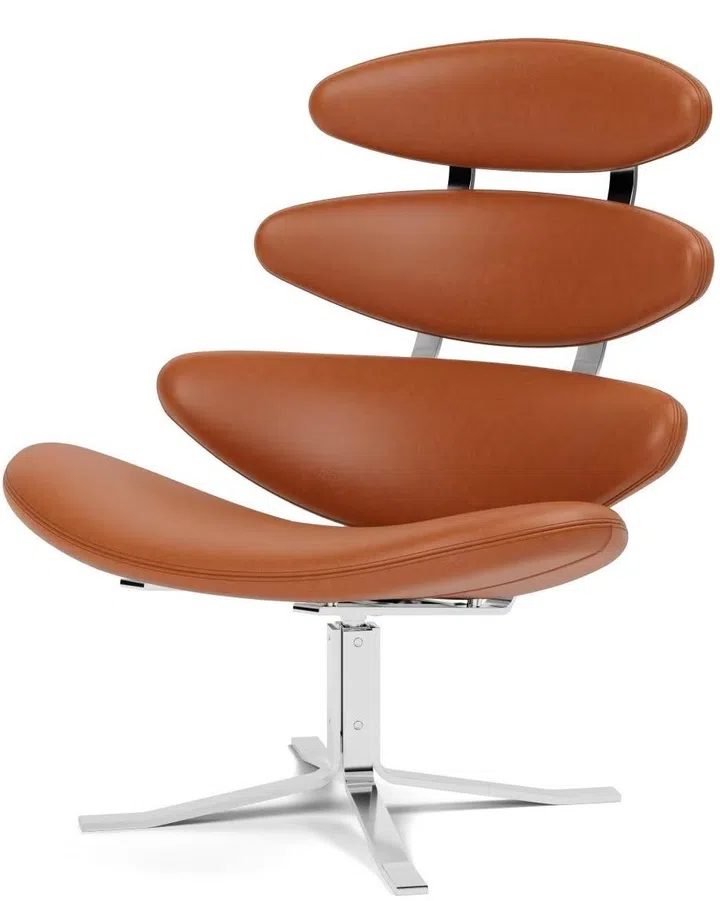
Designed for Danish-born Fredericia, the swivel base chair is a prime example of Scandinavian design.
Corona Classic Lounge Chair
The Corona chair, designed by Poul M. Volther in 1964 and produced by the Danish manufacturer Fredericia (following their acquisition of Erik Jørgensen), is a sculptural triumph of Scandinavian functionalism.
Its significance lies in its daring, skeletal form—a series of four elliptically shaped, padded cushions that decrease in size towards the top, mimicking the anatomy of a human spine and ribs.
The name was inspired by the celestial phenomenon of a solar eclipse, with the “floating” cushions representing the glowing halo of light. Originally conceived in a period of raw material scarcity, the design was a masterclass in resource efficiency, using minimal timber and fabric while providing exceptional ergonomic support.
Its unique transparency allows it to occupy a large visual space without feeling heavy, making it an enduring favourite for avant-garde interiors and a frequent star in cinematic sets, including Star Trek.
Shop it here.