

Apple Vision Pro: New mixed reality headset with 3D video camera priced at US$3,499 (early 2024)
By Alvin Lim -
Share this article
After seven years and billions of dollars, tech giant Apple reveals its first mixed-reality headset, the Vision Pro. Is it worth it — and does it matter?
Apple unveiled a slew of upgrades to existing products at their annual Worldwide Developers Conference (WWDC) — operating system updates across the board, a snappier next-generation chip, and its thinnest laptop yet — but all everyone is talking about the Apple Vision Pro.
Mixed Reality Headset
It is the tech giant’s first foray into the nascent mixed reality market, although the brand insists on calling it a spatial computer rather than what it actually is: A polished, good-looking mixed-reality headset that’s part iPhone, part ski goggles.
Apple Augmented Reality Glasses
Beneath the device’s sleek presentation and shiny aluminium exterior lie billions of dollars of research and a seven-year development process, all to realise Apple chief Tim Cook’s vision of doing for augmented reality (AR) what it did for smartphones, wireless earbuds, and music players in the past.
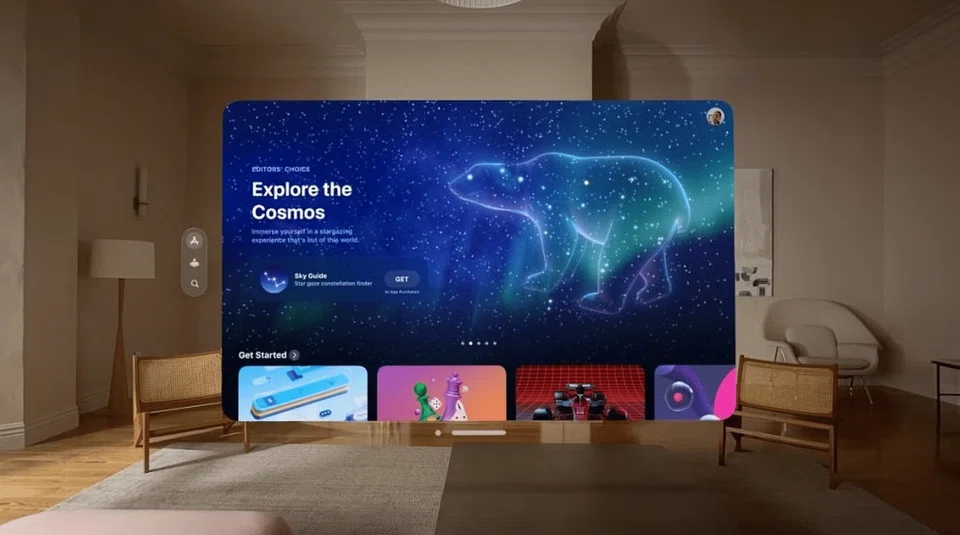
Photo: Apple
Announced Jun 5, 2023
Time is running out for the CEO, best known not for innovation like his firebrand predecessor but for administration — steering the company into relentless growth and ballooning its stock by over 1,000 per cent since taking over in 2011.
Cook plans to retire sometime soon, though no one is sure when. One thing keeping him at the helm — apart from a million-share package that will only finish paying out in 2025 — is the desire to be there for the company’s next big thing since the Apple Watch.
Apple design team didn't want to launch Apple Vision Pro
The executive’s desire to see the project through was so strong, reported the Financial Times, that he released the Vision Pro despite protests from Apple’s design team, who wanted to wait until they had something far sleeker — something more in-line with the brand’s sacred design language.
Apple Vision Pro vs Google Glass
Their original vision, in fact, resembled Google’s ill-fated pioneer AR wearable, the Google Glass, a piece of tech Cook once expressed his disdain for at a 2011 conference.
“There are some positives in the product. It’s probably likely to appeal to certain markets. The likelihood that it has broad appeal is hard to see,” he said.
“To convince people that they have to wear something, it has to be incredible.”
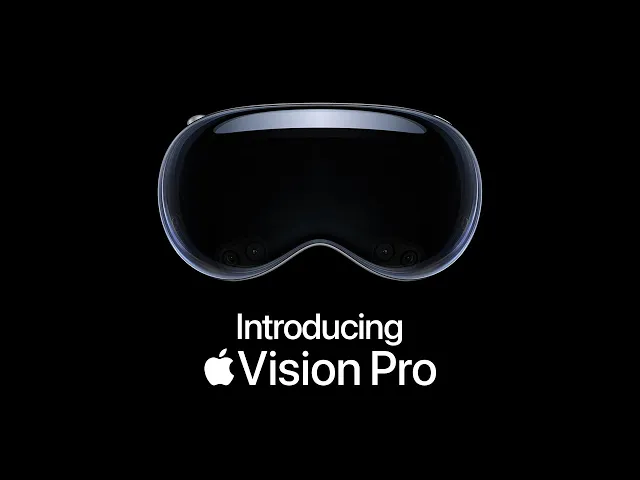
Apple Vision Pro Headset
Still, is the Apple Vision Pro that ‘incredible product’? It certainly looks the part. The headset has a slimmer profile than its contemporaries, partially because the space that’s normally reserved for spectacles has been removed.
Apple Vision Pro Zeiss Lens
Bespectacled folks rely instead on custom lens inserts from German optical manufacturer Zeiss (sold separately for an undisclosed price).
Visual fidelity is also a step up from competitors, said tech reviewers CNET and The Verge after trying the headset, both in terms of 3D video playback as well as a real-time digital recreation of users’ external environments (known as video passthrough), overlaid with the device’s interface.
The Apple Vision Pro’s AR view can be turned into a full virtual reality experience with a dial on the headset, though most other operations — capturing 3D photos and videos, crafting Excel sheets, or posting on social media — can be completed with just your eyes, fingers, and voice.
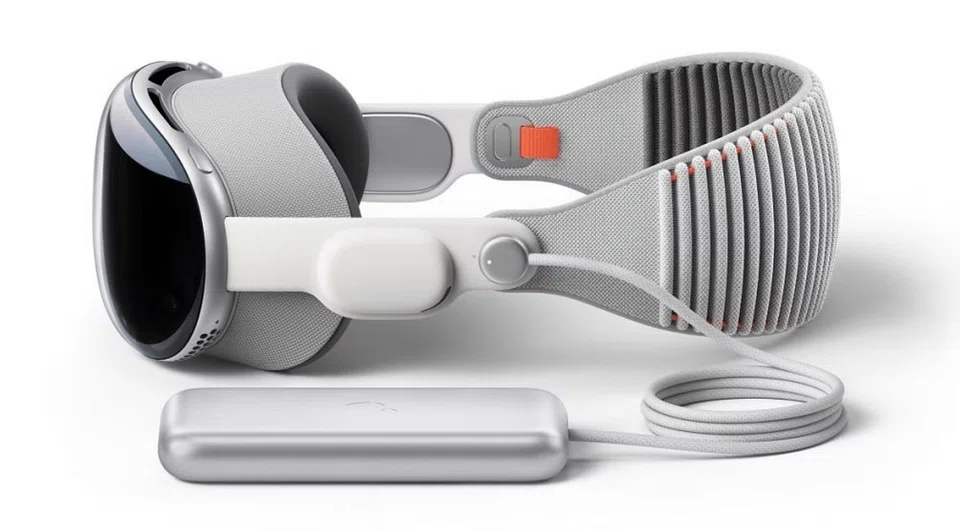
Photo: Apple
Apple Augmented Reality
Still, the headset, despite its protracted development period, is by no means perfect. There are cracks that have shaped the flavour of online discourse surrounding the Vision Pro.
Some complaints are about technical compromises. There’s colour fringing at the very edges of the display, with some noticeable compression and loss of detail from the video passthrough, said The Verge.
And then there’s the external battery, a probable by-product of Apple’s race for sleekness, clunkily connected by wire to the headset and lasting a mere two hours — or about two-thirds through Avatar: The Way of Water, clips of which were used during the headset’s demo — on a full charge.
Others still decry the headset conceptually. Wired and The Verge view the device as an impediment to face-to-face human interaction and, well, reality.
Apple Eyesight: First 3D Camera
The EyeSight feature, for instance, projects users’ eyes onto the headset’s glass front when people are detected nearby. Does Apple expect users to maintain a conversation with the headset on?
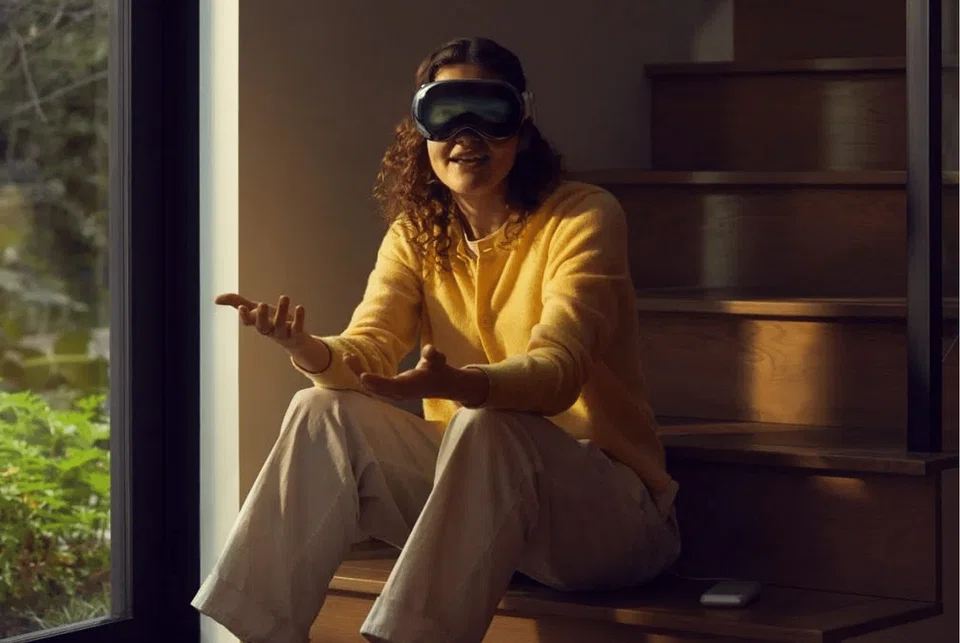
Photo: Apple
Apple Vision Pro Price: $4,700
This is criticism that can be (and has been) levied at other mixed-reality headsets.
And we haven’t even gotten to the headset’s monstrous price tag when it launches in the United States next year: US$3,499 (S$4,700). It’s a figure large (or ridiculous) enough to shock the crowd at WWDC — a crowd accustomed to spending more than a thousand dollars a year on the next iPhone iteration.
Even Apple knows that it is an exceedingly hard sell. According to Bloomberg, the tech giant has revised its initial sales estimate of three million headsets in a year down to a modest and humbling 900,000. It’s a very conservative number, considering the brand sold 230 million iPhones alone in 2022.
But big numbers were never the goal of Apple and Cook when it came to the Vision Pro.
The tech giant, as with almost all of their category-defining releases in the past, managed to get the whole world talking about something.
Their stamp of approval for mixed reality is reinvigorating an industry that was never that exciting after the hype for Zuckerberg’s metaverse died down.
With details and innovations such as application icons that cast realistic shadows on an AR environment, a face-scanned avatar that appears on video calls, or spatial audio and video capture that allows you to recreate a memory a la Black Mirror’s The Entire History of You, the tech giant’s headset has just kicked off an arms race in the mixed-reality space.
What Apple has launched might not be practical, but practicality was never the real pursuit. Instead, the tech behemoth has set out a challenge for Meta, Samsung, HTC, and every other brand in mixed-reality, to ‘think different’ instead of better, faster, and bigger, and to make an AR wearable that’s nothing short of incredible.
And if Apple can do with a mixed-reality headset what it did with the iPhone, iPad, Bluetooth headsets — and possibly even wireless charging — you can bet that we’re looking at a tech reality that’s about to get so much more exciting.
This article was first published in The Peak.