
Thinking of Switching to Gas Water Heaters? Read This First
Did you know? Your water heater is the third most energy-consuming appliance in your home. Here are five myths about gas water heaters that just might surprise you.
By Home & Decor Team -

Share this article
Shopping for home appliances comes with no shortage of dilemmas. Should you get a handheld vacuum? A top- or front-load washer? An induction or gas hob?
One humble appliance that often slips under the radar is the water heater — despite coming just behind your air-conditioning and refrigerator in the home electricity consumption department.
Choosing between electric and gas models also affects your overall shower experience. Not to mention, your utility bills and carbon footprint.
Still, many default to the former without much thought.
In this article, we break down five myths that have long surrounded gas water heaters. Myths, that perhaps you might harbour yourself!
1. Gas water heaters are not an affordable option
This myth seems difficult to dispute at first glance. Compared to their electric counterparts, gas water heaters are more expensive to purchase, install, and activate. But that doesn’t make electric models the more affordable option.

According to a 2019 study by the National Environment Agency (NEA), switching from an electric storage heater to a gas heater can save you about $1,200 over the latter’s 10-year lifespan, because the latter is more energy-efficient than you would expect. And since water heaters are the third most energy-intensive appliance in the home, the savings quickly compound, one hot shower at a time.
2. They are less eco-friendly
Most of us assume electricity is the most efficient choice for home appliances. However, for water heating in Singapore, gas takes the lead. Here’s where it gets a little technical.

Gas water heaters run on Singapore’s piped town gas, while electricity in Singapore is largely generated by burning natural gas.
Imagine it this way. When natural gas is burned to generate electricity, a significant portion of energy is already lost in the process. Then, as that electricity is transmitted to homes, even more energy is lost along the way.
Furthermore, electric storage heaters are inherently less efficient than gas instantaneous heaters, with significantly higher carbon emissions than their gas instantaneous counterparts.
Based on a study by Professor Lee Siew Eang at the National University of Singapore, electric storage heaters are estimated to generate about five times the emissions of gas instantaneous models. In absolute figures, households that switch heaters could reduce their carbon emissions by 320kg a year, per user.
On top of that, electric storage heaters have to keep a tank of water hot at all times, which means they continue drawing power even when no one is showering. This “standby loss” may be invisible, but it is enough to make any environmentally conscious (or cost-conscious) Singaporean wince.
3. It’s too late to switch from electric to gas
Jumping ship from electric to gas is not only possible; it’s less disruptive than you would imagine, with the process taking as little as 3 to 5 hours. And since the works are usually confined to the service yard, you needn’t brace yourself for a mini construction site or a deep-cleaning sesh after.

When you engage City Energy to switch from electric to gas, you also benefit from a single point of contact. Without lifting a finger, the switch can happen in the background while you carry on with your day.
Moreover, their one-stop seamless solutions packages covers everything from electrical termination and minor carpentry adjustments to disposal of the old unit.
4. They are an outdated option
Today, many new models in the market are compact and slim, freeing up bathroom space and sitting discreetly in the service yard. Some even come with high-tech interfaces that meet the expectations of a smart home.
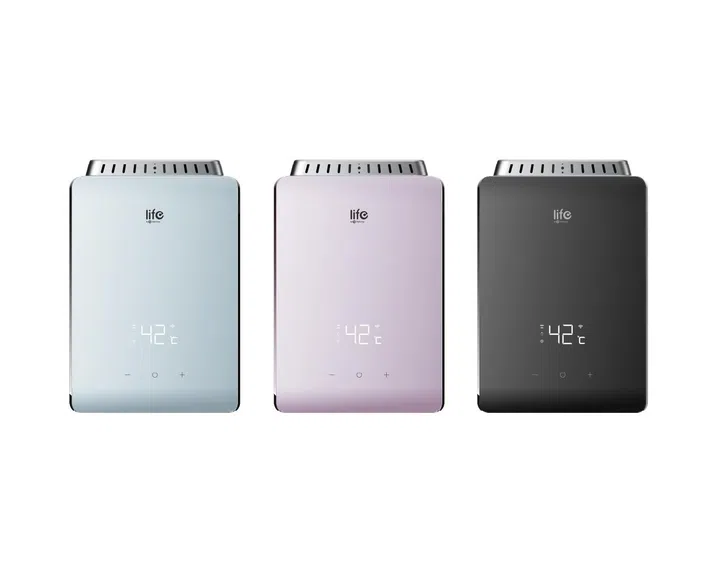
The latest range comes in a sleek glass finish and six colourways, designed to sit comfortably beside other premium appliances in a modern home. You can even control the heater via a mobile app, scheduling your showers down to the minute if you’re a creature of habit, or keeping an eye on usage patterns in case someone in the household has been staging private concerts in the bathroom.
5. They are ‘dangerous’
When we hear the word “gas”, our minds go straight to worst-case scenarios. Quickly, we conclude that electric appliances must be safer. Yet, the top two causes of fires in residential premises in 2025 are unattended cooking and fires of electrical origin.

The real question when shopping for a water heater, then, is less about what powers it than how it’s designed. The gas water heaters sold by City Energy, for instance, not only meet the rigorous European BS EN 26 standard but also incorporate 25 safety features, including automatic shut-offs when the flame goes out.
And if that doesn’t put your mind at ease, you could always arrange for periodic inspections to ensure everything is working exactly as it should, long after the renovation dust settles.
Bonus: When gas makes the most sense
Who are gas water heaters best suited for? Well, they are suitable for all apartments of course!
But especially for you, if any of the following sounds familiar.

- Small spaces: Unlike most electric storage heaters, gas water heaters are not installed in the bathroom. This frees up valuable space and keeps your wabi-sabi sanctuary free from a bulky tank overhead.
- Larger households: If you have multiple bathrooms, or family members who shower back-to-back or at the same time, a gas water heater provides unlimited supply of hot water. Which means no one has to wait or endure an unwelcome cold surprise midway through.
- Bathrooms with rain showers and bathtub: Nothing is more anticlimactic than a weak trickle from a statement rain shower or freestanding tub. Gas heaters provide unlimited supply of hot water with good water pressure, so you actually get your money’s worth from those luxe fittings.