
6 Things You Should Know about the New Sustainability Furniture Mark Progressive Framework
It is a structured, 3-stage roadmap to help furniture businesses build sustainable practices and produce safer, low-emission furniture to meet growing buyer and indoor air quality expectations.
Share this article
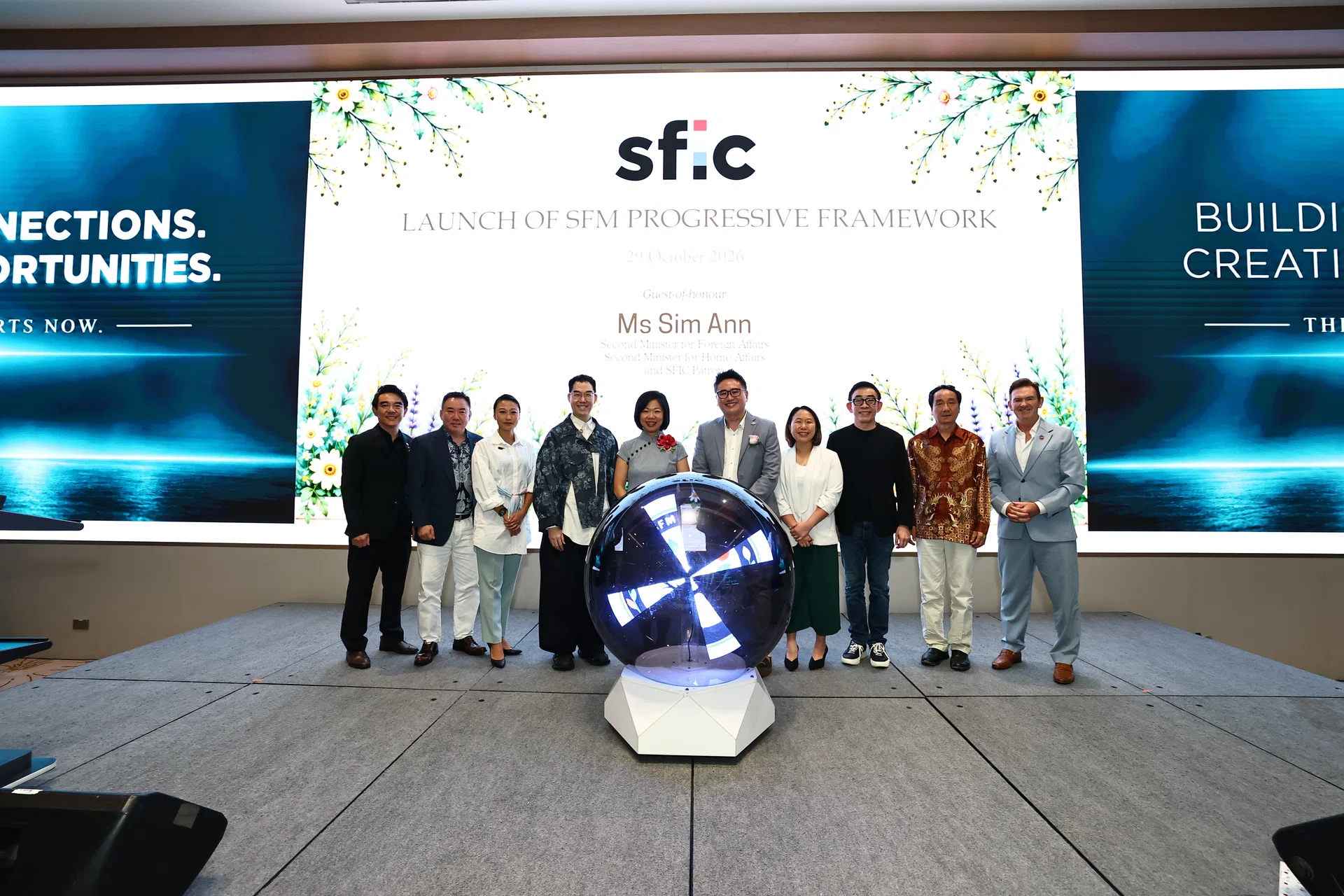
On 29 October 2026, the Singapore Furniture Industries Council (SFIC), supported by Enterprise Singapore (EnterpriseSG), officially launched the Sustainability Furniture Mark (SFM) Progressive Framework.
Officially unveiled by Guest of Honour Ms Sim Ann at the SFIC Annual Industry Dinner, this initiative equips furniture, furnishings, and fit-out enterprises with the tools to meet rising global expectations for healthier indoor environments.
Whether you are a business owner in the built environment sector, an interior designer, or a conscious consumer, several key takeaways define this new industry milestone.
It addresses a critical health priority for city dwellers
According to the Building and Construction Authority (BCA), urban residents spend up to 90% of their time indoors, making indoor air quality essential to human wellbeing.
With national regulatory focus increasingly shifting toward formaldehyde and Total Volatile Organic Compounds (TVOCs), ventilation alone is no longer enough to mitigate health risks.
The framework establishes common industry benchmarks that help suppliers stay ahead of evolving standards while giving corporate buyers and everyday consumers clear reassurance that the furniture they choose is safe.
It provides a structured, three-stage pathway for businesses
Rather than expecting companies to overhaul their operations overnight, the framework meets businesses wherever they are in their sustainability journey through three progressive phases.
The first stage, Discover, focuses on self-diagnosis through a practical gap analysis to identify priority areas for improvement.
The second stage, Build, centers on capability building and B2C readiness, helping firms develop healthier indoor products, responsible business practices, and a foundational understanding of greenhouse gases.
Finally, the Scale stage prepares companies for B2B buyer expectations through stronger documentation, transparent sustainability communication, and responsible supply-chain fundamentals.
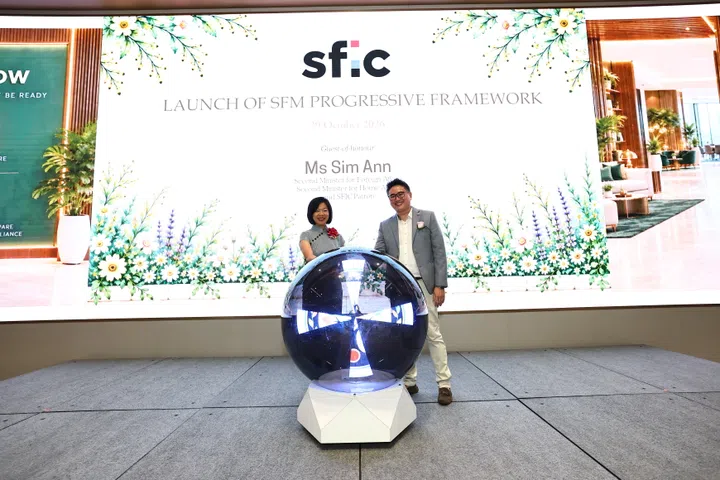
L-R: Ms Sim Ann, Second Minister for Foreign Affairs and Second Minister for Home Affairs; Mr Joshua Koh, President, Singapore Furniture Industries Council
It complements existing SFM recognition
Businesses already familiar with the Sustainability Furniture Mark One Leaf and Two Leaf product recognitions for low-formaldehyde and low-TVOC furniture do not need to start from scratch.
While the existing SFM certification validates qualifying end-products, the new Progressive Framework acts as a practical roadmap to help enterprises build the technical capabilities and knowledge required to earn those credentials.
Together, they establish credible product benchmarks that simplify material selection for specifiers and build trust with buyers.
It is backed by a hands-on Sustainability Playbook
Launched a day prior at SFIC’s Annual General Meeting, the Sustainability Playbook for the Furniture Industry - developed by EnterpriseSG and SFIC in partnership with Ernst & Young - serves as an actionable self-help companion to the framework.
Underpinned by overarching business strategy and proper data governance, the Playbook provides step-by-step guidance, tools, and local case studies across six core segments of the value chain: Design, Source, Make, Distribute, Sell, and End-of-Life.
From reducing manufacturing waste to launching product take-back and refurbishment initiatives, it translates broad sustainability goals into daily operational practices.
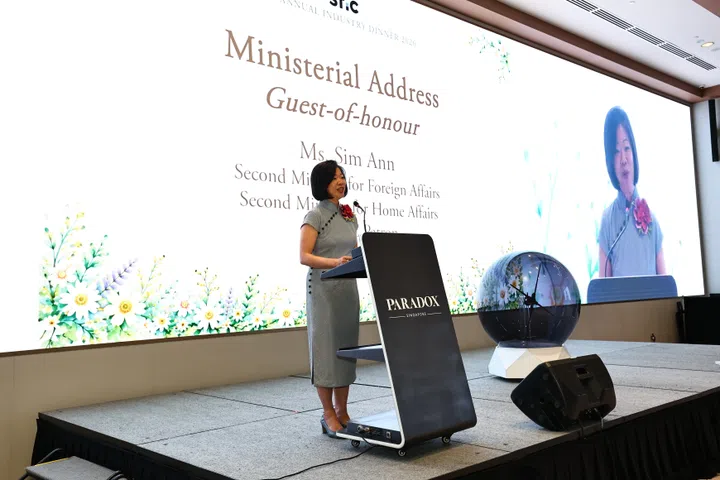
Speech by Ms Sim Ann, Second Minister for Foreign Affairs and Second Minister for Home Affairs.
Early adopters are already seeing tangible commercial returns
Embracing sustainability under the SFM is proving to be a strong driver of business growth and innovation rather than a mere compliance cost.
Furniture retailer Scanteak reported an increase of roughly 10% in its sales closure rate, noting that SFM recognition acts as a visible symbol of reliability that reassures customers about low formaldehyde levels.
Meanwhile, Speco - which saw demand for its green solutions jump by 60% since 2024 - leveraged SFM recognition to pitch its offerings for green building certification projects while developing more effective, cost-competitive products.
Cross-industry partnerships and consumer campaigns will drive future demand
To ensure participating businesses see real market opportunities, SFIC is actively cultivating demand across both B2B and B2C channels.
Ahead of the launch, SFIC signed seven Memorandums of Understanding (MOUs) with key trade associations - including the United Nations Global Compact Network Singapore (UNGCNS), the Society of Interior Designers (Singapore) (SIDS), and major retail, renovation, and building material councils - to promote sustainable procurement and knowledge sharing.
Looking ahead, SFIC also plans to establish formal agreements with project specifiers and roll out social media campaigns with key opinion leaders (KOLs) in 2027 to boost consumer awareness and recognition of SFM-marked products.