
Roborock Unveils the World’s First ‘Stair-Climbing’ Vacuum at CES 2026
Move over, LiDAR. Stairs? No problem.
By Home & Decor Team -
Share this article
In the ever-evolving world of smart home tech, one name has consistently pushed the boundaries of what’s possible: Roborock. Fresh out of CES 2026, the brand has just turned the industry on its head by unveiling a robot that doesn’t just vacuum your floors—it “walks” over your life’s obstacles.
Here is why the new Saros 20 series and the revolutionary Saros Rover are the talk of Singapore’s home decor scene this year.
The “Walking” Vacuum
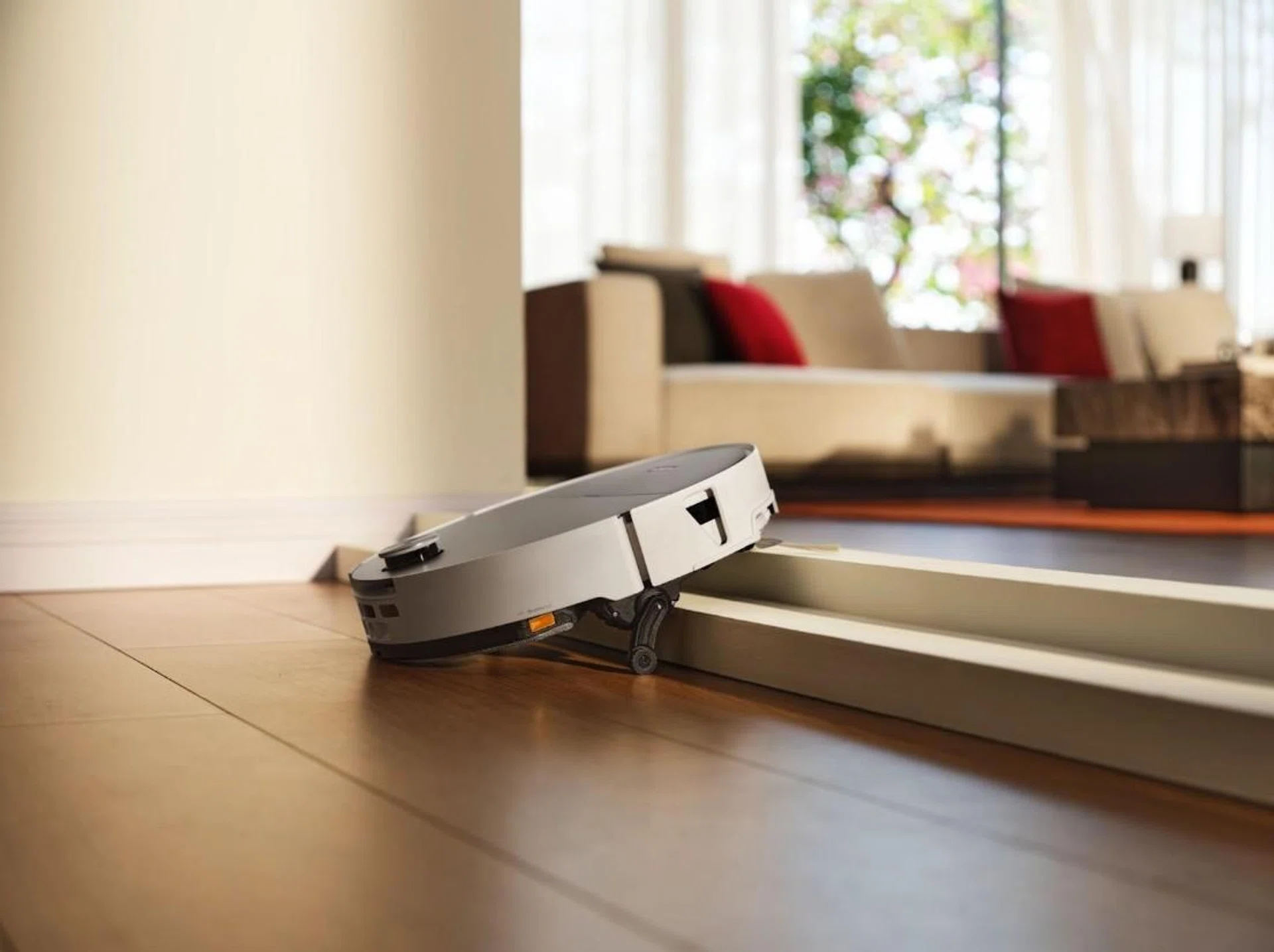
Why the Saros Series looks like a game changer. For years, the “Achilles’ heel” of robot vacuums has been the humble door threshold or the dreaded staircase. The Saros 20 series introduces the AdaptiLift™ Chassis 3.0, a mechanism that allows the vacuum to raise its body up to 8.5 cm—roughly the height of a credit card standing on its edge. This means no more getting stuck on kitchen sliding door frames or thick transition strips. Here are the key features at a glance.
The new Roborock AdaptiLift™ Chassis 3.0 adjusts chassis height and wheel positioning to maintain traction across two closely spaced floor transitions, such as kitchen sliding door frames.
Two-Wheel Legs
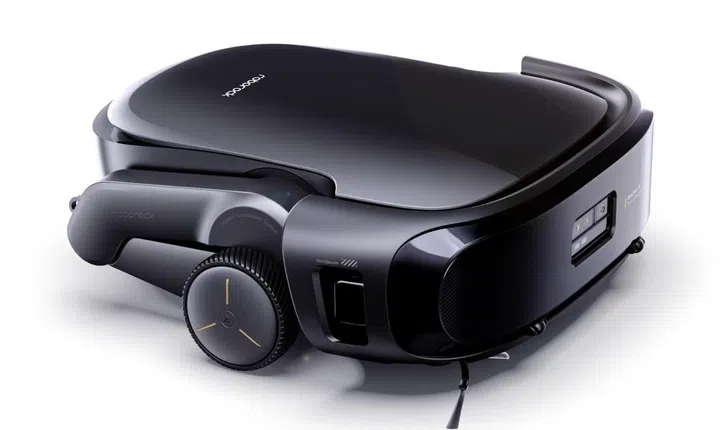
Featured on the Saros Rover, these legs allow the robot to jump, turn agilely, and—for the first time ever—clean and climb stairs independently.
StarSight Autonomous System 2.0
A vision-based brain that recognizes over 200 objects, scanning 21x faster than traditional LiDAR.
RetractSense (Saros 20 Sonic)
A retractable sensor that lets the vacuum “duck” under low-profile designer sofas and cabinets where others simply can’t reach.
Dual-Spinning vs. Sonic Mopping
High-traffic homes get the dual-spinning mop (Saros 20), while those with tight layouts benefit from the vibrating VibraRise® 5.0 (Saros 20 Sonic).
Who is it for?
If you live in a landed property or a maisonette, the Saros Rover is your holy grail. It is designed to clean every individual step as it moves between floors.
If your home features “floating” furniture or low-clearance Scandinavian pieces, the Saros 20 Sonic is the only bot slim enough to clean underneath without getting stuck.
With 35,000Pa of suction (in the Saros 20 models), these are built for high-traffic “mess zones” for families with children or pets.

The Saros 20 uses the StarSight™ Autonomous System 2.0, a vision-based navigation platform that scans its environment up to 21 times more frequently than conventional LDS LiDAR systems.
Market Comparison
While competitors like Dreame and Ecovacs have focused on “robotic arms” to reach corners, Roborock has pivoted to mobility. The Saros series moves more like a living creature than a puck, making it significantly better at navigating “messy” homes with cables and uneven floors.
Price Comparison (Estimated 2026 Singapore Market)
| Robo Vacuum | Estimated Price | Best for... |
|---|---|---|
| Roborock Saros 20 | ~$1,599 - $1,699 | Best for open-plan, high-traffic homes |
| Roborock Saros 20 Sonic | ~$1,799 | Retractable sensors for low furniture |
| Dreame X50 Ultra | ~$1,699 | High suction + extendable side mops |
| Ecovacs Deebot T50 Pro | ~$1,499 | Strong AI obstacle recognition |