
Why Your Home Feels So Hot in Singapore: 9 Smart Fixes That Don’t Involve the A/C
Even with the air-conditioner running, many homes still feel warm and stuffy. Here’s what designers and specialists say actually makes a difference in Singapore’s climate—and what doesn’t.
By Gwyneth Goh -
Share this article
This article is part of Home & Decor’s monthly editorial topics series — crafted around real, current problems that many Singaporean homeowners face. Jam-packed with personal recounts, opinions, and expert takes, we hope that these weekly pieces will inspire you, and bring you solutions that you can take into your own home.
April’s topic: ‘Living in the Tropics’. Article 3/5.
Step into many homes in the late afternoon, and the problem is immediately familiar: the air feels heavy, the floors are warm underfoot, and the sun’s rays seem to linger long after it has passed. Turning on the air-conditioner helps, but not always in the way homeowners expect.
That’s because much of the heat has already entered and settled into the space. In Singapore’s tropical climate, factors like solar gain through windows, trapped airflow, and heat-retaining materials all play a role. Addressing these issues early, or even after renovation, can significantly improve how a home feels day to day.
The good news: comfort isn’t just about cooling harder. It’s about reducing heat build-up in the first place, and using the right combination of strategies to manage light, airflow, and materials. Here are nine that interior designers and specialists consistently rely on.

Applying window film directly to the glass helps reduce heat before it enters the home.
#1. Stop heat at the window, not after it enters
Most homeowners try to cool a room after it has already heated up—by lowering the air-con temperature or running it for longer. Unfortunately, in many Singapore homes, especially those facing strong afternoon sun, the bigger issue is how much heat is entering in the first place.
“An effective window film solution helps to reduce solar energy from entering through the windows, and is part of the total solution to cool down the home,” says Steve Pang, a sales consultant from Jestac, a Singapore-based window film specialist and authorised distributor of 3M architectural films.

Different window films offer varying levels of heat rejection and light transmission, depending on the needs of the space.
Windows are typically the largest and most exposed surfaces in a home. When left untreated, they allow heat to pass through and build up on floors, walls, and furniture—which then continue releasing warmth even after the sun has moved.
This is why designers often prioritise treating windows early, especially in west-facing homes. Solutions like window film, along with the right blinds or curtains, help reduce how much heat enters the space in the first place—instead of trying to cool it down after it has already built up.
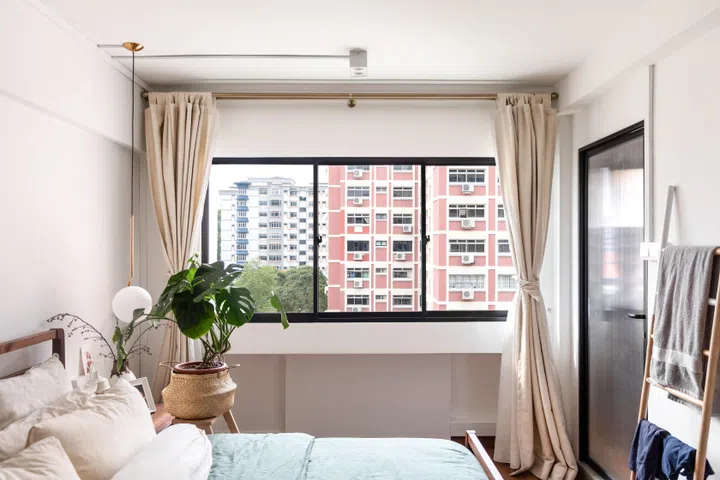
Sheer curtains soften glare and diffuse light, but are typically used alongside other solutions to manage heat more effectively.
#2. Choose solutions that block heat, not just light
A dimmer room doesn’t necessarily mean a cooler one—a distinction that is often overlooked when choosing window treatments.
“The key components of the solar spectrum are ultraviolet (UV), visible light and infrared (IR),” explains Steve. “Glare reduction is about reducing visible light… Heat rejection is about reducing transmission of heat energy from the solar infrared wavelengths.”
Filtered daylight can still carry heat into the room, gradually warming surfaces even when glare is reduced.
In other words, curtains or blinds are effective at softening glare and improving visual comfort, but they work differently from solutions that reduce heat at the glass itself. This is why some spaces still feel warm even when they appear shaded.
For homeowners, understanding this difference is key. The most effective approach is often to combine strategies—using window film to reduce heat gain, alongside curtains or blinds to manage light, privacy, and overall comfort.
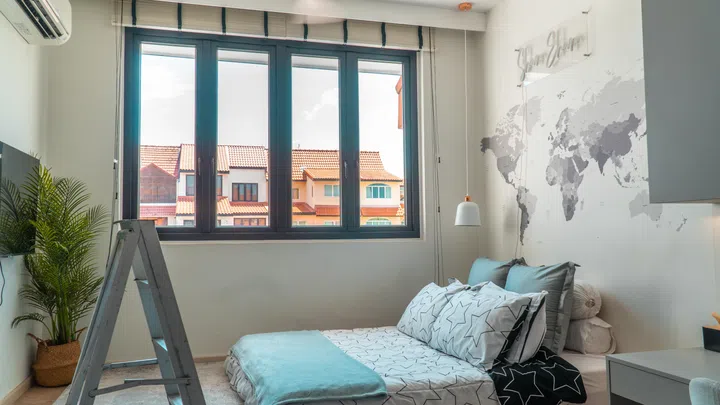
Before: without treatment, direct sunlight can quickly heat up a room and make it uncomfortable during peak hours.
#3. Use window film to reduce heat at the source
Among the most effective ways to manage heat gain is to intervene at the glass itself—before solar energy enters the room.
“Window film rejects heat at the glass level, before it enters the room,” says Steve. “Curtains and blinds, on the other hand, block sunlight only after it has already passed through the glass and turned into heat.”
This distinction is important. By the time sunlight passes through untreated glass, much of its heat has already been absorbed into the space. Window film works earlier in the process, reducing overall heat build-up while still allowing natural light to enter.
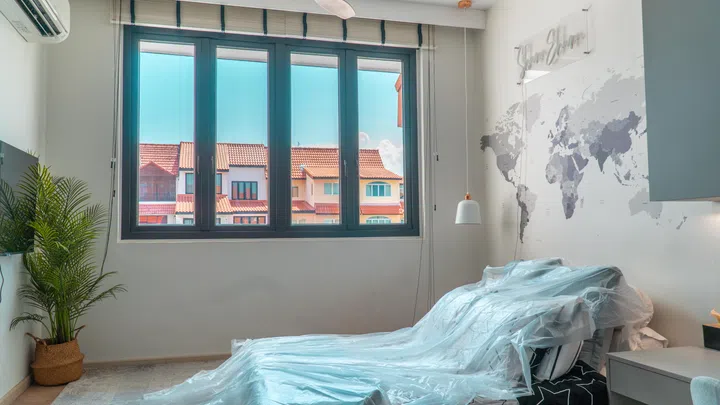
After: with window film applied, glare is reduced and the space remains bright, but noticeably more comfortable.
In real-world applications, the difference can be noticeable. “Most homeowners can expect a reduction in heat intensity—between 2 to 5 degrees Celsius, along with less glare almost immediately after installation,” adds Raymond Hay, a senior sales consultant at Jestac.
That said, window film is not a complete solution on its own. It reduces heat gain but does not eliminate heat entirely, making it most effective when paired with other window treatments. Setting realistic expectations—and layering solutions—is key.
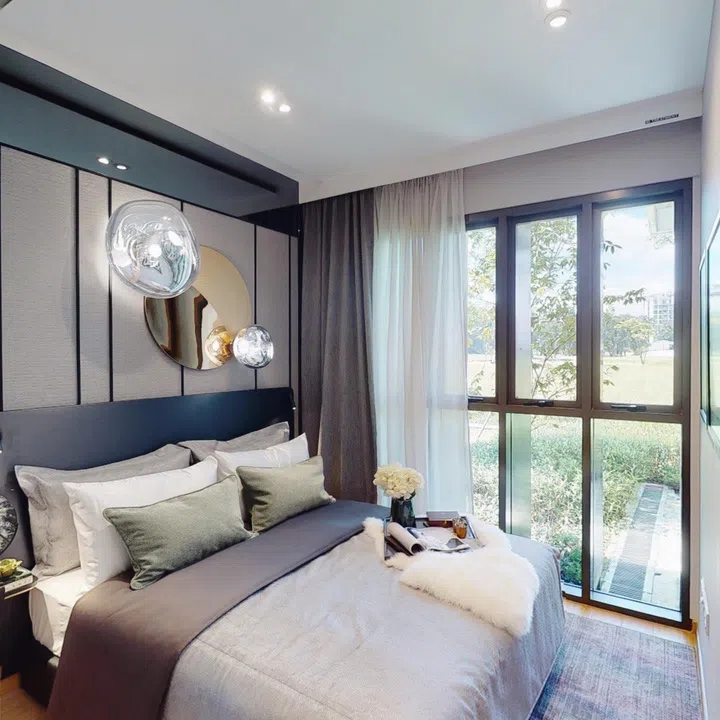
Layering sheer and blackout curtains allows homeowners to adjust light, privacy, and comfort throughout the day.
#4. Layer window treatments for better performance
No single solution does everything. While window film helps reduce heat at the glass, additional layers within the room are often needed to manage light, privacy, and comfort throughout the day.
This is where curtains and blinds come in. Used together, they allow homeowners to adjust how much light and heat enters the space at different times of the day.
“Window treatments are quintessential to reducing heat and improving energy efficiency,” says Ray, business development manager of Fabrik Etc, a Singapore-based curtains and blinds specialist with over 40 years of experience. “We would recommend layering curtains and blinds with solar films for even more heat reduction.”
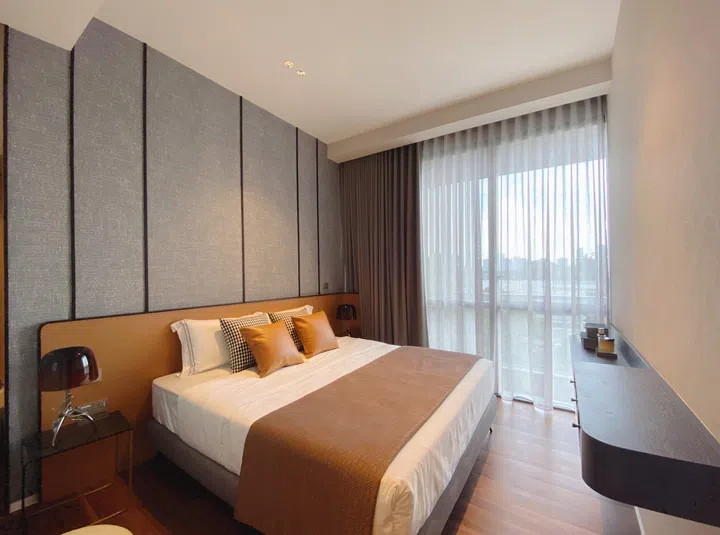
Using multiple window treatments together helps balance glare control, privacy, and overall comfort.
For example, sheer curtains can soften glare during the day while still allowing natural light to filter through—making them suitable for everyday use. Heavier curtains or blinds can then be drawn during peak sun hours, adding another layer of protection when heat and glare are at their strongest.
By combining these elements, homeowners can better control both light and comfort throughout the day, rather than relying on any single solution to do everything.
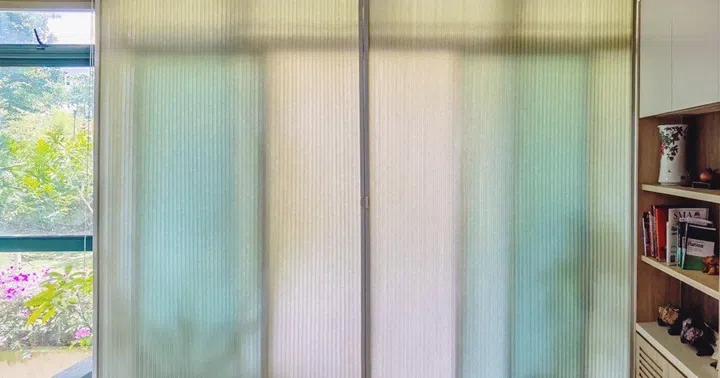
Installed across the window, honeycomb blinds diffuse daylight while creating a layer of trapped air that slows heat entering the room.
#5. Use insulating blinds and lined curtains to reduce heat build-up
Beyond reducing heat at the window, another important strategy is to slow down how heat moves within the room itself.
Certain window treatments are designed to do exactly this. Among the most effective options are honeycomb blinds, named for their cellular structure when viewed from the side. “The honeycomb structure traps still air inside each cell, creating a buffer layer between the hot window and your room,” Ray explains. “As air is a poor conductor of heat, they slow down heat transfer from the external environment.”
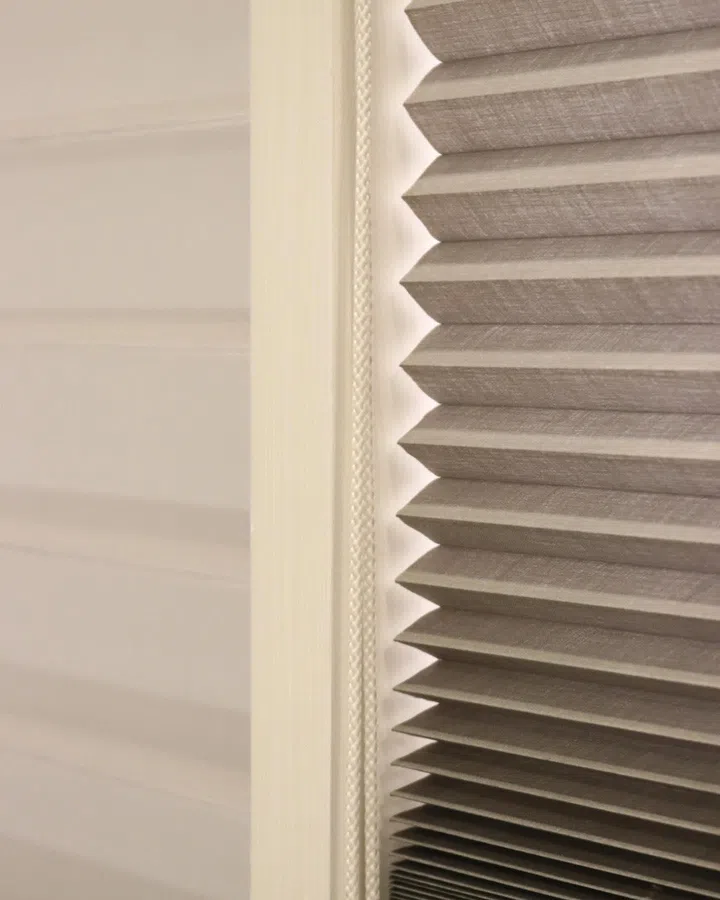
The pleated, cellular structure traps air within its pockets—an insulating layer that helps reduce heat transfer from the glass into the interior.
Other solutions work in similar ways. Reflective aluminium-coated roller blinds help bounce heat back outwards, while double-lined blackout curtains create a thicker barrier that slows both light and heat penetration.
These solutions don’t eliminate heat entirely, but they significantly reduce how much of it builds up indoors. In sun-exposed homes, that added layer of insulation can make a noticeable difference to comfort over the course of the day—especially during those peak afternoon hours.
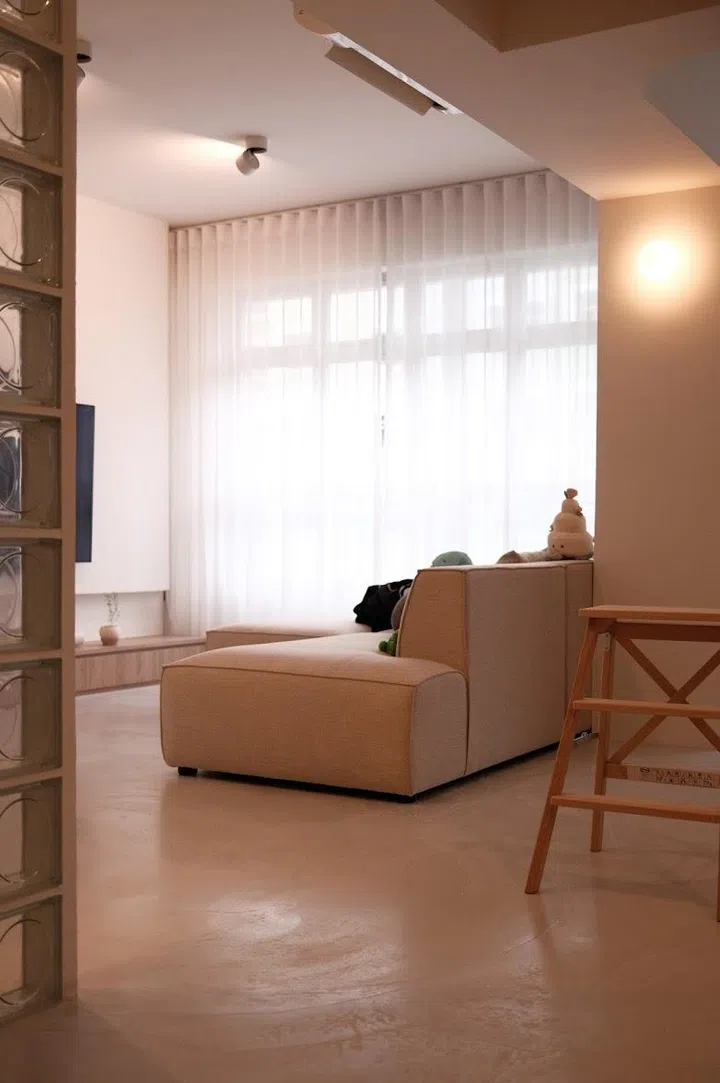
An open layout with minimal visual barriers allows air to move more freely through the space, helping heat dissipate rather than linger.
#6. Fix the airflow, not just the temperature
Even with the right window treatments, a home can still feel warm if air isn’t moving properly. In many flats, the issue isn’t just heat—it’s how that heat gets trapped.
Cross ventilation is key. Jake Lee, founder of local design-and-build firm Persqft, says, “For the home layout itself, we try to create an unblocked cross-ventilation path, from the main door to the furthest window.”
In practical terms, this comes down to how openings align. When windows and doors sit along the same airflow path, air can move more freely, entering from one side and exiting through the other. But when that path is blocked, whether by closed doors, partitions, or even furniture, air stagnates and heat lingers.
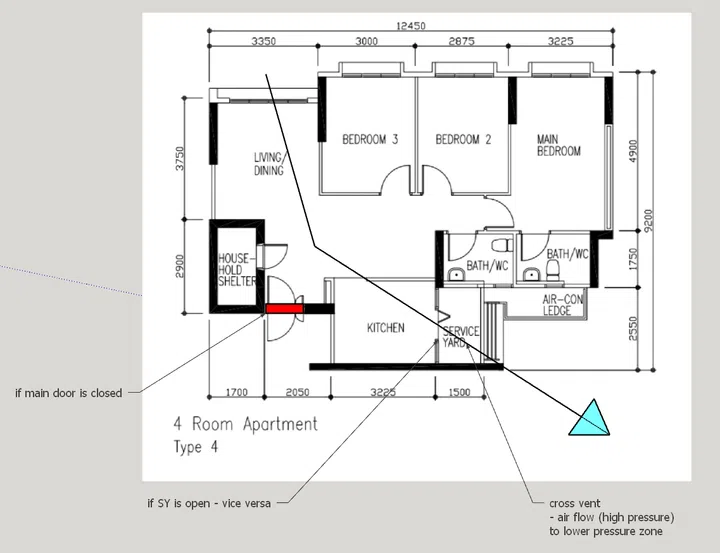
When openings align to form a clear pathway—from the living room windows to the service yard—air can move through the home, improving ventilation and reducing heat build-up.
Even small adjustments can make a difference. Keeping internal doors open, aligning openings where possible, or avoiding layouts that trap air in enclosed zones can help restore movement through the space.
Rather than relying solely on lowering the air-conditioning temperature, improving airflow allows the same cooling to feel more effective, because heat is no longer sitting still within the room.
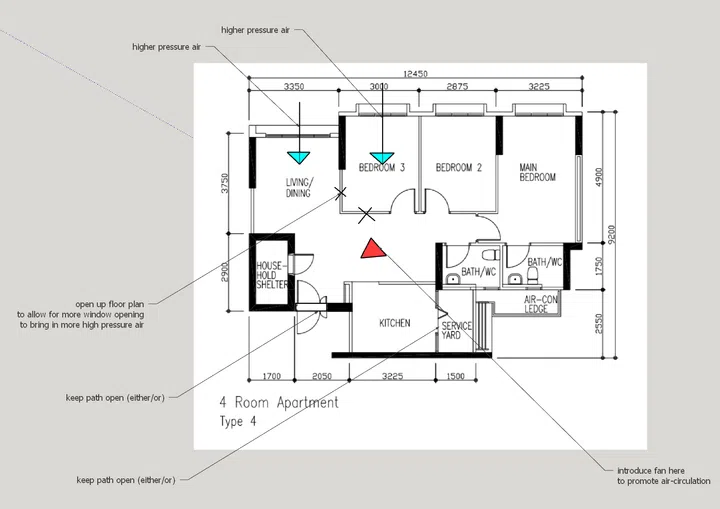
A ceiling fan positioned along the main airflow path helps move air through the home, supporting cross ventilation and reducing stagnant heat pockets.
#7. Use fans to support air movement
“Ceiling fans and aircons are a must,” says Jake.
Once airflow paths are established, the next step is to keep that air moving. Fans don’t cool the air itself, but they help circulate it, pushing warmer air away from occupied areas and preventing heat from settling in one place.
“Fan positioning in rooms can be pretty standard,” Jake adds. He also illustrates how placing a fan within the main living area can support overall air circulation.
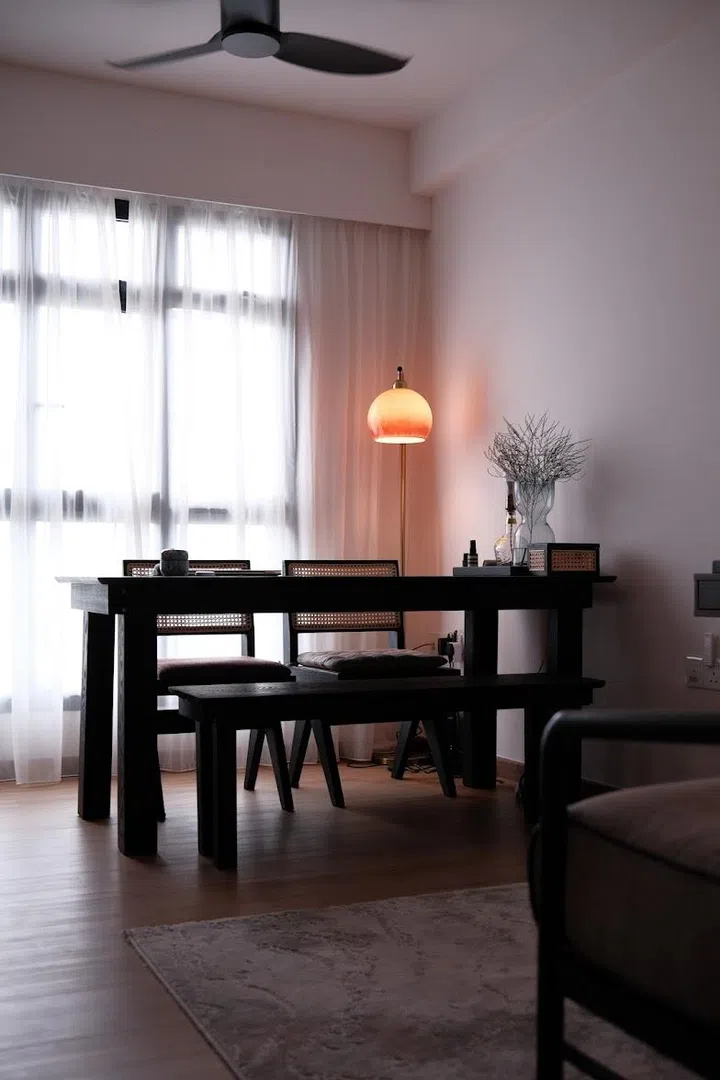
In practice, a well-placed ceiling fan gently circulates air across the dining area, improving daily comfort without over-reliance on air-conditioning.
As shown, positioning a ceiling fan within the main living zone helps distribute air more evenly across the space, especially along the natural airflow path. In layouts where ventilation is weaker or partially blocked, this added movement can make a noticeable difference to comfort, reducing the need to rely on lower air-conditioning temperatures.
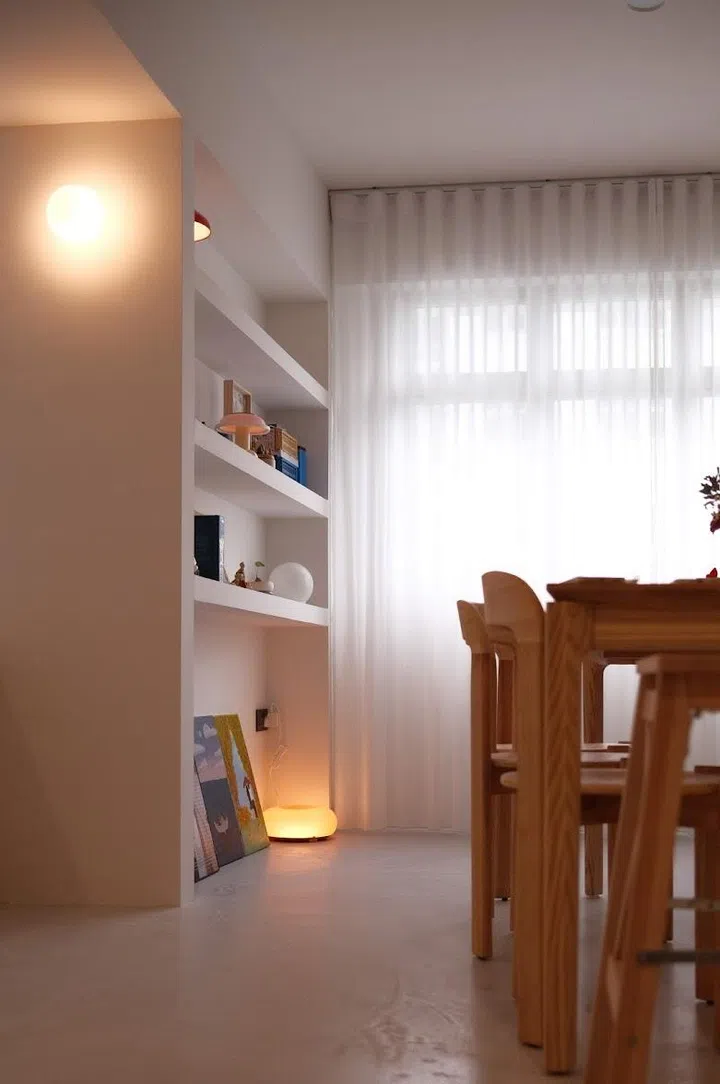
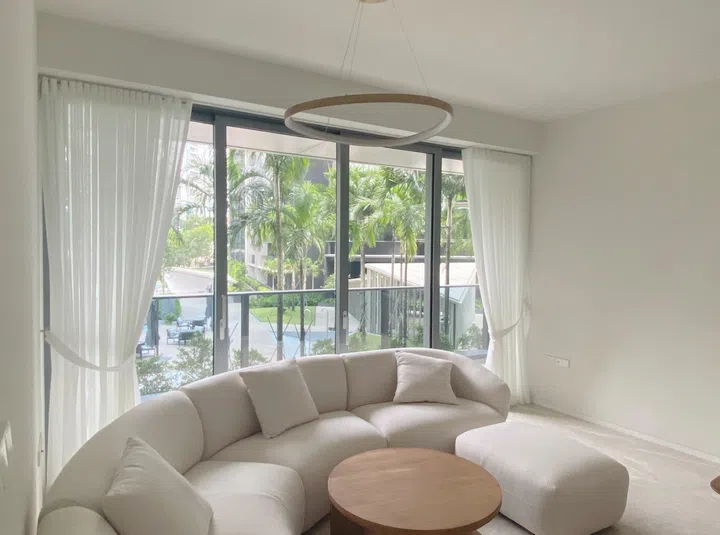
Light-toned finishes and sheer curtains reflect daylight rather than absorb heat, helping the space feel brighter and more comfortable throughout the day.
#8. Choose materials and finishes that don’t retain heat
Beyond airflow and insulation, the materials within a home also influence how heat is absorbed and retained over time.
“Warm makes the space warmer, and neutral can feel fresher,” Jake notes.
In practice, he recommends starting with a lighter material palette. “From the house design angle, I’d recommend going with light paint colours. Try to use materials that don’t trap as much heat, especially nearer to windows, such as a cool stainless-steel bench by the window.”
This becomes especially important in sun-exposed areas, where surfaces can store and radiate heat back into the room long after the sun has moved.
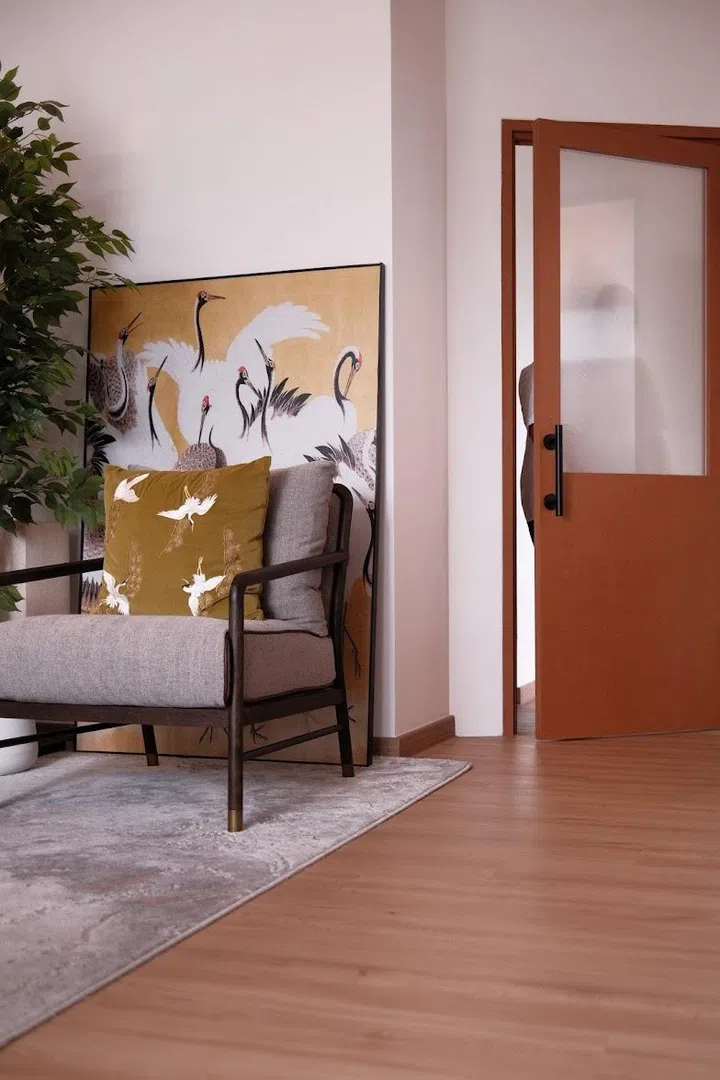
A soft, neutral palette paired with breathable materials reduces heat retention, while the introduction of greenery begins to shape a cooler, more restful atmosphere.
Jake also highlights that improving comfort is rarely about a single intervention, but a combination of smaller moves layered together. “Install window films, adopt lighter colour strategy for furnishing, change paint material/colour for certain areas, change lighting colour temperature, maybe adjust furniture placement to ensure vent path is unblocked, introduce fans to encourage air movement.”
There are also newer materials that can support this approach. “Also, there’s indoor paint that helps with heat gain.”
Taken together, these strategies don’t eliminate heat, but they reduce how much is absorbed—and how long it lingers—making a noticeable difference to everyday comfort.
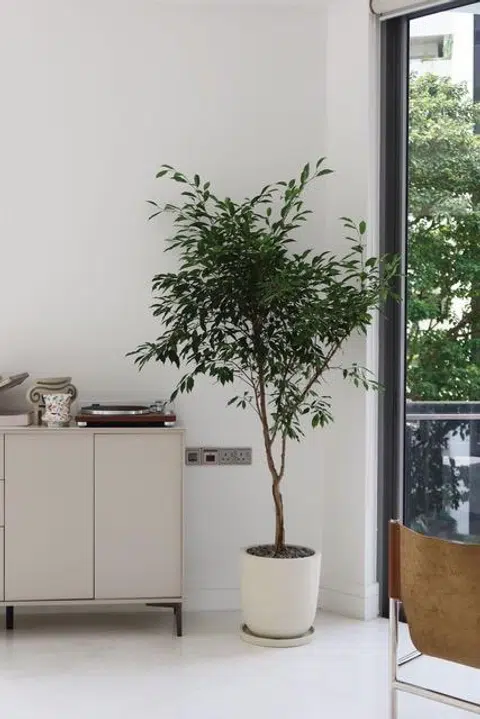
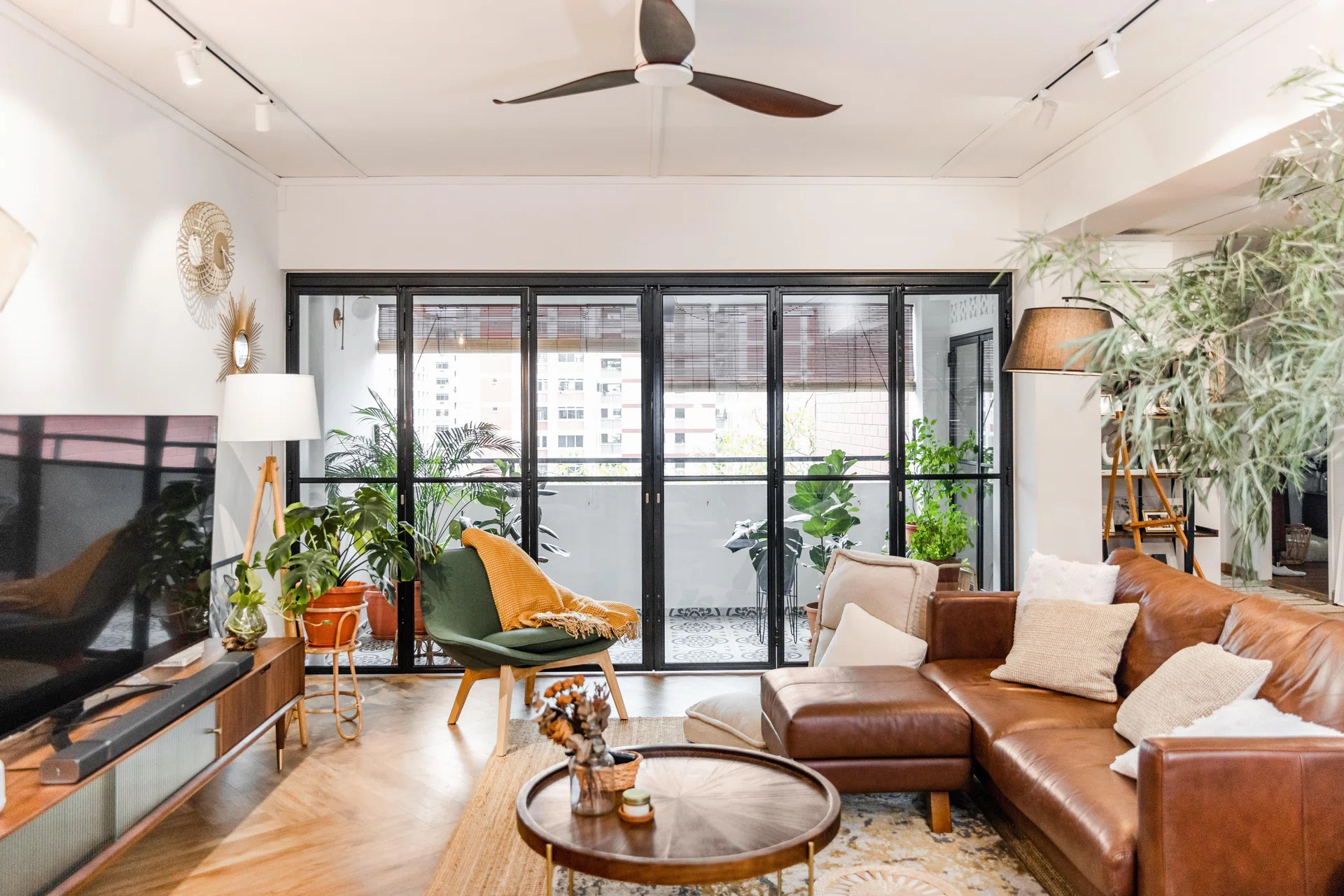
Positioning plants near windows allows them to filter incoming light, softening glare while still maintaining brightness.
#9. Use plants to soften and rebalance the space
While many homeowners turn to plants to “cool” their homes, their impact is less about temperature—and more about perception.
“It’s a common belief, but plants don’t significantly lower ambient temperature in a measurable way—especially indoors,” says Daryl Toh, Creative Director at The Nursery. “What they do very effectively is change how a space feels, which can be just as important.”
That shift in feeling comes from how plants interact with the environment. “They soften the environment visually and psychologically,” he explains. “They reduce harshness from hard materials, introduce movement and texture, and create a sense of calm—which can make a space feel less intense, even in warm conditions.”
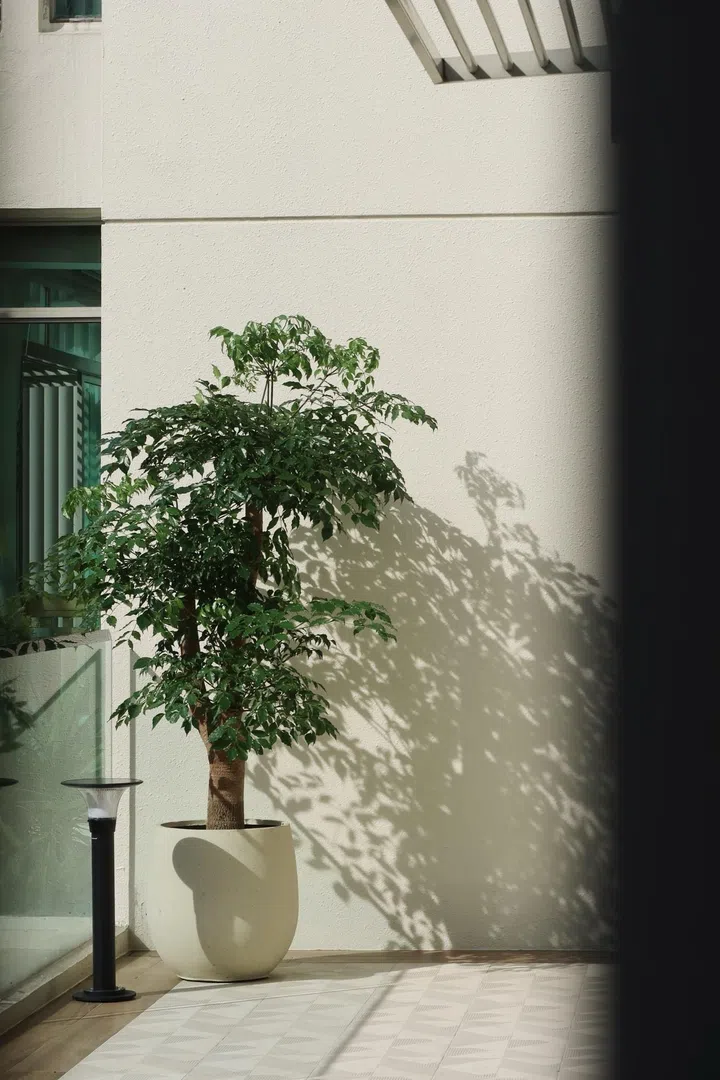
As light passes through foliage, it breaks into softer, dappled patterns—reducing direct heat gain while creating a gentler, more comfortable indoor environment.
In sun-exposed homes, plants can also help manage light more gently. “We often have projects where clients have requested to design a landscape that uses plants as a natural filter—layering them near windows to diffuse harsh sunlight,” Daryl shares. “Instead of blocking light completely, they break it up, creating a softer, more dappled effect that feels much more comfortable.”
Positioning, however, is critical. “Placement is everything—it determines how much light a plant receives, which is the single most important factor for its health,” he notes. “Our advice is always to err on the side of more light, not less.”
Rather than filling a home with greenery, a more intentional approach tends to work better. “A cluster of plants creates a very different experience compared to a single potted plant,” he says. “While one plant can feel decorative, a grouping introduces depth, layering, and a stronger sense of presence within the space.”
For most homeowners, starting small—and placing intentionally—is enough. “A well-positioned plant near a window or a cluster in a corner can already shift the mood of a room,” Daryl adds.