
Beyond the Tour: 5 Japanese interior design principles (and how to bring them into your home)
By Shannon Osztonits -
Share this article
Japanese-inspired interior design, from the wabi sabi style to Japandi (a fusion of Japanese and Scandinavian design), has been taking Singapore’s interior world by storm, remaining one of the city’s most popular and sought-after design trends.
Trends like wabi sabi hit the scene circa 2018, but really gained traction in 2022, around the same time as some of the other Japanese-esque design principles began trending, like Japandi.
However, each type of Japanese interior design follows the same core ethos: a functional and minimalist space, in tune with nature and one that is Zen-like. This is created through favouring natural materials, from stone to wood, creating clean lines and ensuring rooms and spaces are clutter-free. Organic textures are preferred, decor choices are thoughtful and furniture selection is intentional (preferring lower-to-the-ground pieces).
After chatting with interior designer Irina, from Elamo Studio, it became even more evident that the Japanese theme isn’t just extremely popular for those living in Singapore. Whilst the designer now resides in Dubai, she worked on a 2-bedroom condo project for a Chinese couple in Moscow, Russia!
Their one requisite? A complete Japanese-inspired home!
What are the key design principles of Japanese interior design?

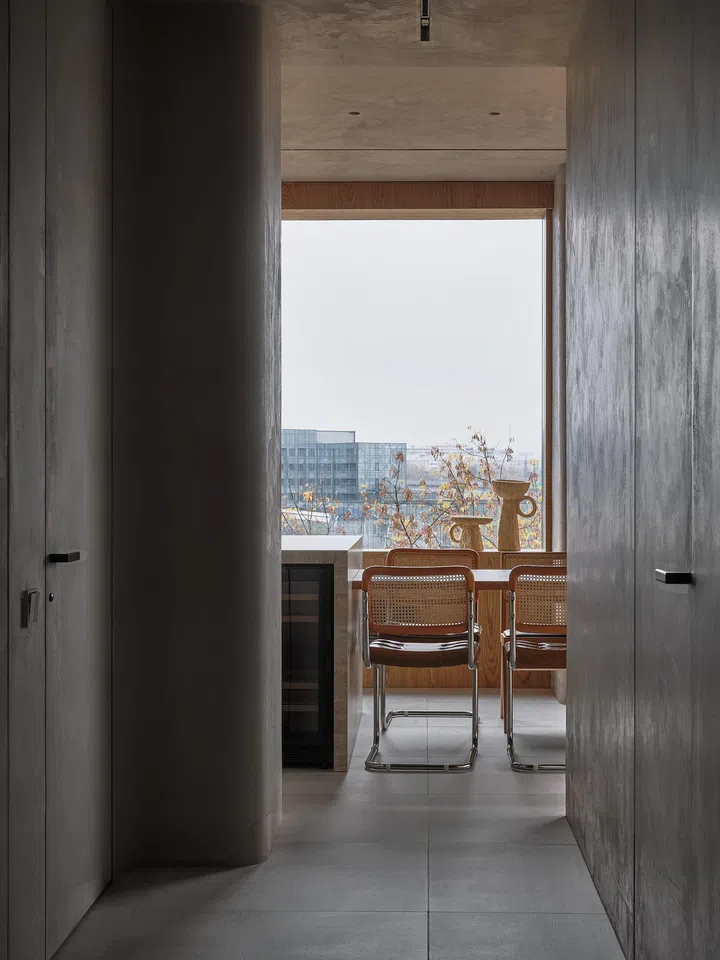
Notice a combination of stone and wood used throughout the entire home. This is the kitchen. The interior designer also created a soft-looking wall texture that mimics fabric.
Beauty in Nature
Nature is intertwined in Japanese culture and traditions. They believe that nature and the natural elements are just as important as human life. In fact, the principle of kami believes that forces and spirits inhabit nature and natural elements, from rivers to trees.
Natural materials such as stone variations, wood (especially oak and maple), silk, bamboo and other natural fibres are extremely important and prevalent in Japanese interior design. When you introduce nature into your home, you’re creating divine harmony and balance between you and nature.
Natural elements in Japanese design also play around with textures, especially soft forms. Another way to bring nature into your home is with plants.

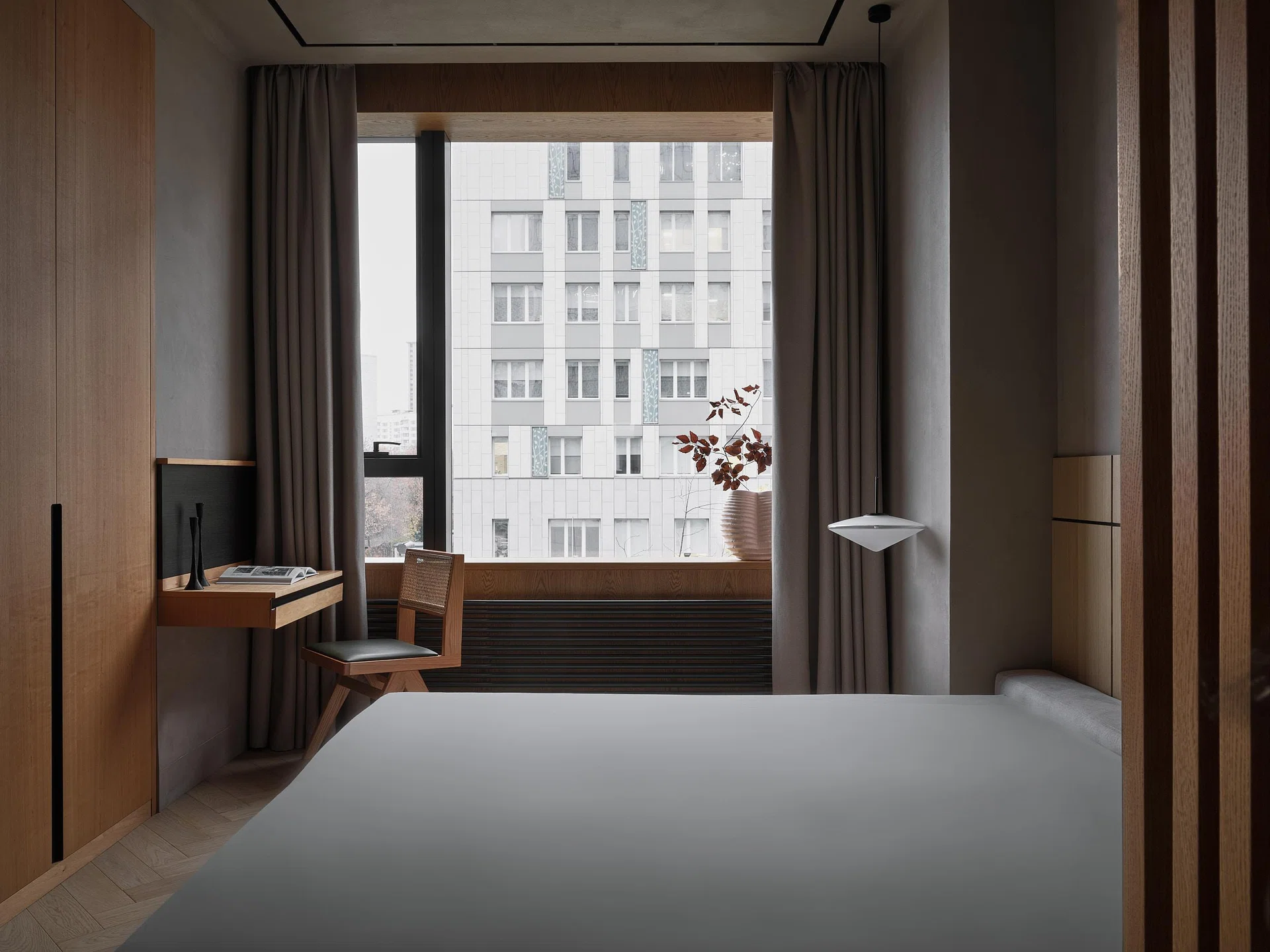
The master bedroom is kept simple. There are no bedside tables. Even the headboard is a single wood panel, flat against the wall.
Minimalism
Simplicity is key in Japanese design. This means keeping spaces decluttered, fuss-free and getting rid of unnecessary objects that don’t serve any real purpose. Clean lines are incorporated for simplicity.
The reason for this is based on ancient philosophies of Shinto and Zen Buddhism.
A minimalist space also enhances focus and mental clarity, creating a tranquil home full of calm. It also helps with a better flow of Qi, or as the Japanese call it, ‘Ki.’

Elamo Studio custom-built a TV console using oak and maple woods. Even the woods contrast one another here, juxtaposing vertical and circular movements. Shelves are boxed in an opposing design to the left-hand side of the unit.
Fukinsei
Similar to the Japanese art form known as kintsugi (金継ぎ), which celebrates imperfections, fukinsei honours the irregularity and asymmetry of life.
In design terms, this means that things don’t always have to be completely balanced, yet you can still create a harmonious space with asymmetric items, furniture placements or finishes. Play around with negative space. Fukinsei is one of the core principles of wabi sabi design.
Think of a pair of three instead of four, or placing furniture off centre.

This condo displays huge windows, covered by warm oak wood panels.
Natural Light
Natural light adds a sense of warmth, tranquility and a zen-like feel.
This means big windows and lighter curtains, even for bedrooms. Wake with the sun.
In Singapore, not all homes, especially HDB apartments, may have access to large windows or many windows at all. To solve these problems, avoid adding heavy window frames during renovation processes, heavy-duty and dark coloured curtains or blinds, or sectioning off the natural light you do have, for example, positioning a chair in front of a window.
Another way to enhance the feeling of natural light is to use warm artificial lighting, not the fluorescent type that strains your eyes. When choosing lamps or standing lights, opt for lamp shades in light tones made from natural fibres or even paper.

In this condo’s guest washroom, an oak panel was installed as a storage cabinet above the toilet. The wall is a soft beige grey colour. Black finishes, like the towel rail and the toilet flush button, balance the lighter shades.
Neutral Colours
One thing you’ll notice across Japanese design is the use of neutral colours, reinforcing the idea of nature in the home.
Bright pops of colour or neon tones are usually avoided. Neutral colours work well with natural materials.
Neutral colours in Japanese design lean towards softer whites (not stark), creams, beiges, browns and light greys. Darker neutral tones, like charcoals, dark browns or blacks, are brought in to create balance or harmony in a space, or for negative space. Brighter colours are embraced with natural elements like a bamboo plant.
Shop the Japanese-inspired Decor Look
Here are some Japanese-esque decor and furniture pieces available to shop for in Singapore.

Gazechimp Paper Lamp Shades Paper Lampshade, $17.28
Gazechimp Paper Lamp Shades Paper Lampshade is priced at $17.28 from Shopee

MUJI 44505038 Wall Mounted Furniture Box, Oak Wood, $48.59
MUJI 44505038 Wall Mounted Furniture Box, Oak Wood is priced at $48.59 from Amazon.

Kintsugi Pottery, Kintsugi Grey Shadowed Bowl, $66.73
Kintsugi Pottery, Kintsugi Grey Shadowed Bowl is priced at $66.73 from Etsy

EPITEX Japanese Futon Mattress - Foldable Single, $55.90
EPITEX Japanese Futon Mattress - Foldable Single is priced at $55.90 from Amazon.

Transparent White Lace Curtains, $7.51
Transparent White Lace Curtains priced at $7.51 from Lazada.

Creative Bedside Table Lamp Paper Lantern Desk Lamp for Office Kids Room, $35.69
Creative Bedside Table Lamp Paper Lantern Desk Lamp for Office Kids Room is priced at $35.69 from Shopee.