
Two Culture Lovers Turn Their Home Into a Collection of Stories From Around the World
Five years after moving in, the couple’s Moonstone Residences apartment brings together travel finds, family heirlooms and everyday rituals, creating a home that reflects their curiosity about the world.
By Joe Lim -
Share this article
Who Lives Here: A couple in their 30s
Home: A 2-bedroom condo in Moonstone Residences
Size: 1,000 sq ft
Interior Designer: Alittlepractice
For a couple in their 30s who describe themselves as culture lovers, choosing a home was never just about floor area, location, or whether the kitchen had enough storage.
They wanted somewhere that could accommodate the way they live, from working and relaxing to hosting friends and collecting objects that caught their attention during their travels. Five years after moving in, their 1,066 sq ft apartment at Moonstone Residences has become a living collection, filled with pieces from India, China, Pakistan, Central Asia, Indonesia, and beyond.
Some objects were bought on their travels. Others were found closer to home. One particularly meaningful piece is a 1960s Singer sewing machine that once belonged to the family.
The apartment may have a distinct Mediterranean, Industrial, and Wabi Sabi influence, but the couple’s curiosity about the world gives it much of its character.
Close To Family, Away From The Rush
The search for a home began around Upper Serangoon, partly because the couple wanted to remain close to their respective family homes. Moonstone Residences, tucked along Moonstone Lane, stood out. Their 16th-floor apartment gets good evening light and expansive views, while the neighbourhood offers a slower pace without being disconnected from everyday conveniences. Food and retail options are nearby, and after five years, the couple have settled into the area’s rhythm.
It is the kind of neighbourhood where they can spend the morning getting coffee downstairs, return home to read or exercise at the condominium gym and still have easy access to the rest of Singapore.
For two people who are interested in culture and the stories behind places, that sense of familiarity has also given them time to explore their surroundings. The couple travel frequently, and hotels in India and the Mediterranean had already shaped their ideas about interiors before they bought the apartment.
Their Travel Memories Became The Starting Point
They were drawn to spaces that felt relaxed rather than overly polished, with natural textures, industrial details and a sense of imperfection. They wanted to bring some of that atmosphere home without turning the apartment into a themed space.
Finding the right interior designer was therefore important.
Their first choice could not take on the project and referred them to a friend at interior design firm, Alittlepractice. The introduction worked because the designers understood the couple’s specific tastes and helped them work through how the apartment should function. The couple had collected photographs of hotels, interiors and spaces they had encountered on their travels and went through them with the designers.
“I didn’t doubt their capabilities. The designers were patient in hearing our views about the home renovation, so they didn’t sound like they were rushing to finish a project,” one of them says.
The brief was not simply to create a good-looking interior. They wanted distinct areas for working, dining, relaxing and entertaining, while retaining enough private space for the two of them to retreat. That meant the designer had to consider not only how the apartment looked, but how the couple moved through it each day.
The Renovation Took Six Months, And The Couple Were In No Hurry
The apartment underwent a significant overhaul, taking around six months. COVID-19 caused delays along the way, but the couple weren’t desperate to finish the project. Having the luxury of time meant the designers could work through the changes without the pressure of rushing the handover.
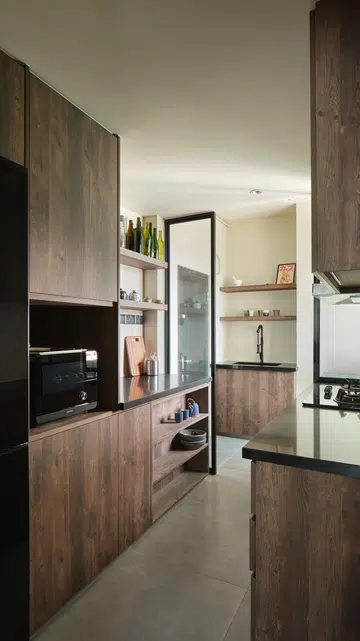
The eventual result was an apartment that felt closely aligned with the couple’s original ideas. There is a dedicated work area, a dining space for meals, a comfortable living area for unwinding, and a more communal setting where friends can gather over drinks.
“We enjoy using the spaces as we designed them – to rest, relax, and host, when necessary,” the couple says.
That has proved to be an important measure of whether the renovation worked. Five years on, the rooms are not simply spaces that looked good when the project was completed. They are spaces the couple continues to use as intended. One of the most distinctive elements is also one of the first things visitors notice: the arches.
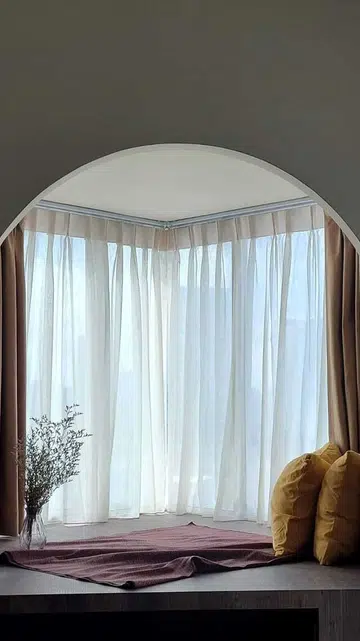
The Arches Have Become The Home’s Conversation Starter
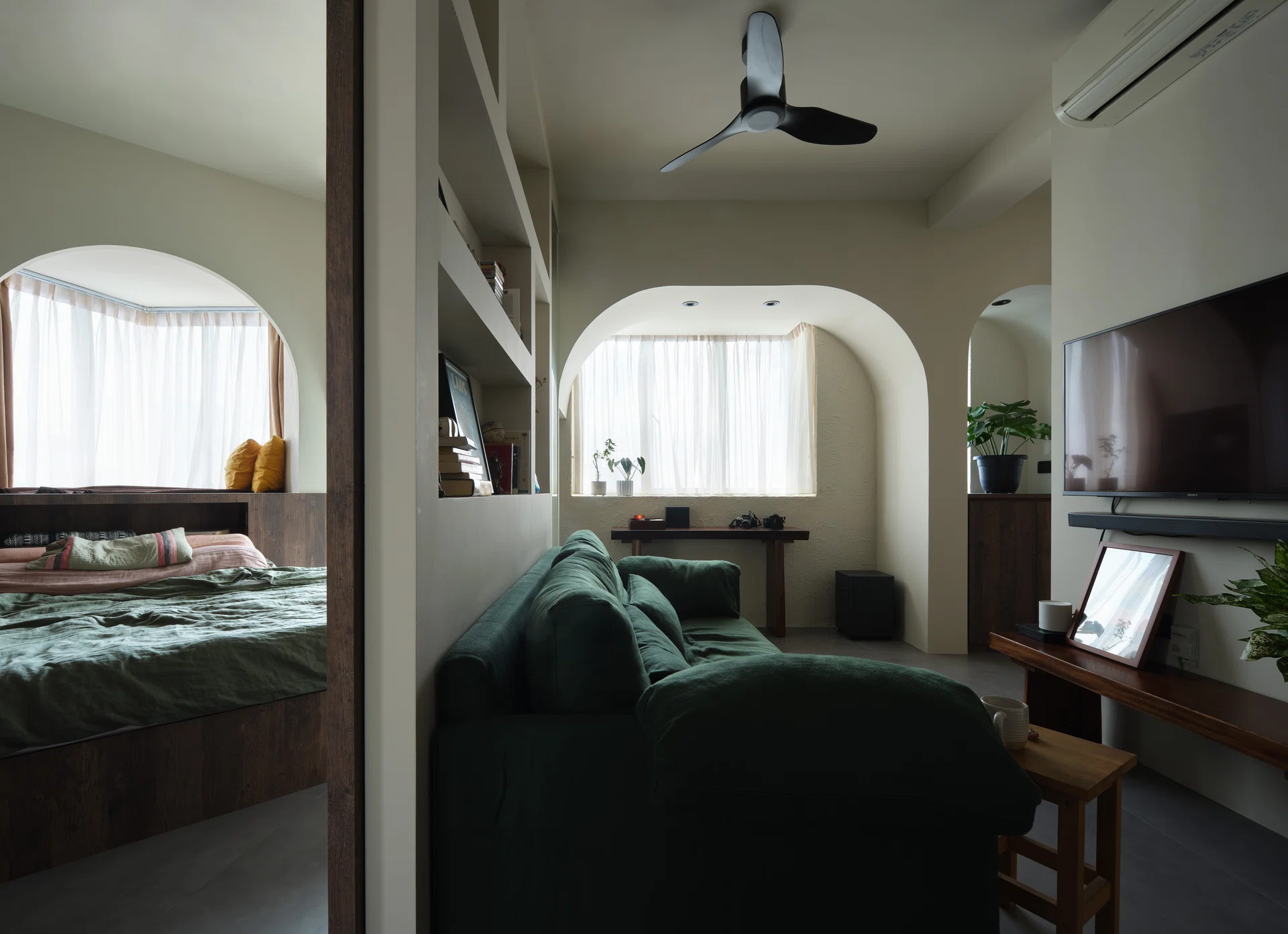
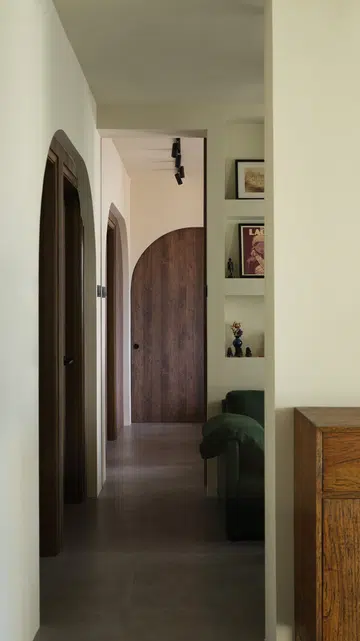
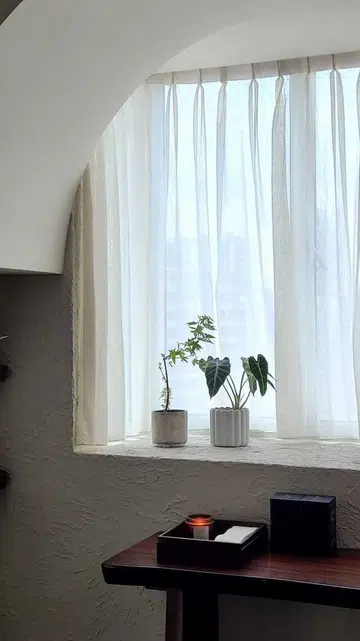
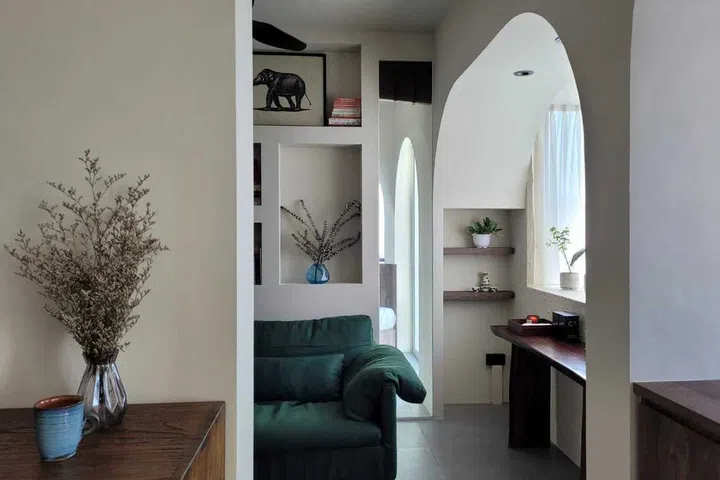
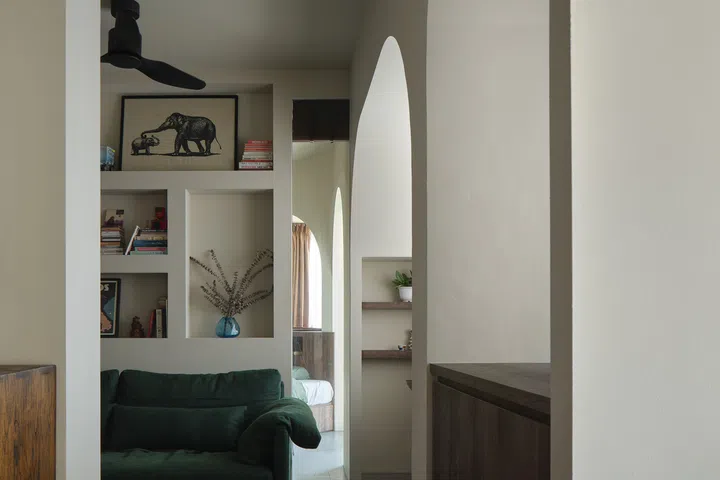
The 12 arches soften the apartment’s otherwise straight lines and bring warmth to the interior. The couple say the curves have become a talking point whenever family and friends visit.
“They make the home feel softer and warmer; the curves break the monotony of linearity,” one of them says.
The arches also change with the light. As the evening sun begins to fade, streaks of sunlight fall across their surfaces, creating shadows and a more subdued atmosphere. This effect suits the couple’s desire for a home where they can slow down after a busy day.
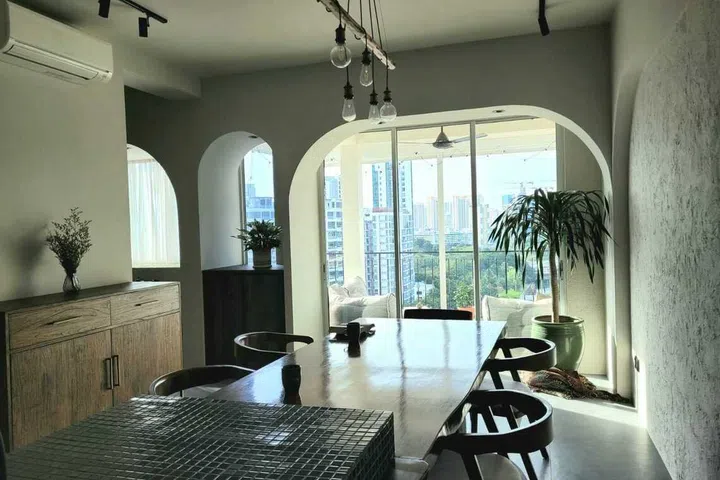
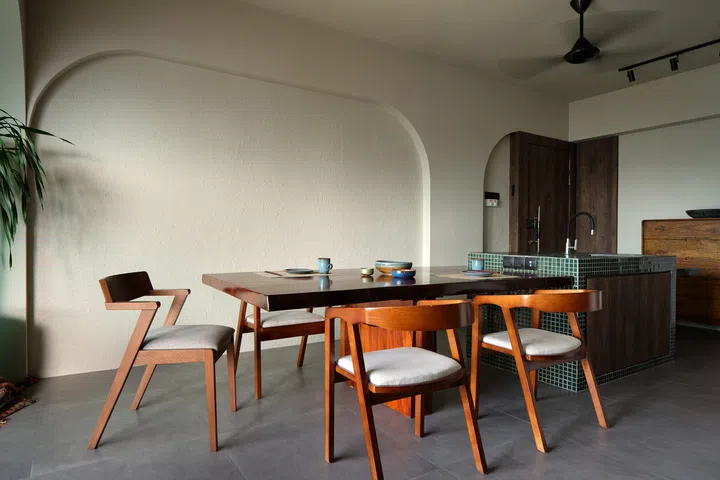
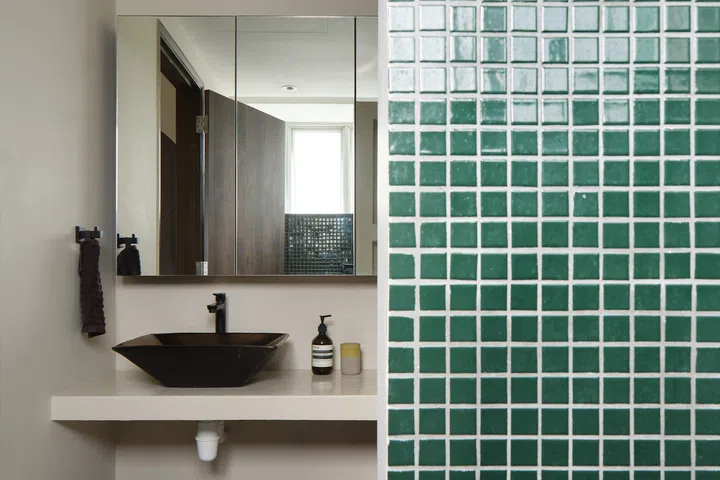
At the entrance, an integrated sink finished in green tiles sits alongside the dining table, making the transition from entryway to dining area feel seamless.
Beyond the dining space, the balcony opens towards views of the surrounding roads and the Kallang River. It reminds you that although the apartment feels removed from the city, urban life is still moving below.
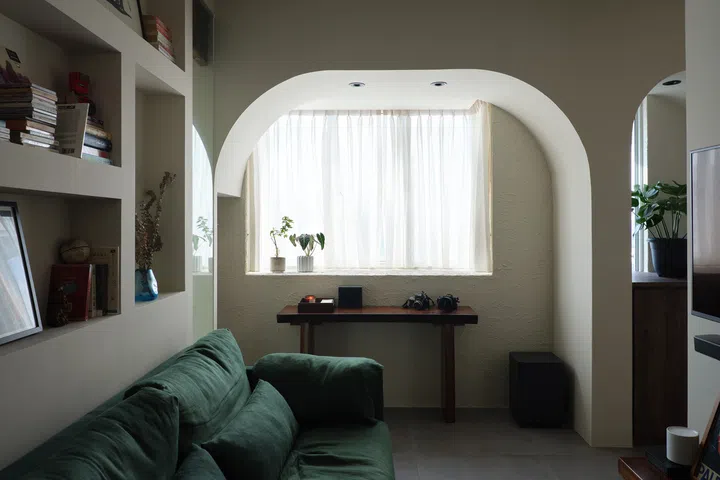
One Bedroom Became A Much Larger Private Retreat
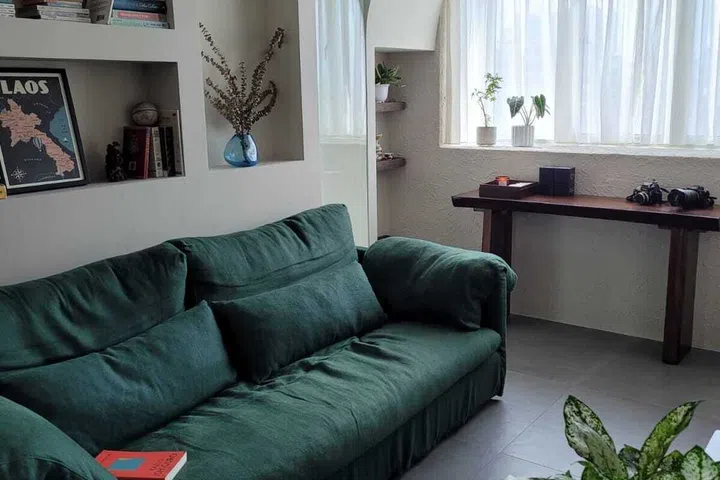
The living room is deliberately separated from the apartment’s communal area, creating a more private enclave where the couple can settle onto their green sofa and watch Netflix.
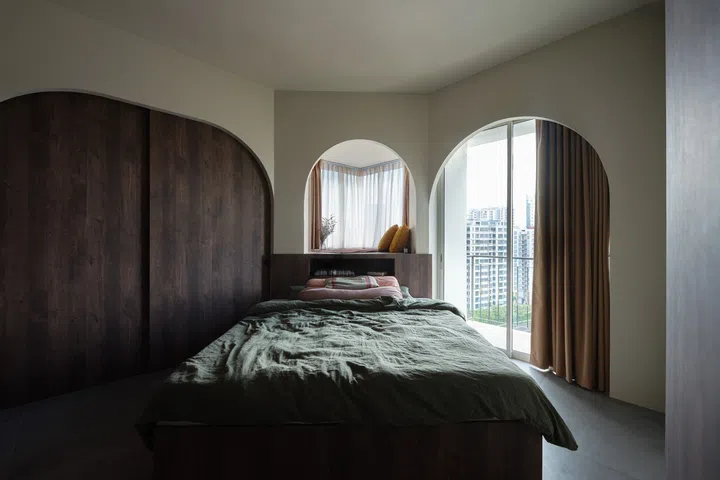
Further inside, the designer gave the primary bedroom considerably more space after proposing removing the dividing wall between the two original bedrooms. The change created a large trapezoid-shaped room and allowed the couple to move away from a conventional two-bedroom layout in favour of a larger private retreat.
This renovation decision reflects the couple’s actual lifestyle rather than an assumption about how an apartment should be configured.
Imperfection Is Part Of The Aesthetic
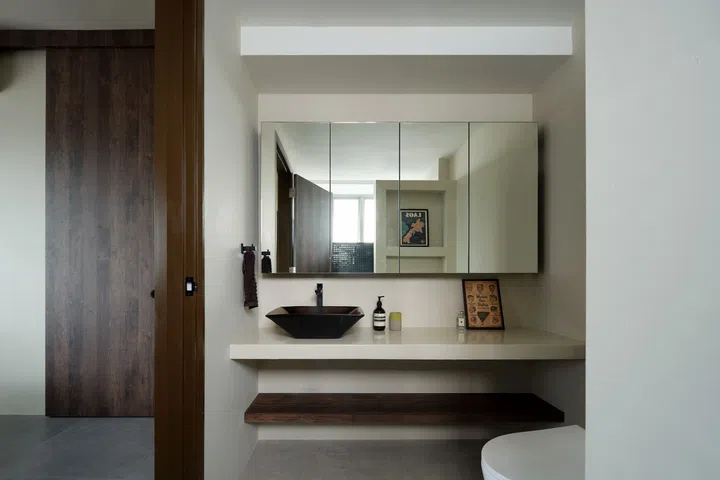
Colour and texture were equally important to the couple. The walls are finished in an off-white limewash, with visible brushstrokes that create subtle variations across the surface. The texture recalls the weathered walls and earthy finishes they encountered during their travels in India.
It also brings Wabi Sabi into the apartment, a Japanese aesthetic they appreciate for its acceptance of imperfection and understated character.
“We feel an interior should embrace imperfections and the Wabi Sabi aesthetic; think rustic, understated elegance, which resonated with our personalities,” they say.
The approach keeps the industrial elements from becoming too hard or clinical. Curved forms, textured walls, and muted tones create a softer backdrop for the objects the couple has accumulated over the years.
Their Most Meaningful Find Came From Their Own Family
Among all the objects gathered from overseas, one of the most personal was found much closer to home. While decluttering their grandparents’ old house, the couple discovered a Singer sewing machine dating from the 1960s. One of their grandfathers had been a tailor, making the discovery particularly meaningful.
They restored and polished the machine, and it now sits prominently in the living area. It is exactly the sort of object that suits this home. They didn’t buy it to match the interior, nor select it because it happened to be fashionable. It already had a story before it arrived.
The couple’s other possessions carry their own histories. Their collection includes wooden sculptures, old posters, textiles and tapestries gathered during their travels. Among them is a wooden sculpture from the Trobriand Islands in Papua New Guinea, along with sculptures from Sulawesi.
“I think our best finds while shopping for curiosities were made during our travels to China, India, Pakistan, Central Asia and Indonesia,” the couple says.
Printed posters from the Paris Olympics, a hand-painted painting of an elephant from Laos and cushion covers from Uzbekistan and Pakistan add further layers of colour and pattern to the lounge.
The result is eclectic without feeling random because the objects connect through something more meaningful than a colour palette: they reflect places the couple have visited and things they found interesting enough to bring home.
They Still Look For Stories Beyond Their Front Door
Five years in, the couple’s interest in culture has become part of their everyday life in the neighbourhood. Their regular coffee stop is Fluid, the café downstairs, where they pick up their daily cup and stock up on roasted beans each month.
When their curiosity takes them further afield, they explore places such as Sim Choo Huat temple, taking time to look at its architectural details and learn about its history. The wider precinct has its own layers of Singapore’s past too, including the former National Aerated Water Factory, where drinks such as Kickapoo and Sinaco were once bottled. For a couple interested in culture across the world, these details are more than background information. They give them another reason to look closely at the place they call home.
Back in the apartment, the rituals are simpler.
They read. They exercise at the condominium gym. They make coffee, often grinding the beans before preparing a pour-over. They visit antique shops regularly, still looking for objects that might eventually find their way into the apartment.
The home, in other words, is still evolving.
A Home That Keeps Collecting Stories
The most successful part of the apartment may not be any single design feature. It’s that the space has been allowed to reflect the people living in it. The arches create softness. The limewashed walls bring texture. The industrial details add structure. The Mediterranean and Wabi Sabi influences give the apartment its visual language.
But the objects are what make the home feel personal.
A sculpture from Papua New Guinea. Textiles from Pakistan. A poster from the Paris Olympics. A painting from Laos. And, perhaps most importantly, a 1960s sewing machine connected to a grandfather who was once a tailor.
You could never have selected these things from a single moodboard. They are accumulated through travel, family, and years of curiosity about the world. That is also why the apartment feels lived in rather than staged. They carefully considered the design but allowed its personality to develop over time.
For the couple, home is ultimately about the small routines that make a place feel familiar: grinding coffee in the morning, settling onto the sofa after work, reading, entertaining friends and noticing how the evening light falls across the arches. Their interior designer gave those habits a framework, but the couple supplied the stories.
And perhaps that is the most fitting outcome for two individuals who have a penchant for culture from all over the world. They did not set out to create a home that looked interesting. They created one that became interesting because it tells the story of the people who live there.