
Rotting floors & peeling paint? This homeowner turned a crumbling 5-room HDB flat into a Japandi sanctuary
Almost like a labyrinth, the walkway and small pockets of spaces and rooms tease visitors into discovering not just the home, but also the people and pets within its walls.
By Lynn Tan -
Share this article
Who Lives Here: A couple and their two daughters
Home: A 5-room HDB flat at Marine Terrace
Size: 1,313 sqft
They both knew right from the start that they wanted to make Marine Parade their home, but finding the right unit took one year. At the time, Tiffany Wee, a 49-year-old functional medicine naturopath, nutritionist and mindfulness teacher was living in Bukit Batok with her family and two daughters, now aged 14 and 12. Her then fiancé, Chan Khai Meng, an engineer who is 50 years old had a BTO flat in Punggol.
The couple put the time while waiting out the MOP for his flat to good use by getting themselves acquainted with the neighbourhood, exploring different blocks, stacks, levels and orientations. After viewing close to 30 units, they finally found the one.
It was a 1975 5-room flat belonging to a well-known local artist, which was in a rather dilapidated condition as it had been left unattended for years. The rotting floors, peeling paint and even sprouting weeds were exactly what they were looking for.
“This unit allowed us to purchase at a more reasonable price point, with the full intention of completely reworking the space- to strip it back and rebuild it into something that truly reflects our lifestyle and vision,” says Tiffany.
Self-designed interiors
Despite having no formal training in design, self-designing their home came naturally to homeowner Tiffany as she has always been someone who is creative and full of ideas. “It felt instinctive, ideas came quite easily and the space became a natural extension of how I think and express myself,” she shares.
Part of this can be attributed to her upbringing and influences over the years. Her father was a self-taught visual artist, so she believes that part of his artistic sensibility lives on in her. Her time in university as a theatre student and working in resort environments have also shaped the way she perceives and experiences the world around her. All of these influences- both conscious and subconscious, eventually found their way into the home.
“In many ways, the house became a kind of canvas- a place where I could bring together ideas, experiences and influence, and translate them into something tangible and lived-in.” she says.
Japanese minimalism + Scandinavian design = Japandi
There was no definitive brief. Instead, the interior design evolved gradually and organically, and was informed by the needs and habits of each family member. She also did not intentionally start out with a specific style in mind. It was only as the project progressed and they began furnishing the home that she came to realise that it was naturally coming together as a combination of her preference for Japanese minimalism and Khai Meng’s inclination towards Scandinavian design to achieve a Japandi blend.
“In many ways, the style was not something we consciously created. It simply emerged from the merging of our personal tastes and over time, we have both come to really appreciate this integrated aesthetic,” she comments. Fundamentally, she sought to achieve a timeless quality that transcends trends and which would allow the home to evolve with the family.
Knowing that this was going to be the family’s long term home also freed up her design and renovation decisions as she was not designing with resale in mind. This meant that she did not have to hold back in terms of reconfiguration the layout and could fully explore design options without any such constraints.
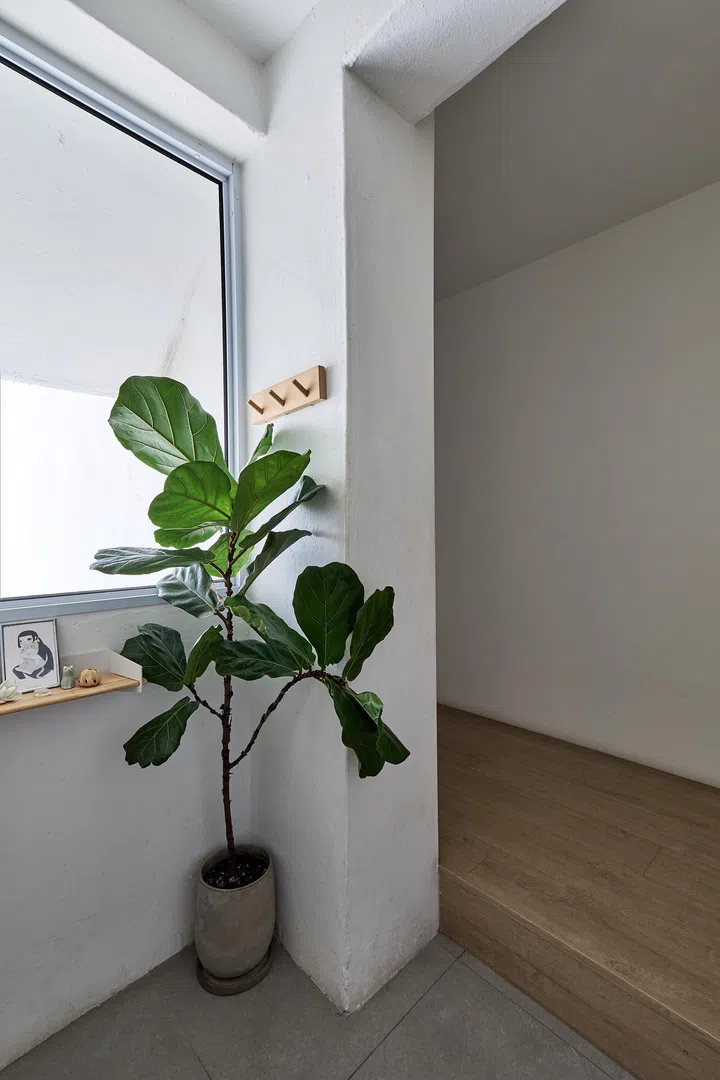
Entrance foyer
The entrance foyer was designed around the concept of the genkan, a traditional Japanese entryway. The step up from the main entrance to the genkan is a very deliberate gesture that demarcates the transition between outside and inside, public and private.
“As you remove your shoes and step onto the wooden platform, it becomes almost symbolic- a moment to leave behind the noise, clutter and demands of the outside world before entering the home,” Tiffany emphasises.
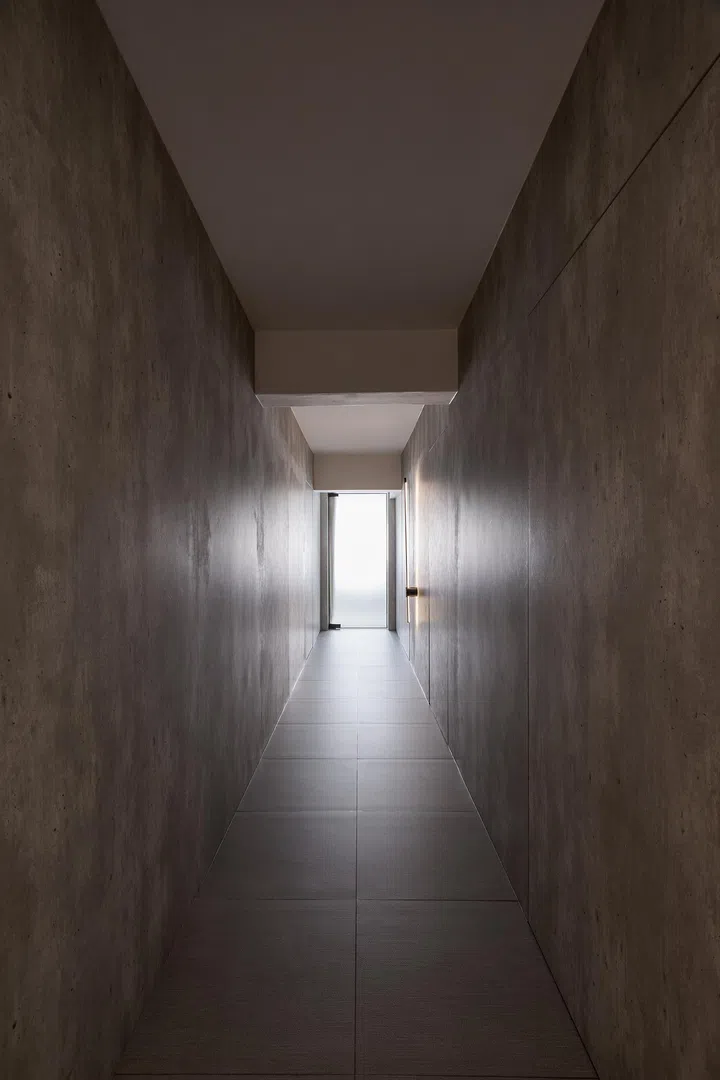
Central walkway
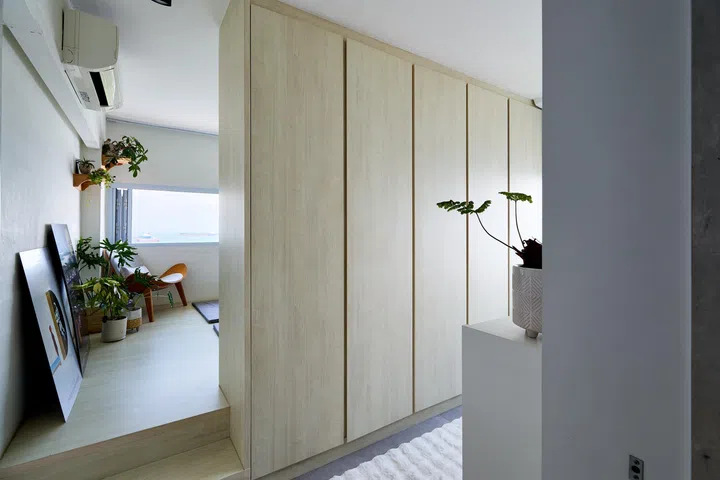
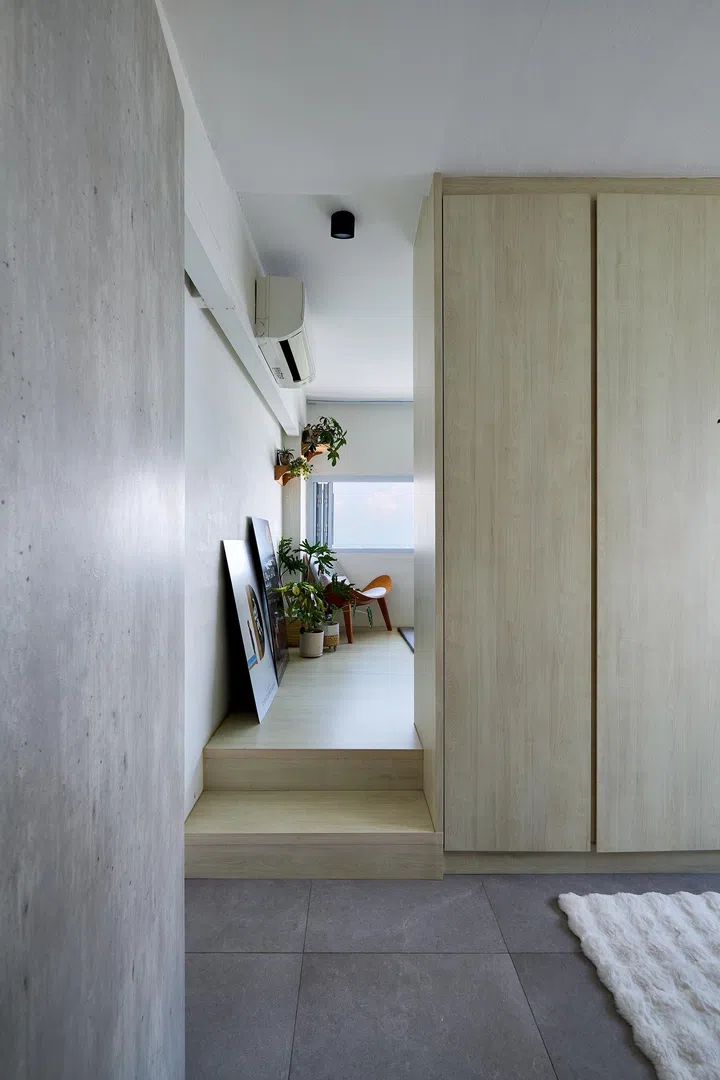
Another step- down this time, from the genkan leads to a central walkway, inspired by Tadao Ando’s use of long, contemplative corridors, such as those found at the Chichu Art Museum. For Tiffany, this embodies the Japanese concept of ma, which refers to the in-between space or intentional emptiness.
“To me, this walkway is not just a passage, but a place of pause. It creates a moment of stillness as one transitions from one space to another, from public to private, from movement to rest,” she elaborates.
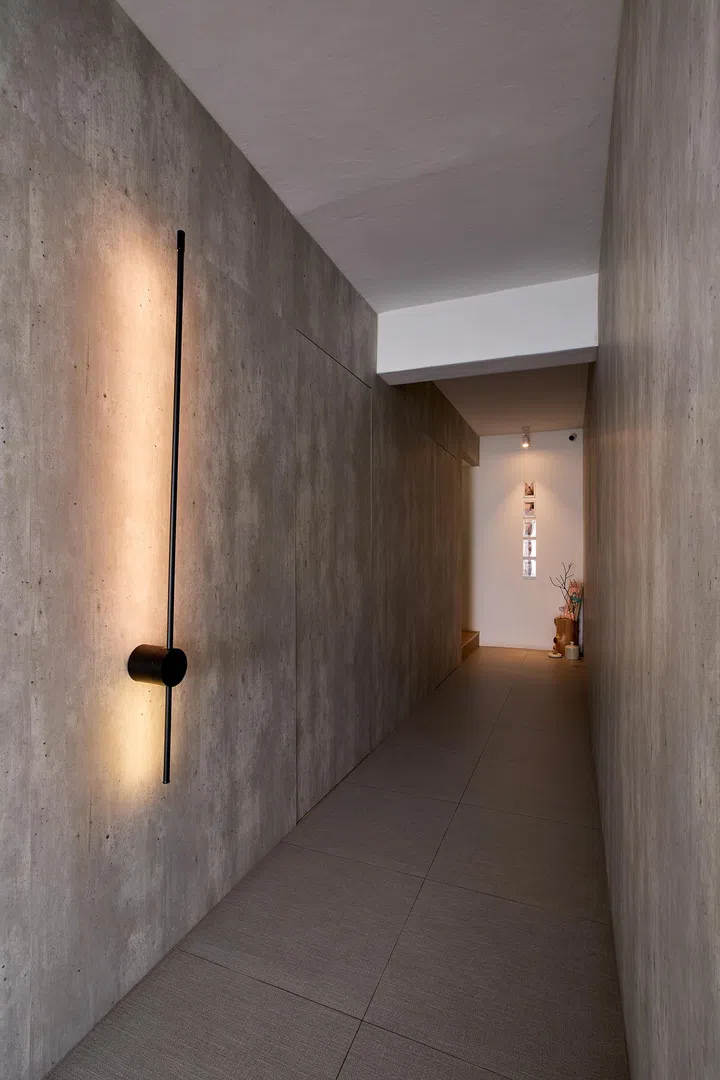
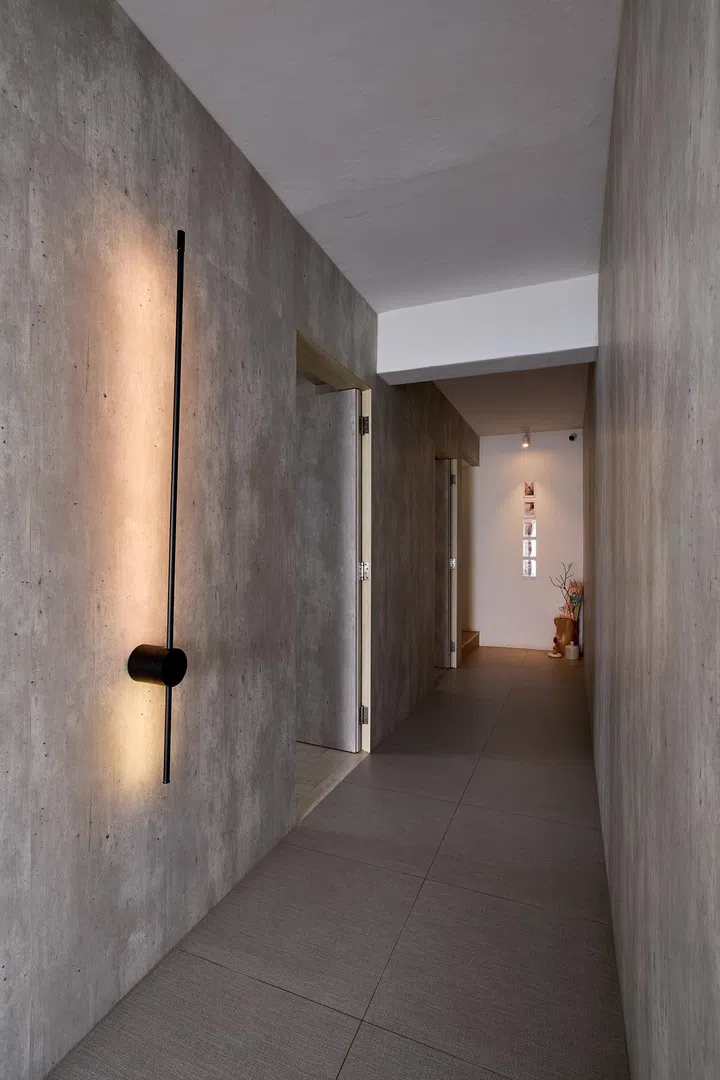
Various doors along this walkway lead to the rest of the rooms and spaces within the home, like portals beckoning you to venture beyond their wooden facades. This deliberate segmenting of the home into smaller rooms and spaces reflects Tiffany’s emotional state following the passing of her brother shortly before they moved into the home. She found the vastness of her family’s Bukit Batok home overwhelming and sought solace in smaller enclosed spaces, often sharing a single canopy bed with her girls as the cave-like environment felt safe and grounding.
This led her to create smaller and more intimate spaces in their new home that feel contained and “womb-like”, and which offer a sense of protection and calm.
“In many ways, the entire home was designed around this idea of creating smaller, quieter pockets within a larger whole- spaces that do not overwhelm, but instead gently hold you. Looking back, I think this design became a way of supporting myself through a very vulnerable period, almost as if the home was quietly cradling a tired and grieving heart,” she confides.
Living areas
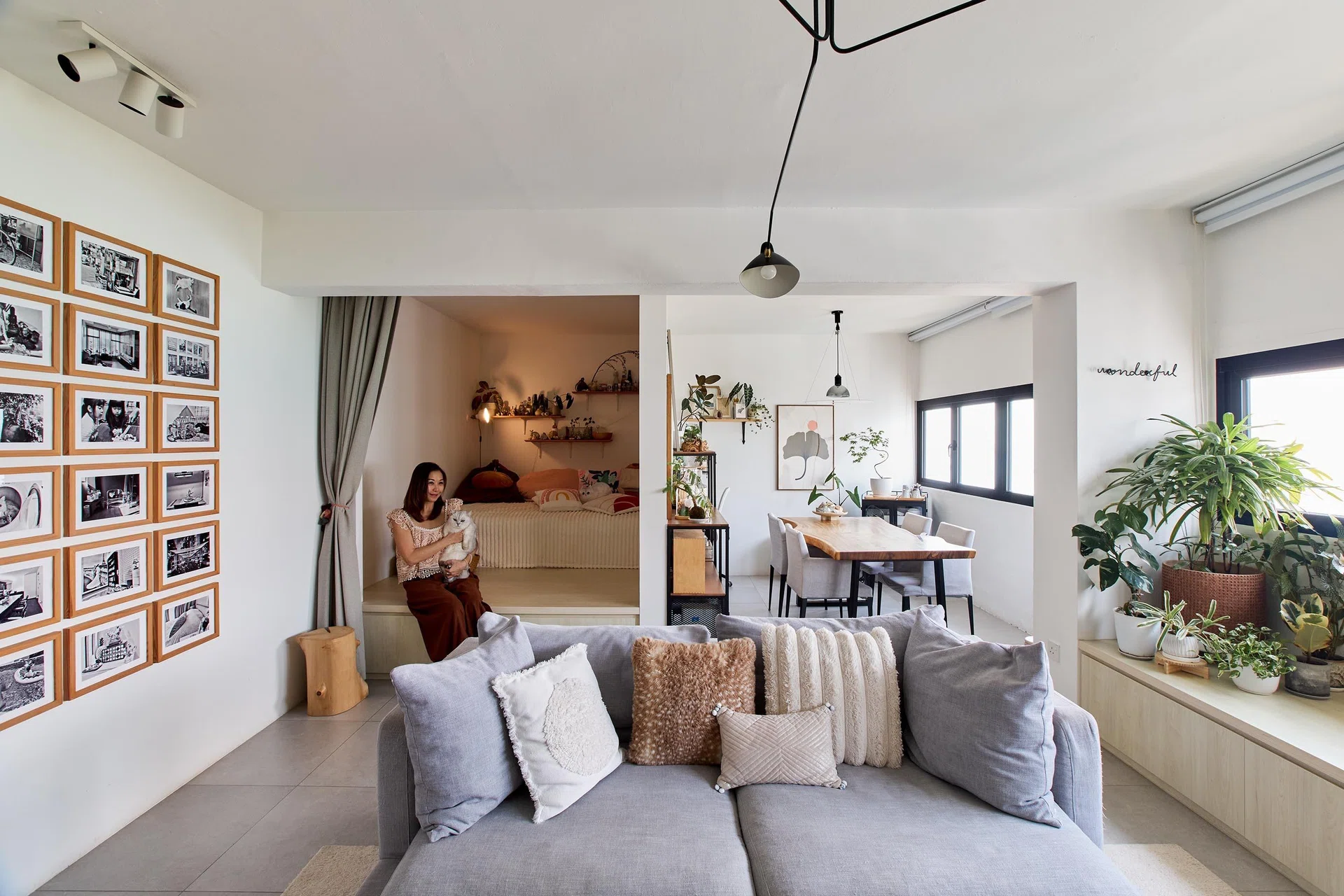
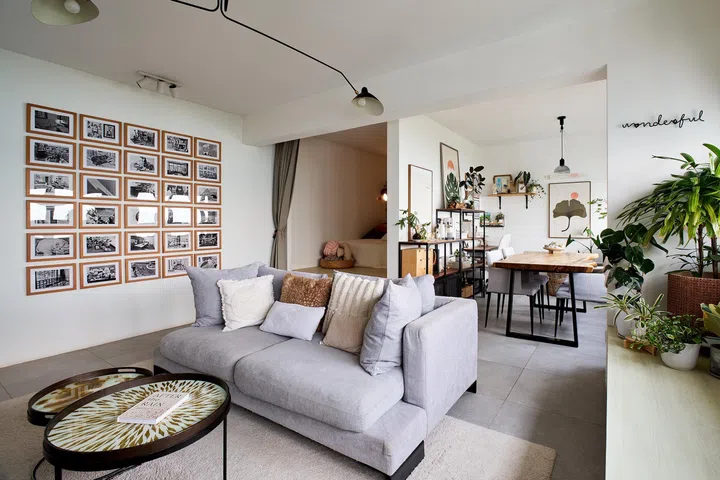
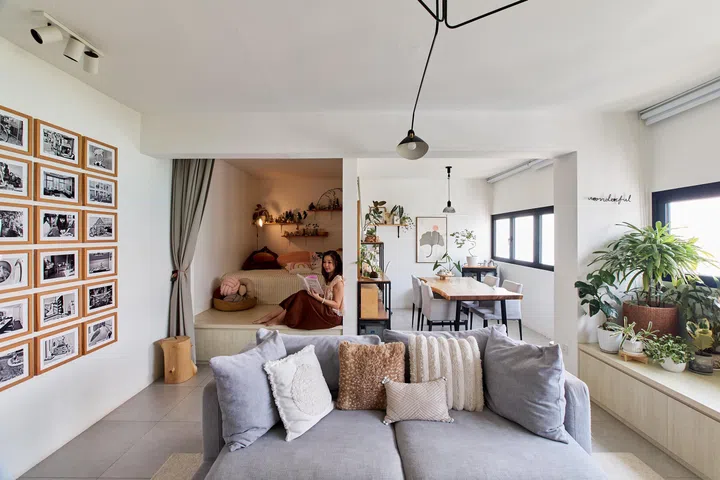
The living area lies beyond one of the doors to the left of the walkway. This layering of spaces- entrance, genkan, walkway, then living area creates a more intentional and grounded transition into the private realms of the home. Within the living area, Tiffany has created distinct zones comprising a television area, a dining room and a multi-purpose space that she refers to as the “Cube”. This approach allows the family to engage in their own activities in the different zones, but still be together within the same collective living space.
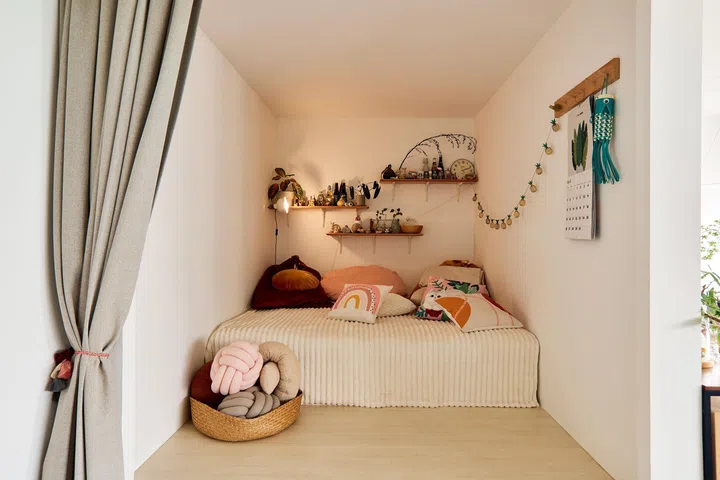
The “Cube” was inspired by the Scandinavian philosophy of hygge and prioritises intimacy and comfort. It can serve as a quiet retreat, a reading space or even a sleeping area. When the girls were younger, the whole family would sometimes all sleep there together, almost like a camping experience within the home.
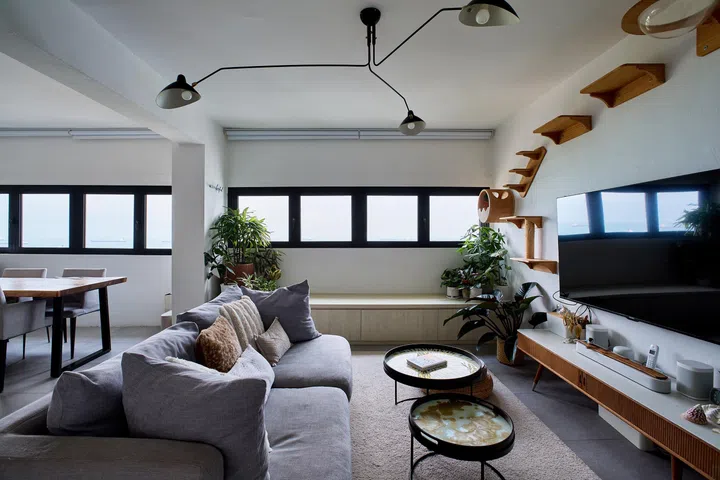
A Scandinavian television console from Khai Meng’s bachelor pad was one of the few pieces from his collection that made it into their new home. It continues to serve the family well and is a reminder of an earlier chapter of his life before wife and kids.
Dining room
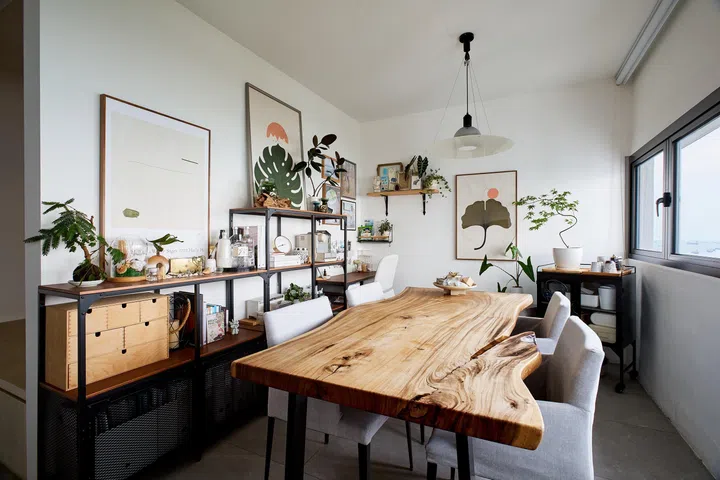
In the dining area sits one of the most important pieces of furniture in the home- a suar wood dining table that the couple knew they wanted right from the start. Its irregularity, imperfection and asymmetrical profile reminds Tiffany that it was once part of a living tree and introduces an organic presence into the home.
The design of the living area also supports Tiffany’s work as a functional medicine practitioner, which often goes beyond looking into physical symptoms. Over the years, she has come to realise that some of the emotional stresses and personal challenges that her clients face can be better addressed in a less clinical and more personal environment. Her home design and layout facilitate this.
Separated from the rest of the home, the living spaces offer her clients a private and personal setting that they feel safe enough to open up in, encouraged by the relaxing sea view, leading to even more positive outcomes for the issues that they are grappling with.
This compartmentalisation also has other practical benefits. Someone who is unwell can be isolated from other family members. Activities- from Tiffany’s home consultations to her daughters’ friends coming over to the helper cooking can take place simultaneously and independently behind closed doors without disturbing one another.
Feature wall
A photo wall between the television area and the “Cube” holds special significance for the family. They invited 30 friends from Singapore and around the world to contribute a photograph representing their favourite part of their homes. Some chose physical corners in their homes, others captured their children or pets, while some were moments frozen in time. This tapestry of lives, perspectives and memories connect the family to people they hold dear.
At its centre is an image of Tiffany’s cat peeking out from inside the open door of a washing machine taken by her late brother. “Placed at the heart of the composition, it serves as a subtle, almost hidden presence within the home, a quiet reminder of him and of a time and place that hold deep meaning for me. In a way, it allows both of them to continue existing within our space,” she shares.
Zen room
The door right at the end of the walkway leads to the Zen room, which used to be part of the balcony area. Since it had a view of the city instead of the more desirable sea view, and it is exposed to strong afternoon sun, Tiffany decided to convert it into an inward-looking space of quiet and refuge that she uses for prayer and reflection.
Kitchen
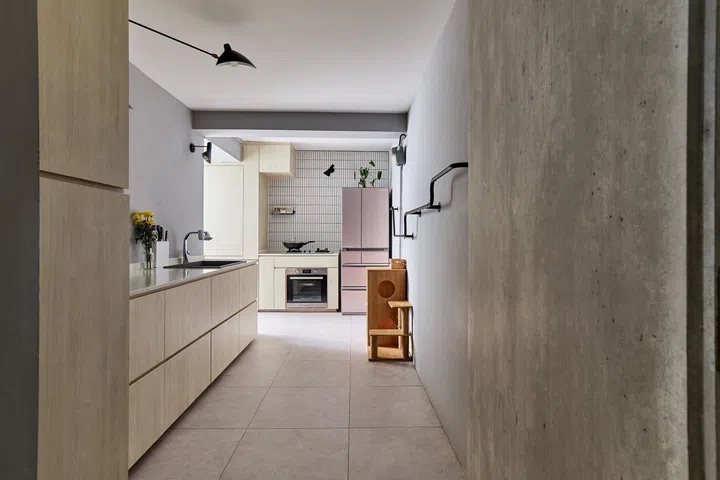
In terms of cabinetry and storage, the family took a very minimal approach, keeping built-in storage to a minimum and intentionally avoiding top-hung cabinets, particularly in the kitchen. Tiffany believes that the more storage you have, the more likely that you will accumulate unnecessary things. Limiting storage encourages ongoing decluttering.
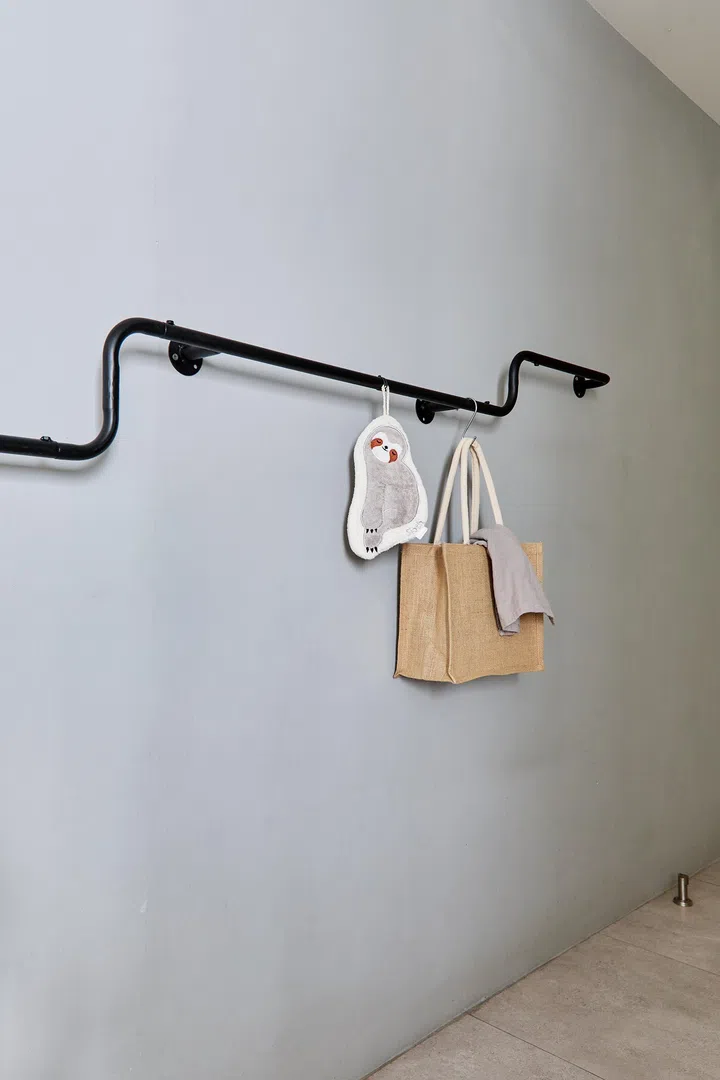
A long black rail extends across one wall of the kitchen. Originally intended to display outfits for retail use, she has adapted it for the kitchen and it has proven extremely useful for hanging fruits, bags, kitchen tools, cloths and even laundry on rainy days.
Master bedroom
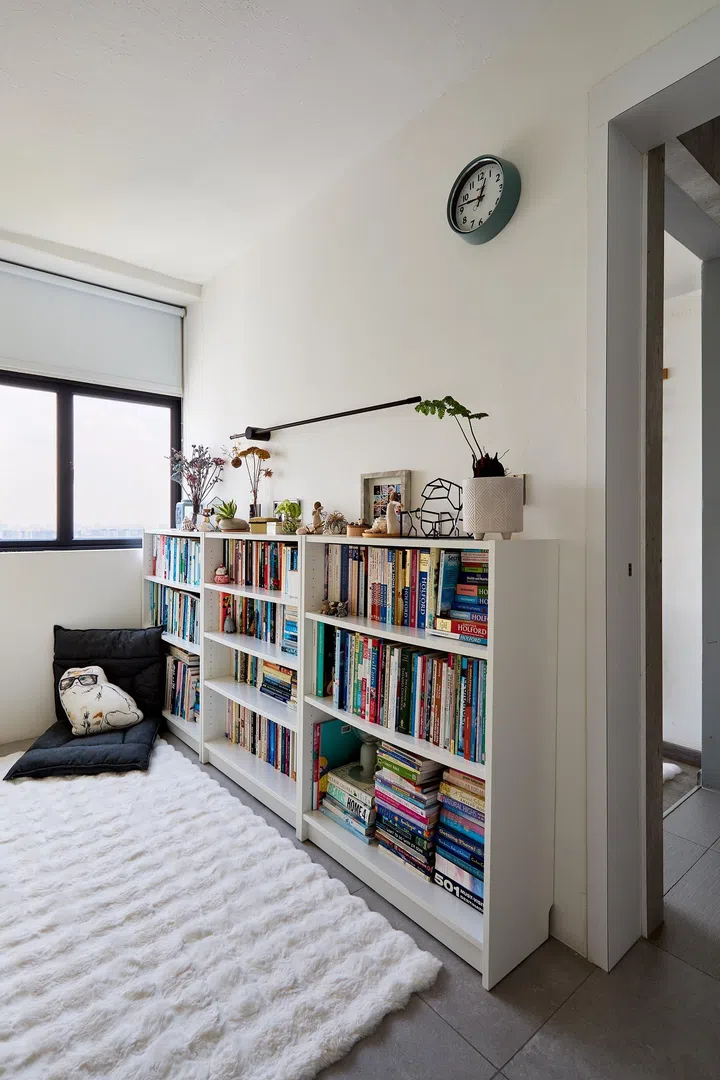
The other door on the left of the walkway, next to the living room door, leads to the master bedroom, which has been extended into part of the original balcony to create a wardrobe area and reading corner within the master suite.
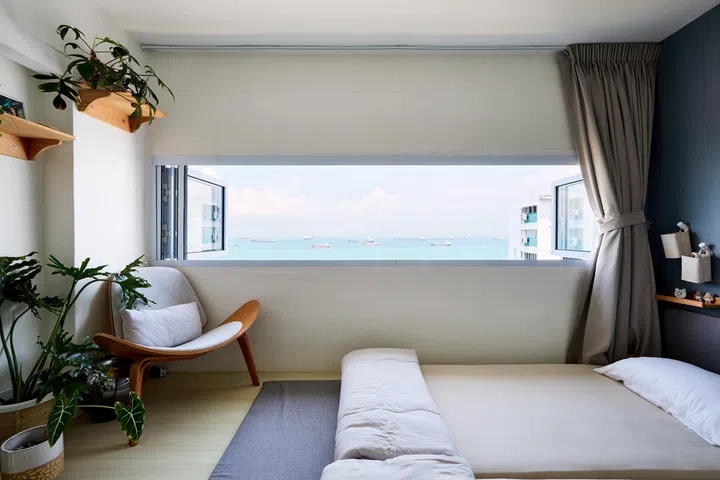
Elevating the sleeping area on a platform allowed the couple to enjoy a view of the sea and sky while seated upright on the bed. Although they have since switched out the original bedframe for a more tatami-style sleeping arrangement, the raised platform still achieves the intended purpose of moderating height and scale to create a cosy bedroom environment.
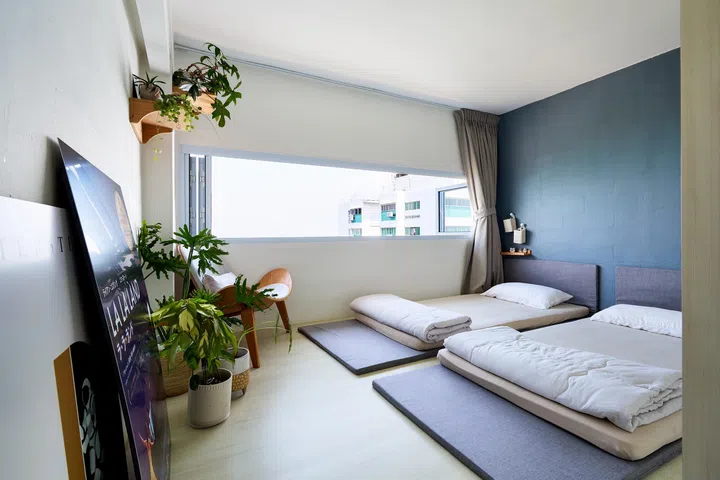
Khai Meng is a movie buff and movie posters adorned the walls in his former home. In their new home, Tiffany specially selected two large metal posters featuring films that the couple watched together in the early days of dating, acknowledging the fact that home is not just a reflection of their individual tastes, but also of their shared memories and the life that they have built together.
Children’s bedroom
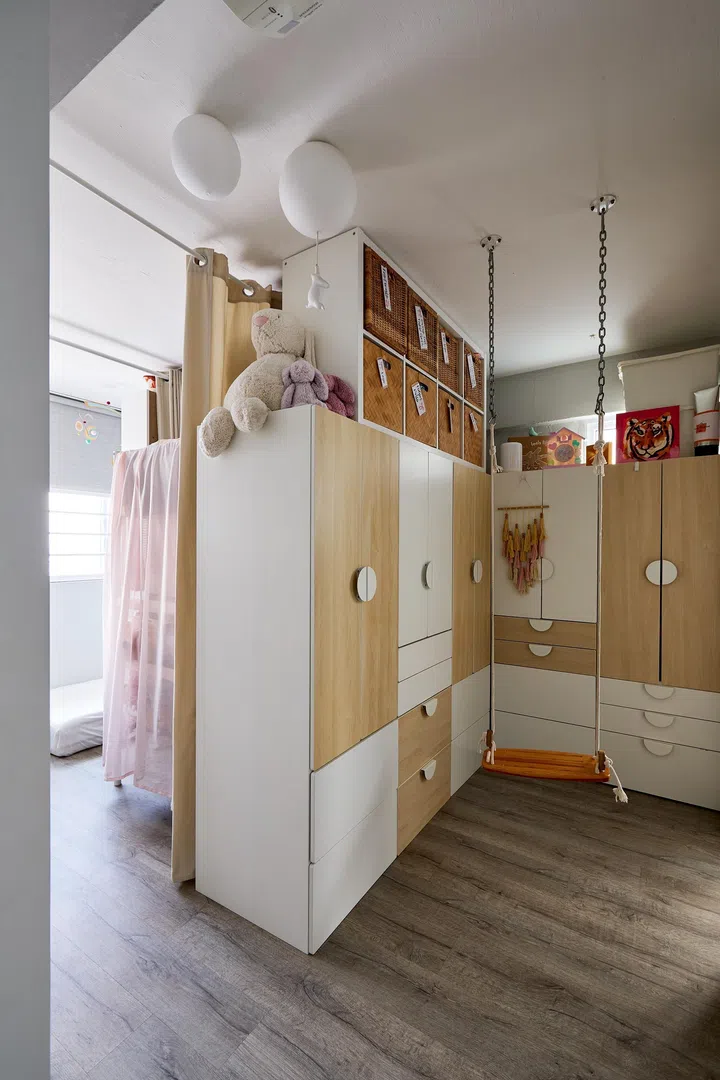
The girls’ bedroom is located on the opposite side of the walkway. This was formerly the master bedroom and although it does not have a sea view like their parents’ room, it gets an attached bathroom.
Tiffany intentionally avoided anything too permanent in the girls’ bedroom so that it can adapt to their changing needs as they grow. She chose simple and affordable furniture options from IKEA and Taobao, which can be replaced or reconfigured without incurring hefty costs.
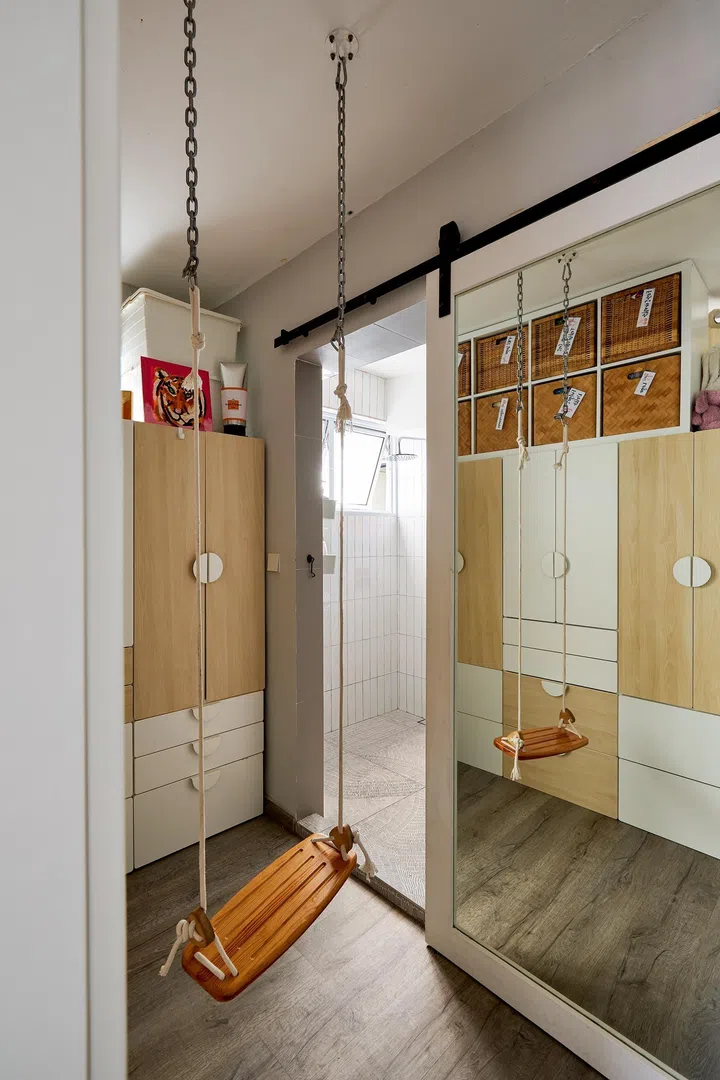
An indoor swing in the bedroom is a favourite among the sisters and their friends. This playful and unexpected element adds a touch of fun and childlike whimsy to the room.
Main bathroom
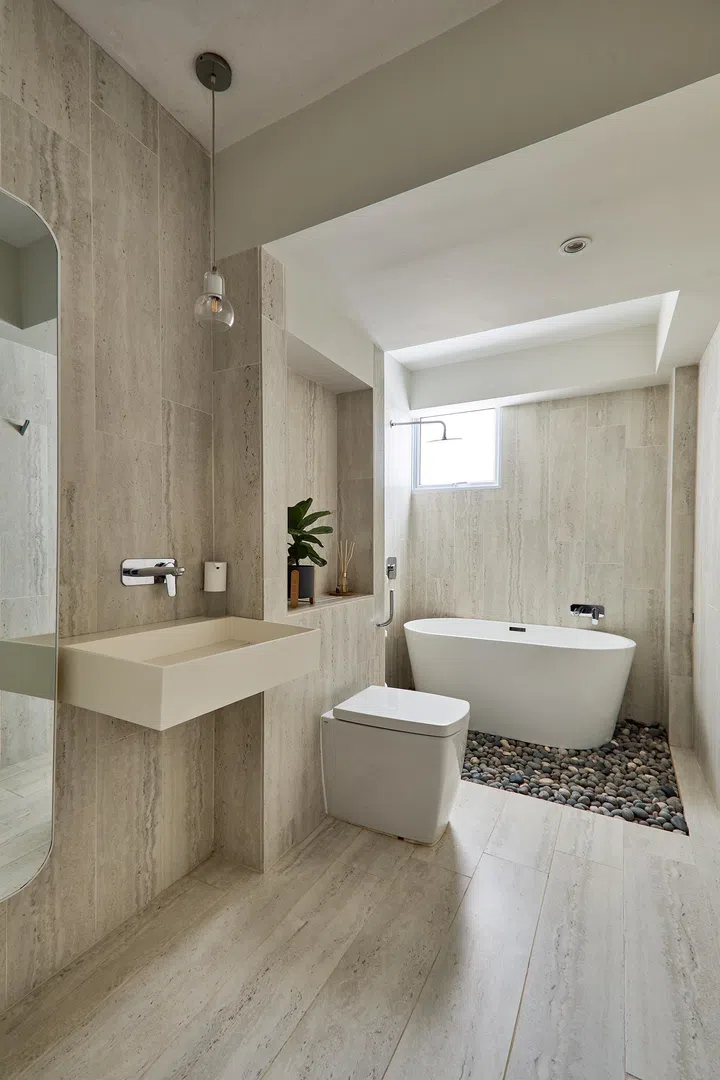
The existing bathroom was extended to allow Tiffany to recreate a hotel-like bathroom experience with a bathtub right at home without having to travel overseas or go on a staycation.
The main bathroom features minimalist detailing with wall-mounted fixtures, concealed plumbing and hidden faucets to achieve a clean look. One type of tile was selected for both the bathroom floor and walls to create a seamless and continuous effect that feels calm, cohesive, and subtly luxurious.
DIY tips
Tiffany advises homeowners who are embarking on self-designing their home to design with longevity in mind: “Renovation is a significant investment, so rather than following trends, focus on creating something timeless, something you genuinely love and will not grow tired of over time.”
Secondly, she cautions against being tempted to fill up all the spaces and complete everything all at once. “Leave some room for the home to evolve. As your lifestyle changes or as you travel and collect meaningful items, those pieces can naturally find their place in the home. That process of gradual layering makes the space feel more personal and lived-in,” she shares.
Lastly, she reminds homeowners that a home should be an extension of who you are. It is one of the few places where you do not need to filter yourself, where you can express your personality, quirks and preferences freely. “If you approach it in this way, the process becomes much more enjoyable and less stressful. It is no longer about getting everything right, but about creating a space that truly feels like yours,” she stresses.
$130,000 Renovation cost
The renovation cost was about $130,000. Including furniture and furnishings, it came up to about $170,000. It took about five months to complete as the renovations were carried out during the pandemic and the family moved into their new home in June 2021.
The home has served the family well over the past five years. The layout continues to support how they live as a family and the neutral palette has truly stood the test of time. The home has also evolved over time. As the children grow, the home has inevitably become more lived-in, perhaps even a little more crowded, especially in the dining area and the children’s rooms.
“I see this not as a flaw, but as a reflection of life itself. A home should not feel fixed or frozen; it should grow and change with its inhabitants. In that sense, it feels almost as though the house is alive- adapting, expanding and shifting through different seasons of our lives,” she points out. “This balance between structure and change is what makes the home truly meaningful,” she adds.
Home for the long term
If Tiffany had her way, she would like to live here for good. With such a lovely neighbourhood surrounded by friendly residents, she finds it hard to imagine living anywhere else. Being close to the sea also holds a deeply personal meaning for her: “My brother was laid to rest at sea, somewhere along this stretch of the East Coast. Over time, being near the sea has become a way for my family to feel close to him, a quiet way of remembering, of speaking to him and of maintaining that connection.”
However, she recognises that there are external factors beyond their control, such as how the Long Island project may alter the surroundings. She acknowledges that if the reclamation and construction become too disruptive, they may consider relocating. “But for now, this is very much home and where we see ourselves remaining for the long term,” she affirms.