
Mistakes I wish I could have avoided during my first home renovation: A Guide to the Big 4 Non-Aesthetic Musts
By Shannon Osztonits -
Share this article
This article is part of Home & Decor’s monthly editorial topics series — crafted around real, current problems that many Singaporean homeowners face. Jam-packed with personal recounts, opinions, and expert takes, we hope that these weekly pieces will inspire you, and bring you solutions that you can take into your own home.
May’s topic: ‘Designing for Real Life’. Article 1/2.
Picture this: You’ve finally landed your dream home; the one you applied for three years ago, and you’ve just received the keys–it’s yours!
What’s the first thing you do (if you haven’t started plans already)?
Pull up those Pinterest inspiration boards and begin contacting interior design studios or individual contractors for any homeowners planning on going the DIY route.
All of your ideas of how you want your future home to look are now coming to fruition, whether that’s a Mid Century abode, a quirky family household reflecting your personality or the ultimate minimalist-meets-Japandi space. You start sourcing furniture and decor, and mapping out how you envision each room to look.
For most of us, we automatically consider the aesthetic side of the home renovation process and not so much the practical side of renovating a home.
“Nobody thinks about tiles until they buy a house. Even after we bought the house, we didn’t think about tiles. Make more of a conscious effort when you’re visiting places to start marking what you like and don’t like,” say homeowners Russell and Syek.
Often, homeowners completely forget about the “Big 4” non-aesthetic musts:
- Flooring
- Electrical wiring
- Tiling
- Lighting
These are particularly important for homeowners doing any hacking works during a full gutting or even a partial home renovation. Tackling these decisions should be some of your first, and not your last. Dozens of homeowners, time and time again, state that these “Big 4” are typically factors they never properly considered, left to the last minute or didn’t realise the importance of each one.
“Especially for decorative lighting like pendant and wall lamps, such statement pieces should complement the ceiling height and the size of the surrounding furniture,” advises interior designer Melissa Wan from Studio HP.
Leaning on advice from real homeowners, here are things to consider when it pertains to the non-aesthetic “Big 4”:
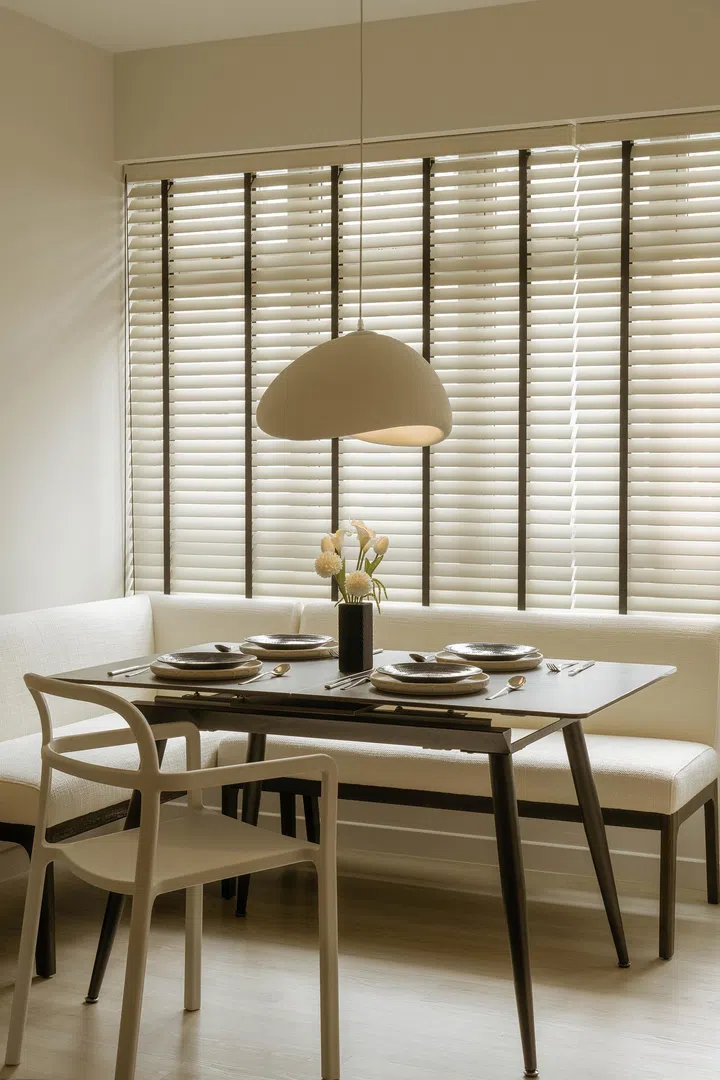
Self-installed vinyl flooring by homeowners Jess and John.
Flooring
“Another big learning curve was our extensive and laborious DIY efforts. We overlaid all the vinyl flooring…As much as it was a rewarding hands-on experience, we probably wouldn’t do it again (laughs*), unless we have plenty of time. That said, we’d still encourage new homeowners to give it a try; it’s a great way to save costs, learn something new, and feel immense pride when you see the results. It’s the best feeling being able to say, “We did it ourselves!” – Millennial homeowners, Jess and John.
Vinyl Flooring vs Laminate Flooring
Do you know the difference between laminate vs vinyl flooring? Laminate floors are more budget-friendly, but vinyl flooring is durable. For example, you get water resistant vinyl flooring, which is a fantastic option for bathrooms.
“Vinyl flooring is different from laminate…It’s rubber base and commonly used in Singapore; it’s more long-lasting,” says Joannie from OVON Design.
Consider the colour
Before choosing the colour for your home floors, think about the household members living there (including pets) and your living needs and habits. Lighter floors show mess more easily, such as women’s long hair strands.
“Don’t get dark kitchen laminates unless it’s fingerprint proof,” shares homeowner, pet-owner and mom of two children, Madhu. “If you have a pet that sheds a lot, do not get dark flooring because then you realise exactly how much they shed. We had no clue until we moved and got dark flooring.”
Older buildings might have unforeseen problems: Budget wisely
For older HDBs in particular, sometimes you do not know what to expect beneath the floors until your contractors or interior designers start hacking away. This can sometimes affect your neighbours below you. If you are moving into an older HDB or apartment block, keep this in the back of your mind to avoid any surprises.
“This is an old HDB, and we only realised that when I hacked my floors, it affected my neighbours below, and they had some ceiling cracks. Luckily, my interior designers were very fast in rectifying the problem for me,” says homeowner Andrea Lim.
Before you sign a contract with your interior design team or contractors, be sure to bring up this topic. Ask them: If this were to happen to you, will they fix it?
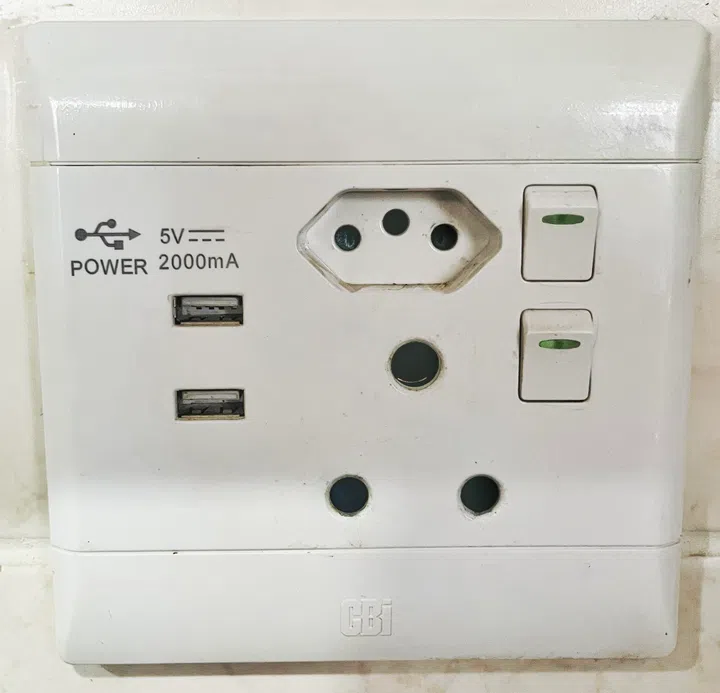
Electrical wiring
“A few design features of the top cabinets to mention are, firstly, the hidden socket points and switches behind the cabinet doors. We needed quite a number of outlets and switches for all our kitchen appliances, but we didn’t like the cluttered look of visible electrical points on the wall, so we thought of the best way to hide it. And we intentionally have an open bottom, so we can easily access from the bottom to operate the points.” – Homeowners Jess and John, who decided to DIY their home renovation.
Liveability
“Being intentional with the number of sockets that are placed throughout the home is key. But another thing that is sometimes overlooked is the exact position of it,” says Melissa Wan. “For example, some questions that I would bring up when going through the electrical plan on-site with my client:
- In the kitchen: do they prefer the sockets hidden in a kitchen (positioned under the top-hung cabinets), or will they prefer it to be easily accessible with the least amount of wires visible when plugged in (positioned on the kitchen backsplash)?
- Bedside tables: similar to the above, do they prefer the socket to be hidden behind the bedside table, or slightly above it for easy accessibility?
- How high (or low) the sockets should be above any countertop/table top surface.”
When deciding on where to place electrical points, think about where you plan on spending most of your time in your home and your daily needs.
“The power point is very important. You really have to imagine how you are living to put the power points. These small details of liveability…Now that we have moved in, we realise we are missing some power points in the bedroom,” explains husband and wife homeowners, Russell and Syek.
Furniture
This is a big one and has an impact on every room. Simultaneously mapping out where to position your furniture, as well as the size of each item, will save you headaches in the future. If your bed stretches across the entire wall, but you have a plug point in the middle of this wall, it makes access difficult. If you have a TV console on one side of the room but no electrical point nearby, will you need an (eyesore) extension cord?
“This is our first home reno. Understanding the space and the limitations of the space early on was helpful. It’s difficult to go back once you’ve sort of committed to a position on where the different lights and switches are going to be. And those then constrain where you can put furniture. We had a bit of a painful process landing on where switches and plugs needed to be to support what we wanted for the furniture,” explain a husband and wife in their mid 30s.
More is more
“One of the lessons I learned from my first renovation is that it’s always good to have a lot of electrical points. I never had enough. You can never have too many electrical points. So this time around, in my house, I have a lot of electrical points!” – Homeowner, Nicholas Lim.
Electrical costs
Always budget for the unexpected. Take it from these homeowners, electrical costs are not cheap.
“A lot of things that we didn’t know of, we didn’t expect, like electrical points. Those were things that we weren’t familiar with, and then, on the day that they had to do it, we had to come on-site and decide at that point where we wanted the electrical points to be. So actually, I think there was one point where we were quite shocked. Because the electrical cost turned out to be a lot higher than what we had initially expected.” – Singaporean couple and homeowners Sam and Jian Hao.
Testing
Before you decide to go ahead and drill into your walls and add in wiring, do a final test walk-through. This simple task is one often overlooked. Compare how far apart electrical points are. Are you happy with how the wiring and sockets will look once installed? Do you have enough power points?
“If I had to come up with just one [learning curve], it would be to do a real-life walk-through to test plug and light placements before finalising your electrical plan. I missed one high-traffic light switch and also ended up with a few unused sockets, but nothing serious or too inconvenient.” – Homeowner of a walk-up HDB in Tiong Bahru, Michelle.

Lighting
“Having the right amount of lighting is really important. Having a good balance of layered lighting (task lighting vs ambient lighting) is so important to add to the mood and experience of a home. Smart dimmable bulbs are great to provide that flexibility of adjusting the lighting mood throughout the day, and are super easy to install and set up,” explains interior designer Melissa.
Lighting Overkill
“I ended up in a situation where I grew up with the ceiling lights, but everyone is now using smaller lamps and lights. Even though we spent quite a bit on the lamps…Now I end up turning off seven lamps a night.” – Homeowner and content creator, Samantha Joy Loh.
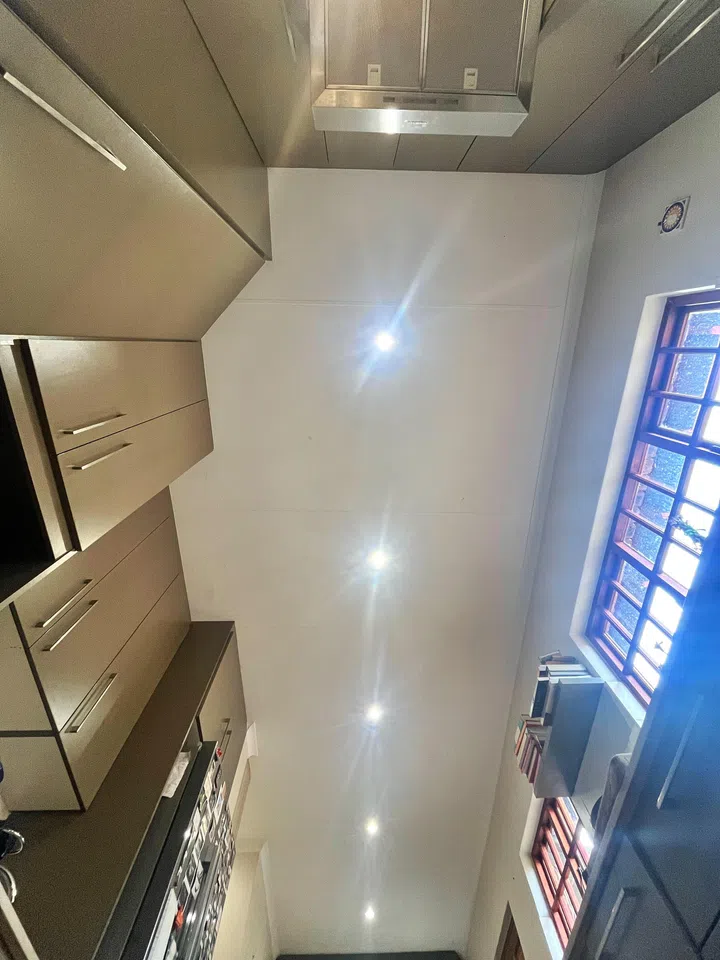
Whilst you certainly don’t want to end up with too few lights in your home, installing too many lights means unnecessary renovation and construction costs. Smart consideration of how many lights you are going to really use is vital.
“One example of lights we don’t use is the LED bathroom mirror light. We wanted to do some fancy stuff, like this light, but now we don’t really need or use it.” – Husband, homeowner and doctor, Zheng Cong.
Positioning
Similar to electrical points, positioning of your lights is just as important regarding design, functionality and furniture choices.
“The long strip of warm LED light along the end of the countertop has been so useful for our kitchen tasks, instead of light above the head that casts shadows on the countertop…For the master bedroom, we designed a small niche at bedside height, complete with charging points and a hidden LED light switch for the wardrobe light. It’s just the right spot to place our phone and spectacles before sleeping, very practical, yet intentionally integrating into the design,” detail creative homeowners John and Jess.
Natural lighting
Analyse what spaces and areas receive the most natural light and avoid directly placing a light in this view–unless you plan on utilising the space a lot in the evenings. When natural sunlight pairs with artificial light, it can create unnecessary reflections. If a room receives an abundance of natural light, you can also save costs on lighting by limiting the number of lights the area requires.
“You do not realise how much your space can impact you…How much daylight do you need when you’re working?” – Homeowner, Madhu, who self-designed her family home.
Tiling
“One other detail we like is the linear drain in our shower spaces, which matches the width of the large-format tiles. It was a last-minute decision; we bought it off Carousell and rushed across the island to collect it,” explains homeowners Jess and John.
“The challenge was that the floor trap’s pipe position could not be changed, so the linear drain had to follow that as the starting point for the floor tiles to set out from, which would carry on to the wall tiles. Despite the manoeuvrability and size constraints, we found a tile layout that we felt was perfectly resolved.”
Composition
“I picked out my floor tiles personally, and I wanted a cement kind of style, but afterwards I realised that these tiles easily absorb water. So I think if I had to have another tile, I would choose another. The tiles are very important. I did the tile selection on my own, but I wish I had left it to the professionals to do. I do not have the understanding of how that works.” Celebrity fashion stylist and homeowner, Li Rong.
Knowing what the composition of your tiles is, i.e., what material it is made of and their manufacturing process, pays off. Being knowledgeable about the different tile composites before you go into a tile shop, like Hafary, is powerful. There are many different types of tiles, from vinyl floor tiles to ceramic to porcelain floor tiles.
Tile design layout
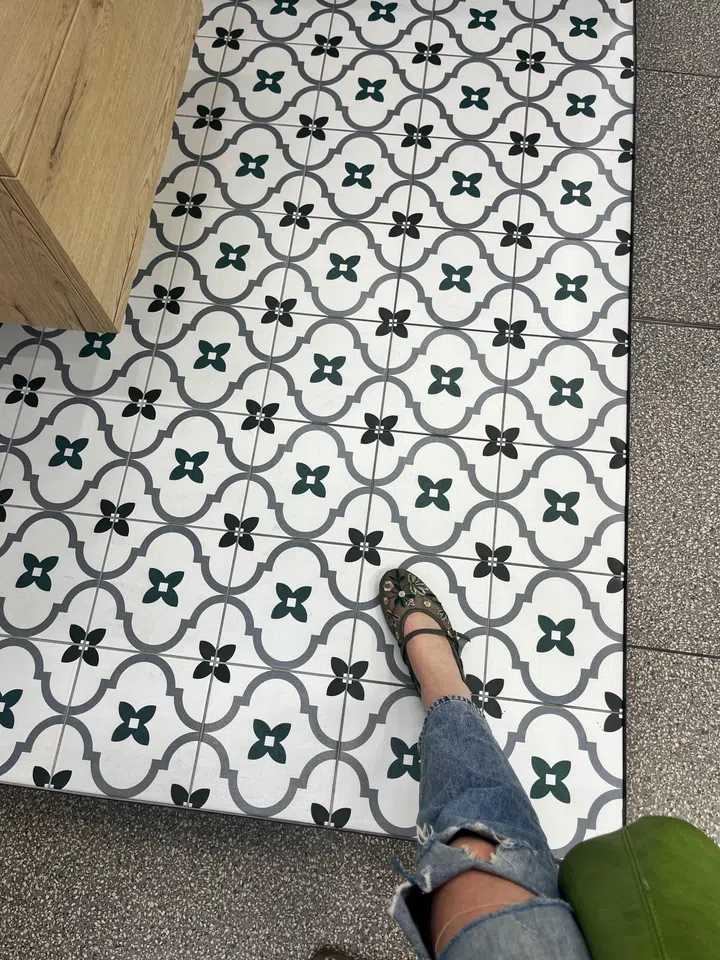
When I was renovating my bathroom at home, I fell in love with a Spanish tile with a very detailed print. It wasn’t until our contractor was installing the tiles and he asked me which direction I wanted to place the pattern that I realised the importance of the tile design layout and its pattern/print.
“Apart from the design and texture of the tile, something that is often overlooked is also the tile lay (even if we’re working with standard-sized tiles). A good designer will plan this out with the tiler prior to tiling works, but it’s such an important detail that the end result can be night and day if not planned properly,” says Melissa Wan.
“Some examples of these include:
- Determining where the start of the tile-lay will begin–if it needs to be centralised to a doorway, if there will be a small piece leftover that will be cut and where that should be, etc.
- The laying direction and orientation of the tiles (horizontal or vertical).
- If using different-sized tiles on the walls and floor, how will the alignment of both look?”
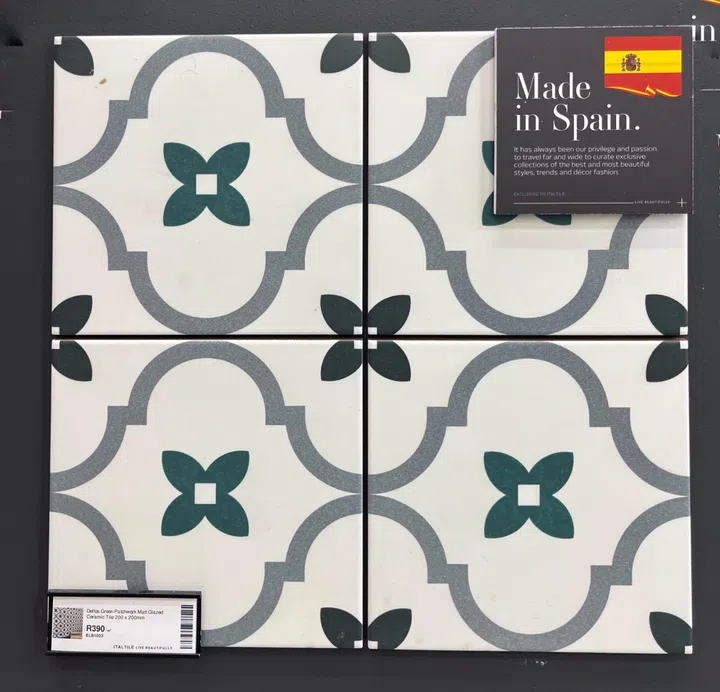
“I didn’t know that on that day, our interior designer asked us where to place the tile and in which direction we wanted the tile. My wife wasn’t home, and they all looked the same to me.” – Homeowners Jian Hao and Sam.
Household members
The people living in the home should impact your tile-selection choices, whether talking age or personality. If your husband is a messy cook who spends a lot of time in the kitchen, choosing light grouting between the tiles for a kitchen backsplash can show marks like oil stains more easily. If your elderly parents live with you or you have young, active children, non-slip ceramic floor tiles or anti-slip vinyl floor tiles are a safe bet.
“The bathroom floor tiles continue all the way into the shower. We tried to get it lightly on the anti-slip because of our kids and older parents.” – Homeowners Zheng Cong and Helen Chin.
Other useful tips from homeowners
Apart from the non-aesthetic “Big 4,” there are other considerations to think of when you are renovating a home that you might overlook. These include:
- Importing furniture can put a delay on things, for example, if an item is arriving from Europe.
- Plan and consider your renovation timeline around dates of the year, for example, Chinese New Year.
- Always give exact measurements of your doorways and tiles before installing anything, especially finishings like a kitchen island slab or a custom piece of furniture.
- Not sure how long you are going to live in your home? In this instance, opting for non-built-in furniture and carpentry works is beneficial as they are not permanent and can easily be removed and transferred to a new home.
- Don’t underestimate colours. For example, there isn’t just one shade of white. Colours are not all the same.
- Decide on a colour theme early on in the design process. This impacts so much of the design process, like furniture choices, decor, finishings, etc.
- Plan storage needs early on.
- Communicate clearly with your interior designers and contractors

When I was choosing tiles for my bathroom, the tile advisor and expert at the tile shop warned me that this specific Spanish tile wasn’t anti-slip. It was a bathroom tile, and I used it for my bathroom floor and shower. Despite his warning, my husband and I went ahead and purchased the tile. My pregnant sister-in-law was staying with us for a weekend and was showering, and she nearly slipped in the shower. Take it from me; sometimes, experts know best!